Xi'an to Chengdu Train: Time, Price & Tunnel Tips (2026)
The fastest bullet train from Xi'an to Chengdu covers 658 km in about 3 hours 10 minutes. Most trains take closer to 3.5 to 4 hours because they stop once or twice along the way at places like Hanzhong or Guangyuan. Either way, this is one of the more unusual rides in China: the line spends so much of its route underground, cutting through the Qinling Mountains, that you'll lose phone signal repeatedly and see a lot less scenery than the words "mountain crossing" suggest.
Quick answer: The Xi'an to Chengdu high-speed train takes 3 to 4 hours (fastest trains around 3h10m), costs roughly ¥245-300 for second class, and beats flying once you count airport transfer and check-in time. Book on 12306 (free, official) or through a booking agent like Trip.com if you want an English interface.
Book China train tickets
Compare fares and book Xi'an-Chengdu high-speed trains
Some links are affiliate links; we may earn a commission at no extra cost to you.
You can also buy tickets directly on 12306.cn or the 12306 app, China Railway's official booking system. It's free to use and has no markup, which is why most locals book through it. The catch is that some features work more smoothly with a Chinese phone number, and the English interface is basic. That's why a lot of first-time visitors use Trip.com instead: it's in full English, accepts foreign passports without friction, and charges a small booking fee for the convenience.
For step-by-step guidance on registering, choosing between 12306 and Trip.com, and boarding with only your passport, see our complete guide to booking China's high-speed trains.
How long is the Xi'an to Chengdu train ride
Not every train on this route runs at the same speed. The line was built for 250 km/h operation because of the mountainous terrain, so even the fastest "G" trains here are a notch slower than the 300-350 km/h trains you'd find on flatter routes like Beijing to Shanghai.
- Fastest nonstop G-trains: around 3 hours 10 minutes to 3 hours 30 minutes
- Typical G-trains with 1-2 stops: 3.5 to 4 hours
- Older D-trains: can run closer to 4.5 hours
More than 40 train pairs run the route daily, with the first departures from Xi'an North around 5:13am and the last around 7:58pm. In practice that means a train roughly every 20-30 minutes for most of the day, so you rarely need to plan your whole day around a single fixed departure.
Xi'an to Chengdu train schedule, stations and prices
Almost all high-speed trains depart from Xi'an North Railway Station and arrive at Chengdu East Railway Station (Chengdudong), the two cities' main high-speed rail hubs. A handful of services also call at smaller stops such as Hanzhong North or Guangyuan, which is useful if you're breaking up the trip rather than riding straight through.
Ticket prices scale with seat class the same way they do across China's network:
| Seat class | Typical price (2nd-class ride) | What you get |
|---|---|---|
| Second class | ¥245-300 (~US$34-42) | Standard 3-4-2 or 2-3 rows, fine for the full ride |
| First class | roughly ¥390-480 (~US$55-67) | Wider 2-2 seating, more legroom, quieter car |
| Business class | roughly ¥750-900 (~US$105-125) | 1-2 seating, fully reclining seats, lounge access at bigger stations |
Second class is genuinely comfortable enough for a 3-4 hour ride, so don't feel pressured into paying up unless you specifically want the extra space or are traveling overnight-adjacent hours. Prices shift a little by exact train number and how far ahead you book, but this range holds for most departures.
Why this line has so many tunnels
This is the detail most guides skip, and it's worth knowing before you board. Crossing the Qinling Mountains, the range that geographically divides north and south China, means the railway spends roughly 135 km tunneling through the range, and about 127 km of that, or 94%, is inside a tunnel. Across the whole 658 km line, the bridge-and-tunnel ratio is around 93%, with 62 tunnels and 139 bridges total. Seven of those tunnels run longer than 10 km each; the longest, the Qinling Tianhua Mountain Tunnel, stretches nearly 16 km and is buried more than 1,000 meters deep in places, one of the longest single-tube high-speed rail tunnels in Asia.
What that means for your actual ride:
- Your phone signal will cut in and out. Carriers have coverage in some tunnels but not all of the longer ones. Download offline maps, podcasts, or your itinerary notes before boarding rather than counting on data.
- Your ears will pop, repeatedly. Trains moving at speed into a tunnel create a real pressure change. It's not dangerous, just noticeable, especially in the first few tunnels after leaving Xi'an.
- Don't expect a window-gazing trip. Unlike, say, the Guilin routes, most of this journey is spent in darkness or narrow cuttings. The best above-ground views come in short bursts near Xi'an and again once you drop onto the Chengdu plain in the last 30-40 minutes.
- Bring your own entertainment. Downloaded shows, books, or music matter more here than on most Chinese high-speed routes precisely because you can't rely on scenery or a signal to fill the time.
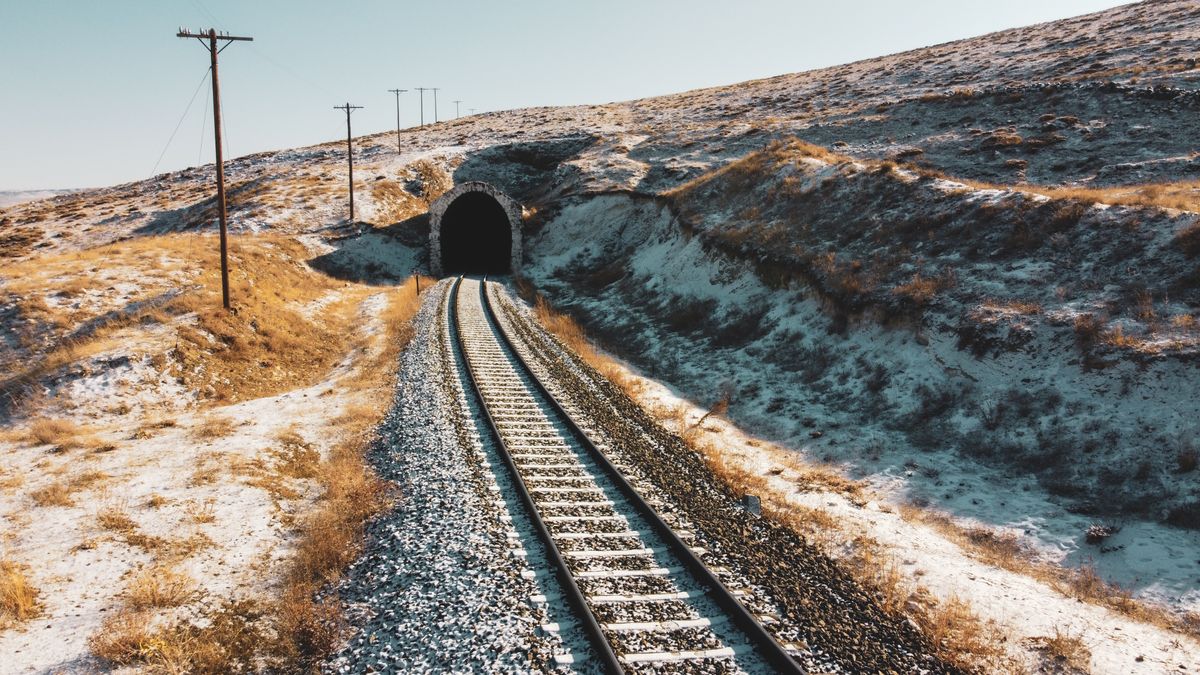
Railway tracks leading into a mountain tunnel in a hilly landscape
Train vs flight: which one is faster door to door
A direct flight between Xi'an Xianyang and Chengdu Tianfu or Shuangliu airports takes about 1.5 to 2 hours in the air, which sounds faster than any train option. In practice the two options end up closer than that number suggests. Add an hour for airport check-in and security on the Xi'an side, plus transfer time from the airport into either city center (30-60 minutes each way, since both airports sit well outside downtown), and total door-to-door time lands close to what the train takes, sometimes longer once you account for delays.
Cost tips the comparison further toward the train. Economy flights on this route commonly run ¥600 or more, roughly double to triple a second-class train fare, and flights only run 2-8 times a day compared with 40-plus train departures. Unless you're catching a connecting international flight at either airport or specifically need business-class comfort for a work trip, the train is the more practical choice for most travelers doing Xi'an and Chengdu as part of a wider China itinerary, including anyone pairing this leg with a stay at one of the good places to stay in Chengdu near the pandas or the East station itself.
Common mistakes to avoid
- Booking same-day during Chinese holidays. Spring Festival and National Day (early October) sell out this route fast. Book as soon as your dates are fixed, ideally 1-2 weeks ahead in peak season, a few days ahead the rest of the year.
- Assuming second class means cramped or unsafe. It's a normal airline-style seat with a fold-down tray and full legroom, not a budget compromise.
- Confusing Chengdu East with other Chengdu stations. Chengdu also has Chengdu Railway Station (the older, central one) and Chengdu South. Most Xi'an trains use Chengdu East, which connects to metro Lines 2 and 7, so double-check your ticket before booking onward transport.
- Expecting a scenic ride and being bored by the tunnels. Plan entertainment in advance instead of counting on the view or a signal.
- Not checking seat class details when comparing train types. If you want to understand the seating layout differences in more depth, see our breakdown of China's train classes and seat types before you book.
Who this train suits
This route works best for travelers already doing a China-wide itinerary that includes both cities, commonly pairing the Terracotta Army in Xi'an with the giant pandas in Chengdu. It also suits anyone on a budget, since even first class here costs less than a typical domestic economy flight. If you're short on time (a single business day, say) or you're connecting to another flight at either airport anyway, flying can still make sense, particularly in business or premium economy. For everyone else, the train's frequency and reliability, unaffected by the weather delays that hit flights more often, make it the easier default.
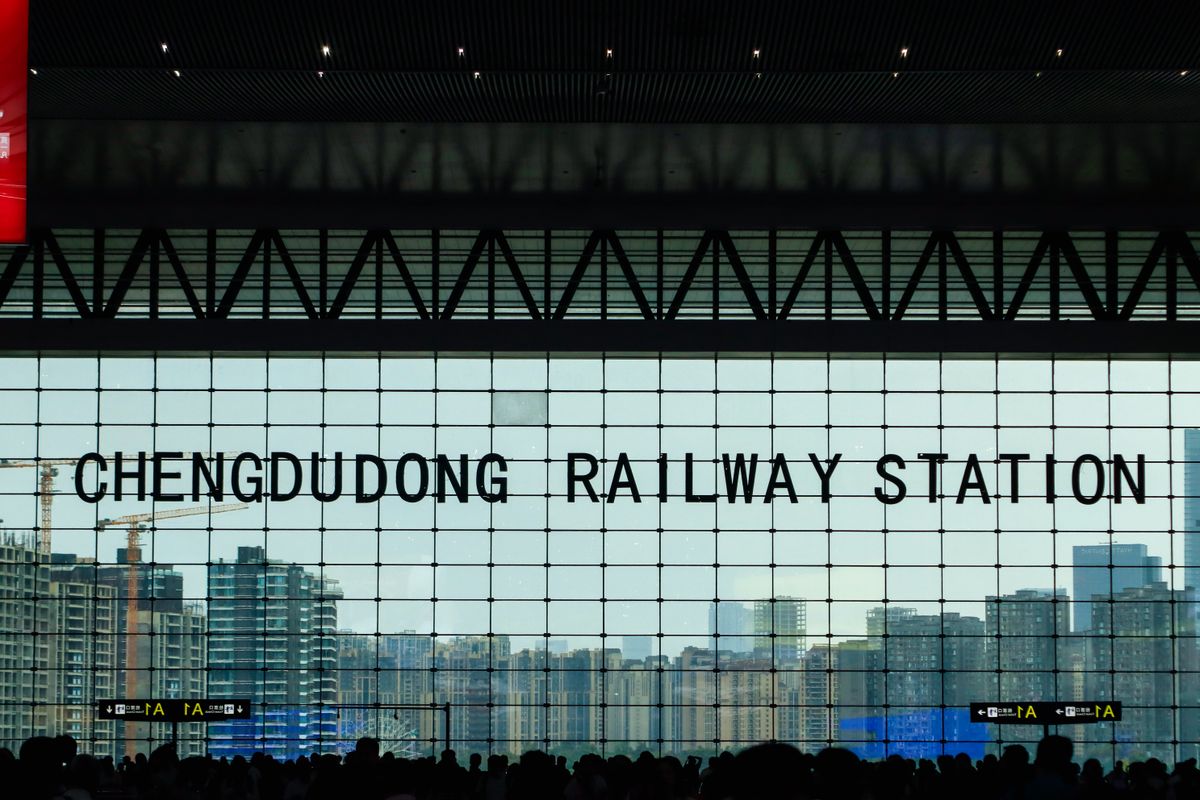
Chengdu East Railway Station signage visible through the terminal's glass facade
A few practical tips before you go
- Arrive at Xi'an North at least 45 minutes before departure; it's a large station and security lines can be long during peak travel weeks.
- Bring a printed or downloaded copy of your ticket confirmation and passport, both are checked at security and again at the gate.
- Pack snacks and water. The onboard trolley sells basics, but selection is limited and lines form fast.
- If you're prone to ear discomfort, chewing gum or swallowing during the tunnel sections helps the same way it does on a plane.
- Save an offline map of both Xi'an North and Chengdu East station layouts; both are large enough that finding your exit or metro line without signal can eat 10-15 minutes.
Frequently Asked Questions
Is there a flight or train that's faster from Xi'an to Chengdu? Flying is faster in the air (1.5-2 hours vs 3-4 hours), but once you add airport transfer, check-in and security, total door-to-door time is close to the train's, and the train is more frequent and cheaper.
How far in advance should I book Xi'an to Chengdu train tickets? A few days ahead is usually fine outside peak season. During Spring Festival or National Day, book 1-2 weeks ahead since this route sells out. See our guide on how far in advance to book China train tickets for the full picture by season.
Which stations do I need in Xi'an and Chengdu? Xi'an North Railway Station on the Xi'an side, Chengdu East Railway Station on the Chengdu side, for nearly all high-speed services.
Is the Xi'an to Chengdu train ride scenic? Not really, most of the mountain crossing is inside tunnels. You get some above-ground views near Xi'an and as you approach the Chengdu plain, but don't book this route expecting a window-gazing experience.
Can foreigners buy tickets on 12306 with a passport? Yes, 12306 accepts foreign passports for both online and station-counter purchases. The interface is more basic in English than third-party platforms like Trip.com, which is why many first-time visitors prefer the latter despite the small fee.
Do I need first class for a 3-4 hour ride? No. Second class is comfortable enough for the full trip. First and business class mainly add legroom and quieter cars, worth it if you want extra space, not required for comfort.