Luoyang
Luoyang Ancient Tombs Museum
Luoyang Ancient Tombs Museum: Tickets, Hours and How to Visit (2026)
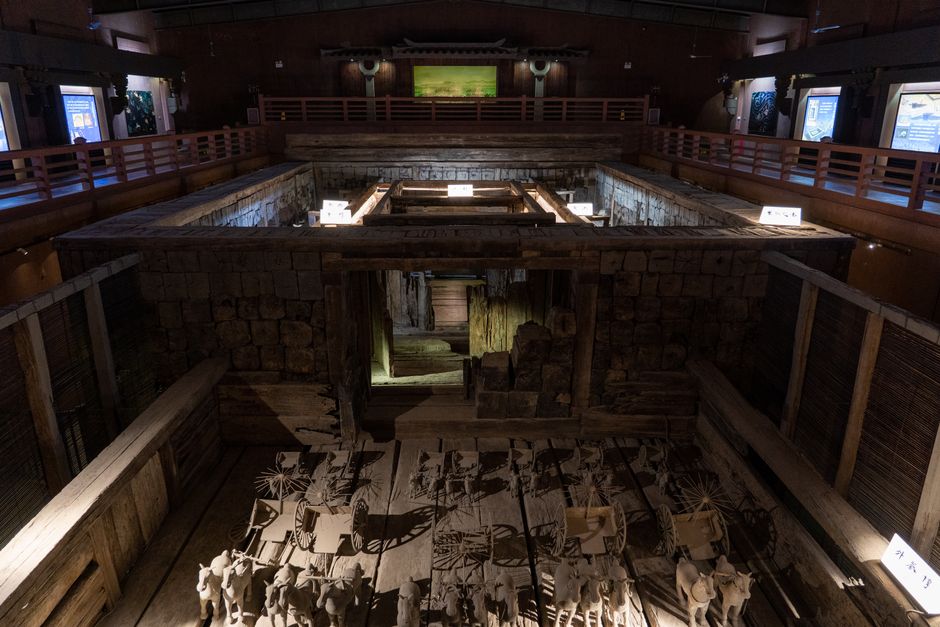
Luoyang Ancient Tombs Museum is the place to see how burial architecture, wall painting and funerary customs changed across successive Chinese dynasties. Its defining exhibit is a chronological group of 25 relocated and reconstructed tombs, rather than a conventional hall filled only with objects in cases. Visitors descend into underground passages, enter tomb chambers and examine how layouts, bricks, carvings and painted scenes developed from the Western Han period through the Song and Jin periods.
The museum also uses the name Henan Museum of Ancient Murals. Older maps may identify it as Luoyang Ancient Art Museum, so check the Chinese name Luoyang Gumu Bowuguan and the address before starting your journey. Plan about 2.5 to 3 hours for a first visit. This is a practical estimate, not an official time limit. It leaves enough time for the reconstructed tombs, mural galleries and Northern Wei imperial burial section without rushing through the darker underground rooms.
What are the tickets and opening hours in 2026?
The museum’s permanent exhibitions are free, but visitors are expected to make a real-name reservation through the official reservation website or official WeChat account. The published standard schedule is 9:00 to 17:00, with last admission at 16:30. Monday is the regular closing day unless it falls during a statutory holiday. Holiday programs and special events can change the schedule, so check the museum’s current announcements shortly before visiting.
| Planning item | Published visitor information |
|---|---|
| Admission | Free for the permanent exhibitions |
| Reservation | Real-name advance reservation through the official website or WeChat account |
| Standard hours | 9:00–17:00, last admission at 16:30 |
| Weekly closure | Monday, except statutory holidays |
| Address | No. 6 Airport Road, Laocheng District, Luoyang, Henan |
| Visitor-service phone | 0379-62260019 |
Foreign visitors can reserve with a passport or another accepted identity document. After booking, take the original document to the entrance, where staff check the details before admission. The official guide says visitors using documents other than a Chinese identity card enter after an on-site document check. Do not rely on a screenshot of the passport alone. Children under 14 do not require a separate ticket and may enter with an accompanying adult, according to the same visitor guide.
What can you see inside the museum?
The collection makes more sense if you follow it as a story about changing ideas of death, status and the afterlife. The official museum overview divides the displays into three principal groups: the survey of Luoyang tombs, the Northern Wei imperial mausoleums and an exhibition of carved bricks from the Song and Jin periods. The first group contains three connected exhibitions about burial culture, representative Luoyang tombs and ancient murals from Henan.
The 25 reconstructed tombs
The central section presents 25 representative tombs from nine dynastic periods in chronological order. They were relocated and reconstructed for display, allowing visitors to compare chamber shapes and decorative programs at close range. Look first at the structure rather than individual objects: note the number of chambers, the use of brick, the shape of ceilings and the position of painted or carved decoration. This approach makes the transition between periods easier to understand.
The museum’s exploration page says the tomb displays contain about 600 objects and cover architecture, carved brick, murals and excavated material. Two highlighted Western Han painted tombs are associated with the Bu Qianqiu mural and the image commonly translated as “Exorcising Demons.” Light levels are deliberately low around sensitive material, so allow your eyes time to adjust before trying to inspect the paintings.
Henan’s ancient tomb murals
The Ancient Tomb Murals of Henan exhibition brings together 18 groups comprising 65 murals, with a combined displayed area of 185 square metres. Their dates extend from the Han dynasties into the Republican period. Instead of treating every image as decoration, look for daily activities, processions, servants, animals and symbolic figures. These details show what patrons wanted to preserve or project inside spaces intended for the dead.
Some galleries permit photography, but the official rules prohibit flash and tripods. Individual exhibitions may impose stricter limits, which should be posted at their entrances. Low-light phone photography may be disappointing; seeing the painted lines and surviving pigments with your own eyes is often more rewarding than trying to produce a bright image.
Northern Wei imperial burials and carved bricks
The Northern Wei section explains the imperial burial system used when Luoyang served as the dynasty’s capital. It centers on Jingling, the mausoleum connected with Emperor Xuanwu, and adds a different scale to the smaller representative tombs. The Song and Jin carved-brick exhibition then shifts attention to scenes of service, family duty, auspicious wishes and secular life. The museum states that this gallery contains 106 carved bricks arranged into three thematic groups.
What is the best route through Luoyang Ancient Tombs Museum?
Follow the museum’s historical sequence rather than choosing rooms at random. A clear first-visit route is:
- Begin with the burial-culture introduction to learn the vocabulary used in later galleries.
- Continue through the 25 representative tombs in chronological order.
- Slow down in the mural section, especially around the Western Han examples.
- Visit the Northern Wei imperial mausoleum display after the smaller tombs so the change in political scale is clear.
- Finish with the Song and Jin carved-brick gallery, where scenes of everyday life are easier to read after the underground sections.
If time is limited, prioritize the chronological tomb display, the mural gallery and the Northern Wei section. Visitors with more time can read the introductory material and compare recurring motifs across several periods. Because many spaces are underground and intentionally dim, brief pauses between sections help prevent visual fatigue.
How do you reach the museum from central Luoyang?
The museum is at No. 6 Airport Road in Laocheng District, north of the main historic center. The official transport guide lists bus 83 as a direct service from Luoyang Railway Station. It also suggests taking Metro Line 2 to Mangling Station and transferring to bus 83 when coming from other parts of the city.
Search for either “Luoyang Gumu Bowuguan” or the former name “Luoyang Gudai Yishu Bowuguan” in a Chinese map application. Confirm that the result shows Airport Road in Laocheng District. Luoyang Museum is a different institution in another part of the city, and selecting it by mistake can disrupt a half-day plan.
For the return journey, check the live bus information before leaving the building. If you are combining this museum with another attraction, avoid promising yourself a tight connection immediately after last admission. The site is outside the most concentrated group of central sights, and the transfer should be treated as part of the visit.
When should you visit?
Arriving close to 9:00 is the simplest choice for a quieter passage through the reconstructed tombs. The underground rooms can feel confined when a large group stops in a chamber, so let groups move ahead rather than trying to pass them in narrow areas. Weekday mornings outside public holidays usually offer the easiest pace, though this is a planning recommendation rather than a museum guarantee.
The attraction works in any season because its main displays are indoors or underground. Spring and autumn are comfortable for walking between the buildings, but the city’s seasonal popularity can increase demand for reservation slots. Check availability first, then build the rest of the day around the confirmed booking.
Practical rules that matter inside
Bring the identity document used for the reservation. Large belongings may be stored free of charge at the entrance lockers or visitor-service desk, according to the official guide. Flash photography and tripods are not allowed, and signs at individual galleries may ban photography entirely. Food, smoking and pets are not permitted in the exhibition area.
Translations may not cover every label. A camera-translation application can help with longer Chinese panels, but turn off the flash before opening the camera. Save the Chinese names Bu Qianqiu Mu, Da Gui Tu and Jing Ling in advance if those are your priorities; showing the names to a member of staff is easier than relying on an English pronunciation.
Frequently asked questions
Is Luoyang Ancient Tombs Museum free?
Yes. Its permanent exhibitions are free, but the museum requires advance real-name reservation through an official channel.
Can a foreign visitor book with a passport?
Yes. The official instructions include passports among the identity documents that can be used. Bring the original document for staff verification at the entrance.
Is the museum open on Monday?
It is normally closed on Monday, except during statutory holidays. Special notices can replace the regular schedule, so check the official website before travelling.
How long should I allow?
Allow around 2.5 to 3 hours for a comfortable first visit. Two hours can cover the main reconstructed tombs and murals, but leaves little time for labels or the carved-brick exhibition.
What should I see if I have limited time?
Start with the chronological tomb route, continue to the ancient mural gallery and finish at the Northern Wei imperial burial section. Those areas explain what makes this museum different from a general archaeological collection.
Highlights
- Walk through 25 relocated and reconstructed tombs arranged across nine dynastic periods.
- Compare burial architecture from the Western Han through the Song and Jin periods.
- See important ancient murals, including works associated with the Bu Qianqiu tomb and “Exorcising Demons.”
- Explore the Northern Wei imperial burial section centered on Emperor Xuanwu’s Jingling mausoleum.
- Inspect 106 Song and Jin carved bricks depicting service, family duty, auspicious wishes and daily life.
Travel Tips
Reserve with your passport details
Use the official website or WeChat account, then bring the original passport used for the real-name booking so staff can verify it at the entrance.
Arrive near opening time
A 9:00 arrival gives you a better chance to view the narrow, dim tomb chambers before larger groups gather inside.
Follow the chronological route
Start with the burial-culture introduction and visit the reconstructed tombs in order before moving to the murals and Northern Wei section.
Check the latest notice
Monday closures, statutory holidays and special events can alter the published schedule, so confirm the current announcement shortly before departure.