How Much Does a China Trip Cost in 2026? Full Budget Breakdown
Quick answer: A mid-range trip to China runs about US$90 to US$165 per person per day on the ground (roughly ¥650 to ¥1,200), covering a comfortable 3 to 4-star hotel, high-speed trains, local restaurants, and paid sights. Add US$700 to US$1,300 for a return flight from North America. A typical 10-day mid-range trip lands near US$1,800 to US$2,800 per person all in.
Most people overestimate what China costs and underestimate how far a dollar stretches once they land. A bowl of hand-pulled noodles is under US$2. A bullet train that would cost a fortune in Europe is often US$40 to US$90. The expensive parts are the flight over and, if you choose them, four and five-star hotels in Beijing and Shanghai. Everything in between is your choice.
Here is what a China trip actually costs in 2026, broken down by how you like to travel, with real numbers you can build a budget on.
What a day in China costs
Your daily on-the-ground spend depends far more on your hotel choice than on food or transport. Here is the range per person, per day, not counting your international flight:
| Style | Per day (per person) | What that buys |
|---|---|---|
| Backpacker | ¥300–500 (US$42–70) | Hostel dorm or budget room, street food and canteens, metro and standing-class trains, a few free or cheap sights |
| Mid-range | ¥650–1,200 (US$90–165) | 3 to 4-star hotel, second-class high-speed trains, mix of local restaurants, most paid attractions |
| Comfort | ¥1,500+ (US$210+) | 4 to 5-star or boutique hotels, first-class or business train seats, nicer restaurants, private guides |
The exchange rate hovers around ¥7.1 to US$1 in 2026, so ¥100 is roughly US$14.
The line items that make up your budget
International flights. This is usually your single biggest cost. Return economy fares run about US$700 to US$1,300 from the US and Canada, and US$600 to US$1,100 from Western Europe, depending on season and how early you book. Flying in shoulder season (March to April, or September to early October outside the holiday week) saves the most.
Accommodation. A clean 3-star hotel room costs about US$60 to US$100 a night in cities like Xi'an, Chengdu, or Guilin, and US$100 to US$160 in central Beijing or Shanghai. Hostel dorms run US$12 to US$25. Four and five-star international brands start around US$150 and climb from there. Booking a few weeks ahead matters most around the two Golden Weeks (early May and the first week of October), when rooms fill and prices jump.
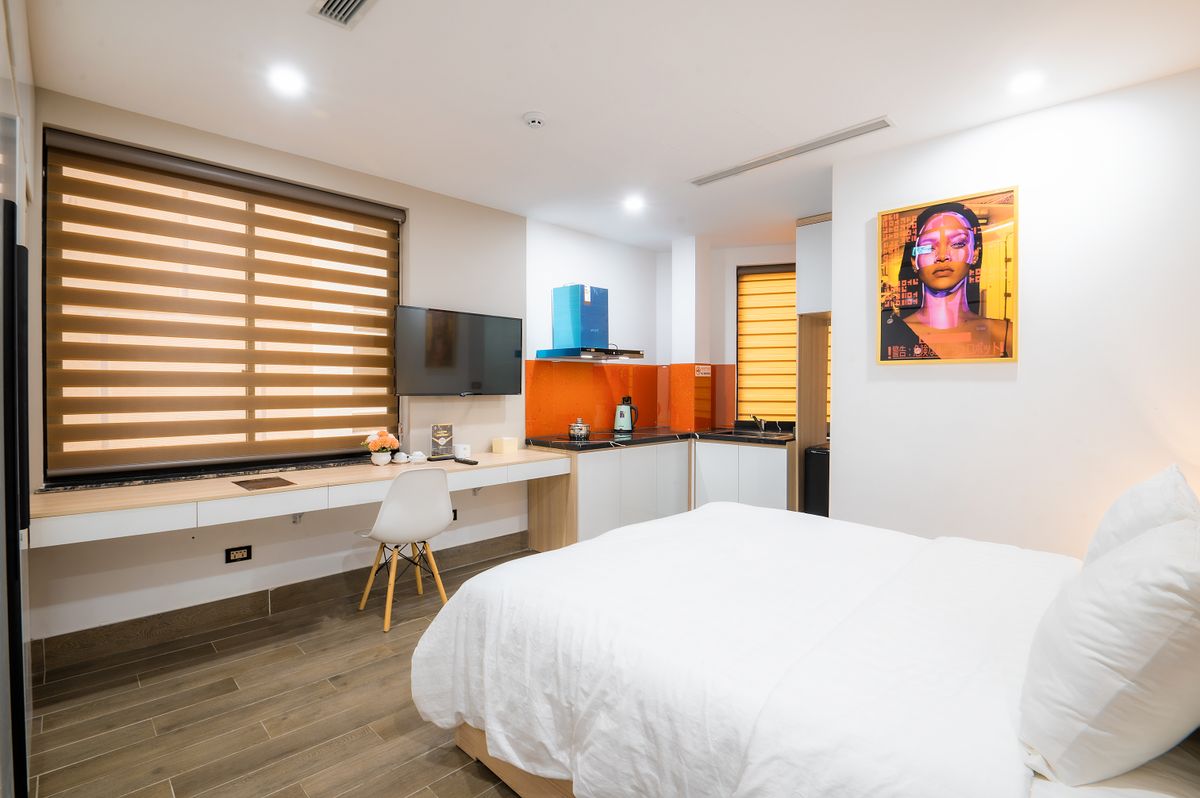
Mid-range hotel room in a Chinese city
High-speed trains. China's rail network is the cheapest fast way to cover long distances. Most intercity bullet-train legs cost ¥200 to ¥600 (US$28 to US$85) in second class. The flagship Beijing to Shanghai route sits around ¥560 to ¥660 for a second-class seat after a fare adjustment in mid-2026, and covers 1,300 km in about 4.5 hours. Book through 12306 or a booking site a week or two out for popular routes.
Food. This is where China feels genuinely cheap. A filling bowl of noodles, a plate of dumplings, or a street snack runs ¥8 to ¥30 (US$1 to US$4). A sit-down meal at a busy local restaurant averages ¥40 to ¥120 per person (US$6 to US$17). You only spend real money if you seek out hotel restaurants or high-end dining.
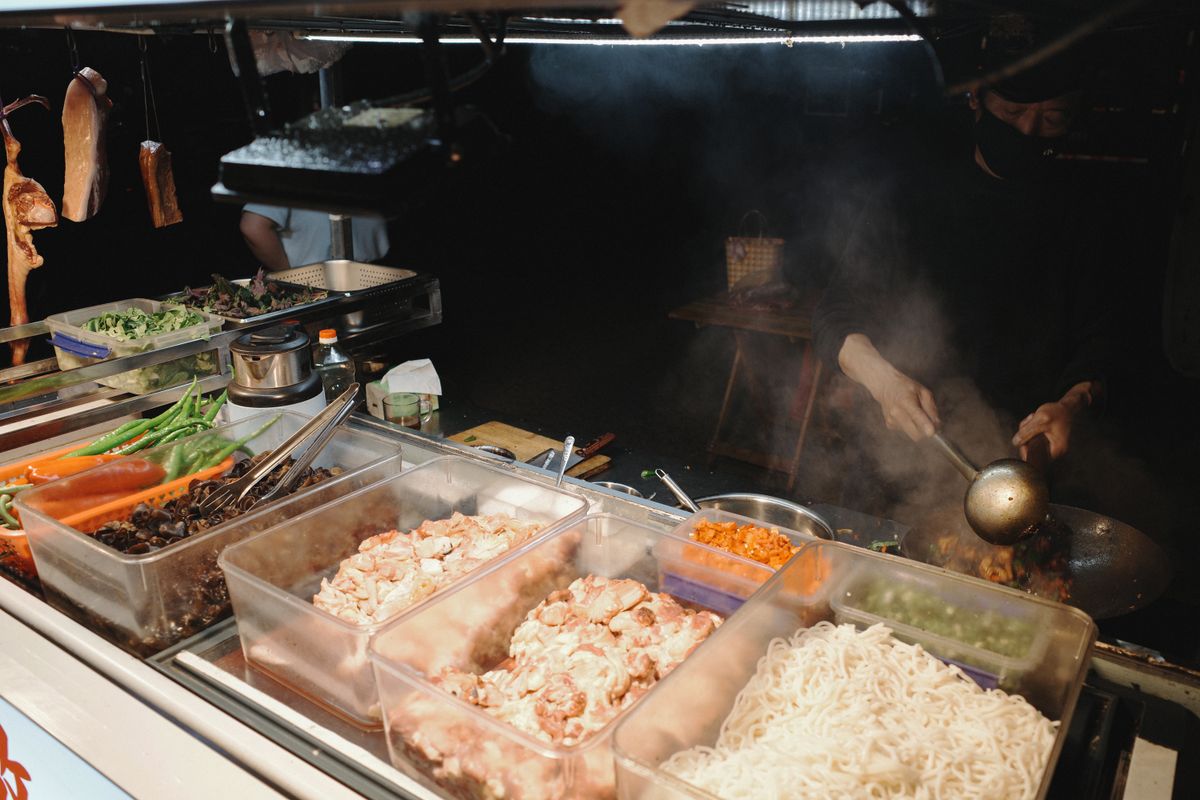
Local street food stall in China
Attractions. Big-ticket sights are moderate: the Forbidden City is ¥60, the Terracotta Warriors ¥120, a Mutianyu Great Wall visit around ¥40 plus the cable car, and a Li River cruise from Guilin ¥210 and up. Budget ¥100 to ¥250 (US$14 to US$35) per person on a heavy sightseeing day.
Getting around town. City metros charge ¥3 to ¥7 a ride, and didi (ride-hailing) trips across a city center are usually ¥15 to ¥40. Transport inside a city rarely tops US$10 a day.
Mobile data. A travel eSIM that works around China's app blocks costs about US$5 to US$25 for a week or two of data, which you set up before you fly.
Sample budgets
These are per-person estimates excluding your international flight, for a mid-range trip:
| Trip | On-the-ground cost | With return flight (from US) |
|---|---|---|
| 1 week, one city + day trips | US$650–1,100 | US$1,350–2,400 |
| 10 days, classic Beijing–Xi'an–Shanghai | US$950–1,650 | US$1,650–2,950 |
| 2 weeks, adding Chengdu or Guilin | US$1,300–2,300 | US$2,000–3,600 |
Two people traveling together spend less per head, because you split hotel rooms and taxis.
Common mistakes
- Assuming you need lots of cash. China runs on mobile payments. You link a foreign Visa or Mastercard to Alipay or WeChat Pay and tap for almost everything. Carry ¥500 to ¥1,000 as backup, not your whole budget.
- Booking five-star hotels out of caution. Mid-range Chinese hotels are clean, modern, and a fraction of the price. Save the splurge for one or two nights, not the whole trip.
- Flying during Golden Week. Domestic flights, trains, and hotels all spike in early May and early October. Shift your dates by a week and you save meaningfully.
- Skipping the eSIM and relying on hotel Wi-Fi. Hotel Wi-Fi sits behind the same content filters as everything else, so budget the small eSIM cost up front.
Who this is for
This breakdown suits independent travelers planning their own route. If you book a fully guided package, expect US$150 to US$400 per day all-inclusive, which trades flexibility for zero logistics. Business travelers and luxury travelers can multiply the comfort figures; backpackers can undercut the budget row by cooking and taking slower trains.
How to keep the cost down
Two decisions move your budget the most: where you sleep and how you handle data. Book mid-range hotels early, and sort your connectivity before you land instead of paying roaming.
{pick:booking.trip|Book China hotels and trains|Compare mid-range rooms and high-speed rail in one place|rec,compact} {pick:esim.airalo|Get a China travel eSIM|Data that works around the app blocks, set up before you fly|compact}
Frequently asked questions (FAQ)
Is China expensive to travel in? No, apart from the flight to get there. On the ground it is cheaper than Japan, Western Europe, or Australia. Food and transport are inexpensive; your hotel tier is the main variable.
How much does a 2-week trip to China cost from the USA? Budget roughly US$2,000 to US$3,600 per person for a mid-range trip including a return flight. Two people sharing rooms come in toward the lower end per head.
How much cash should I bring to China? Very little. Link a foreign card to Alipay or WeChat Pay for daily spending and carry ¥500 to ¥1,000 in cash as a backup for small vendors and emergencies.
Is a China trip cheaper than Japan? Yes, generally. Hotels, intercity trains, and restaurant meals in China cost noticeably less than their Japanese equivalents, though international flight prices are similar.