Beijing to Lhasa Train 2026: Z21 Cost, Time and Tibet Permit Guide
Board the Z21 at Beijing West just after 7pm and you won't see Lhasa until midday, two days later. That's not a typo: the Beijing to Lhasa train covers 3,757 km and takes roughly 40 hours, longer than a transatlantic flight and layover combined, and it climbs from sea level to a railway summit above 5,000 meters along the way. This guide covers 2026 fares by class, the oxygen system that makes the high-altitude section survivable, and the Tibet Travel Permit paperwork that trips up more travelers than the altitude does.
For step-by-step guidance on registering, choosing between 12306 and Trip.com, and boarding with only your passport, see our complete guide to booking China's high-speed trains.
How much does the Beijing to Lhasa train cost in 2026?
Train Z21 leaves Beijing West Railway Station daily at 19:22 and arrives at Lhasa Railway Station at 11:42, two days later, a journey of about 40 hours and 20 minutes. The return service is Z22. Base ticket prices (before any agency service fee):
| Class | Price (CNY) | Berths/seats | Notes |
|---|---|---|---|
| Hard seat | ~¥360 | Upright bench seating | Only realistic for short legs, not recommended for the full 40 hours |
| Hard sleeper | ¥720 (top) / ¥742 (middle) / ¥763 (bottom) | 6 berths per open bay | Best value if you don't need privacy |
| Soft sleeper | ¥1,144 (top) / ¥1,186 (bottom) | 4 berths per closed compartment | Lockable door, table, TV screen, individual oxygen outlet |
Soft sleeper cars on this train have 18 compartments and 72 berths total, two upper and two lower berths per compartment. If you're traveling with family or want to sleep properly at altitude, it's worth the upgrade over hard sleeper.
Compare Beijing-Lhasa train fares
See live Z21 seat availability and sleeper prices
Some links are affiliate links; we may earn a commission at no extra cost to you.
The official channel for tickets is 12306.cn (China Railway's own site and app), which foreigners can use with a passport once tickets release, usually 15 days before departure. It's free of markup, but seats on this route sell out fast in peak season (June to September), and you can't collect a ticket to Lhasa without a valid Tibet Travel Permit in hand. Most foreign travelers end up booking through the same licensed agency that arranges their permit, since the two are tied together anyway.
Do you need a Tibet Travel Permit for this trip?
Yes, and this catches out more first-time visitors than anything else on this route. Every foreign national needs a Tibet Travel Permit (TTP) in addition to a standard Chinese visa to enter Lhasa or anywhere else in the Tibet Autonomous Region. A few points that matter in practice:
- The permit can only be arranged through a licensed Tibet travel agency, and only as part of a booked tour package. You cannot apply for it yourself or travel to Tibet independently, even after you have the permit in hand.
- You'll need a passport valid for at least 6 months and a Chinese tourist (L) visa, or documentation for other visa types.
- Processing typically takes 10 to 15 working days once your agency submits the application, but agencies generally ask for 20 to 25 days' lead time to book the tour first. Plan on 1 to 2 months ahead of travel to be safe, and earlier still if you're traveling in July or August.
- Hong Kong passport holders are the one exception: they can book the train directly through 12306 or Trip.com without a TTP.
- Station staff check your passport, visa, and permit together both when you collect your ticket and again when you board. Missing paperwork means missing the train, not a warning.
Because the permit is bundled with a guided tour, you'll travel with a licensed guide once you're in Tibet rather than exploring on your own itinerary. Build that into your planning rather than fighting it: a good agency can tailor the tour around your interests once the paperwork is sorted.
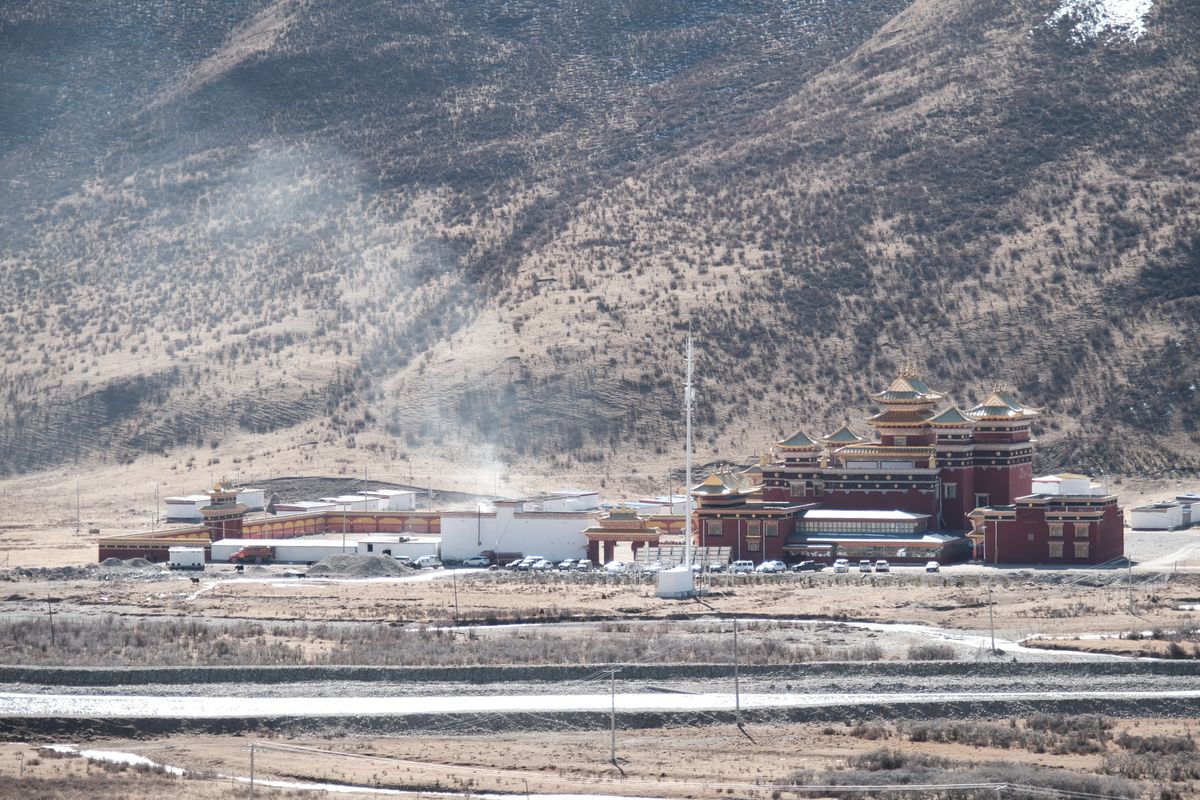
Tibetan monastery in a mountain valley along the plateau
Is Beijing to Lhasa the longest train ride into Tibet?
Not quite, and it's worth correcting here since this claim gets repeated a lot. At 3,757 km and about 40 hours, the Beijing route is long, but the Shanghai to Lhasa train covers 4,373 km in around 47 to 48 hours, making it the longer of the two. What the Beijing route does hold is the title of flagship service: it was the first direct train connecting the capital to Lhasa when the Qinghai-Tibet Railway opened through service in 2006, and it remains the most-booked route for travelers combining Beijing sightseeing with a Tibet extension.
The final stretch, from Golmud in Qinghai to Lhasa, runs along the Qinghai-Tibet Railway, the highest railway in the world. The track crosses Tanggula Pass at 5,072 meters, and Tanggula railway station, just below the summit at 5,068 meters, is the highest railway station on earth. Over 960 km of this line sits above 4,000 meters. Whichever city you start from, this is the section where the scenery and the altitude both peak at once: frozen wetlands, wild yaks near the tracks, and glacier-capped ranges out the window for hours.
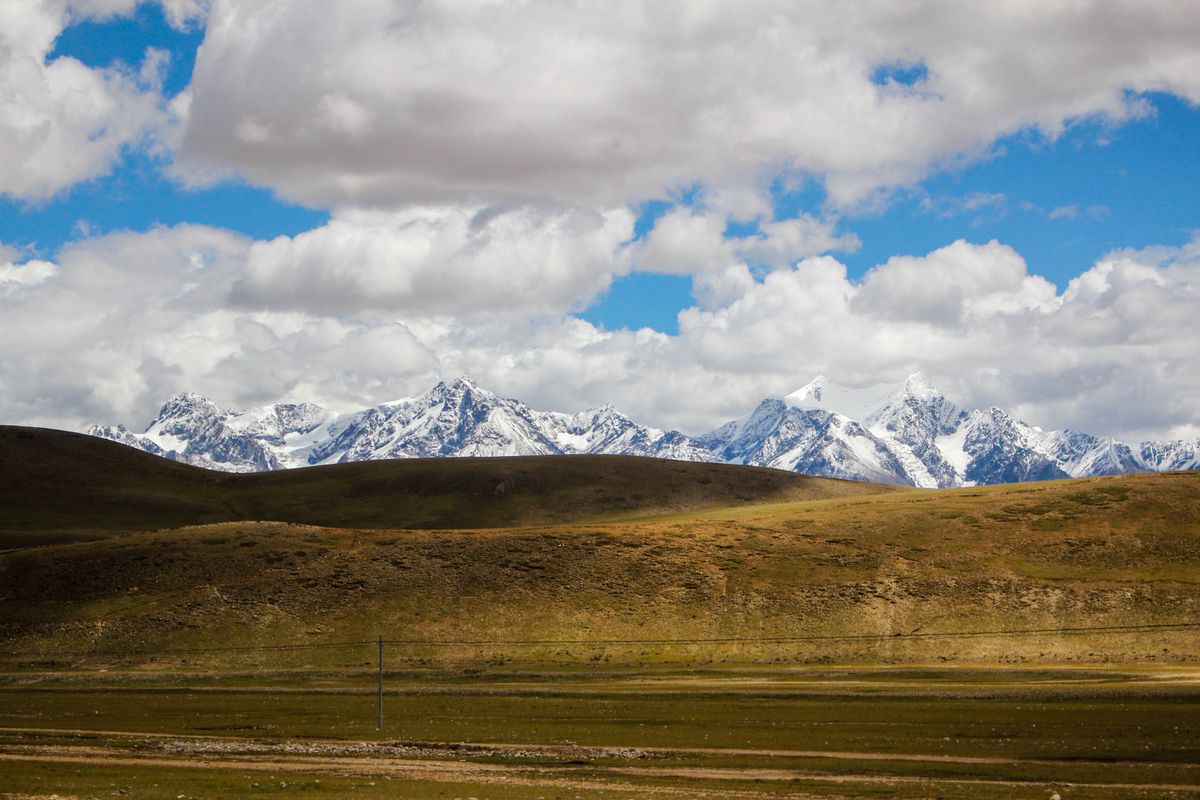
Snow-capped mountains and grassland on the Tibetan plateau near Damxung
What is the oxygen supply system like on board?
The oxygen cabin claim holds up. Once the train reaches Golmud (2,809 meters), staff switch on a dual oxygen system built specifically for the high-altitude section:
- Diffusion mode: oxygen generated onboard is fed into the carriage's air conditioning system, raising the oxygen concentration in the cabin air to around 23%, close to sea-level levels, so most passengers barely notice the altitude while seated or sleeping.
- Distribution mode: individual oxygen outlets built into the walls, near the berths in sleeper cars and under the seats in hard seat carriages, let you plug in a disposable nasal tube for direct oxygen if you feel short of breath.
You don't need to do anything to activate the outlets beyond inserting the tube. Even with the system running, expect some lightheadedness, a mild headache, or shortness of breath on stairs once you're above 3,500 meters, that's normal, not a medical emergency. Drink more water than usual, skip alcohol on the train, and avoid overexerting yourself in your first 24 hours in Lhasa (which sits at 3,656 meters). Bring your own diamox or other altitude medication if your doctor has prescribed it, since it works best started a day before you reach altitude.
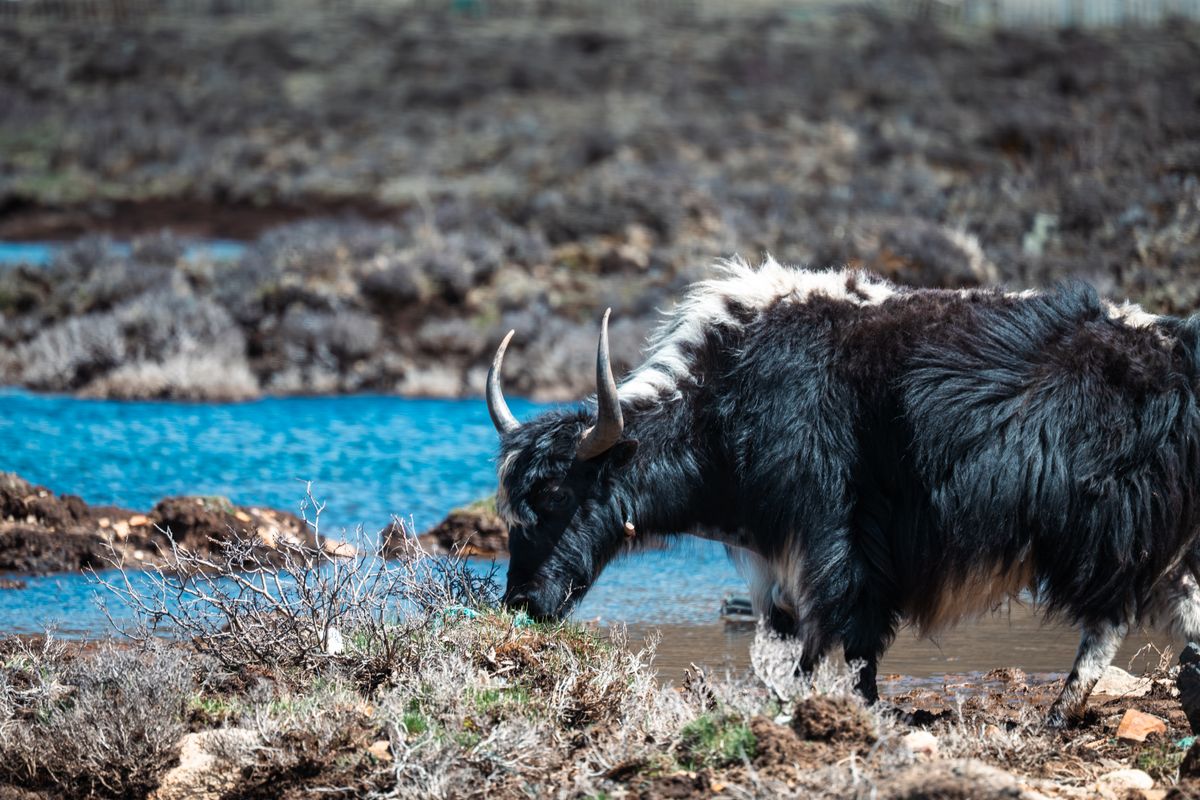
Yak grazing beside a lake on the Tibetan plateau
Booking checklist and trip prep
Work backward from your travel date like this:
- 60+ days out: pick a licensed Tibet travel agency and confirm your tour outline. This starts the permit process.
- 25-30 days out: agency submits your Tibet Travel Permit application alongside your passport and visa copies.
- 15 days out: train tickets release on 12306; your agency (or you, once the TTP is confirmed) books the specific Z21 soft or hard sleeper berth.
- Before departure: collect your paper ticket and TTP original at the station counter, not just a mobile booking confirmation. Both are checked before boarding.
- On the train: pack layers, a refillable water bottle, snacks (the dining car sells basic meals but runs out of popular items), and any personal medication.
- On arrival: keep your TTP with you throughout Tibet. Some checkpoints outside Lhasa ask for it again.
FAQ
How long does the Beijing to Lhasa train take? Around 40 hours and 20 minutes on the daily Z21 service, covering 3,757 km from Beijing West to Lhasa Railway Station.
Do I need a Tibet Travel Permit to take this train? Yes, every foreign passport holder except Hong Kong SAR passport holders needs a Tibet Travel Permit, arranged through a licensed travel agency as part of a booked tour, in addition to a Chinese visa.
Is there oxygen on the Beijing to Lhasa train? Yes. From Golmud onward, the train runs a dual system: cabin-wide oxygen enrichment through the air conditioning, plus individual outlets near every berth and seat for a direct nasal tube if needed.
Should I book soft sleeper or hard sleeper for this route? Soft sleeper (4 berths, closed compartment, individual oxygen outlet, ¥1,144 to ¥1,186) is worth the extra cost for a 40-hour ride, especially if you want to sleep properly at altitude. Hard sleeper (6 open berths, ¥720 to ¥763) is fine if you're comfortable with less privacy.
How far ahead should I book the Beijing to Lhasa train ticket? Tickets release 15 days before departure on 12306, but you need your Tibet Travel Permit sorted first, which means starting the agency booking process 1 to 2 months ahead, more if you're traveling in peak summer season.