Beijing to Shenyang Train: Times, Prices, and the Two Forbidden Cities Route (2026)
The fastest train from Beijing to Shenyang covers the roughly 700 km run in 2 hours and 44 minutes. Most G-trains take 3 to 4.5 hours and cost between $37 and $55 for a second-class seat. That's quick enough to bolt onto any Beijing itinerary, but the real reason to make the trip isn't the ride itself: Shenyang has its own Forbidden City. It's a walled Qing-dynasty palace complex that predates Beijing's imperial takeover by two decades, built by a different generation of rulers for a completely different purpose, and it's a genuine UNESCO World Heritage Site in its own right, not a scaled-down copy.
Book Beijing to Shenyang Train Tickets
Compare G-train schedules and lock in seats in English
Some links are affiliate links; we may earn a commission at no extra cost to you.
You can also book directly through 12306, China's official rail ticketing system, for the same price with no service fee, but the interface is Chinese-only and payment requires a China-linked card or Alipay/WeChat Pay. If you want an English interface, live customer support, and international card payment, an agent platform like Trip.com is worth the small markup. Our 12306 vs Trip.com comparison breaks down which to use depending on your situation.
For step-by-step guidance on registering, choosing between 12306 and Trip.com, and boarding with only your passport, see our complete guide to booking China's high-speed trains.
How long does the Beijing to Shenyang train take?
This route runs on the Beijing-Harbin high-speed corridor, which continues past Shenyang to Changchun and Harbin. Around 60 high-speed departures run daily between roughly 6:50 AM and 8:40 PM, so you're rarely waiting more than 20-30 minutes for the next option during peak hours.
Journey times vary more than you'd expect for a single route, because some G-trains run nonstop or with one stop (Tianjin or Qinhuangdao only), while others make five or six intermediate stops:
- Fastest nonstop services: around 2 hours 44 minutes to 3 hours
- Typical G-trains with a few stops: 3.5 to 4 hours
- Slower services or those routed with extra stops: up to 4.5 hours
That 4.5-hour figure is the one worth planning around if you're booking without checking the specific train first, since roughly half the daily departures fall into that slower band rather than the sub-3-hour express tier.
Which stations do you leave from and arrive at?
This trips up a lot of first-time visitors: Beijing-Shenyang trains do not use Beijing South Railway Station, which is the terminus for the Beijing-Shanghai line. Beijing-Harbin corridor trains depart from Beijing Railway Station (Beijingzhan, near Dongsi and the east side of the second ring road) or Beijing Chaoyang Railway Station, depending on the specific service. Check your ticket's departure station carefully, since the two stations sit on opposite sides of the city and are not walkable from each other.
On arrival, most trains stop at Shenyang North Railway Station (Shenyangbei), the city's main high-speed hub with metro Line 2 access. A smaller number continue to or terminate at Shenyang Railway Station, the older downtown station closer to some hotel districts. Both are workable bases, but confirm which one your train uses before booking a hotel, since the two stations are roughly 8 km apart.
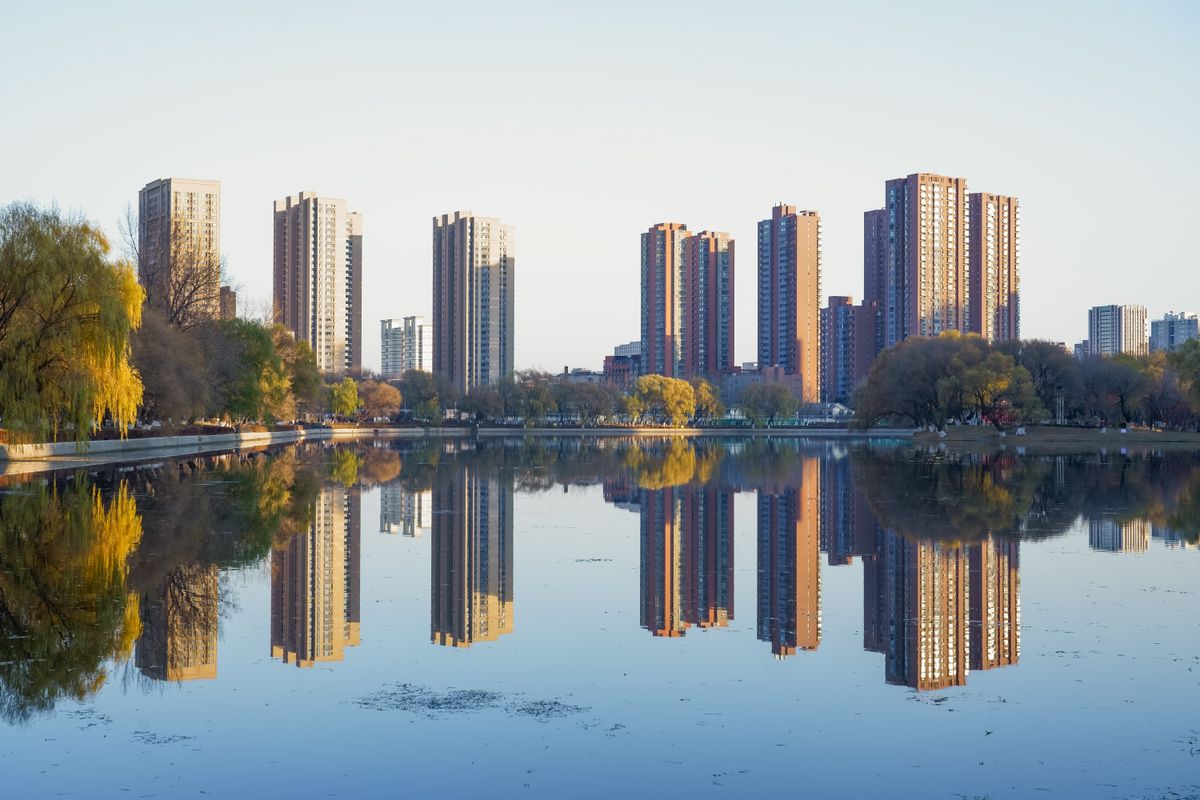
Shenyang's skyline reflected in a city lake
Ticket prices and classes
| Class | Price range (CNY) | Approx. USD |
|---|---|---|
| Second class | 250.5 - 378 | $37 - $55 |
| First class | 400 - 470 | $58 - $68 |
| Business class | 750 - 900 | $108 - $130 |
Prices shift slightly by train speed and route length (nonstop expresses sometimes cost a bit more than slower services covering the same distance). Weekend and holiday departures sell out first, particularly around Chinese New Year and the October national holiday, so book on 12306 or Trip.com at least a few days ahead, and a week or more ahead for holiday travel. For a full walkthrough of how far in advance Chinese trains open for sale, see our guide on booking China train tickets.
Two Forbidden Cities: why Shenyang's palace isn't a copy
Beijing's Forbidden City gets all the attention, and it should: it's the largest palace complex in the world. But Shenyang's Imperial Palace, also called Mukden Palace, tells a different story that most visitors never hear. Nurhaci, the Manchu leader who founded the Later Jin dynasty, started building it in 1625, before the Qing had conquered Beijing at all. His son Hong Taiji expanded it through the 1630s, and the first three Qing rulers lived and governed from this palace, not Beijing's, until 1644.
Once the Qing took Beijing, Mukden Palace didn't get abandoned. It became a secondary residence, and emperors continued visiting it for ceremonial trips north for the next two centuries, with the Qianlong Emperor adding more halls in 1780. In 1955 it was converted into a museum, and in 2004 UNESCO added it to the World Heritage list as an extension of the same listing that covers Beijing's Forbidden City, officially recognizing both as one connected imperial story rather than an original and a replica.
The architecture makes the point on its own. At about 60,000 square meters, Mukden Palace is roughly one-twelfth the size of Beijing's complex, with just over 300 rooms across some 20 courtyards instead of thousands. But it mixes in Manchu and Tibetan design elements you won't find in Beijing: the central Dazheng Hall is an octagonal pavilion flanked by the Ten Kings Pavilions, a layout that echoes a Manchu military camp rather than the strict north-south symmetry of a Han Chinese palace. If you've already walked through Beijing's Forbidden City, Shenyang's version reads less like a smaller rerun and more like an earlier draft written in a different language.
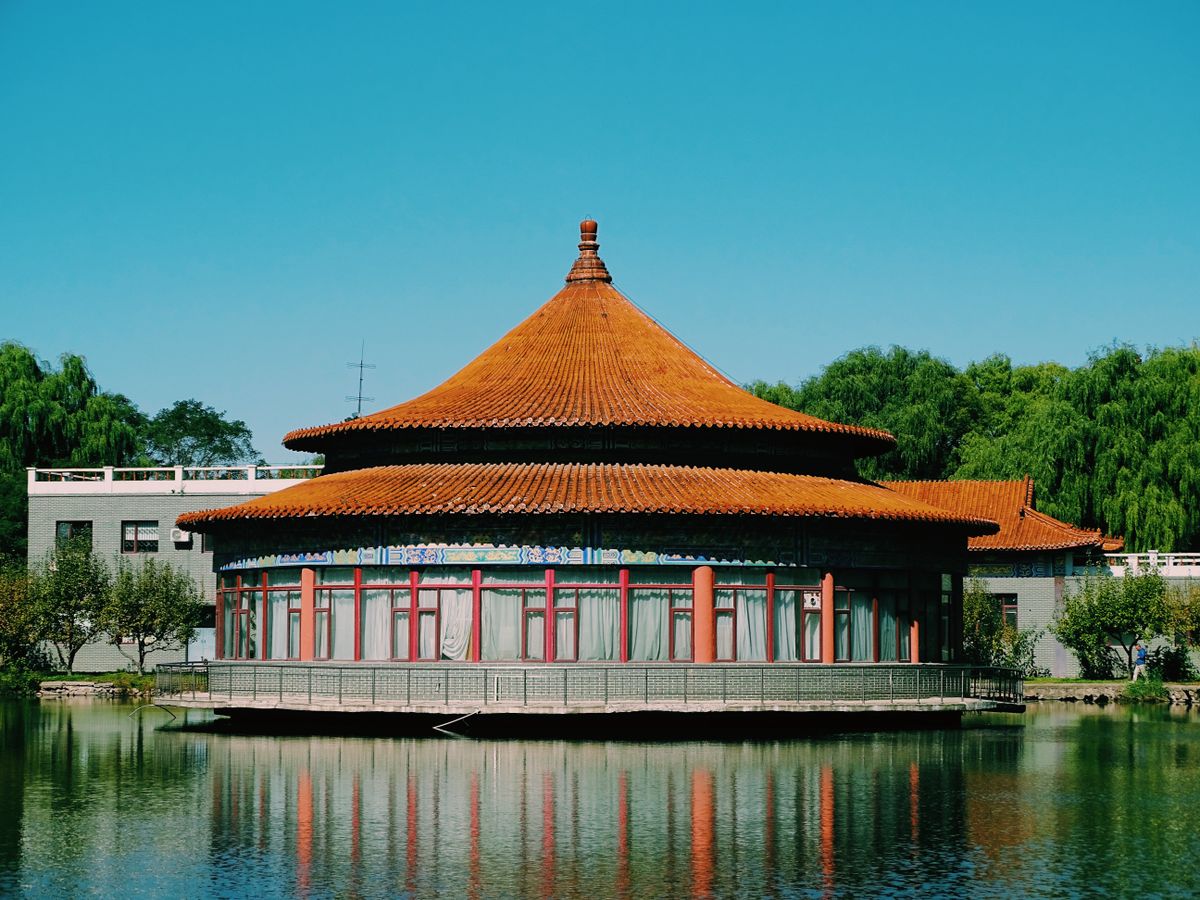
A traditional pavilion in one of Shenyang's public parks
Other Shenyang highlights worth the extra hours
Mukden Palace alone justifies the trip, but pairing it with one or two of these keeps a longer stay from feeling padded:
- Zhaoling Tomb (Beiling Park): the burial site of Hong Taiji, set inside a large public park in northern Shenyang, also part of the same UNESCO listing as the palace.
- Fuling Tomb (Dongling Park): Nurhaci's tomb on wooded hills east of the city, quieter and less visited than Zhaoling.
- Tiexi District industrial heritage: once the industrial heart of northeast China, now home to museums covering the region's Soviet-assisted factory era, worth an afternoon if you're into 20th-century history rather than just Qing-dynasty sites.
Best time to visit Shenyang
Shenyang sits considerably further north than Beijing, and it shows. Winter runs long, from roughly December through February, with average temperatures between -11°C and -15°C and nights routinely colder. If you're coming from Beijing in January expecting similar conditions, pack for something noticeably colder: down jacket, layers, and warm footwear, not just a coat.
April through October is the comfortable stretch, with July averaging around 25°C and enough sunshine to walk the palace grounds without rushing. Spring can be windy and autumn is generally the most pleasant season for walking outdoor sites like Beiling and Dongling parks. If you don't mind the cold and want a quieter, less touristed alternative to Harbin's famous ice festival scene, winter in Shenyang has its own smaller ice and snow activities without the crowds.
Day trip or overnight?
A day trip is technically possible on the fastest nonstop trains: leave Beijing around 7 AM, arrive by 10 AM, and catch a train back in the early evening. That gives you roughly 6-7 hours in Shenyang, enough for Mukden Palace and one nearby tomb if you move efficiently and don't linger over meals.
An overnight stay is the better call if you want to see the palace properly, add both tombs, and walk through Tiexi without feeling rushed. Two nights lets you slow down further and treat Shenyang as a real stop rather than a detour. If you're continuing north anyway, this route is also the first leg of a longer trip; our Beijing to Harbin train guide covers extending the same corridor another 3-4 hours to Harbin.
Takeaways
- Book the specific train, not just the route: journey times range from 2h44m to 4.5 hours depending on stops.
- Confirm your Beijing departure station (Beijingzhan or Beijing Chaoyang, not Beijing South) and your Shenyang arrival station (Shenyang North or Shenyang Railway Station) before booking a hotel.
- Use 12306 for the lowest price with no markup, or Trip.com if you want an English interface and support.
- Give Mukden Palace at least half a day; add Zhaoling or Fuling if you're staying overnight.
- Pack for real winter cold if traveling December through February.
FAQ
Is Shenyang's Imperial Palace genuinely different from Beijing's Forbidden City? Yes. It was built decades earlier by Nurhaci and Hong Taiji before the Qing conquered Beijing, houses different Manchu and Tibetan-influenced architecture, and functioned as the actual seat of power for the first three Qing rulers. UNESCO lists it as an extension of the Beijing Forbidden City listing, but it's a separate historical site with its own layout and story.
Which Beijing station should I go to for a Shenyang train? Check your ticket first. Beijing-Shenyang trains use Beijing Railway Station (Beijingzhan) or Beijing Chaoyang Railway Station, not Beijing South, which serves the Shanghai line. The two correct stations are on opposite sides of the city, so arriving at the wrong one means missing your train.
Is a day trip from Beijing to Shenyang realistic? Yes, if you take the fastest nonstop train and are comfortable with a tight schedule. You'll get roughly 6-7 hours on the ground, enough for the palace and a quick tomb visit. An overnight stay is more comfortable if you want to add both tombs and Tiexi's industrial museums.
How far ahead should I book tickets? A few days ahead covers most weekday travel. Book a week or more ahead for weekends, Chinese New Year, or the October holiday, when seats sell out fast. See our guide on how far in advance to book China train tickets for the exact release windows.
Is Shenyang worth visiting if I'm not that interested in Qing dynasty history? The Tiexi District's industrial heritage museums and the city's food scene (Shenyang is known for its street food and hot pot) give non-history travelers something to do, but the palace and tombs are still the main draw. If neither history nor industrial heritage interests you, your time is probably better spent elsewhere on this corridor.