Shanghai Maglev Train 2026: Real Speed, Price, Schedule and Is It Worth It
The Shanghai maglev used to hit 431 km/h on every run. It doesn't anymore. Since May 2021 the train that once held the title of fastest commercial rail service on earth has capped its cruising speed at 300 km/h, and that change is still in effect in 2026. If you came here chasing the 431 km/h number, you need the real picture before you buy a ticket, because the ride you'll experience is a different (still impressive) one.
That doesn't mean the maglev is a letdown. Eight minutes to cover 30 km with zero wheels touching a rail is still unlike anything else you'll ride in China. But whether it's worth the ¥50-100 and the detour depends on where you're going, and this guide lays out the real numbers so you can decide before you're standing at the Longyang Road ticket counter.
For step-by-step guidance on registering, choosing between 12306 and Trip.com, and boarding with only your passport, see our complete guide to booking China's high-speed trains.
Is the Shanghai maglev still 431 km/h in 2026?
No. The Shanghai Maglev Transportation Development Company reduced the standard cruising speed to 300 km/h in May 2021, citing wear on the guideway and the cost of running the line at full power for a route this short. That cap has held steady every year since, including through 2026. The trains are still mechanically capable of 431 km/h and Chinese state media has run test clips of demonstration runs at that speed, but 431 km/h is not something you can buy a ticket for as a regular passenger. Some older travel blogs still describe a "peak-hour window" where the train supposedly hits full speed for paying customers; that isn't the current operating reality, and you shouldn't plan your trip around catching it.
Here's what that costs you in time: at 431 km/h, the old timetable had the full run at 7 minutes 20 seconds. At the current 300 km/h cap, it's 8 minutes 10 seconds. That's a 50-second difference over the whole trip. The speed cut sounds dramatic on paper (431 down to 300 is a 30% reduction), but because the line is so short, you barely feel it in your travel time. You'll still watch the onboard speed display climb past 250, and 300 km/h on a train with no wheels is still a genuinely strange sensation the first time you feel it.
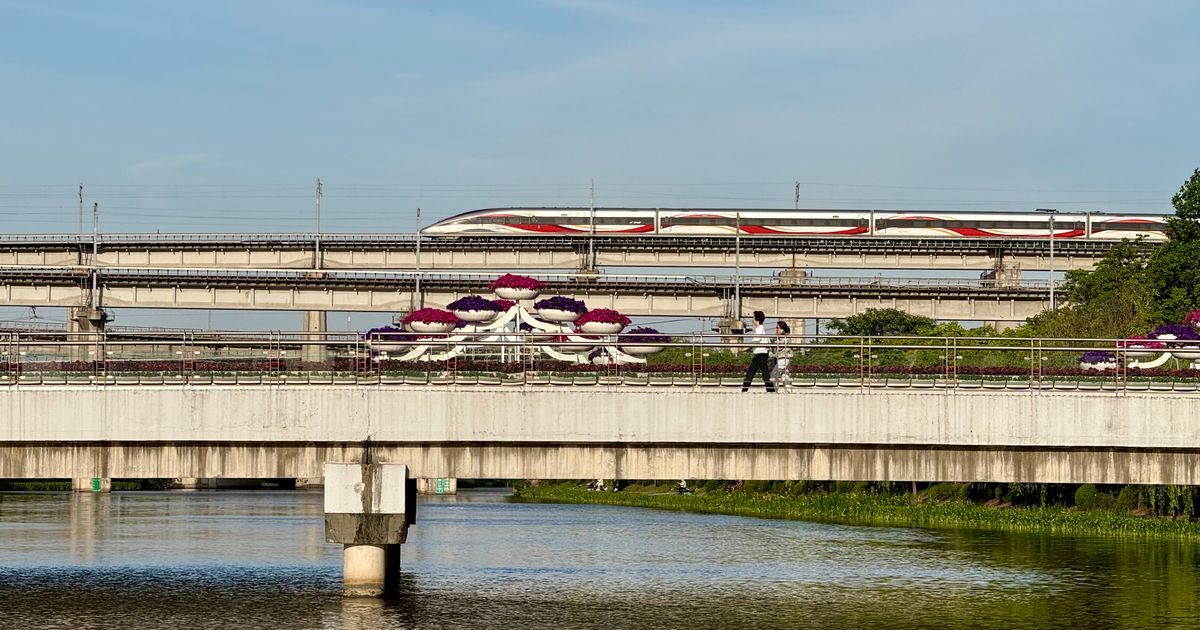
Shanghai's elevated maglev guideway crossing a canal near Pudong
Route, distance, and how long the ride takes
The line runs point to point with no intermediate stops: Longyang Road Station in Pudong to Pudong International Airport Terminal 1&2, a distance of about 30 km. Longyang Road is the only place the maglev touches the regular transit network, where it connects to Shanghai Metro Lines 2, 7, 16, and 18. Line 2 is the one that matters most for visitors, since it runs west through Lujiazui, crosses under the Huangpu River, and continues to People's Square and on toward Hongqiao (train station and airport) on the other side of the city.
At the airport end, the maglev station sits inside Terminal 1&2, a short walk from arrivals, so there's no shuttle bus or long connecting corridor to deal with. At 300 km/h the ride itself takes about 8 minutes, though scheduled journey times printed on some tickets round to a flat "8 minutes" without the extra 10 seconds. Either way, budget 10 to 15 minutes total once you count boarding and disembarking.
Ticket prices and how to buy
Fares haven't changed much in years and are simple compared to most Chinese rail tickets. Here's the full price list:
| Ticket type | Price | Notes |
|---|---|---|
| Single trip (standard) | ¥50 | One-way, either direction |
| Single trip with same-day flight ticket | ¥40 | Show a paper or electronic boarding pass/ticket dated the same day for a 20% discount |
| Round trip | ¥80 | Valid 7 days from purchase |
| VIP single trip | ¥100 | Front carriage, panoramic forward-facing window |
| VIP round trip | ¥160 | Same VIP carriage, valid 7 days |
| Maglev Pass (30 trips/year) | ¥900 | Only worth it for Pudong-based commuters, not visitors |
You can buy tickets three ways. The simplest for a first-time visitor is the ticket counter at either station (2nd floor at Longyang Road, 2nd floor east side at Pudong Airport) with cash or a bank card. You can also load a ticket onto a Shanghai Public Transportation Card if you already carry one for the metro. For advance booking in English, third-party platforms resell maglev tickets and let you enter your passport number ahead of time, which is useful if you want everything sorted before you land.
Book China train and transfer tickets in English
Cover the maglev, onward high-speed rail, and airport transfers from one app
Some links are affiliate links; we may earn a commission at no extra cost to you.
If you'd rather book everything yourself for free, use 12306, the official Chinese railway booking site and app, for any onward high-speed train you take after landing (Shanghai to Hangzhou, Suzhou, Beijing, and so on). 12306 doesn't sell maglev tickets directly since the maglev is operated separately from the national rail network, so for the maglev itself you're buying at the station counter or through the WeChat official account either way. The real value of a booking app here is bundling your maglev fare with the onward train ticket in one English-language checkout, not avoiding an official channel that doesn't exist for this specific line.
Schedule and frequency
Trains run in both directions from early morning to just after 9:30pm, with departures roughly every 15 to 20 minutes depending on the time of day.
- Longyang Road to Pudong Airport: first train 6:45am, last train 9:40pm
- Pudong Airport to Longyang Road: first train 7:02am, last train 9:42pm
- Frequency 6:45am to 7:00pm: every 15 minutes
- Frequency 7:00pm to close: every 20 minutes
That works out to roughly 50-60 departures a day in each direction, so you're rarely waiting long. There's no need to reserve a specific train time in advance for a standard ticket. VIP tickets are also unreserved-seating within the VIP carriage, so arrive a few minutes early if you want a window seat on that side.
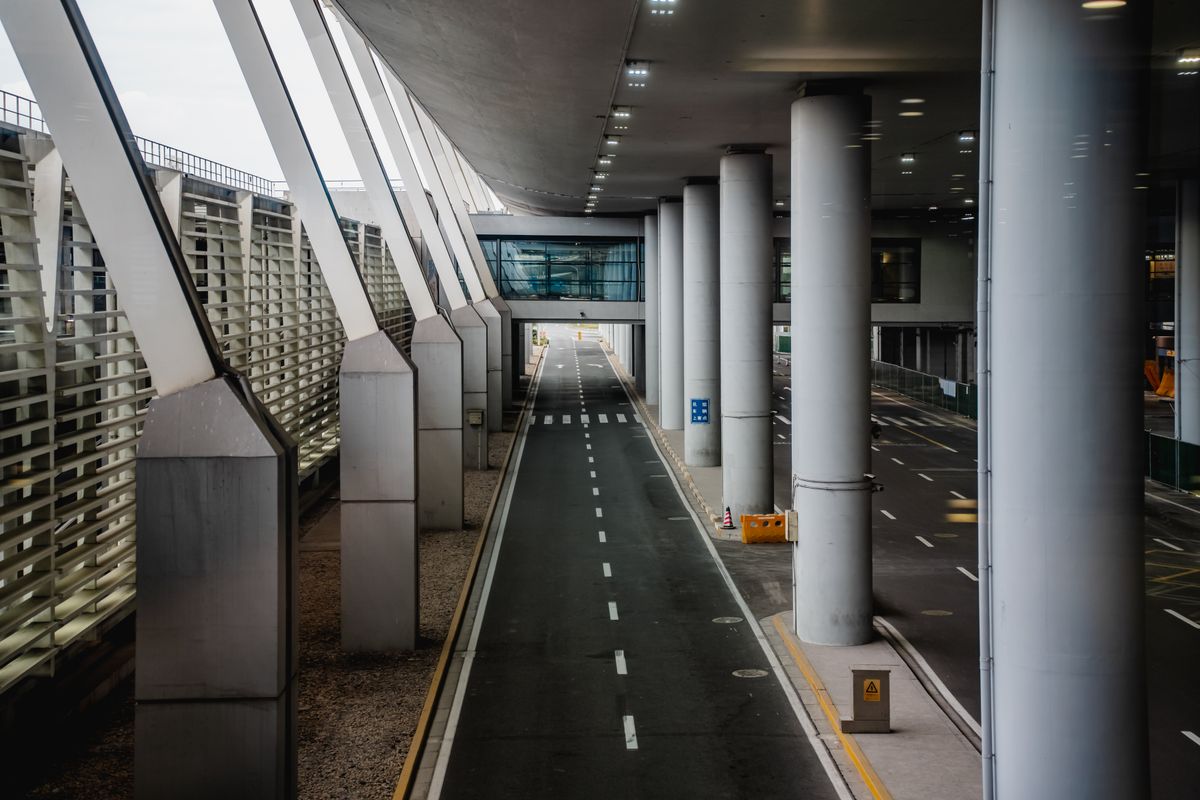
Shanghai Metro elevated train, the budget alternative into the city center
Is the Shanghai maglev worth it?
This depends entirely on where you're headed after you land, and being honest about the comparison matters more than the hype.
If your hotel is near Lujiazui, People's Square, or anywhere along Metro Line 2: the maglev is genuinely useful, not just a novelty. Ride the maglev 8 minutes to Longyang Road, transfer directly to Line 2 (same station, short walk), and you're in downtown Shanghai in another 25-35 minutes depending on your stop. Total cost: ¥50 (maglev) plus ¥4-8 (metro) versus a taxi that runs ¥150-220 depending on traffic and tolls, and often takes just as long or longer during rush hour on the elevated expressways.
If your hotel is anywhere else, or you're traveling with a lot of luggage: the math changes. You'll still need a taxi or rideshare from Longyang Road to your final destination, which erases most of the time advantage and adds a transfer with bags in tow. In that case, a direct taxi or DiDi from the airport, or the Airport Bus Line that runs to multiple hotel districts, is usually less hassle even if it isn't as fast in a straight line.
If you're doing it purely for the experience: that's a completely valid reason on its own, and plenty of visitors treat the maglev as a 10-minute attraction rather than pure transport. Buy the VIP ticket (¥100), sit in the front carriage, and watch the speed readout instead of your phone. At ¥50-100 for the standard experience it's cheap compared to most paid attractions in Shanghai, even without the historical 431 km/h you may have read about.
The honest verdict: worth it if it fits your route or you want the experience for its own sake; skippable if you're just trying to shave minutes off an airport transfer to a hotel that isn't near Longyang Road.
Practical tips before you go
- Buy your ticket at the counter with cash or card if the WeChat mini-program in Chinese looks like too much hassle; counter staff are used to foreign travelers.
- Keep your same-day flight ticket or boarding pass handy (paper or on your phone) to claim the ¥40 discounted fare instead of paying ¥50.
- Sit on the right side heading from the airport for the better view of the flower gardens and canal near Longyang Road; sit left for the reverse trip.
- Don't plan your schedule around catching 431 km/h. It isn't offered to regular passengers in 2026, no matter what an older blog post claims.
- If you're heading downtown, buy a single maglev ticket (not round trip) unless you know you're returning to the airport from Longyang Road later the same week; the round trip discount only pays off if you use both legs.
- Arrive with 15-20 minutes of buffer if you have a flight to catch afterward. The ride is fast, but airport security lines are not.
FAQ
Is the Shanghai maglev still 431 km/h in 2026? No. The operating speed has been capped at 300 km/h since May 2021, and that cap is still in place in 2026. The train is mechanically capable of 431 km/h and occasionally runs demonstration tests at that speed, but regular paying passengers ride at 300 km/h.
Is the Shanghai maglev worth it? Worth it if your destination is near Metro Line 2 (Lujiazui, People's Square, and stops further west) or if you want the experience itself. Less worth it if your hotel is far from Longyang Road and you're carrying heavy luggage, since you'll need a second taxi leg either way.
How do I buy a Shanghai maglev ticket? Buy at the ticket counter on the 2nd floor of either station with cash or card, load it onto a Shanghai Public Transportation Card, or book in advance through a third-party platform if you want an English interface and to enter your passport number ahead of time. The maglev is not sold through 12306.
How long does the Shanghai maglev ride take? About 8 minutes 10 seconds at the current 300 km/h cruising speed, covering roughly 30 km between Longyang Road and Pudong International Airport.
Does the Shanghai maglev connect to the metro? Yes, at Longyang Road Station, which links to Metro Lines 2, 7, 16, and 18. It does not stop anywhere else, so Longyang Road is your only transfer point in either direction.