Where to Stay in Beijing: Old Town Hutongs vs CBD (2026 Neighborhood Guide)
Picture two travelers landing in Beijing next spring. The first wants to duck into a courtyard restaurant at 9pm, hear the wind move through the hutong trees, and walk to the Bell Tower for sunrise photos before the crowds show up. The second has a 9am meeting at China World Trade Center, needs a gym and dependable WiFi in the room, and wants dinner within a 10-minute walk after a long flight. Both are visiting the same city, but the neighborhood that suits one would wear on the other by day two.
Beijing's hotel map splits, in practice, along almost exactly this line: the old city core around Dongcheng's hutong district (Nanluoguxiang, Gulou, and the Yonghegong/Lama Temple area) versus the Guomao CBD and embassy business district to the east. Here's what differs between them, block by block, plus how the city's two subway loop lines, Line 2 and Line 10, decide which one gets you where faster.
Compare hotels in Beijing on Trip.com
Real-time pricing across both neighborhoods
Some links are affiliate links; we may earn a commission at no extra cost to you.
Where to Stay in Beijing: Old Town or CBD at a Glance
| Dongcheng Old Town (Gulou / Nanluoguxiang) | Guomao CBD / Embassy District | |
|---|---|---|
| Best for | First-time visitors, culture-focused trips, photographers | Business travel, repeat visitors, families who want predictable modern rooms |
| Typical 2026 price | $55-140/night (roughly ¥400-1,000) for courtyard boutique hotels; $90-180 for a 4-star with elevators | $110-260/night (roughly ¥790-1,850) for international-brand hotels around Guomao and Jianwai SOHO |
| Subway coverage | Line 2 loop: Gulou Dajie, Andingmen, Yonghegong, Jianguomen | Line 10 loop: Guomao, Tuanjiehu, Hujialou |
| Walk to main sights | 10-20 minutes to the Bell and Drum Towers, Houhai lakeside, Yonghegong | 15-25 minutes to Sanlitun bars and shopping; the Forbidden City is a 20-minute subway ride away |
| Noise and comfort | Thin courtyard walls, weekend bar noise near Nanluoguxiang and Houhai, some properties skip elevators and central heating | Standard hotel soundproofing, central heating and air conditioning, elevators as a given |
| Airport transfer | About 40-50 minutes: Airport Express to Dongzhimen, then transfer to Line 2 | About 30-35 minutes: Airport Express to Sanyuanqiao, then transfer to Line 10 |
What Is It Like to Stay in Dongcheng's Hutong Old Town?
This is the Beijing of grey-brick courtyard houses, single-story lanes, and the sound of bicycle bells instead of car horns. Nanluoguxiang itself is a pedestrian lane packed with cafes and souvenir shops, so most people don't sleep directly on it. The better play is a converted courtyard hotel one or two lanes off the main strip, in the maze of alleys between Gulou Dajie and Di'anmen, or closer to Yonghegong (Lama Temple) if you want a quieter base with easy access to both the temple and Houhai lake.
Prices for a well-reviewed courtyard boutique room run $55-140 a night in 2026, depending on room size and whether the property has been recently renovated. A handful of higher-end courtyard properties near Nanluoguxiang and Wudaoying Hutong push past $180, closer to what you'd pay for a business hotel, because the rooms are larger and the courtyards better kept.
The honest caveat: many of these buildings are decades old, converted from single-family courtyard homes, and were never built with elevators or central heating in mind. Expect to carry your own bags up a narrow staircase at some properties, and in December and January ask specifically whether heating is central or a portable unit in the room, because a few smaller guesthouses still rely on space heaters. Walls between rooms in older courtyard conversions can be thin, so a request for a room away from the street or courtyard center is worth making at check-in if you're a light sleeper, especially anywhere within a few minutes' walk of the Nanluoguxiang or Houhai bar strips on a Friday or Saturday night.
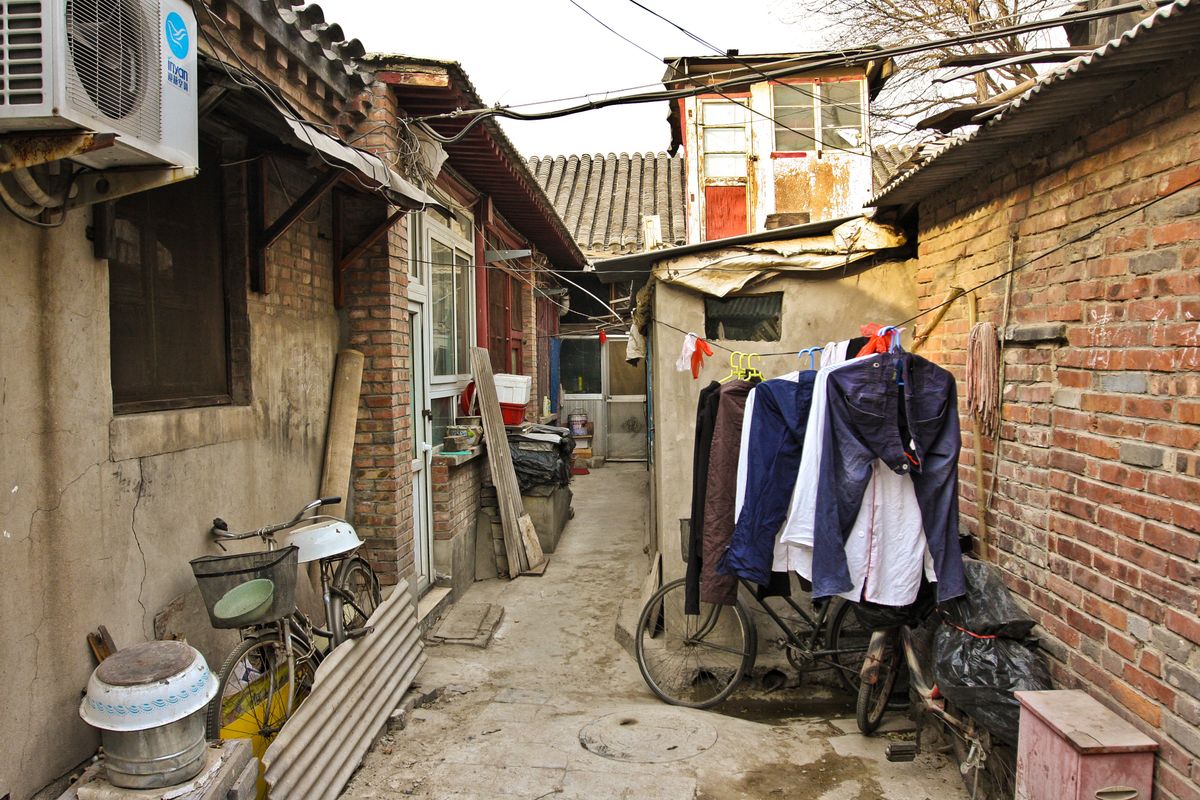
Narrow hutong alley in Beijing's old town with courtyard housing and bicycles
What you get in exchange: a five-minute walk to the Bell and Drum Towers, a 15-minute walk to Houhai for lakeside beer gardens, and the Forbidden City's north gate (Shenwumen) reachable on foot in 20-25 minutes or two stops on Line 2. This is the base that makes a first Beijing trip feel like Beijing rather than an international business district that could be anywhere.
What Is It Like to Stay Near Guomao and the CBD?
Guomao is Beijing's financial and corporate core, the cluster of towers around China World Trade Center, Jianwai SOHO, and the CCTV headquarters building. Hotels here are almost entirely international chains built in the last 15 years, so the room stock is predictable: reliable elevators, central heating and air conditioning that work, blackout curtains, and a gym and business center as standard rather than a bonus. Rates in 2026 run $110-260 a night depending on brand and floor, with a jump around the towers directly on Jianguomenwai Avenue.
This area suits people who have work to do in Beijing, are on a layover and want to be close to the airport express connection, or simply prefer the certainty of a modern room over a heritage building's quirks. It's also a reasonable base for families, since rooms tend to run larger and staff are used to international guests.
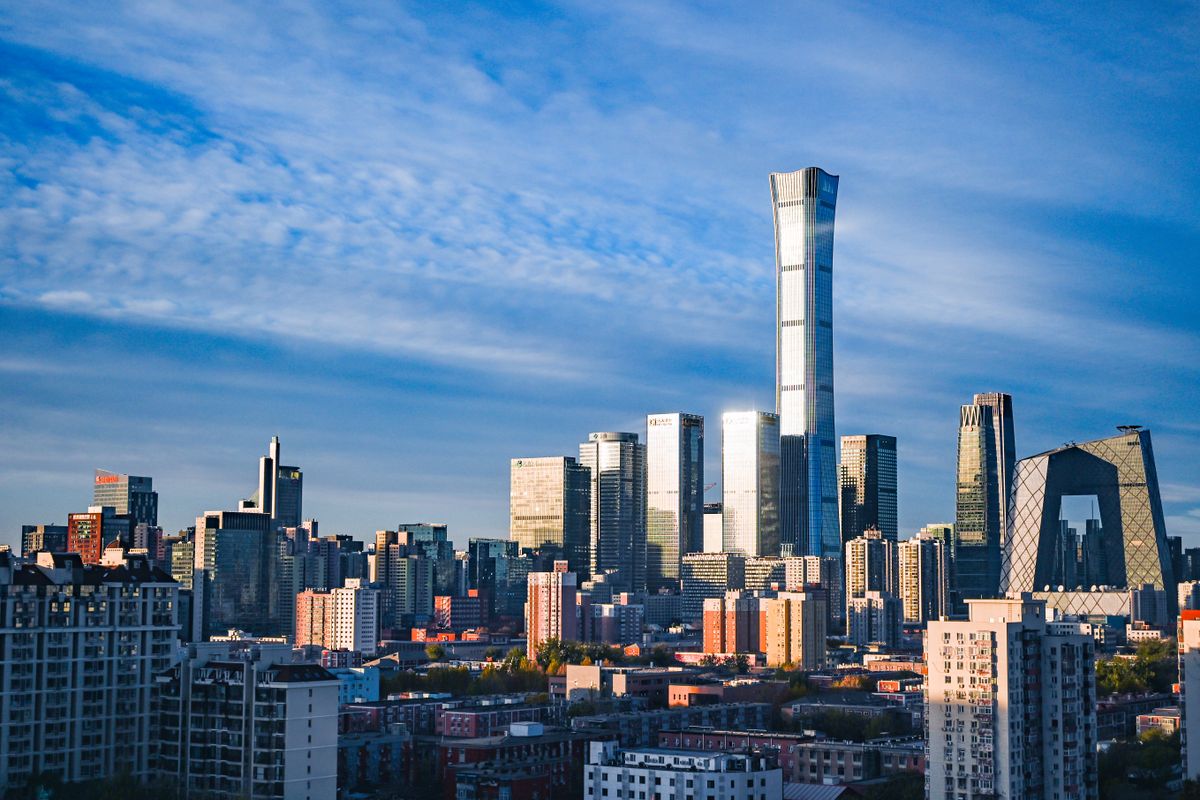
Beijing CBD skyline with modern skyscrapers under a clear blue sky
The trade-off is atmosphere. Guomao itself is office towers and shopping malls, not a place you'd wander at random for its own sake. Sanlitun, with its bar streets, Taikoo Li shopping complex, and the embassy district around Ritan Park, is a 15-20 minute walk or one subway stop from Guomao, and gives the area its evening life. The Forbidden City, Tiananmen Square, and the hutong lanes are all a 20-25 minute subway ride away rather than a stroll, which is the real cost of staying here on a sightseeing-heavy trip.
Does Subway Line 2 or Line 10 Decide Where You Should Book?
Both of Beijing's loop lines matter here, and they don't overlap much, which is exactly why the choice of neighborhood is also a choice of subway line. Line 2 traces the route of the old Ming-dynasty city wall in a tight rectangle around Dongcheng and Xicheng: Gulou Dajie, Andingmen, Yonghegong, and Jianguomen are all on it, which is why it's the backbone for anyone based in the hutong district. Trains are frequent, but the line is old and the loop is compact, so during rush hour (roughly 7:30-9am and 5:30-7pm) cars fill up fast at interchange stations like Jianguomen and Xizhimen.
Line 10 is the newer, much larger loop, 57 kilometers with 45 stations, wrapping around Chaoyang, Haidian, and Fengtai. It's the line that serves the CBD directly, with Guomao as its anchor station, plus Tuanjiehu and Hujialou a short walk from Sanlitun. A ride from Guomao to Tuanjiehu (for Sanlitun) takes about 10-15 minutes and costs a few yuan.
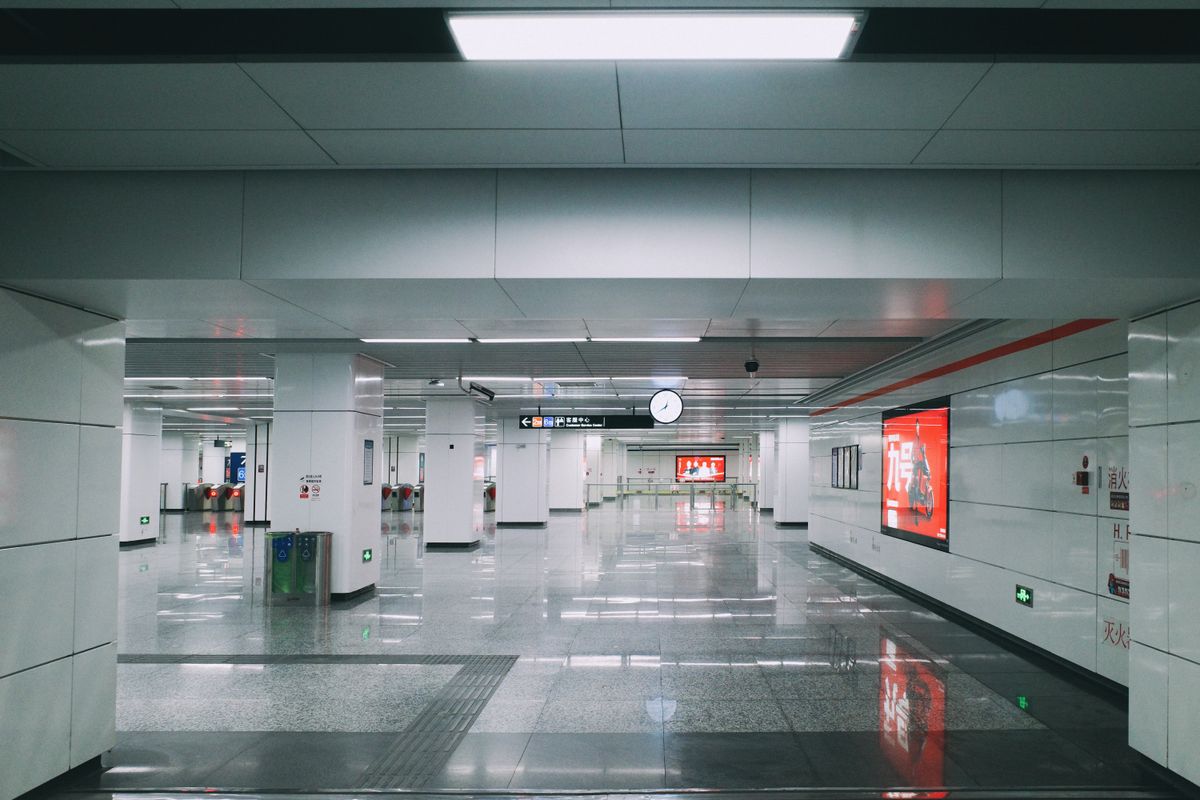
Modern Beijing subway station platform with ticket gates and signage
For the airport run, this split matters more than most guides mention. The Airport Express from Beijing Capital Airport (PEK) connects to Line 2 at Dongzhimen and to Line 10 at Sanyuanqiao, one stop earlier. That means a hotel near Guomao is typically a straight shot: Airport Express to Sanyuanqiao, transfer to Line 10, ride two or three stops, done in around 30-35 minutes plus walking time. Reaching the old town takes one extra transfer step and a longer walk from the Line 2 exits at Gulou Dajie or Andingmen to a courtyard hotel down a lane, closer to 40-50 minutes door to door. If you're flying into the newer Daxing Airport (PKX) south of the city instead, both areas require a longer transfer, generally 55-70 minutes via the Daxing Airport Express and a subway change, since Daxing sits well outside either loop.
Old Town vs CBD: Who Fits Each Neighborhood
- Choose Dongcheng's hutong district if: this is your first trip to Beijing, you want to be walking distance from the Bell Tower, Houhai, and Yonghegong, you don't mind carrying a bag up a flight of stairs, and evenings spent in a courtyard restaurant matter more to you than a gym.
- Choose Guomao/CBD if: you have meetings or conference obligations, you're traveling with young kids and want a larger, more predictable room, you're arriving on a tight layover and want the fastest possible airport connection, or you'd rather spend your sightseeing hours on the subway than adjust to an older building's plumbing and stairs.
- Split the difference if: your trip is 5+ nights. Book 2-3 nights in the hutong district for the Forbidden City, Temple of Heaven, and hutong wandering, then move to Guomao or Sanlitun for Sanlitun's nightlife and a more modern finish. Both neighborhoods sit on the Line 2/Line 10 network, so moving between them with luggage is a single subway ride with one transfer, generally under 30 minutes.
Before you book, cross-check your shortlist against the full Beijing destination guide for what's within walking range of each area, and if you're building out a full schedule, the 4-day Beijing itinerary lays out which sights pair naturally with an old-town base versus a CBD one. For the wider country, the where to stay in China guide covers how this old-town-versus-new-district pattern repeats in Shanghai, Xi'an, and beyond.
The short version: pick the hutong district for atmosphere and walkability to the historic core, pick Guomao for modern reliability and the fastest airport link, and check which subway loop, Line 2 or Line 10, reaches your must-see list before you commit to a booking.
FAQ
Where should first-time visitors stay in Beijing? Most first-time visitors do better in Dongcheng's hutong district, close to the Bell and Drum Towers, Houhai, and Yonghegong, because it puts the sights people picture when they think of Beijing within walking distance and keeps early subway rides to a minimum.
Is it better to stay near the Forbidden City or in the CBD? Staying near the Forbidden City, meaning the Dongcheng old town, cuts your commute to the Forbidden City, Tiananmen Square, and Jingshan Park to a short walk or one subway stop. Staying in the CBD means a 20-25 minute subway ride each way to those same sights, but a shorter ride to Sanlitun's nightlife and a faster airport transfer.
Is Beijing safe at night near Houhai/Sanlitun? Both areas are considered safe for walking at night by local standards, with steady foot traffic, lit streets, and a visible police presence. The practical caveats are noise, not safety: Houhai's lakeside bars and Sanlitun's bar streets run loud until around 2am on weekends, so ask for a room set back from the main strip if you want to sleep before then.
How far is the airport from each area? From Beijing Capital Airport, a hotel near Guomao/CBD is roughly 30-35 minutes door to door via the Airport Express to Sanyuanqiao and a Line 10 transfer. A hotel in the hutong old town runs closer to 40-50 minutes, since it requires the Airport Express to Dongzhimen, a Line 2 transfer, and a longer walk from the subway exit down the lanes. Flying into Daxing Airport instead adds roughly 20-25 minutes to either route.
Do hutong hotels have elevators and heating? Not always. Many courtyard hotels are converted historic homes, and smaller or budget properties sometimes lack an elevator and rely on portable heaters rather than central heating in winter. Larger, recently renovated courtyard hotels near Nanluoguxiang and Wudaoying Hutong typically do have both, but it's worth confirming directly with the property before booking if either matters to you.