China in Summer 2026: Beat the Heat, Crowds, and Price Spikes
Quick answer: July and August are China's hottest, busiest, and priciest months. Expect 35 to 38C in most cities, hotel rates 30 to 50% above spring, and high-speed seats gone within hours of release. You can still have a great trip if you head for cool high-altitude regions (Yunnan, Qinghai, Tibet), book 6 to 8 weeks ahead, and treat the midday heat as siesta time.
If you only get school-holiday weeks off, summer may be your only window to see China. It works, but you plan around three things at once: the heat, the domestic travel surge, and typhoons on the coast. Here is how each one plays out and what to do about it.
How hot it actually gets
Most major cities sit at 35 to 38C (95 to 100F) through July. The problem is rarely the number, it is the humidity. Chongqing regularly hits 38C with around 90% humidity, which locals only half-jokingly call the "steamer basket." Wuhan, Nanjing, and Nanchang round out China's traditional "furnace cities," where nights barely cool down. Shanghai is not far behind: hot, muggy, and sticky from mid-June.
Practical heat rules that work:
- Front-load sightseeing to before 10am, then rest indoors from roughly noon to 4pm.
- Carry a refillable bottle. Hot water dispensers are everywhere; many travelers switch to room-temperature water to avoid stomach shock.
- Metro stations, malls, and museums are heavily air-conditioned and free to sit in.
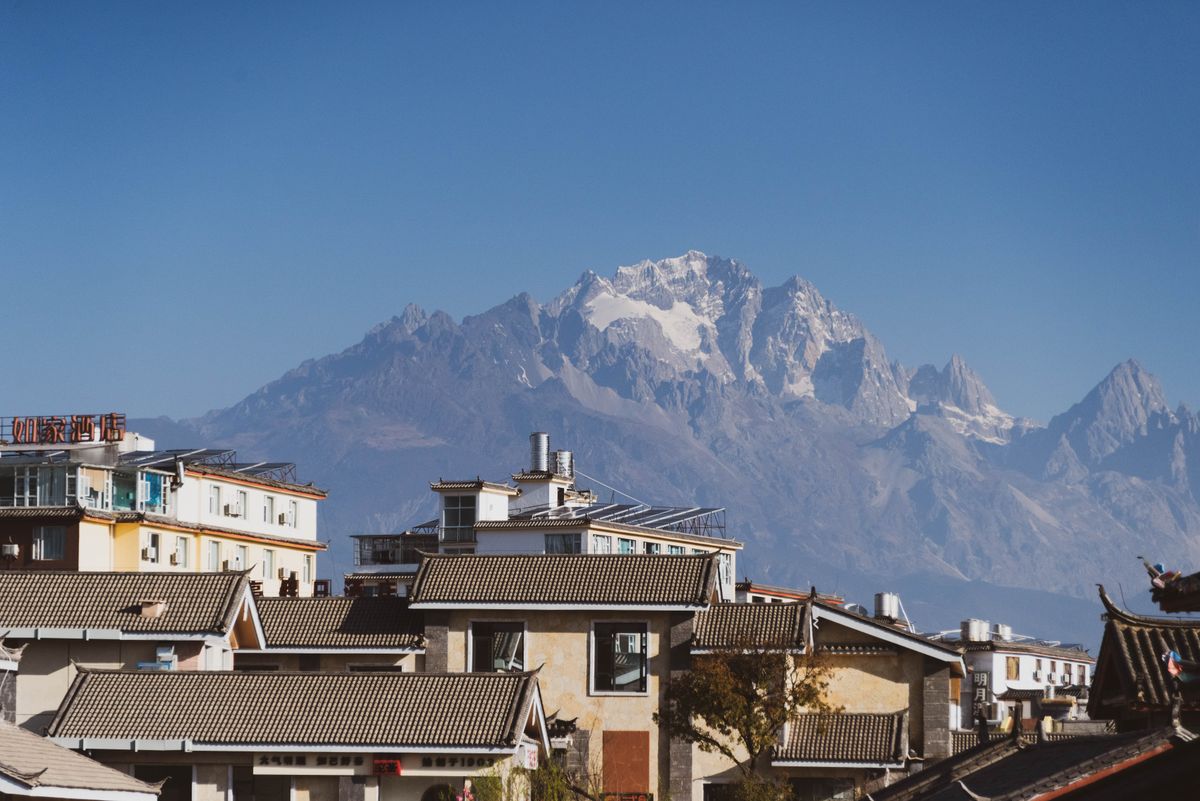
Cool green mountains and a canal town below snow-capped peaks in Yunnan
The crowd and price problem
Chinese school holidays start around July 1 and run to August 31. Domestic tourism ignites, and every scenic spot goes from busy to packed over a single weekend. Transport operators, airlines, and agencies report record bookings across the July to August season.
What that means for your wallet and calendar:
- Hotel prices in popular destinations rise 30 to 50% versus spring or autumn.
- Flights to Lhasa, Jiuzhaigou, and Sanya hit their annual high.
- High-speed rail tickets open 15 days before departure and sell out on popular routes within hours.
The fix is not to avoid summer, it is to book early and travel slightly off the obvious path. Midweek beats weekends. A 7am departure train often has seats when the 9am is gone.
Where to go to stay cool
The smartest summer itineraries climb in altitude or head far north or west, where 35C simply does not happen.
- Yunnan: Kunming stays mild all summer (locals call it the "spring city"). Lijiang, Dali, and Shangri-La add cool nights and mountain air.
- Qinghai and Tibet: Xining, Qinghai Lake, and Lhasa sit high enough that summer days feel like a northern European spring. This is peak season, so permits and trains fill fast.
- Xinjiang: Kashgar, the Tianshan range, and Kanas Lake are at their best in summer, but infrastructure is thin relative to demand.
- Northeast: Harbin and the Changbai Mountains are a genuine escape from southern humidity.
- Guizhou and Sichuan's west: Jiuzhaigou, Huanglong, and the Guizhou highlands stay green and comfortable.
For Xinjiang and Yunnan especially, book core elements (flights, signature hotels, driver-guides) 6 to 8 weeks ahead. These regions run out of good rooms long before the cities do.
Typhoons and coastal rain
Typhoons hit China's southeastern coast from June through September, with July and August the peak. The main targets are Shanghai, Fujian, Guangdong, and Hainan. A typhoon can ground flights and close ferries for a day or two with little notice.
If your trip includes the coast:
- Build in a buffer day around any flight into or out of Shanghai, Xiamen, or Sanya.
- Watch the forecast 3 to 4 days out and keep bookings changeable where you can.
- Sanya is beautiful but it is both peak-priced and typhoon-exposed in summer; go in knowing both.
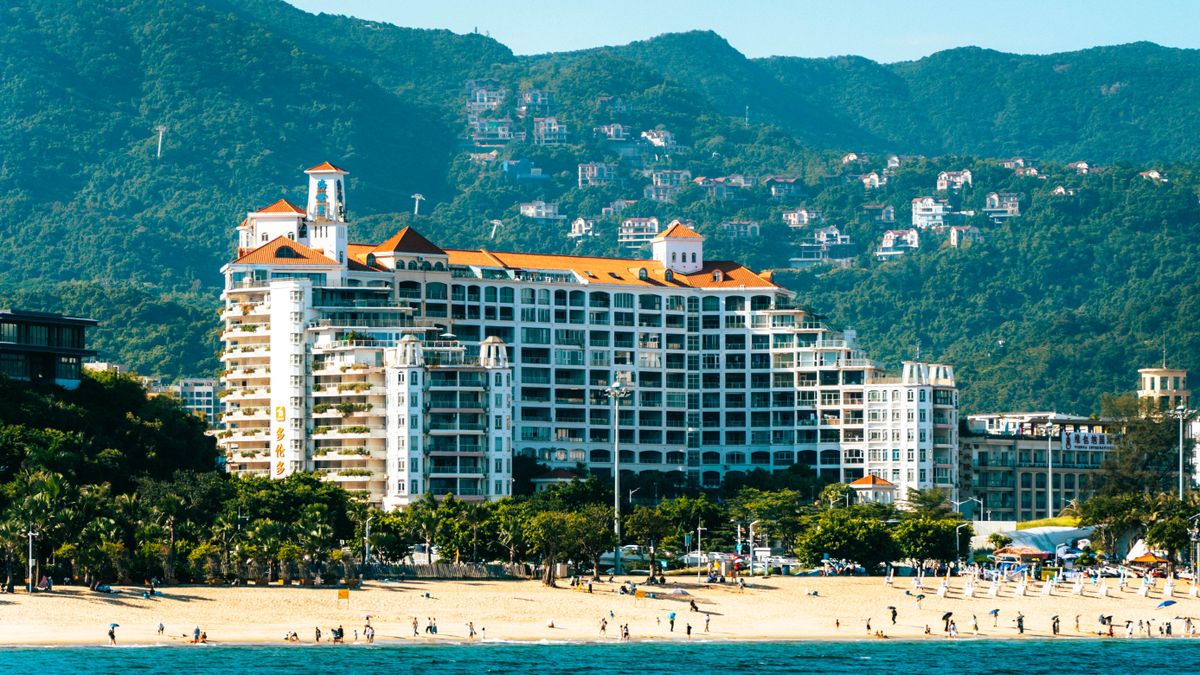
Beachfront resorts along the Sanya coastline in Hainan
A booking timeline that works
- 8 weeks out: lock international flights and any Yunnan, Xinjiang, Tibet, or Qinghai plans.
- 2 to 3 weeks out: finalize your city order so you know which trains you need.
- 15 days out, to the minute: buy high-speed rail tickets the moment the window opens for popular routes like Beijing to Xi'an or Shanghai to Zhangjiajie.
- Ongoing: hold hotels on free-cancellation rates and rebook if prices dip.
Book China hotels and high-speed trains on Trip.com
Summer rooms and popular rail seats sell out fast, lock them early
Some links are affiliate links; we may earn a commission at no extra cost to you.
What to pack for a China summer
Light, breathable clothing; a compact umbrella that doubles for sun and typhoon rain; strong sunscreen; and a light layer for over-cranked air conditioning on trains and in malls. A portable fan and electrolyte sachets earn their space in Chongqing or Wuhan.
Frequently asked questions
Is summer a bad time to visit China? Not bad, just demanding. Heat, crowds, and prices all peak, but high-altitude regions stay pleasant and it may be your only school-holiday window. Plan around the heat and book early.
Which Chinese cities are coolest in summer? Kunming, Lijiang, Xining, Lhasa, and Harbin all stay comfortable. Anywhere high (Yunnan, Qinghai, Tibet) or far north beats the humid lowland "furnace cities."
How far ahead should I book summer trains in China? Tickets release 15 days before departure. For popular routes buy them the moment the window opens, since they can sell out within hours in July and August.
Will typhoons ruin my trip? Only if you leave no slack. Typhoons mainly affect the southeast coast (Shanghai, Fujian, Guangdong, Hainan). Keep a buffer day around coastal flights and watch the 3-day forecast.
How much more expensive is summer travel in China? Budget roughly 30 to 50% more for hotels in popular spots, plus peak airfare to Lhasa, Jiuzhaigou, and Sanya. Booking early is the single biggest saver.