Is China Safe to Visit in 2026? The Honest Answer (Crime Data, Scams, Solo Travel)
Quick answer: Yes. China has one of the lowest violent crime rates of any major travel destination, statistically safer for tourists than the US, the UK, or France on almost every violent-crime measure. The real risks aren't muggings or assaults, they're a handful of well-rehearsed scams (tea house invitations, fake art students, rigged taxi meters) that target exactly the areas where you'll be sightseeing. Know the five scams below and China is a straightforward, low-risk destination for first-timers, solo travelers, and women traveling alone.
If your mental picture of China's safety comes from news headlines about US-China tensions or a vague sense that "it's a big unfamiliar place," the actual data tells a different story. Numbeo's mid-2026 crime index puts Beijing and Shanghai in the same safety bracket as Tokyo and Singapore, well ahead of London, Paris, or any major US city. China's homicide rate sits around 0.5 per 100,000 people, roughly ten times lower than the United States. Random street violence against foreigners is rare enough that it makes local news when it happens.
That doesn't mean China is risk-free. It means the risks are different from what most travelers expect: not violent crime, but targeted scams designed to separate polite, jet-lagged tourists from their money. This guide covers what's genuinely dangerous, what isn't, and the specific traps to watch for.
What the safety data says
The U.S. State Department currently rates China at Level 2: Exercise Increased Caution, the second-lowest of its four tiers (Level 1 is "exercise normal precautions," Level 4 is "do not travel"). That rating has been in place since 2019 and is driven almost entirely by the risk of arbitrary law enforcement and exit bans, which affects business travelers, dual nationals, and people involved in disputes with Chinese companies far more than it affects a two-week tourist itinerary. It is not a crime warning. For comparison, France and the UK also carry a Level 2 rating from the same agency, driven by terrorism risk.
On ordinary crime, the numbers are unambiguous. You're more than twice as likely to be a victim of crime in San Francisco or Chicago than in Beijing or Shanghai. Pickpocketing exists in crowded subway stations and tourist markets, but it's less common than in Barcelona, Rome, or Paris. Violent crime against foreign visitors, muggings, assaults, robberies at knifepoint, is genuinely rare, not "rare but happens all the time anyway" rare, but rare in the way it would need to make headlines.
Two things do carry more weight than in many Western countries: surveillance is pervasive (cameras everywhere, real-name registration for SIM cards and hotels), and the legal system doesn't operate the way it does at home, so if you ever do get into a dispute, don't expect the same due-process protections you're used to. Neither of these translates into physical danger for a tourist following normal rules, but they're worth knowing before you go.
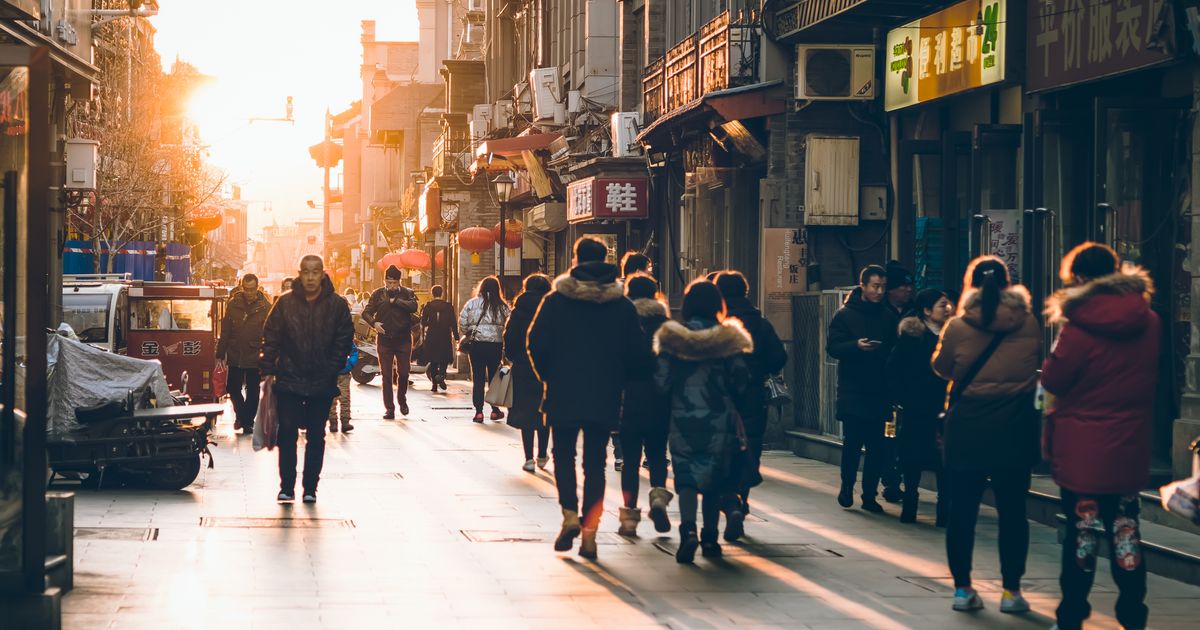
Pedestrians walking a sunlit street in Beijing at sunset
The scams you'll run into
This is where most trip-ruining incidents in China happen, not in a dark alley, but in broad daylight near major attractions, from someone who's friendly, well-dressed, and speaks decent English. The scripts are decades old and still work because they exploit politeness, not fear.
| Scam | How it works | How to avoid it |
|---|---|---|
| Tea house / tea ceremony | A friendly "student" near Tiananmen, Wangfujing, or the Bund invites you to practice English over tea. The bill arrives after: $200 to $1,000+ per person, and the exit is blocked until you pay. | Decline any unsolicited invitation to tea from a stranger, no matter how genuine the small talk feels. If it happens, ask to see a menu with prices before ordering anything. |
| Fake art student / gallery | Similar setup: a "student" invites you to see their exhibition, then applies heavy pressure to buy mass-produced paintings at inflated prices, often with a sob story about tuition. | Politely decline any unsolicited gallery invitation from a stranger on the street. Legitimate art students don't recruit customers outside tourist sites. |
| Taxi overcharging / rigged meter | Unlicensed cabs near airports and stations quote a flat "special price," or a licensed driver runs a rigged meter or takes a long way round. | Use Didi (China's Uber) instead of hailing on the street, it shows the price upfront and logs the route. If you do take a street taxi, insist on the meter and get in only at official taxi stands. |
| Fake antiques / jade | Vendors near temples and markets sell "ancient" jade, calligraphy, or ceramics with fabricated certificates of authenticity. | Assume anything sold as a genuine antique on the street is not one. Buy souvenirs as souvenirs, not investments, and only buy real antiques from licensed dealers with export paperwork. |
| Currency and change scams | A vendor or cab driver claims a large bill is counterfeit and swaps it, or shorts you on change while distracting you. | Use mobile payment (Alipay or WeChat Pay) wherever possible so cash never changes hands. Count change before walking away. |
None of these will hurt you physically. All of them will cost you money and a bad afternoon if you don't recognize the setup. The common thread: anyone who approaches you first, near a major tourist site, with unusually good English and an invitation somewhere, deserves a polite "no thanks" and a walk in the other direction.
Is China safe for solo female travelers?
Yes, and this is one of the more consistent findings across independent trip reports and traveler surveys: women traveling alone in China report feeling safer walking at night in Beijing or Chengdu than in most major US or European cities. Street harassment happens less frequently than in Southern Europe or Latin America, and physical assault against foreign women is rare enough that it isn't a top-line concern the way it might be elsewhere.
The friction points are different: unwanted staring or photo requests (especially outside first-tier cities, where foreign visitors are still a novelty), language barriers that make it harder to de-escalate any uncomfortable interaction, and the same scam targeting outlined above, which doesn't discriminate by gender but can feel more pressuring when you're navigating it solo. Standard precautions apply and work well: stick to licensed transport after dark, share your live location with someone, keep a translation app ready, and book your first two or three nights somewhere with English-speaking staff and 24-hour front desk before you get comfortable improvising.
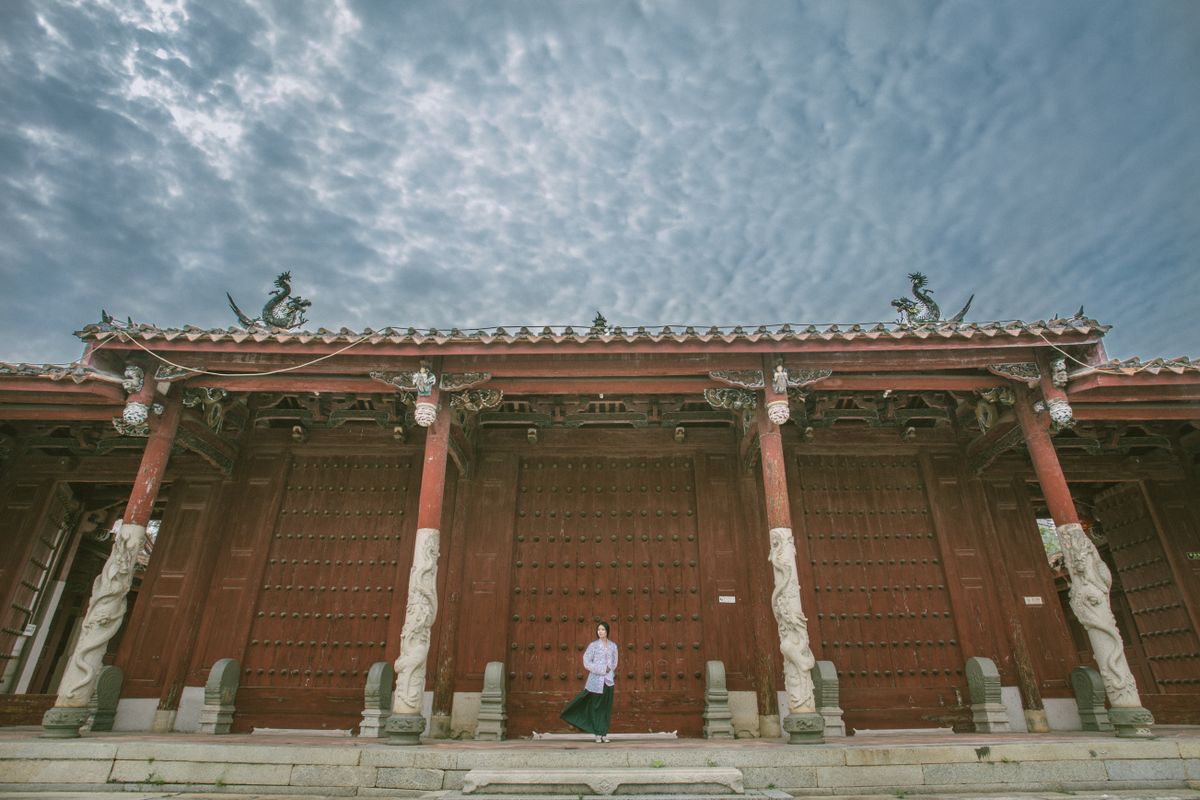
A solo traveler standing in the courtyard of a traditional temple gate in China
Food, water, and air quality: what's a real risk and what isn't
Tap water isn't safe to drink straight from the faucet anywhere in China; bottled and filtered water are cheap and everywhere, so this is a non-issue in practice, not a real risk.
Street food has a reputation problem it doesn't fully deserve. The rule that works: eat where the line is long and the wok is visibly hot. High turnover means food isn't sitting around, and it's the single best predictor of a clean stall, better than how the storefront looks. Sit-down restaurants, especially chains, are held to formal food-safety inspections and are a safe default if you'd rather not gamble.
Air quality is the one item on this list that's a genuine, measurable health consideration rather than a stranger-danger issue. Beijing, and industrial cities more broadly, can hit unhealthy AQI levels in winter and early spring, less so in summer and after recent years of pollution-control policy, but it still happens. Check the AQI on your weather app before heavy outdoor days, and if you have asthma or another respiratory condition, pack a well-fitted mask for high-pollution days as a precaution rather than an emergency measure.
Natural disasters (earthquakes in the west, typhoons on the southeast coast in summer) are a real but low-probability consideration depending on your route and season, worth a look at your specific itinerary but not a reason to avoid the country as a whole.
Common mistakes
- Assuming Level 2 State Department advisory means "dangerous." It's a mid-tier rating shared with France and the UK, driven by legal-system risk for specific situations (business disputes, dual nationals), not a street-crime warning for tourists.
- Falling for the tea house or art student script because the person seems genuinely friendly. They usually are pleasant, that's the entire mechanism. Politeness isn't verification.
- Treating "very safe from crime" as "no precautions needed." Pickpocketing in crowded subway stations, scam artists near tourist sites, and ordinary travel risks (traffic, air quality, food handling) still apply even though violent crime doesn't.
- Hailing cabs on the street instead of using Didi. This is the single easiest fix for the most common tourist complaint in China: getting overcharged or taken the long way round.
- Carrying large amounts of cash "to be safe." The opposite is true. Mobile payment via Alipay or WeChat Pay removes most currency and change scams entirely, and losing a phone is recoverable in a way losing cash isn't.
Who this is for
First-time visitors and general tourists: China is a low-risk, high-reward destination for a first trip. The scams are avoidable once you know them, and the crime risk is lower than at home for most Western travelers.
Solo female travelers: Genuinely one of the more comfortable solo-female destinations in Asia by most trip reports, with the standard precautions (licensed transport at night, location-sharing, English-speaking accommodation for your first few nights) covering nearly all real risk.
Families with kids: Low violent-crime environment, but budget extra patience for language barriers and unfamiliar systems (car seats and stroller-friendly infrastructure vary a lot by city) rather than for safety concerns.
Americans specifically, given current tensions: The State Department's Level 2 advisory is about legal-system risk in specific circumstances (business disputes, activism, dual-national status), not about street safety for tourists. A normal two-week tourist itinerary carries essentially none of the exit-ban or detention risk the advisory is flagging. If you have Chinese heritage, dual nationality, or any outstanding legal or business dispute involving a Chinese entity, read the full advisory closely; if you're a standard tourist on a standard trip, it doesn't materially change your risk profile.
For the medical side of this question, vaccines, travel insurance, and what to do if you get sick or hurt, see our separate guide to health, safety, and travel insurance in China. This article covers personal and physical safety; that one covers the practical medical logistics.

A traditional Chinese tea set on a wooden table, the setup used in the country's most common tourist scam
FAQ
Is China safe to visit for Americans? Yes. The Level 2 State Department advisory reflects legal-system risk for specific situations (business disputes, dual nationals, activism) rather than a street-crime warning. A standard tourist itinerary carries low risk by any crime-rate measure, and current US-China political tensions haven't translated into any documented pattern of tourists being targeted.
Is China safer than the US? On violent crime specifically, yes, by a wide margin. China's homicide rate is roughly ten times lower than the US, and you're more than twice as likely to be a victim of crime in a major US city than in Beijing or Shanghai. The US doesn't carry the exit-ban and arbitrary-detention risks that drive China's advisory level, so it isn't a clean better-or-worse comparison, but for the specific question of "will I be a victim of crime," China rates lower.
Is China safe for solo female travelers? Yes, with standard precautions. Traveler reports consistently describe feeling safe walking alone at night in major Chinese cities, with harassment rates lower than in much of Europe or Latin America. Use licensed transport (Didi) after dark, share your location with someone, and book accommodation with English-speaking staff for your first few nights.
What is the most common scam in China? The tea house invitation, where a friendly stranger near a major tourist site invites you for tea and you're presented with a bill for hundreds of dollars afterward. The fake art student gallery scam and taxi overcharging are close behind. All three rely on a stranger approaching you first near a tourist attraction.
Do I need to worry about air pollution as a tourist? Only situationally. Check the AQI for your destination city and dates, it's worse in Beijing in winter than in summer, and worse in northern industrial cities than in the south. If you have asthma or another respiratory condition, bring a mask for high-pollution days. It's a health planning item, not a reason to cancel a trip.
Sources
- China Travel Advisory · U.S. Department of State
- China - Traveler View · CDC Travelers' Health