Language Barrier in China: Translation Apps & Key Phrases (2026)
Quick answer: You can travel China comfortably without Mandarin. Install Microsoft Translator and Baidu Translate (with their offline English-Chinese packs) before you fly, learn three phrases (Nǐ hǎo, Xièxie, Duōshao qián), and use camera translation for menus and signs. The barrier becomes a speed bump, not a wall.
Will you survive in China without speaking Mandarin? Yes. Outside international tourist areas, everyday English is limited, but two free apps, memorized phrases, and a few offline backups make most interactions manageable.
This guide covers translation apps that work in China, useful phrases, scripted scenarios, and low-tech backups for when your battery or connection fails.
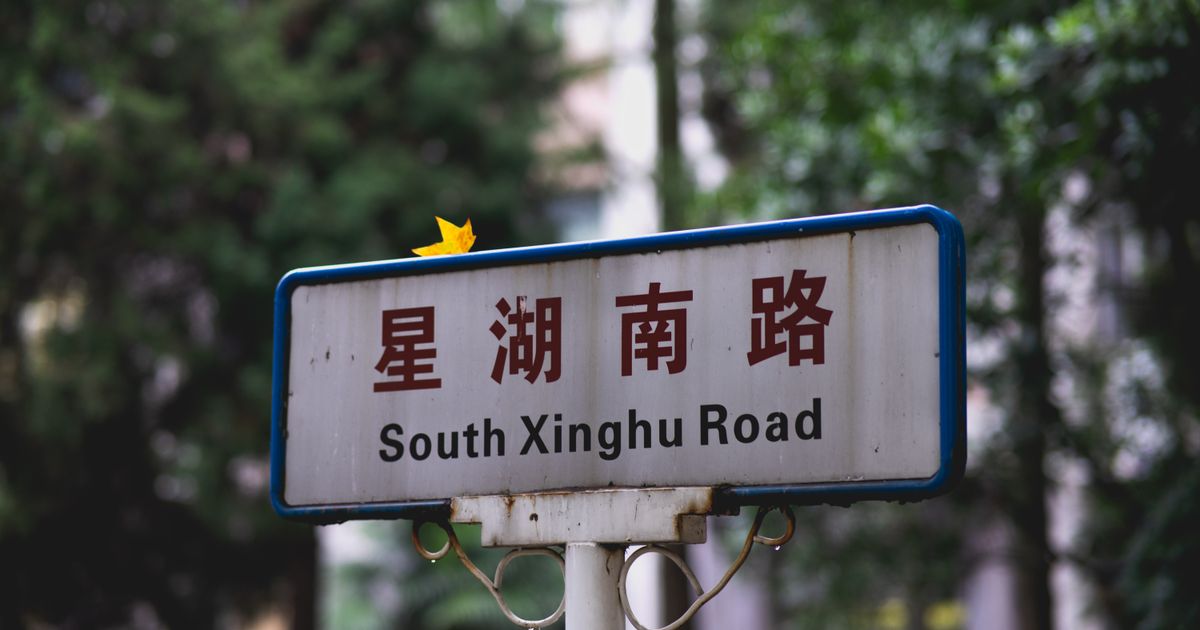
Bilingual Chinese and English street sign reading South Xinghu Road mounted on a pole with trees behind
How much English you'll encounter
In major-city metros, airports, high-speed-rail stations, and major attractions, signage is often bilingual. Major hotels and international chains may have English-speaking staff. Outside those areas, local restaurants, pharmacies, taxis, and small-town services may operate almost entirely in Mandarin.
The most useful mindset shift is to show translated text instead of repeating English slowly or loudly. A clear sentence on your phone is often easier to understand.

Busy Shanghai shopping street at night with large Chinese-character shop signs glowing above pedestrians
Translation apps that work in China (2026)
Google Translate and DeepL may be unavailable or unreliable in mainland China. Install more than one alternative before departure and download offline language packs while you have dependable internet.
| App | Best for | Works without VPN? | Offline mode |
|---|---|---|---|
| Microsoft Translator | Text, voice, camera, and conversations | Check availability before travel | Text may be available offline |
| Baidu Translate (Baidu Fanyi) | Local context, food, text, image, camera, and voice translation | China-based service | Check current offline support |
| iFlytek Translation (Xunfei Fanyi) | Voice and multilingual translation | Check current availability | Check current offline support |
| Pleco | Dictionary and character lookup | Yes | Yes |
Baidu Translate supports text, image, camera, and voice translation. iFlytek translation products support text and multilingual translation features, but current app names, availability, and supported languages can change, so check the official listing before travelling. Pleco is a dictionary rather than a full-sentence translator. WeChat and Alipay also offer translation features for some messages and scanned text.
Voice translation generally requires an internet connection. Prepare at least two communication methods, especially for medical situations, where language and cultural differences can make navigation difficult.

Traveler holding up a smartphone to photograph a lantern-lit Chinese night street, the scene visible on the phone screen
Camera and voice translation
Camera translation is useful for menus, labels, signs, and medicine packaging. It is imperfect with decorative fonts, handwriting, and stylized menus, so take a still photo when live translation struggles.
Conversation features can help with back-and-forth exchanges. Speak in short, simple sentences and confirm important details in writing. Do not rely on a translation app alone for allergies, medication, or urgent medical care.
Key phrases worth learning
Pinyin is the romanized pronunciation. Tones help, but pointing to written Chinese or showing a translated screen is often more reliable.
| English | Pinyin |
|---|---|
| Hello | Nǐ hǎo |
| Thank you | Xièxie |
| How much is it? | Duōshao qián? |
| Too expensive | Tài guì le |
| Where is the toilet? | Cèsuǒ zài nǎlǐ? |
| Where is the metro? | Dìtiě zhàn zài nǎlǐ? |
| I don't eat meat | Wǒ bù chī ròu |
| Not spicy | Bú yào là |
| The bill, please | Mǎi dān |
| I need a doctor | Wǒ xūyào yīshēng |
| I don't understand | Wǒ tīng bù dǒng |
Memorize Nǐ hǎo, Xièxie, and Duōshao qián?, then let your phone handle longer exchanges.
Useful scenarios
- Ordering food: Point at the menu or translated screen and say Bú yào là if you do not want spicy food. For allergies, show the specific ingredient in writing rather than relying only on pronunciation.
- Taking a taxi: Save your hotel name and address in Latin transliteration and Chinese characters before leaving. Show the address to the driver.
- At a pharmacy or when unwell: Use Wǒ xūyào yīshēng if you need a doctor, and verify medicine instructions and active ingredients before buying anything.
- Bargaining: Say Tài guì le and type your counteroffer into the calculator.
- Getting unstuck: Say Wǒ tīng bù dǒng, smile, and hand over your phone.
Low-tech backups
- Screenshot your hotel's name and address before you travel.
- Save key addresses, your next hotel, the airport, and restaurants offline.
- Carry a hotel business card when possible.
- Point at written characters or pictures.
- Use a calculator for prices.
- Carry a power bank and keep a written emergency contact note.
Before you fly
- Install Microsoft Translator, Baidu Translate, and optionally Pleco.
- Check current availability and download any supported offline packs.
- Save your first hotel's name and address offline.
- Prepare an eSIM or other connectivity option if needed.
- Learn Nǐ hǎo, Xièxie, and Duōshao qián?, plus one phrase relevant to your trip.
- Prepare a second communication method for medical or urgent situations.
Common mistakes
- Relying on one translation app.
- Forgetting to test offline features before departure.
- Treating a VPN or blocked service as your only backup.
- Speaking louder instead of showing translated text.
- Trusting camera translation for allergies, medicine, or complicated instructions without confirmation.
Who this is for
This guide is for first-time visitors to mainland China who do not speak Mandarin and want a practical plan for ordering food, taking taxis, reading signs, and handling everyday exchanges.
Skip it if you already speak conversational Mandarin or will remain entirely with a bilingual guide in English-friendly hotels.
Frequently Asked Questions
Can you travel China without speaking Chinese? Yes. Translation tools, bilingual signage in major transport hubs, memorized phrases, and offline backups make most trips manageable.
Do people speak English in China? English is more available in major cities, international hotels, and large chains, but it is less available in rural or remote areas and in many everyday local services.
What is the best translation app for China? Use a combination rather than relying on one app. Baidu Translate offers text, image, camera, and voice functions. iFlytek supports text and multilingual translation features, but check current availability before travelling. Pleco is useful for dictionary lookups.
How do you communicate in China without speaking the language? Use camera translation for menus and signs, short written messages for important details, a few pinyin phrases, saved addresses, and a second communication method for urgent situations.
Sources
- Microsoft Translator · Microsoft (Apple App Store)
- Pleco Chinese Dictionary · Pleco Software
- Baidu Translate (百度翻译) · Baidu (Apple App Store)
- Microsoft Translator multi-device conversation help · Microsoft
- Google shuts down Translate service in China · CNBC