Where to Stay in Shenzhen: Futian vs Luohu for Shopping and the Hong Kong Border (2026)
Two districts handle almost all of Shenzhen's short-stay tourism: Futian, the glass-tower business core with the city's best shopping malls, and Luohu, the older neighborhood built directly against the border crossing to Hong Kong. Both sit on metro lines, both have direct pedestrian checkpoints into Hong Kong, and both get mixed up constantly because listings on booking sites use the names loosely. Here's what actually separates them, and which one fits your trip.
Book Shenzhen hotels on Trip.com
Free cancellation on most stays · compare neighborhoods
Some links are affiliate links; we may earn a commission at no extra cost to you.
Before you book, it's worth skimming our guide to hotel booking rules and police registration in China, which covers the site-wide basics that apply no matter which city you're headed to.
Futian: Shenzhen's Business and Shopping Core
Futian is the seat of the Shenzhen municipal government, the Shenzhen Stock Exchange, and the Ping An Finance Centre, one of the tallest buildings in China. It's also where most short-term visitors end up staying, because Coco Park and MixC World, the city's two biggest shopping and dining complexes, sit at its center along with dozens of international hotel brands. Hilton Shenzhen Futian is a 15-minute walk from Coco Park, Crowne Plaza Shenzhen Futian sits a few blocks from the Shenzhen Convention and Exhibition Centre, and UrCove by Hyatt and Park Hyatt cover the upper end of the market. If you're in town for a trade fair at the older convention center (the newer one is out in Bao'an, near the airport), Futian is the district within walking or short-taxi distance.
Rooms here run higher than Luohu, generally ¥500-900 a night for a clean 4-star business hotel and upward of ¥1,500 for the 5-star properties near Coco Park. What you get for the premium: newer buildings, English-speaking front desk staff more often than not, walkable nightlife (Coco Park's outdoor plaza runs bars and live music into the night), and easy access to Metro Lines 2, 3, and 11. Shenzhen Book City, one of the largest bookstores in China, and Lianhuashan Park, a hill with a skyline view over the CBD, both sit within a short walk of the main hotel cluster.
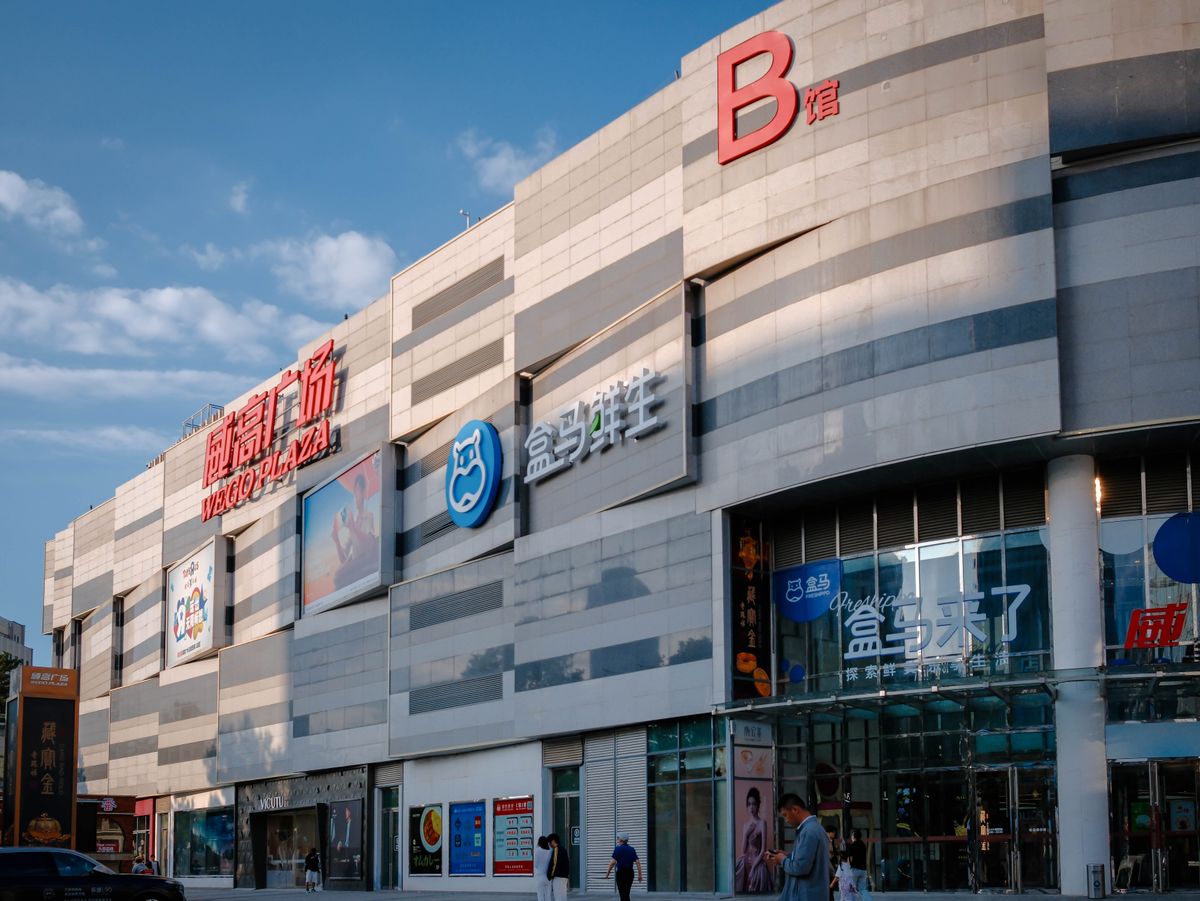
Shopping mall storefront in a Shenzhen retail district
Futian also has its own border crossing: Futian Checkpoint, connected by a pedestrian bridge to Hong Kong's Lok Ma Chau MTR station on the East Rail Line. It's smaller and newer than Luohu's, open 6:30am-10:30pm (not 24 hours, unlike the vehicle crossing next to it), and it tends to move faster on weekday mornings simply because it handles less foot traffic. If your hotel is in central Futian, a short walk or a one-stop ride on Line 4 to Futian Checkpoint Station puts you at the crossing in under 15 minutes.
Luohu: The Original Border-Crossing Neighborhood
Luohu is older and denser, developed in the 1980s and 90s as Shenzhen's first built-up district, sitting right against the Shenzhen River and the Luohu/Lo Wu checkpoint. This is the crossing most travelers picture when they think of walking into Hong Kong: you clear Chinese immigration, cross a short covered walkway, clear Hong Kong immigration, and you're standing inside Lo Wu MTR station on the East Rail Line, roughly 45-55 minutes by train from Hong Kong's Central district.
The district's other claim to fame is Luohu Commercial City, a five-story mall attached directly to the checkpoint and packed with stalls selling tailored suits, watches, bags, and electronics, nearly all of it up for negotiation. Counter at 20-25% of the asking price and expect to settle around half; it's a different shopping experience from Futian's fixed-price malls, closer to a market wrapped in a mall shell. A few minutes' walk further is Dongmen Pedestrian Street, an older, cheaper shopping strip with street food stalls that stays busy well past 10pm.
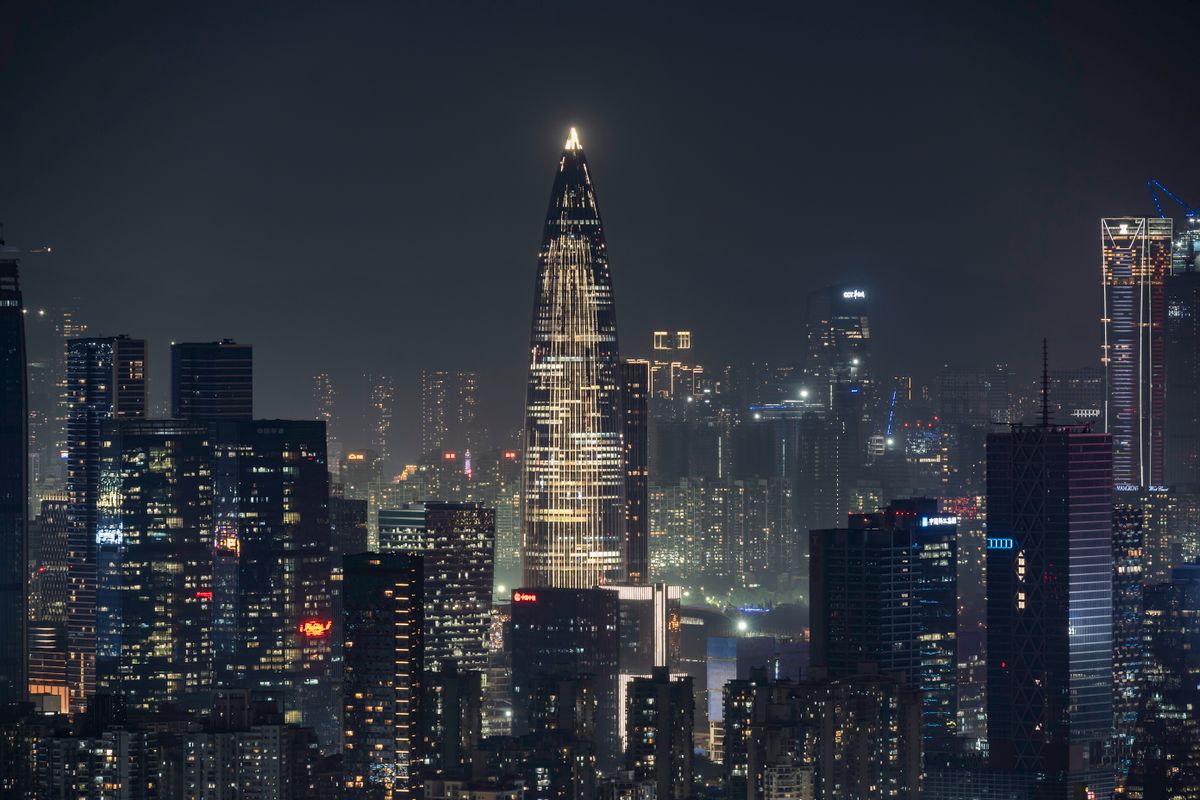
Kingkey 100 tower and the Luohu skyline at night
Hotels in Luohu skew older and cheaper: budget and mid-range 3-star options run ¥250-450 a night, with a handful of renovated 4-star properties (Shangri-La Shenzhen among them) pushing past ¥700. The area suits travelers who want a short hop to the border over polish, or anyone building a shopping trip around Luohu Commercial City or Dongmen. It's less walkable after dark than Futian and the streetscape shows its age, but most hotels near Renmin Nan Lu put you 10-15 minutes on foot from the checkpoint.
Crossing the Border: Futian vs Luohu
Both checkpoints are pedestrian-only and require your passport plus a valid Hong Kong entry permit (many nationalities enter visa-free for a set number of days, and the allowance varies by citizenship, so confirm your own country's rule before relying on it). Here's the practical difference between the two:
| Luohu / Lo Wu | Futian Checkpoint | |
|---|---|---|
| Hong Kong side | Lo Wu MTR station (East Rail Line) | Lok Ma Chau MTR station (East Rail Line) |
| Hours | Roughly 6:30am-midnight | 6:30am-10:30pm |
| Journey to HK Central | About 45-55 minutes by train | About 50-60 minutes by train |
| Shenzhen metro link | Line 1, Luohu station | Line 4, Futian Checkpoint station |
| Crowds | Heavier, especially weekends and holidays | Generally lighter |
| Shopping at the crossing | Luohu Commercial City, Dongmen | None directly at the checkpoint |
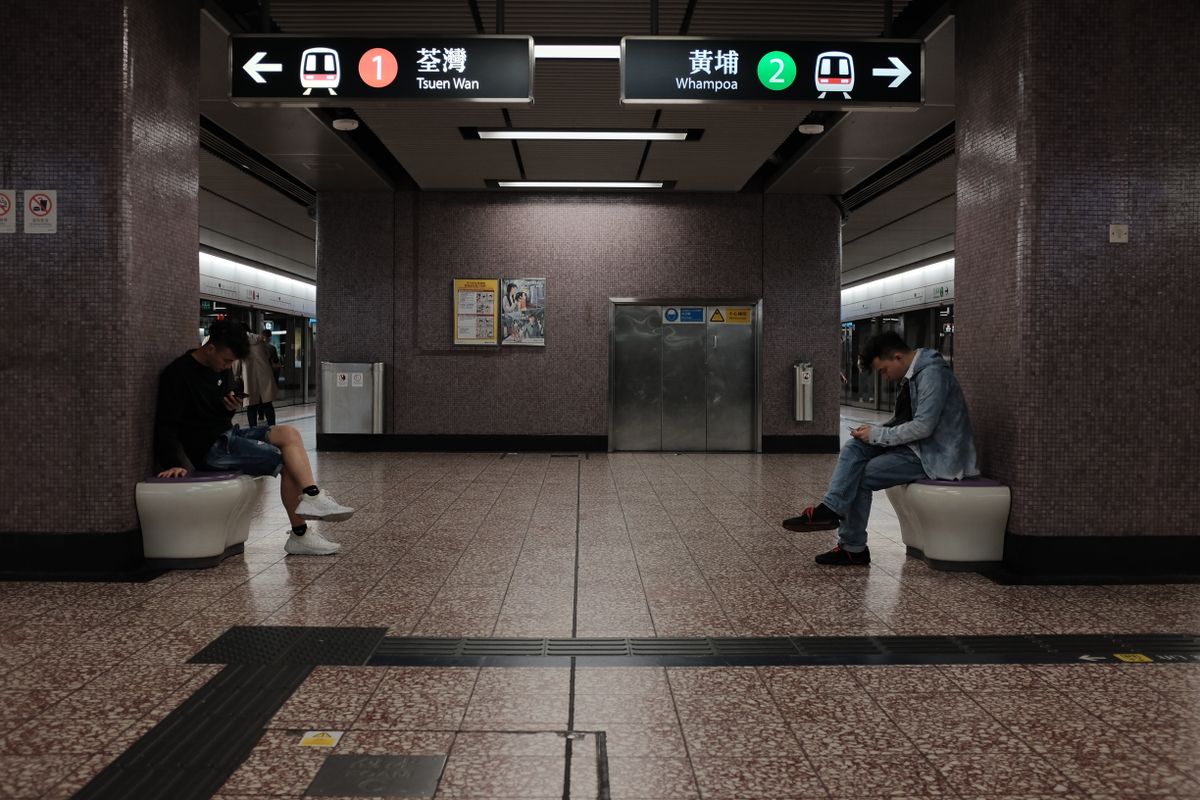
Hong Kong MTR station platform
Neither crossing is meaningfully faster once you're on the train, but Futian usually clears visitors through immigration quicker outside rush hour, since it carries a smaller share of daily cross-border traffic than Luohu.
Getting In From the Airport
Shenzhen Bao'an International Airport sits about 32km northwest of both districts. Metro Line 11 runs express service straight to Futian in around 40 minutes. For Luohu, ride Line 11 to Chegongmiao and transfer to Line 1, which adds 20-30 minutes to the trip. A taxi or ride-hail runs roughly ¥120-160 to Futian and ¥150-190 to Luohu depending on traffic, generally 45-70 minutes either way.
Who Should Stay Where
Choose Futian if you're in Shenzhen for business meetings, want mall-based shopping and a modern hotel, plan to use the Futian-Lok Ma Chau crossing, or are staying more than two nights and want restaurants and nightlife within walking distance after dark.
Choose Luohu if your main goal is a quick, low-cost border hop, you want to shop for bargained goods at Luohu Commercial City or Dongmen, your budget is tight, or you're connecting onward from Hong Kong and want to minimize the walk between train platform and hotel room.
If you're also comparing nearby Guangdong cities on this trip, our Guangzhou hotel guide breaks down Tianhe versus Beijing Road using the same business-district-versus-old-town logic, useful if Shenzhen is one stop on a longer Pearl River Delta route.
Practical Takeaways
- Book Futian for comfort, mall shopping, and nightlife; book Luohu for a cheap, fast border crossing and bargain shopping.
- Both checkpoints connect directly to Hong Kong's East Rail Line, so neither requires a taxi or bus once you're through Hong Kong immigration.
- Futian Checkpoint closes at 10:30pm; Luohu stays open later, which matters if you're crossing after a late dinner.
- From the airport, Futian is a single Line 11 ride; Luohu needs a transfer at Chegongmiao and 20-30 extra minutes.
- Keep your passport on you near either checkpoint at all times; front desks in both districts can photocopy it at check-in if your Hong Kong entry permit requires one.
FAQ
Is it better to stay in Futian or Luohu? Futian suits business travelers, families wanting modern hotels and mall shopping, and anyone staying multiple nights. Luohu suits budget travelers, day-trippers crossing quickly to Hong Kong, and shoppers after Luohu Commercial City's bargained goods.
How do you cross from Shenzhen to Hong Kong on foot? Walk to either the Luohu checkpoint (attached to Luohu MTR station and Luohu Commercial City) or Futian Checkpoint (next to Futian Checkpoint metro station), clear Chinese exit immigration, cross the covered pedestrian bridge, then clear Hong Kong immigration. You'll arrive directly inside Lo Wu or Lok Ma Chau MTR station on the East Rail Line, no bus or taxi needed on the Hong Kong side.
Does Futian also have a Hong Kong border crossing, not just Luohu? Yes. Futian Checkpoint opened in 2007 and connects by footbridge to Lok Ma Chau MTR station, separate from Luohu's crossing into Lo Wu station. First-time visitors often assume only Luohu has a crossing; Futian's is smaller but frequently faster to clear.
How far is Luohu Commercial City from the border checkpoint? It sits directly against the Luohu checkpoint exit, close enough that you can see the mall entrance from the immigration hall doors.
Is Shenzhen safe for tourists staying near the border? Both Futian and Luohu are well-lit, heavily monitored tourist and business districts requiring normal city-level precautions. Watch your bag in crowded mall areas and specifically at Luohu Commercial City, where pickpocketing gets reported more often than elsewhere in the city.