Where to Stay in Wuhan: Jianghan Road vs Guanggu (2026 Guide)
If you're searching "where to stay in Wuhan," the generic hotel round-ups skip the one thing that matters: this city has two distinct bases, and picking the wrong one wastes real time on the metro instead of at Yellow Crane Tower or East Lake.
Jianghan Road is the old riverside concession district in Hankou, packed with colonial-era buildings, night food streets, and a short ride from Yellow Crane Tower. Guanggu (Optics Valley, Optics Valley) is the tech and university district on the city's east side, where business travelers, conference attendees, and longer-stay visitors usually end up. This guide breaks down what each one offers, who should book where, and how to get between them if your trip needs both, say, two days of sightseeing followed by a work meeting across town.
Book Wuhan hotels on Trip.com
Compare Jianghan Road and Guanggu rates side by side
Some links are affiliate links; we may earn a commission at no extra cost to you.
Jianghan Road: Wuhan's Old Riverside Core
Jianghan Road is a roughly 1.2 km pedestrian street in Hankou that was once the heart of the British concession, from 1861 to 1927. Walk it today and you pass restored Renaissance- and Baroque-style banks, trading houses, and the old customs building, all lit up after dark with thousands of small lights along the facades. Locals describe it as a walkable museum of 20th-century architecture, and it's the single most photogenic stretch in the city center.
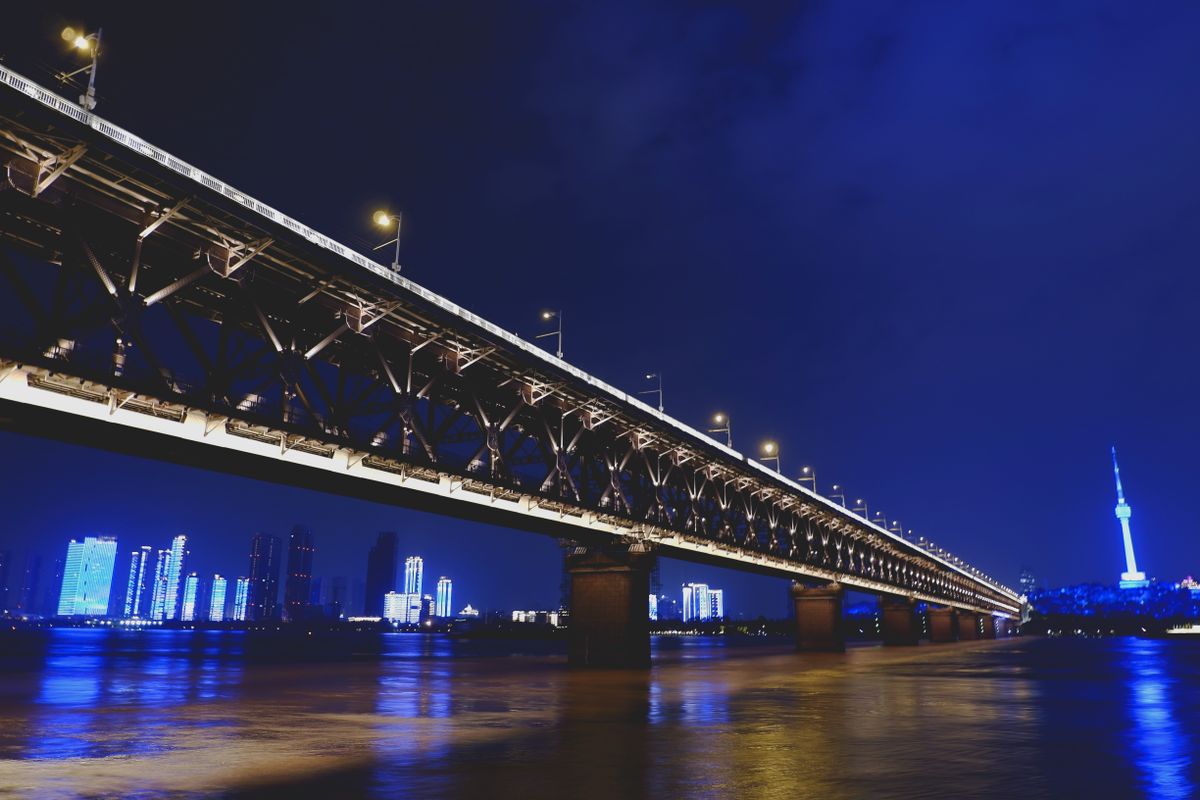
Wuhan's Yangtze River Bridge lit up at night, seen from the Hankou riverside
Stay in this area and you're within a 15 to 30 minute taxi or metro ride of:
- Yellow Crane Tower (Yellow Crane Tower): the rebuilt Qing-style tower on Snake Hill in Wuchang, open 8:00 AM to 6:00 PM from April to October and 8:00 AM to 5:00 PM from November to March. Tickets run ¥70 in peak season and ¥60 off-season, with a separate evening session from 7:30 PM to 10:00 PM.
- Hubu Alley (Hubu Alley): Wuhan's best-known breakfast street, a few minutes on foot from Yellow Crane Tower, known for hot dry noodles and other local snacks.
- Jiqing Street and the Yanhuoxiang food street, both a short walk from Jianghan Road itself, lined with neon signage and street stalls well past 10 PM most nights.
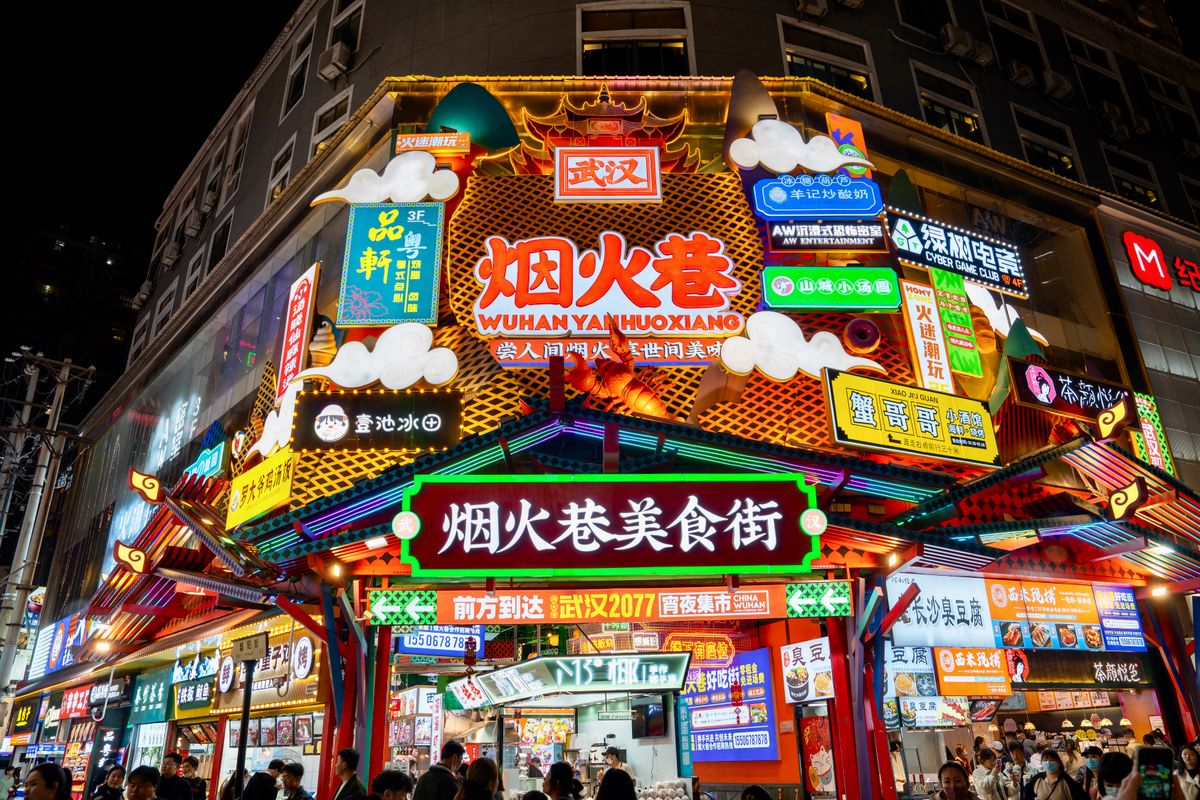
A neon-lit night food street near Jianghan Road in Wuhan
This is where most first-time visitors should book a room. Rates run cheaper than you'd expect for a historic core: budget hotels start around ¥180 to ¥250 a night, midrange chain hotels (Ibis, Jinjiang, Home Inn) sit in the ¥300 to ¥450 range, and a handful of boutique riverside properties go above ¥600. Rooms with a Yangtze River view or a window onto the pedestrian street itself carry a real price premium, and they also mean more noise until close to midnight, so ask for a courtyard-facing room if you want quiet before then.
Guanggu (Optics Valley): Wuhan's Tech and University District
Guanggu sits roughly 25 km east of Jianghan Road in Hongshan District, on the far side of East Lake. It grew up around the East Lake High-Tech Development Zone and today houses Wuhan University, Huazhong University of Science and Technology, and the offices of companies like Xiaomi, Fiberhome, and a long list of optoelectronics and semiconductor firms, which is where the "Optics Valley" name comes from.
For sightseeing, there isn't much to do in Guanggu itself: no historic core, no riverside promenade, mostly office towers and campus streets. What it does have is newer, larger hotel rooms built for business stays: the Wuhan Marriott Hotel Optics Valley, Hyatt Regency Wuhan Optics Valley, Hilton Wuhan Optics Valley, and a Crowne Plaza all sit inside the district, generally priced ¥450 to ¥750 a night, with more meeting rooms, gyms, and pools than the older Jianghan Road hotels tend to offer.
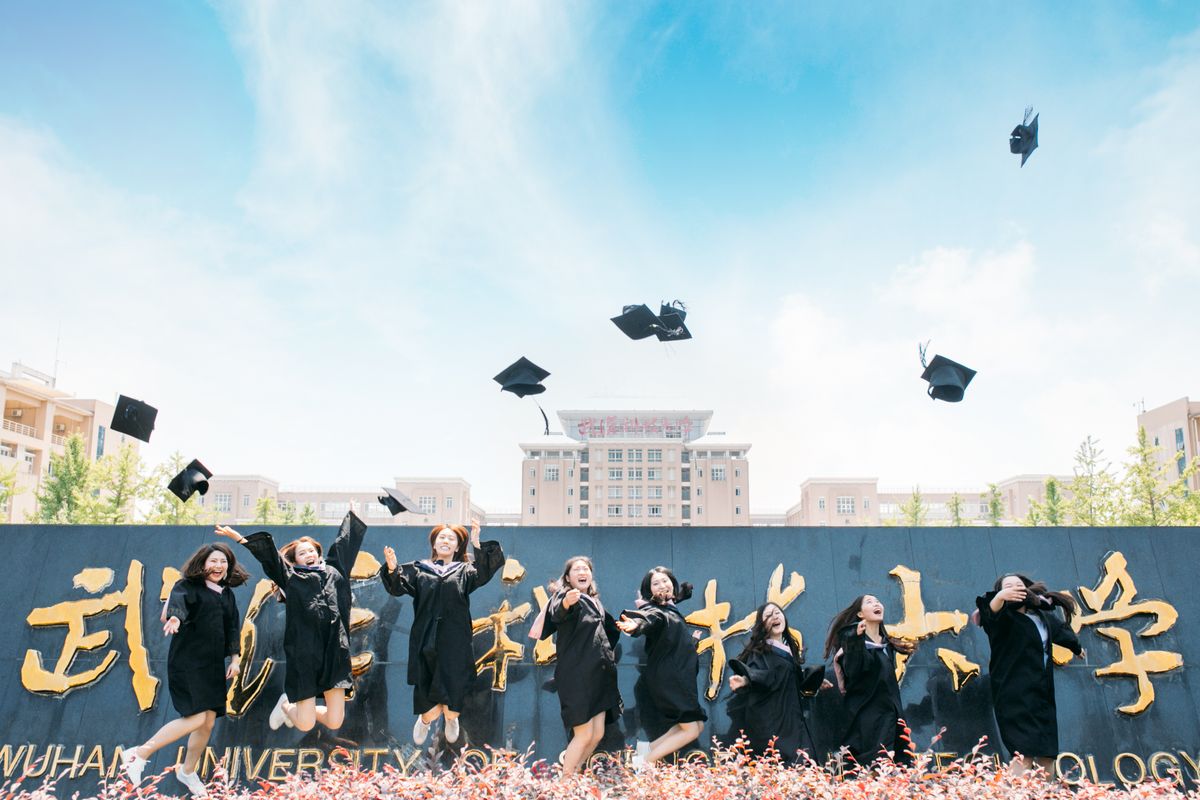
Graduates celebrating outside a university campus gate in Wuhan's Guanggu district
Guanggu makes sense if:
- You're in Wuhan for business, a conference, or a university visit and don't need to be near the sightseeing core.
- You're staying a week or longer and want a quieter, more residential base, with newer apartment-style rooms and serviced-apartment options.
- You want easy access to East Lake (Donghu), the largest urban lake inside a Chinese city, which borders Guanggu on its western edge and is worth a half-day bike ride or boat trip. Wuhan University's cherry blossom season, usually mid-March, also draws big crowds each spring and sits close to this side of the city.
Jianghan Road vs Guanggu: Which Should You Pick
| Jianghan Road | Guanggu (Optics Valley) | |
|---|---|---|
| Best for | First-time sightseeing, short trips (1 to 4 days) | Business, conferences, stays of a week or more |
| Distance to Yellow Crane Tower | 15 to 20 min by taxi or metro | 45 to 60 min by taxi or metro |
| Distance to Tianhe Airport | About 40 min via Metro Line 2, no transfer | About 55 to 65 min via Metro Line 2, no transfer |
| Typical room rate | ¥180 to ¥600 | ¥450 to ¥750 |
| Atmosphere after dark | Lit up, loud, walkable, crowded on weekends | Quiet, campus-like, little street life past 10 PM |
| Nearest metro lines | Line 2 and Line 6 (interchange at Jianghan Road station) | Line 2 and Line 11 (Optics Valley Square station) |
Getting Between the Two Districts
The good news is you don't need to transfer trains. Wuhan Metro Line 2 runs as a single, uninterrupted line from Tianhe International Airport Terminal 3, through Wuhan East, past Hankou Railway Station, straight through Jianghan Road station in the old concession core, across the Yangtze into Wuchang, and out to Optics Valley Square at the far end. It's a long ride precisely because it's a long line, part of a network that had grown to 13 lines and 553 km of track by May 2026, so budget 45 to 55 minutes for the full trip between Jianghan Road and Optics Valley Square and settle in with a podcast instead of expecting a quick hop.
If you're arriving by train rather than by plane, Hankou Railway Station sits on Line 2 a few stops from Jianghan Road, making it the most convenient station for anyone heading straight into the old concession district. Wuhan Railway Station (Lines 4, 5, 11, and 19) and Wuchang Railway Station (Lines 4 and 7) both sit closer to Wuchang and reach Guanggu with a single transfer onto Line 2 or Line 11.
For onward travel by high-speed train, Wuhan is one of China's largest rail hubs, sometimes called the country's rail crossroads for how many lines converge here, so wherever you're based, reaching your next city rarely takes more than a short metro ride to the right station first.
Practical Tips Before You Book
- First trip, under 4 days: book Jianghan Road. You'll be within walking or short-taxi distance of Yellow Crane Tower, Hubu Alley, and the night markets, and you won't lose a day of your trip to commuting.
- Business trip or conference in Guanggu: book there directly instead of commuting daily from Jianghan Road. A 45-plus minute ride each way adds up fast over a multi-day stay, and Guanggu's hotels are built for exactly this kind of visit.
- Traveling with kids: Jianghan Road's pedestrian-only stretch and food markets are easier to manage on foot than Guanggu's spread-out, car-oriented layout.
- On a tight budget: Jianghan Road has more sub-¥250 options, while Guanggu skews toward business-hotel pricing across the board.
- Splitting a longer trip: if you're in Wuhan more than four days for both sightseeing and work, book two or three nights in each district rather than commuting the full 45-minute Line 2 ride daily.
- Combining Wuhan with a longer China trip: check our first-time China itinerary for how Wuhan can slot in alongside Beijing, Xi'an, and Shanghai, and see our general guide to where to stay in China for how Wuhan's pricing and layout compare to other cities.
FAQ
Is Wuhan worth visiting? Yes. It's a major Yangtze River city with a genuinely distinct old town at Jianghan Road, one of China's most recognizable towers at Yellow Crane Tower, and street food culture that holds its own against Chengdu or Xi'an. It also tends to be cheaper and less crowded than Beijing, Shanghai, or Xi'an for a similar level of sights.
How many days do you need in Wuhan? Two full days covers the core sights: Yellow Crane Tower, Hubu Alley, Jianghan Road, and a half-day at East Lake. Add a third day if you want to see Guanggu, walk a university campus, or take a slower pass through the old concession buildings.
Where should first-time visitors stay in Wuhan? Jianghan Road, for the reasons above: it puts you closest to the main sights and the best food streets, and it carries the widest range of budget and midrange hotel options.
What is Wuhan famous for? Yellow Crane Tower, hot dry noodles, the Yangtze River bridges, East Lake, and, more recently, its universities and high-tech industry around Guanggu. It's also the capital of Hubei province and one of China's largest inland transport hubs.
Is Jianghan Road safe and walkable at night? Yes. It's a pedestrian-only street with heavy foot traffic and lighting until at least 10 or 11 PM most nights, and it sits among the more heavily patrolled commercial districts in the city. Standard city precautions, watching your bag in crowds and sticking to lit main streets, apply here as they would anywhere.
Sources
- Jianghan Road Pedestrian Street · Wuhan Municipal People's Government
- Optics Valley, a window to the world · Wuhan Municipal People's Government
- Wuhan Metro Line 2 · Wuhan Municipal People's Government
- Yellow Crane Tower · Wuhan Municipal People's Government
- Hubu Lane · Wuhan Municipal People's Government
- Wuhan Hot-Dry Noodles Standard · Wuhan Municipal Administration for Market Regulation