Xi'an to Zhangjiajie Train: Overnight Sleeper Time, Price & Booking (2026)
You board around 9pm in Xi'an, sleep through Henan and Hubei, and wake up climbing into the mountains around Zhangjiajie. That's the honest version of this route: there's no bullet train that does it in a few hours, so most travelers either take an overnight sleeper or fly. Here's what the direct trains cost, how the overnight ride works if you've never done one, and how to split the two cities into one trip that includes the Terracotta Army and the sandstone pillars without wasting a day in transit.
For step-by-step guidance on registering, choosing between 12306 and Trip.com, and boarding with only your passport, see our complete guide to booking China's high-speed trains.
Is there a direct train from Xi'an to Zhangjiajie?
Not a high-speed one. Xi'an and Zhangjiajie sit on different rail corridors, and no G or D bullet train currently runs the full distance, about 1,100 km (682 miles), point to point. What does run direct are conventional Z, T, and K trains: overnight sleeper services that cover the distance in 12.5 to 14 hours. That's the trade-off on this route: no daytime bullet train, but a real overnight sleeper that gets you there while you sleep.
Typical direct departures (check exact numbers on 12306 before you book, since train numbers shift):
| Train | Xi'an dep. | Zhangjiajie arr. | Duration |
|---|---|---|---|
| Z41 | 21:27 | 08:43 (+1 day) | ~12h 44m |
| T307 | 19:56 | 06:56 (+1 day) | ~13h 00m |
| T197 | 17:21 | 03:46 (+1 day) | ~13h 35m |
| K367 | 02:23 | 12:15 (same day) | ~14h 08m |
Going back, Z42, Z306, T270, and K368 run the reverse direction on similar overnight schedules (14 to 17 hours depending on the train). Z trains are generally the fastest and newest rolling stock; K trains are older and slightly cheaper but add an hour or two.
Check Sleeper Berths on Trip.com
English booking, seat maps, no Chinese ID number needed
Some links are affiliate links; we may earn a commission at no extra cost to you.
If you'd rather book directly with the railway, 12306.cn (and its English app) sells the same tickets for free, with no service fee. Trip.com charges a small booking fee but has an English interface and lets you pay with a foreign card, which matters if 12306's ID-verification step gives you trouble.
Hard sleeper vs soft sleeper: what you get
Both classes exist on every direct train on this route.
- Hard sleeper (¥260 to ¥265 one way): open bays of 6 bunks (three tiers, no door), the standard choice for budget and mid-range travelers. It's not padded any less than soft sleeper, just less private.
- Soft sleeper (¥405 to ¥410 one way): closed 4-berth compartments with a locking door, more legroom, and usually a quieter car overall.
Prices move with season and train, so treat these as ballpark figures and confirm on 12306 or Trip.com before you commit to a date. For a 13-hour overnight ride, most people find hard sleeper perfectly comfortable; soft sleeper is worth the upgrade if you're traveling with kids, want to keep luggage more secure, or just sleep light and want the door closed.
If none of the sleeper classes above are available for your date (this route sells out fast around holidays), see our guide on what to do when China train tickets are sold out.
Booking practicalities: reserve berths early
Sleeper berths on this route go fast, especially lower bunks and anything around a weekend or a Chinese public holiday. A few concrete rules:
- Tickets release 15 days ahead on 12306 (some overnight trains show slightly different windows depending on origin station). Set a calendar reminder for exactly 15 days before your travel date and book that morning.
- Lower berths sell out first. They're easier to get in and out of and double as a bench seat during the day, so they go before middle and upper bunks.
- Bring your passport. Your name and passport number get printed on the ticket, and station staff check it against your face before you board, no exceptions.
- If you booked through Trip.com, you'll usually need to pick up a paper ticket at the station (or at self-service kiosks using your passport), so arrive at least 45 minutes early.
For a full walkthrough of 12306 in English, see our guide on using 12306 as a foreigner, and for how far out you can book, see China train ticket booking windows.
What an overnight Chinese sleeper train is like
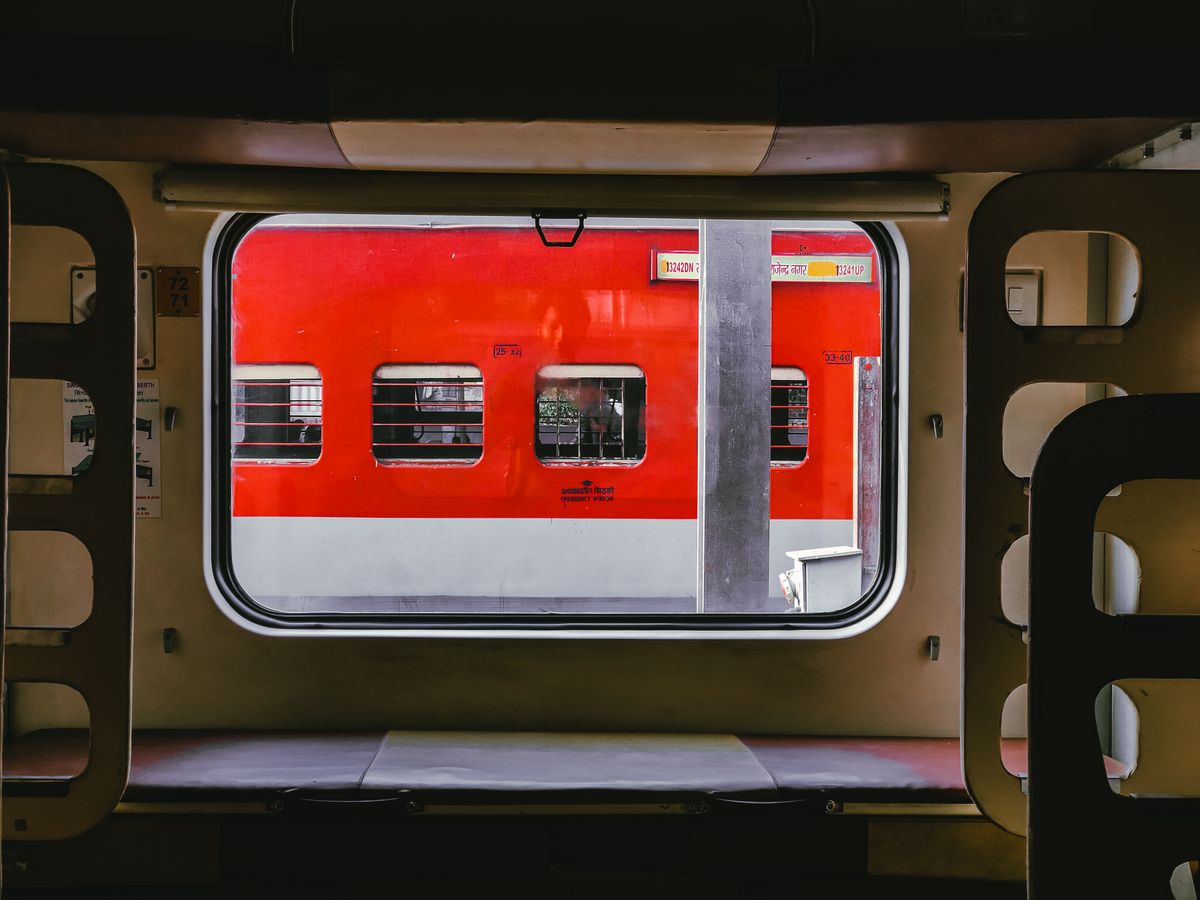
Hard sleeper compartment on an overnight Chinese train, bunks visible through the window
If you've never slept on a Chinese train, here's the practical rundown:
- Bedding is provided and already made up on your bunk: a sheet, pillow, and blanket. You don't need to bring your own, though a small travel pillow helps if you're picky.
- Luggage storage is under the bottom bunk (large suitcases) and on a shelf above the corridor door (smaller bags). Keep valuables with you, not stashed in the open bay.
- The dining car serves basic hot meals and instant noodles, and every carriage has a hot water dispenser for cup noodles or tea. Bring your own snacks and a cup noodle if you're picky about train food; it's genuinely one of the best cheap dinners on board.
- Ticket swap system: a conductor collects your paper ticket shortly after boarding and gives you a plastic tag instead. They swap it back and wake you about 20 to 30 minutes before your stop, so you don't need to set an alarm, though it's smart to anyway.
- Lights and announcements dim around 22:00 to 22:30, and the hallway lighting stays low overnight. Bring earplugs and an eye mask if you're a light sleeper, and pack slip-on shoes since you'll want to walk to the toilet or dining car without lacing up boots.
- Toilets are shared per carriage, squat-style in most cars with one Western-style option, and get less pleasant toward the end of a 13-hour ride, so go early.
For the mechanics of boarding, station procedures, and reading your e-ticket, see how to ride China's trains, and check luggage size and weight limits before you pack for the overnight leg.
Combining Xi'an and Zhangjiajie in one trip
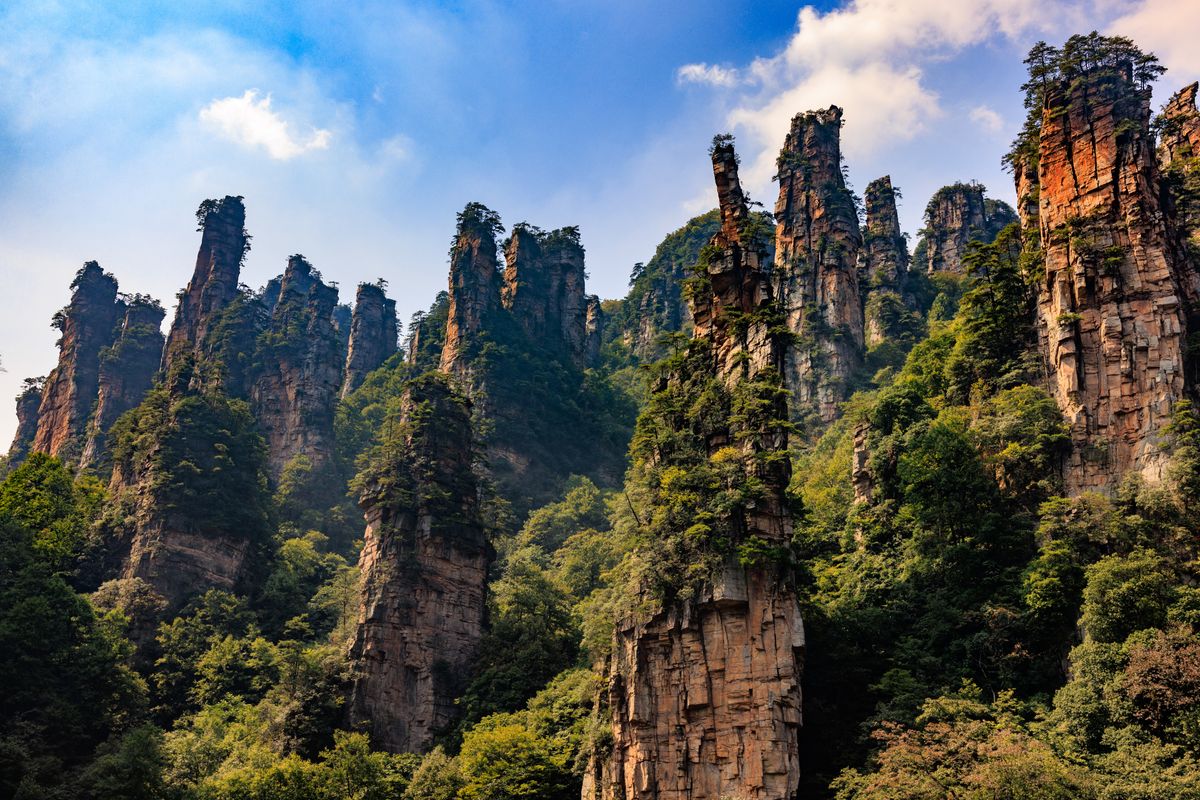
Zhangjiajie's sandstone pillars rising above the forest at Wulingyuan
This pairing works well precisely because the overnight train removes a full travel day: you sleep through the transfer instead of losing daylight hours to it. A workable split for a 6 to 7 day trip:
- Day 1 to 2, Xi'an: the Terracotta Army (half a day, plus travel time to the site), the City Wall, and the Muslim Quarter for food. See our Xi'an 3-day itinerary if you want to stretch this to three full days, and check where to stay in Xi'an or specifically near the Bell Tower for central options.
- Day 2, evening: board an overnight sleeper (Z41 at 21:27 is a good option, arriving 08:43 the next morning) straight after dinner in the Muslim Quarter.
- Day 3 to 5, Zhangjiajie: you land already checked into a full day, since the train arrives mid-morning. Head to Wulingyuan for the Yuanjiajie pillars and Tianzi Mountain, then the glass skywalk. Our Zhangjiajie 3-day itinerary breaks down the park logistics, and where to stay in Zhangjiajie covers whether to base yourself in Wulingyuan village or downtown.
- Day 5 or 6: fly out of Zhangjiajie Hehua Airport rather than train back, since flights connect faster to most onward hubs (Shanghai, Guangzhou, Beijing) than a return sleeper does.
If Xi'an to Chengdu is also on your route (a common add-on for Sichuan-bound travelers), we've covered that separately in our Xi'an to Chengdu train guide.
Should you just fly instead?
Flying is the fast option if the overnight train doesn't appeal. Xi'an Xianyang to Zhangjiajie Hehua runs about 1.5 hours direct, with roughly 3 flights a day on carriers including China Eastern, China Express, Sichuan Airlines, and Tianjin Airlines. Fares start around $120 to $130 one way in low season and climb well above that around holidays.
The honest comparison: flying saves you 11 to 12 hours of travel time but costs 2 to 3 times what a hard sleeper does, and you still need to get to and from two airports (Xianyang is a 45-minute drive from central Xi'an; Hehua is close to Zhangjiajie city). If your schedule is tight, fly. If you'd rather save the cash and treat the overnight ride as part of the trip rather than dead time, take the sleeper.
There's also a same-day alternative that skips both the overnight train and the flight: ride a high-speed train from Xi'an North to Changsha South (roughly 6 to 7 hours on a G train), then transfer to a high-speed Changsha to Zhangjiajie service (about 2 to 2.5 hours). It's a long day with a station transfer in the middle, but it runs entirely on modern bullet trains and avoids the overnight sleeper if you'd rather not deal with shared bunks.
Quick answer
- No direct bullet train exists between Xi'an and Zhangjiajie; take an overnight Z/T/K sleeper (12.5 to 14 hours) or fly (about 1.5 hours).
- Hard sleeper runs roughly ¥260, soft sleeper roughly ¥405 to ¥410, one way.
- Book 15 days ahead on 12306, or use Trip.com if you want an English interface.
- Combine both cities by riding the overnight train right after your last evening in Xi'an, so you arrive in Zhangjiajie already mid-morning with a full day ahead of you.
FAQ
Is there a bullet train from Xi'an to Zhangjiajie? No, not a direct one. The fastest all-bullet-train option involves transferring through Changsha, which takes roughly 9 to 10 hours total across two trains. The direct option is an overnight sleeper on a Z, T, or K train.
How long is the Xi'an to Zhangjiajie sleeper train? Direct sleeper trains run about 12.5 to 14 hours depending on the specific train (Z trains tend to be faster than K trains).
How much does a sleeper train from Xi'an to Zhangjiajie cost? Hard sleeper is roughly ¥260 (about $37), and soft sleeper is roughly ¥405 to ¥410 (about $58), one way. Prices vary slightly by train and season, so confirm on 12306 or Trip.com before booking.
Should I book hard sleeper or soft sleeper for this route? Hard sleeper is fine for most travelers on a single overnight ride; it's an open 6-berth bay, not private, but comfortable enough for one night. Soft sleeper (a closed 4-berth compartment with a door) is worth the extra cost if you're traveling with children, want more privacy, or are a light sleeper.
Is it better to fly or take the train between Xi'an and Zhangjiajie? Flying takes about 1.5 hours and costs more (from around $120 one way); the sleeper train takes 12.5 to 14 hours but costs a fraction of that and saves you a hotel night, since you sleep on the train. Choose based on whether your budget or your schedule is tighter.