Beijing 240-Hour Transit: PEK vs PKX Airports & 10-Day Itinerary (2026)
Quick answer: Beijing has two airports on China's 240-hour visa-free transit list, Capital (PEK) and Daxing (PKX). Either one starts the clock, and both let you roam Beijing, Tianjin, and Hebei province for up to 10 days on a confirmed onward ticket to a third country, no visa application required.
Most transit guides treat China's 240-hour rule as one national policy and stop there. Beijing deserves its own breakdown because it is the only city in the country where travelers get a choice of two international gateways under the same 240-hour clock, and the airport you land at changes how your ten days should actually be planned. This piece is the Beijing-specific companion to our full 240-hour visa-free transit guide: read that one first if you have not already confirmed your nationality is on the eligible list, then come back here to plan the Beijing leg.
PEK or PKX: which Beijing airport starts your 240 hours
Both Beijing Capital International Airport (PEK) and Beijing Daxing International Airport (PKX) are on the national list of 65 ports across 24 provinces where the 240-hour transit stamp is issued. Landing at either one, with a confirmed onward ticket to a third country or region departing within 240 hours, gets you the same stamp and the same rights inside Beijing, Tianjin, and Hebei.
| Capital Airport (PEK) | Daxing Airport (PKX) | |
|---|---|---|
| Distance to Forbidden City | ~25 km | ~46 km |
| Taxi time to city center | 40-60 min | 90-120 min (often with a transfer) |
| Main airlines | Air China hub; most Star Alliance and oneworld carriers | China Southern and China Eastern hub; most SkyTeam carriers, plus Qatar Airways |
| Express rail | Airport Express to Dongzhimen/Sanyuanqiao, ~25-30 min, connects to Line 2 and Line 10 | Daxing Airport Express to Caoqiao, ~22 min, then transfer to Line 10 or Line 19 for downtown |
| Terminal to know | T3 for most international flights | Single terminal, opened 2019, starfish-shaped roof |
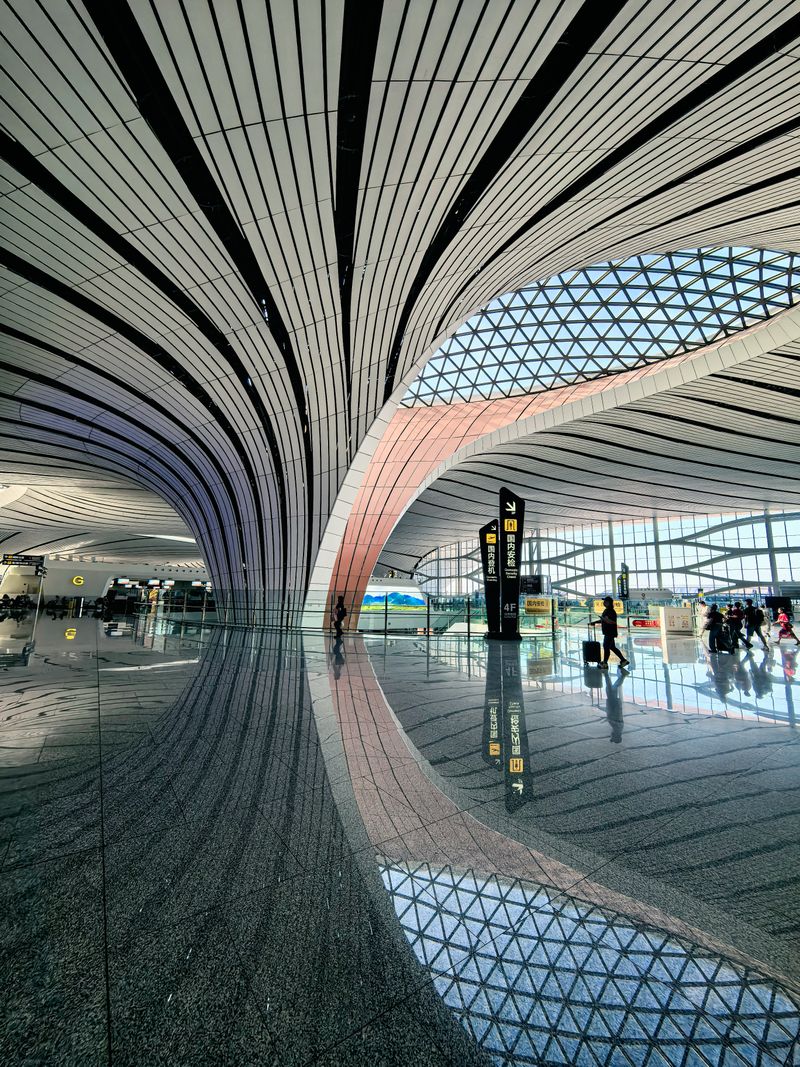
Interior of Beijing Daxing International Airport with its distinctive starfish-shaped terminal roof
If your flight lands at PEK, you are already close to the old city center where the Forbidden City, Tiananmen Square, and most of the hutong neighborhoods sit, so plan your first two or three days there before ranging further out. If you land at PKX, budget an extra hour on arrival day, and consider basing your first nights near a Daxing Airport Express stop such as Caoqiao before moving into the Forbidden City area for the middle stretch of your trip. Nothing stops you from flying into one airport and departing from the other. As long as your final onward ticket is confirmed and dated within 240 hours of your first arrival stamp, immigration does not require a matching port of exit.
The rules in plain terms
As of 2026 the eligible-nationality list has grown to 55 countries, spanning Europe, North and South America, Oceania, and a handful of Asian and Middle Eastern countries including Singapore, Japan, South Korea, Brunei, Indonesia, and the UAE. Check your passport against the current list on the pillar 240-hour transit guide before booking anything, because it changes more often than most travel blogs update.
To actually get the stamp at a Beijing immigration counter you need: a passport valid at least three months beyond your arrival date, a completed arrival/departure card, and a paid, confirmed onward ticket to a third country or region (not simply a domestic connection or an open return to your home country) departing within 240 hours. Tell your check-in agent at your origin airport that you intend to use the transit policy so your boarding pass and documents are flagged correctly, then request the stamp at the transit or arrivals immigration desk in Beijing, not at a separate visa window.
Once stamped, you can move freely across Beijing municipality, Tianjin municipality, and all of Hebei province without any extra permit. That region-lock was widened in late 2025, so older articles describing a narrower zone are out of date. Activities allowed include sightseeing, business meetings, visiting family, and transiting; the policy does not cover paid work, study, or journalism, which still need a real visa.
A realistic 10-day Beijing itinerary
Ten days sounds generous, but the clock starts the moment you're stamped in, not when you finish clearing customs, so treat day one as a half-day. Here is a pacing that covers the essentials without a Great Wall day trip that eats your whole itinerary.
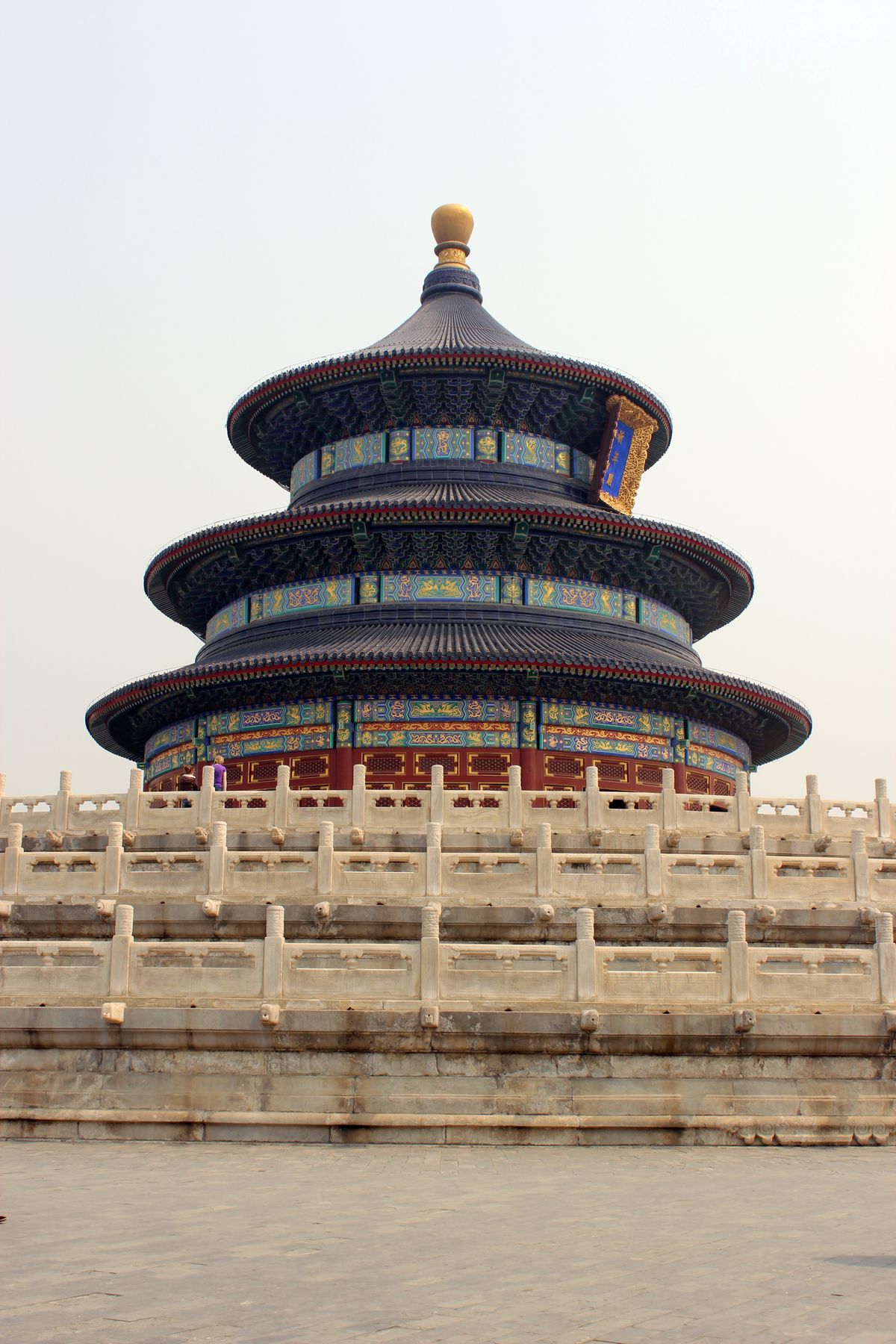
The Hall of Prayer for Good Harvests at the Temple of Heaven in Beijing
| Days | Focus |
|---|---|
| 1 | Arrival, immigration, transfer to hotel; short walk around your neighborhood |
| 2-3 | Forbidden City, Tiananmen Square, Jingshan Park (for the rooftop view over the palace), a hutong walk near Nanluoguxiang |
| 4 | Temple of Heaven and the Summer Palace, split across the morning and afternoon |
| 5 | Great Wall day trip (see section below for which section fits a day) |
| 6 | Day trip to Tianjin: a fast train covers the distance in well under an hour and stays inside the permitted region; see our Beijing to Tianjin train guide for schedules and ticket options |
| 7 | 798 Art District and Sanlitun, or a Hebei day trip if your dates and energy allow |
| 8 | Lama Temple, Beihai Park, catch-up on anything missed |
| 9 | Buffer day for weather delays, a second Great Wall section, or slow travel |
| 10 | Departure day, budget 3+ hours before your onward flight for security and immigration |
Beijing, Shanghai, Guangzhou, and Shenzhen each run their own version of the 240-hour policy with their own eligible ports and, in some cases, their own regional boundaries, so don't assume an itinerary built for one city transfers cleanly to another.
Great Wall in a day: which section actually works
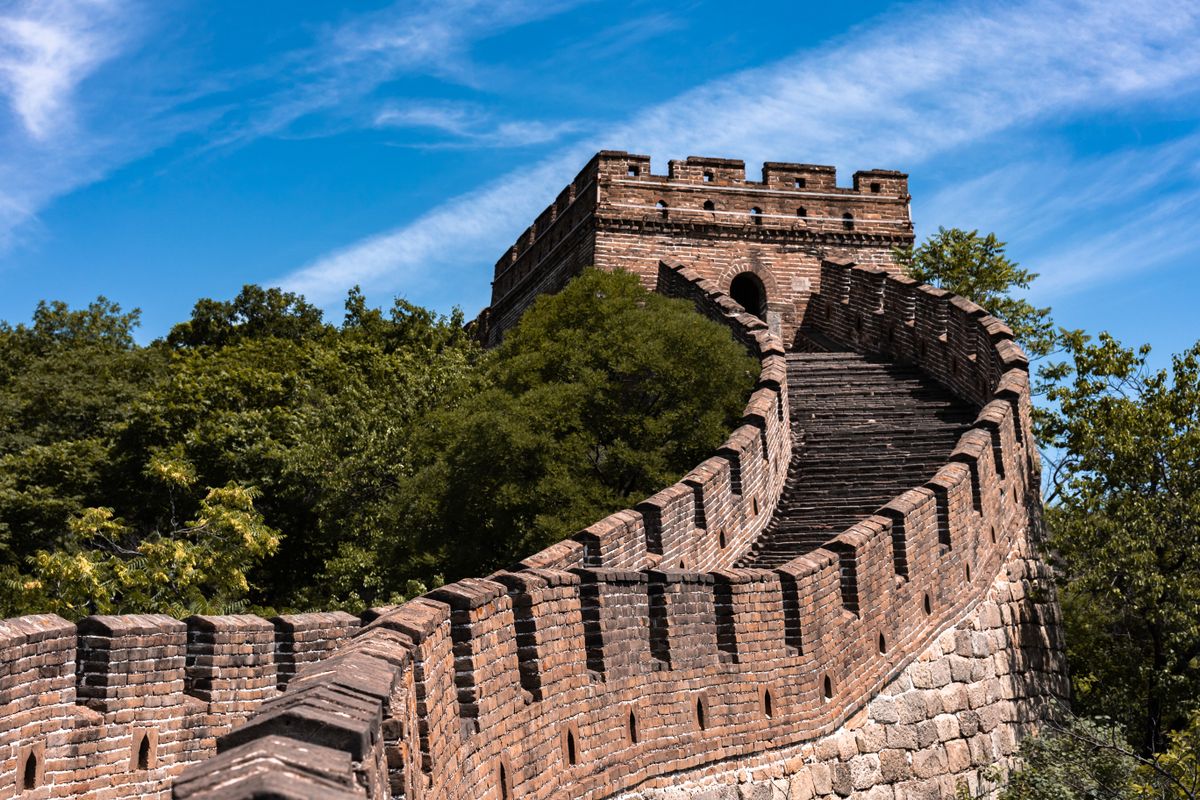
A restored watchtower and wall path on the Great Wall of China near Beijing under a clear blue sky
This is the step where most transit itineraries fall apart. The Great Wall is not one easy day trip, it's several different day trips with very different time budgets.
Mutianyu is the section most travelers without a car should book. A direct shuttle from the Beijing Tourist Distribution Center near Qianmen runs roughly every 15-30 minutes in the morning, costs about 80 yuan round trip, and gets you a restored wall section with a cable car and a toboggan run down, so you're not stuck doing a punishing hike on a tight schedule. Budget the whole day: door to door is realistically 7-8 hours including the wall itself.
Badaling is the easiest to reach on paper, with bus 877 from Deshengmen or the S2 suburban train doing the trip in an hour to 90 minutes, and it's the most complete restoration you'll see. The tradeoff is crowds, especially on weekends, which can eat more time in queues than the Mutianyu trip loses in travel time.
Jinshanling is the one to skip unless you have a spare full day and prioritize scenery over convenience. The tourist bus from Dongzhimen takes about two hours each way, so between transit, the visit itself, and the return, you're committing 8+ hours and giving up flexibility elsewhere in your ten days.
For navigation between metro stops, bus stations, and your hotel, download Amap before you land. It's the map Chinese drivers and bus systems actually use, and English place names alone often won't get you to the right departure point for the Great Wall shuttles.
Common mistakes
- Booking Jinshanling or a "quiet, off-the-beaten-path" Great Wall section without checking travel time first. A 2-hour-each-way bus ride plus the visit itself can consume most of a transit day that should also cover Tianjin or a second city sight.
- Assuming PEK and PKX are interchangeable for planning purposes. Daxing is roughly twice as far from the Forbidden City area as Capital Airport, and that extra hour or two matters when you're working with a fixed 240-hour budget.
- Forgetting that the 240-hour clock starts at the immigration stamp, not after you clear customs and collect luggage. Arrivals that take an hour of queueing still eat into your ten days.
- Thinking a Tianjin day trip needs a separate visa or permit. It doesn't. Tianjin is inside the same Beijing-Tianjin-Hebei zone covered by the transit stamp, and the fast train makes it a genuinely easy day out.
- Booking a domestic connecting flight as the "onward ticket." Immigration checks for a ticket to a third country or region, not a flight to another Chinese city.
Who this is for
This plan works well if you're transiting through Beijing between two other countries, hold a passport from one of the 55 eligible nations, and want to see the Forbidden City and at least one Great Wall section without applying for a full tourist visa. It also suits travelers who already planned a Beijing stopover and want to add a low-effort Tianjin day trip.
It's not the right fit if you need more than 10 days in the Beijing area, plan to work or study while in China, are booked only on a domestic connecting flight rather than international onward travel, or hold a passport that isn't on the current 55-country list, in which case you'll need a standard visa instead.
FAQ
Can I use the 240-hour transit policy at both Beijing airports on the same trip? Yes. You can arrive at Capital Airport and depart from Daxing, or the reverse. What matters is that your onward ticket to a third country is confirmed and departs within 240 hours of your first arrival stamp, not which airport you use for entry versus exit.
Do I need a separate visa or permit for a Tianjin day trip? No. Tianjin sits inside the Beijing-Tianjin-Hebei region that the 240-hour stamp already covers, so a fast-train day trip needs nothing beyond the transit stamp you already have.
Which Great Wall section is realistic for a 240-hour Beijing visit? Mutianyu is the best balance of scenery and travel time for most visitors without a car. Badaling is faster to reach but more crowded. Jinshanling looks better in photos but costs a full day of travel.
How many countries currently qualify for China's 240-hour transit in Beijing? 55 countries as of 2026, spanning Europe, the Americas, Oceania, and several Asian and Middle Eastern nations. Confirm your specific country on the current list before booking, since it has expanded multiple times in recent years.
Can I extend my stay past 240 hours if my flight gets delayed? The transit stamp does not include a grace period for flight delays. If your connection is at genuine risk, contact your airline or a local immigration office as soon as possible rather than assuming extra time will be granted automatically.
Not sure if you even need a visa?
Check your China visa-free eligibility →
Sources
- 240-Hour Visa-Free Transit Policy for Foreigners · National Immigration Administration (NIA)
- 240-Hour Visa-Free Transit in Beijing · Beijing Municipal Government