China 240-Hour Visa-Free Transit by Train: 2026 Rules
Quick answer: A train can form the international exit or entry leg of China's 240-hour visa-free transit, but only through an eligible exit-entry port and with a confirmed onward route to a third country or region. West Kowloon Station joined the policy on November 5, 2025.
A domestic train by itself does not create a transit. Your full route must show origin A, mainland China, then destination B, with A and B different. Hong Kong and Macao count as regions outside mainland China for this routing test.
Can you use the 240-hour transit policy and leave China by train?
Yes, if all of these conditions are met:
- your nationality is one of the 55 listed by the National Immigration Administration
- you arrive through one of the 65 eligible ports
- your confirmed onward train leaves through an eligible exit-entry port within the permitted time
- the onward destination is a third country or region, not the place from which you entered
- you remain within the policy's permitted areas while in mainland China
- your purpose is allowed, such as tourism, business, a visit or family reunion
Border inspection makes the final decision at entry. Carry the confirmed train number, date, seat, destination and booking record in a form you can show without mobile data.
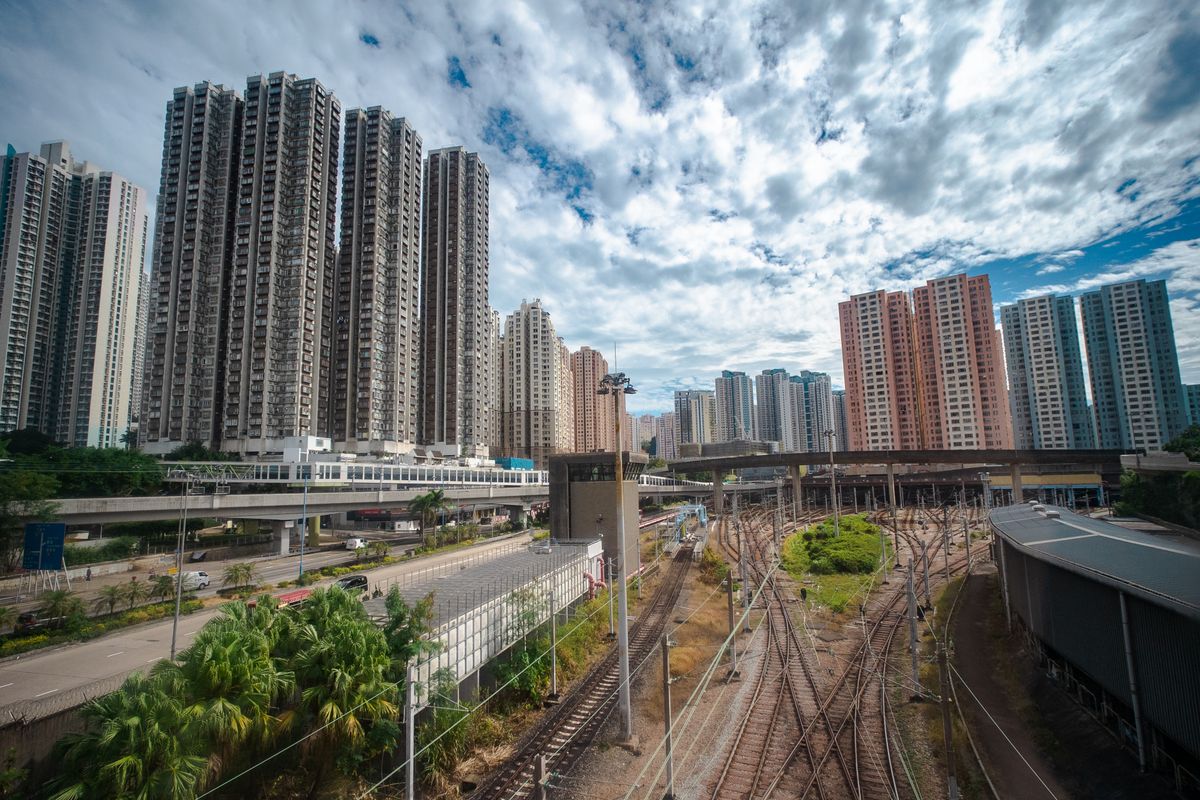
Rail lines at a station in Hong Kong
Which train port matters most for tourists in 2026?
The most useful rail port is West Kowloon Station on the Guangzhou-Shenzhen-Hong Kong Express Rail Link. The NIA added it, along with four other Guangdong ports, from November 5, 2025. That change raised the total number of eligible ports from 60 to 65.
This update makes routes such as these possible in principle:
| Route | Policy logic | Likely result |
|---|---|---|
| Seoul → Guangzhou by air → Hong Kong West Kowloon by train | South Korea, mainland China, Hong Kong | Valid transit pattern if all other conditions are met |
| Hong Kong West Kowloon → mainland China by train → Bangkok by air | Hong Kong, mainland China, Thailand | Valid transit pattern if nationality, ports and area qualify |
| Hong Kong → Guangzhou → Hong Kong | Same origin and onward region | Not a third-region transit |
| Paris → Beijing → Shanghai by domestic train, no booked exit | No confirmed international exit | Not enough for 240-hour transit |
| Tokyo → Shanghai → Seoul | Different origin and destination | Valid pattern when using eligible ports |
Do not rely on old articles published before November 2025 that say West Kowloon cannot be used. The rule changed. Check the current NIA port list again before purchase because a rail station can handle international passengers without being eligible for this specific policy.
What is the difference between 24-hour and 240-hour train transit?
The 24-hour visa-free transit applies at open exit-entry ports to travelers of all nationalities who hold confirmed international air, ship or train connections. Travelers normally remain in the restricted port area. Anyone who needs to leave that area must request a temporary entry permit.
The 240-hour policy is narrower by nationality and port but permits eligible travelers to enter mainland China and move within approved areas for up to 10 days. The NIA currently lists 55 nationalities and 65 ports across 24 provincial-level regions.
The 240-hour clock is handled through the temporary entry permission issued at border inspection. Read the expiry shown on your document and do not calculate a later deadline from your hotel check-in time.
How should you book the onward train?
Buy the cross-border segment before flying to China. The officer needs proof of a confirmed onward journey, not a plan to search for tickets after entry.
The official Railway 12306 English site accepts valid foreign passports. Cross-border tickets generally have a 15-day advance-sale period including the departure date, and tickets from Hong Kong West Kowloon bought through 12306 must be purchased no later than 30 minutes before departure. For immigration evidence, booking days ahead is safer than relying on that final cutoff.
Keep these items together:
- Passport used for the booking
- Inbound flight, ship or train confirmation
- Onward West Kowloon or other eligible-port ticket
- First-night hotel reservation
- A simple route showing the cities you will visit
- Offline copies in English and, if available, Chinese
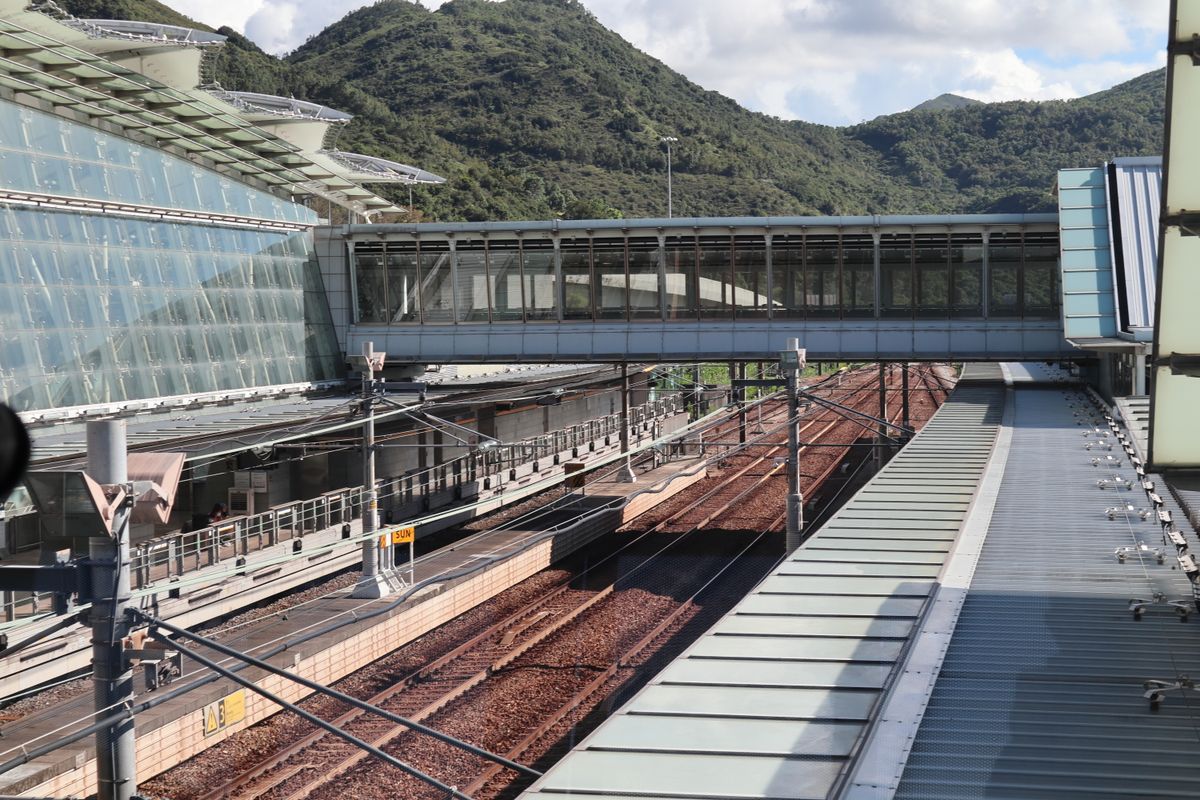
Contemporary railway station at Hong Kong's mountain edge
The name and passport number on the railway ticket must match the document in your hand. If you renew a passport after booking, contact the seller before travel rather than assuming the old booking will pass both railway and immigration checks.
Where can you travel during the 240 hours?
The policy does not grant unrestricted travel across every part of China. The NIA publishes permitted stay areas by port and province. Some entries allow movement across broad groups of provinces; others limit the traveler to named cities or a single province.
Plan from the official table, not from a map drawn by a travel blog. A domestic high-speed train may cross an area where you are not allowed to stop. If the route is unclear, call the NIA's 12367 service before buying nonrefundable tickets.
For a simple Guangdong route, enter at Guangzhou or West Kowloon, stay within the current permitted area and depart through an eligible Guangdong or Hong Kong-facing port. For a larger route, verify every overnight city against the NIA list.
Read the main 240-hour visa-free transit guide for the country list and regional table. The China entry requirements guide covers the broader document check before departure.
Common mistakes
- Treating Hong Kong → mainland China → Hong Kong as a third-destination route.
- Showing only a domestic train ticket with no confirmed exit from mainland China.
- Using an international railway station that is absent from the 65-port policy list.
- Reading a pre-November 2025 page about West Kowloon and missing the expansion.
- Booking the onward ticket under a different passport number.
- Traveling outside the permitted stay area because the train itself continues there.
- Assuming approval is automatic before border inspection reviews the documents.
Who this is for
This route works for an eligible traveler combining Guangdong with Hong Kong, or arriving in Hong Kong and leaving mainland China by air to a different country. It can also suit travelers who prefer rail to a second flight.
Apply for a regular visa instead if your nationality is not on the list, your route returns to the same country or region, you need to work or study, your departure port is not eligible, or you want to travel beyond the permitted areas.
Final document check
- Confirm nationality and all ports on the current NIA page.
- Confirm A → mainland China → B, with A different from B.
- Buy the international train before arrival.
- Save ticket details offline.
- Match the passport number exactly.
- Keep hotels and route within permitted areas.
- Ask border inspection or 12367 when the itinerary is unusual.
Frequently asked questions
Can I enter mainland China at West Kowloon with the 240-hour policy?
Yes, West Kowloon became an eligible port on November 5, 2025. You still need an eligible nationality, a confirmed onward journey to a third country or region and a route within permitted areas.
Can I fly into Guangzhou and take a train to Hong Kong?
This can satisfy the route pattern because Hong Kong is a region outside mainland China. The train must depart through an eligible port, and all other policy conditions still apply.
Does a domestic China train count as the onward ticket?
No. A domestic train can be part of your trip, but you also need confirmed transport that exits mainland China to a third country or region.
Do separate flight and train bookings qualify?
The NIA requires confirmed onward transport with dates and seats. Carry both bookings together and make the full route easy to understand; border inspection decides whether the evidence is sufficient.
Is 240-hour transit the same as a ten-day tourist visa?
No. It is a conditional transit permission tied to nationality, ports, route, time and permitted areas. A normal visa supports routes that do not fit those limits.
Not sure if you even need a visa?
Check your China visa-free eligibility →
Sources
- Visa-Free Transit Policies · National Immigration Administration
- Announcement Adding West Kowloon and Four Guangdong Ports · National Immigration Administration
- China Railway Cross-Border Passenger Rules · China Railway 12306