China Visa for Australian Citizens 2026: Visa-Free Entry, Fees and How to Apply
Quick answer: No, most Australians do not need a visa for China right now. Under China's unilateral exemption, ordinary Australian passport holders can enter visa-free for up to 30 days per visit, for tourism, business, family visits and transit, and this runs through December 31, 2026. You only need to apply for a paid visa (L, M or work visa) if your trip is longer than 30 days, or if you're moving to China for study, work or long-term residence.
Australia was added to this exemption list and the policy has been repeatedly extended since. The latest notice from the Chinese Embassy in Canberra, dated November 5, 2025, confirms the 30-day visa-free arrangement is locked in until the end of 2026. Below is what changes depending on why you're going and how long you're staying, since "China visa" for an Australian passport now covers several different situations rather than one product.
Do Australians need a visa for China in 2026?
For the vast majority of trips, no. Since the exemption applies, if you hold an ordinary Australian passport with at least 6 months of validity left from your entry date, you can fly into mainland China and clear immigration without a visa, provided:
- Your stay is 30 days or less per visit
- Your purpose is tourism, business, visiting family or friends, exchanges, or transit
- You're entering with an ordinary (non-diplomatic, non-official) passport
There's no online form to fill out beforehand and no visa sticker in your passport. You just show up with your passport and a return or onward ticket, and immigration processes you like any other visa-free arrival. The exemption doesn't apply to Hong Kong and Macau separately, those Special Administrative Regions run their own entry rules, but it does cover entry into mainland China through any port that processes foreign arrivals.
Where people get caught out is assuming this exemption stretches to cover things it doesn't: working in China, studying for a degree, or staying past 30 days on a single visit. For any of those, you're back to needing a visa applied for in advance.
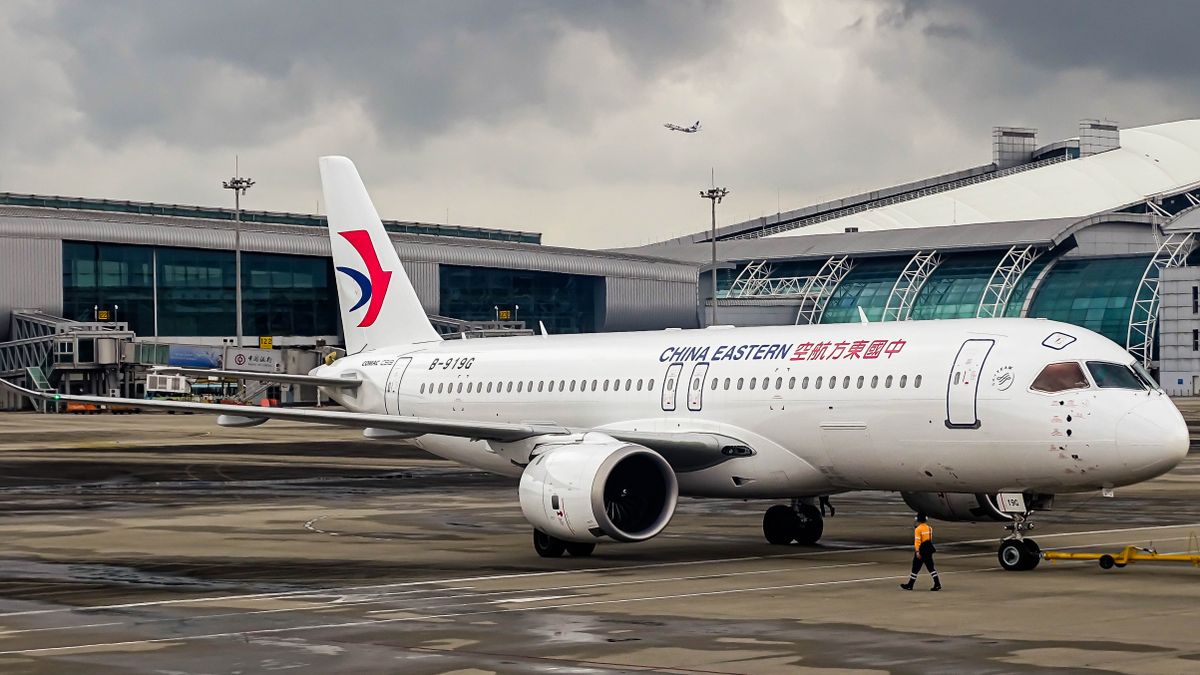
Aircraft on the tarmac at a Chinese airport
Staying longer than 30 days: the tourist (L) visa
If your itinerary runs past 30 days, whether that's a long backpacking loop or an extended family stay, you need an L visa before you fly. As of the current fee schedule (in effect through December 31, 2026), a single-entry L visa for Australian citizens costs AU$56, down from the standard AU$109 rate under a temporary fee cut the Chinese Embassy and consulates rolled out for all applicants.
To apply, you'll need:
- A passport valid for at least 6 months with 2 blank pages
- A completed online application form from the Chinese Visa Application Service Centre (CVASC) portal
- One recent passport-style photo meeting the size and background specs
- Proof of onward or return travel (flight booking)
- Proof of accommodation (hotel booking or an invitation if staying with family/friends)
Applications go through CVASC offices, not the embassy or consulate directly, located in Canberra, Sydney, Melbourne, Brisbane, Perth and Adelaide. Regular processing takes about 4 working days; express (2-3 days) and rush (next day) services are available for an extra fee if you're booking last minute. Since the visa-free entry already covers a 30-day tourist trip at zero cost, only apply for an L visa if you know your trip will run longer or you want a multi-entry visa for repeated short trips within a set period.
Just passing through: do you need a transit visa?
Separately from the 30-day exemption, China also runs a 240-hour (10-day) visa-free transit policy for travelers connecting through certain Chinese cities on the way to a third country or region, provided they hold a confirmed onward ticket and don't leave the designated transit area or municipality.
For Australians, this transit rule is largely beside the point. Since the general 30-day exemption already lists "transit" as a covered purpose, an Australian passport holder connecting through Beijing, Shanghai, Guangzhou or any other Chinese airport can simply use the standard visa-free entry rather than the separate transit scheme; there's no need for an onward ticket to a third country under the general exemption, and you're free to leave the airport and explore rather than being confined to a transit zone or single city. The 240-hour transit route mostly matters for nationalities not on the 30-day list. Where it can still help an Australian traveler is a short layover where you'd rather not spend immigration time or paperwork explaining a "tourism" purpose; but in practice, most Australians connecting through China just clear the standard visa-free entry.
Business visa (M): invitation letters and longer stays
Business trips of 30 days or under are covered by the same visa-free exemption; you don't need an M visa just to attend a meeting, trade show or sign a contract on a short visit. An M visa becomes necessary when:
- The business trip runs longer than 30 days
- You're conducting business activity that isn't a one-off visit, such as ongoing contract work, technical installation, or activity that shifts into anything resembling employment
- Your Chinese partner or immigration wants formal sponsorship on file for repeated entries
The core extra requirement for an M visa is an invitation letter from a Chinese company, trade partner or authorized institution. It needs to state your full name, passport number, the purpose and dates of your visit, and the inviting organization's name, contact details, and an official stamp with signature. A photocopy, fax or printed scan is accepted for the application, though immigration officers can ask for the original at the border. Fees mirror the L visa: single-entry M visas are also discounted to AU$56 through the end of 2026, while multi-entry business visas are roughly 40 percent cheaper than the standard rate under the same fee reduction.

Business meeting in a Chinese office
Tourist, transit and business entry compared
| Entry type | Who it's for | Max stay | Visa needed? | Cost |
|---|---|---|---|---|
| 30-day visa-free entry | Tourism, business, family visits, transit | 30 days per visit | No | Free |
| Tourist (L) visa | Trips over 30 days, or repeat multi-entry tourism | Set on the visa (commonly 30-90 days per entry) | Yes | AU$56 single entry |
| 240-hour transit | Connecting to a third country, confirmed onward ticket | 10 days, transit area only | No (separate scheme, rarely needed by Australians) | Free |
| Business (M) visa | Business over 30 days, or ongoing/repeat business activity | Set on the visa | Yes | AU$56 single entry, less for multi-entry |
| Work (Z) visa | Employment in China | Duration of employment | Yes, applied for after work permit approval | Varies |
Common mistakes Australians make with the China visa rule
- Assuming "visa-free" means unlimited stay. It's capped at 30 days per visit. Overstaying, even by a day, risks fines and can complicate future entries.
- Thinking a work assignment counts as "business." Sitting in meetings for two weeks is business; taking a salaried role or working on-site for a Chinese employer is not covered by the exemption and needs a proper work visa (Z) with a work permit arranged first.
- Applying at the wrong window. Because the visa-free policy is periodically extended (most recently to December 31, 2026), it's worth checking the current end date shortly before you travel rather than assuming last year's rules still apply.
- Forgetting passport validity. Six months of validity from your entry date is the standard requirement; a passport expiring in three months can get you refused boarding even though you don't need a visa.
- Applying for a visa directly at the consulate. Since 2016, Australian applicants must go through a Chinese Visa Application Service Centre, not the embassy or consulate counter, for standard visa applications.
Who this is for
You're covered by the free 30-day exemption if you're: a tourist visiting for up to a month, someone attending a short business meeting or trade fair, visiting family or friends, or connecting through China on a layover.
You still need to apply for a visa if you're: planning a trip longer than 30 days on a single visit, moving to China to study at a university or language school, taking up paid employment or an internship, or working on a long-term contract or installation project that goes beyond a short business visit.
Before you fly, it's worth sorting travel insurance separately since visa-free entry doesn't include any health or travel cover. SafetyWing is a straightforward option for short trips if you don't already have annual cover.
Before you book
- Check your passport has at least 6 months of validity left from your planned entry date and 2 blank pages.
- Confirm your trip purpose and length fit the 30-day exemption; if not, start your L or M visa application at least 2-3 weeks before departure.
- If applying for a visa, book your CVASC appointment or postal submission early, standard processing is about 4 working days but can back up around holidays.
- Keep a copy of your return or onward flight booking and accommodation details on hand for immigration, even under visa-free entry.
Book flights and hotels to China
Trip.com covers flights, hotels, trains and airport transfers in one place
Some links are affiliate links; we may earn a commission at no extra cost to you.
FAQ
Do Australians need a visa to visit China? Not for stays of 30 days or less for tourism, business, family visits or transit. China's unilateral exemption for Australian passport holders runs through December 31, 2026. Longer stays, study or work still require a visa.
How much does a Chinese visa cost for Australian citizens? If you do need one, a single-entry L (tourist) or M (business) visa currently costs AU$56 through the end of 2026, down from the standard AU$109, plus any CVASC service fee for processing your application.
Can I extend my 30-day visa-free stay once I'm in China? Generally no. The 30-day limit applies per visit, and visa-free entries aren't designed to be extended at a local police station the way some visa categories are. If you need longer, apply for an L visa before you travel.
Is the 240-hour transit policy the same as the 30-day visa-free entry? No. The 240-hour rule is a separate scheme for travelers continuing to a third country with a confirmed onward ticket. Australians usually don't need it since the 30-day exemption already covers transit and lets you leave the airport freely.
Do I need an invitation letter to enter China visa-free for business? No, not for a business trip of 30 days or under. An invitation letter is only required if you're applying for an M visa because your business stay runs longer than 30 days or involves ongoing activity.
Not sure if you even need a visa?
Check your China visa-free eligibility →
Sources
- Notice on Extension of Visa-free Policy · Embassy of the People's Republic of China in Australia
- The Embassy and Consulates of China in Australia to Reduce Regular Visa Fees · Consulate-General of the People's Republic of China in Perth