China Visa for Malaysian Citizens: 30-Day Visa-Free Rules for 2026
You booked a flight to Guangzhou for a trade fair, or you're finally taking the family to see the Great Wall, and you're not sure whether you need to queue at a visa center first. If you hold a Malaysian passport, the answer changed in a big way in mid-2025, and a lot of blog posts online are still describing the old rules.
Quick answer: Malaysians with an ordinary passport valid for at least 6 months can enter mainland China visa-free for up to 30 days per trip, for tourism, business, family visits, exchanges, private affairs, medical treatment or transit. The catch is a 90-day cap within any rolling 180-day window. If you're going for work, study, media assignments, long-term residence, or a stay over 30 days, you still need a visa.
The 2025 mutual agreement, not the old unilateral policy
Before July 2025, Malaysians traveling to China relied on China's unilateral visa exemption, a policy Beijing granted on its own and could adjust or cancel without much notice. That's gone now. On July 17, 2025, the Agreement between the Government of the People's Republic of China and the Government of Malaysia on Mutual Visa Exemption came into force, replacing the unilateral arrangement with a reciprocal treaty signed during President Xi Jinping's state visit to Malaysia in April 2025.
The distinction matters for planning. A mutual agreement is a formal diplomatic instrument: it runs for 5 years and renews automatically for another 5-year term unless either government formally cancels it. That's a much sturdier basis for booking a trip 8 months out than a unilateral notice with an expiry date printed on it. If you've seen articles saying the visa-free policy "runs until the end of 2026," they're citing the old unilateral extension notice, which no longer applies to Malaysian ordinary passport holders once the mutual agreement took over.
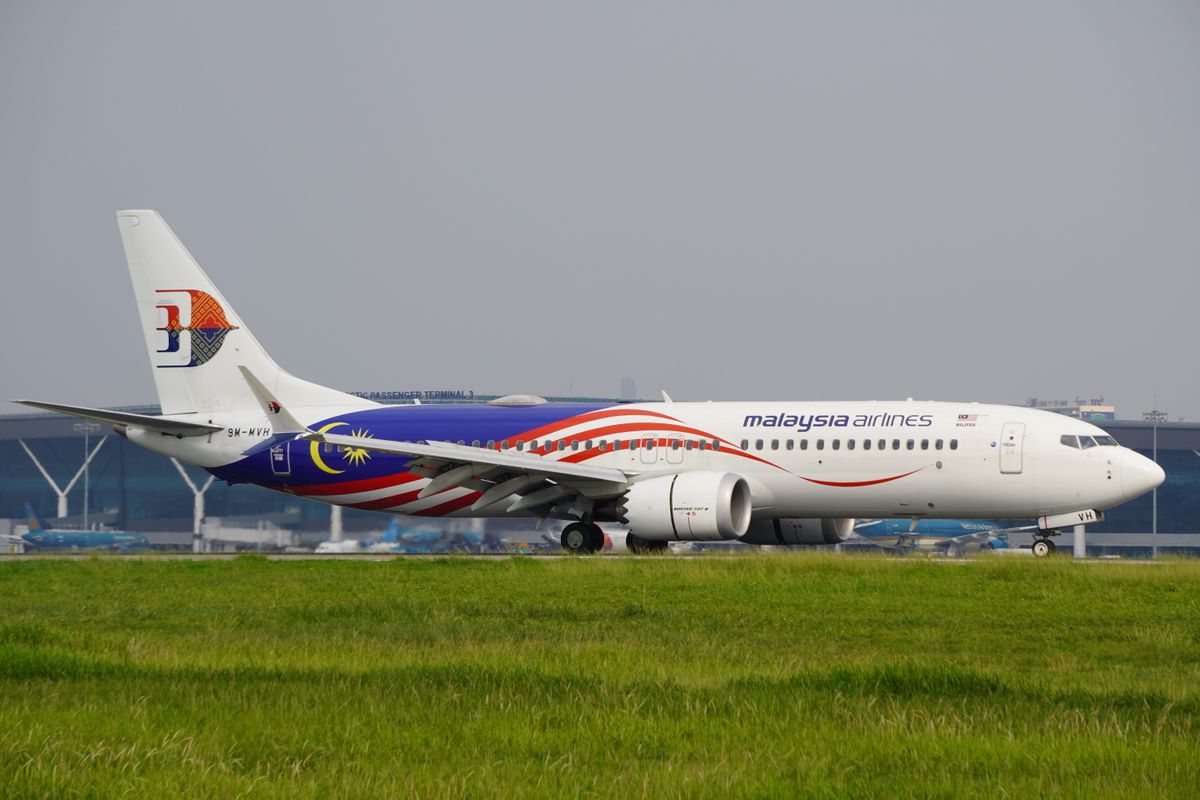
Malaysia Airlines aircraft on the tarmac at Kuala Lumpur International Airport
Under the new agreement, both directions are covered: Chinese public affairs and ordinary passport holders get the same 30-day visa-free treatment entering Malaysia. Eligible purposes on the China side are vacation and sightseeing, visiting family or friends, business meetings, exchange programs, private affairs, medical treatment, and international transport for crew members passing through. Residence, employment, study, and media work are explicitly excluded, no matter how short the trip.
One passport detail trips people up: your Malaysian passport needs at least 6 months of validity remaining on the day you enter China, not just on the day you book your ticket. Renew early if you're anywhere close to that line.
The 90-day cap: how the rolling 180-day window works
The 30-day-per-entry headline is only half the rule. Chinese immigration also caps your total visa-free time at 90 days within any 180-day period, counted backward from your entry date, including the day you arrive.
The embassy's own worked example: if you plan to enter China on February 1, 2026, the relevant 180-day window runs from August 5, 2025 to February 1, 2026. Every visa-free day you spent in China during that window counts against your 90-day allowance. There's no cap on the number of separate trips, only on the cumulative days.
A few practical consequences:
- If you've already used 90 days inside the current 180-day window, border control will refuse visa-free entry, full stop, even for a weekend trip.
- If you've used, say, 70 days, you can still enter, but only for up to 20 more days before you hit the cap, even though the general rule allows 30 days per entry.
- Time spent in China on an actual visa, a residence permit, or an APEC Business Travel Card doesn't count toward the 90-day visa-free allowance.
- Stays before July 17, 2025 don't carry over. The counter effectively reset when the mutual agreement took effect, so old unilateral-policy trips from 2024 aren't held against you.
If you're doing frequent short business trips, for instance, flying in monthly for a week each time, it's worth tracking your cumulative days on a spreadsheet. Immigration officers do the math at the border, and "I didn't realize" isn't a valid appeal.
When you still need an actual visa
Skip the visa-free route and apply for a proper Chinese visa if any of these apply to you:
- Your trip is longer than 30 days. There's no visa-free extension option for planned long stays; you need the right visa category before you fly.
- You're working in China, even remotely for a China-based employer, or doing paid media/journalism assignments.
- You're studying, including short intensive language courses that require enrollment documentation.
- You're relocating or applying for residence, such as joining family long-term or retiring in China.
- You've already hit the 90-day cap in your current 180-day window, regardless of how many free days you'd otherwise have left.
For these cases, you'd apply through the Chinese Visa Application Service Centre (CVASC) in Kuala Lumpur, or the relevant Chinese consulate if you're based in Sabah, Sarawak, or Penang. A standard tourist (L) visa application typically wants a completed application form, a passport photo, your passport, and supporting documents like a hotel booking and return ticket; a 1-year multiple-entry L-visa usually asks for a fuller travel itinerary plus proof of any previous China visas. Fees and processing times change by visa category and number of entries, so check the current schedule directly with CVASC or your nearest consulate rather than trusting a random price quoted on a forum from two years ago.
Common mistakes Malaysian travelers make
- Assuming "visa-free" means no rules at all. Border officers can and do ask for proof matching your stated purpose, an invitation letter, flight itinerary, or hotel booking. Carry something that backs up why you're visiting.
- Confusing the 30-day limit with the 90-day limit. You can stay up to 30 days per entry, but your total across a rolling 180 days can't exceed 90, even if you split it into several short trips.
- Skipping accommodation registration. Hotels register foreign guests automatically at check-in, but if you're staying at a friend's or relative's place, Chinese law requires the host or guest to register with the local police station within 24 hours of arrival. This still applies even though you didn't need a visa to enter.
- Traveling on a passport with under 6 months validity. Airlines and border control both check this, and boarding can be denied before you even reach Chinese immigration.
- Assuming the policy expires soon. As covered above, the current arrangement is a 5-year renewable treaty from July 2025, not a temporary notice with a 2026 cutoff.
- Overstaying because of a delayed flight home. If a genuine emergency pushes you past your 30 days, you need to apply for a stay extension at the local Exit-Entry Administration office before the visa-free period runs out, not after.
Who this is for
This visa-free route works well if you're a Malaysian ordinary passport holder taking a short trip: a week in Chengdu for the pandas, a business meeting in Shenzhen, visiting relatives in Fujian, a medical checkup at a Beijing hospital, or transiting through a Chinese airport on the way somewhere else. It also covers exchange visits and conference attendance, as long as you're not being paid by a China-based entity for work performed there.
It's not the right fit if you're moving to China for a job, enrolling in a degree or long-term language program, planning to stay past 30 days, or you've already used up your 90-day allowance for the current 180-day cycle. In any of those cases, go straight to a visa application rather than hoping the visa-free entry gets approved at the border.
Air China aircraft parked at an airport terminal
Frequently Asked Questions
Do Malaysians need a visa for China? Not for short trips. Since July 17, 2025, Malaysian ordinary passport holders can enter China visa-free for up to 30 days per trip under the China-Malaysia Mutual Visa Exemption Agreement, provided the purpose is tourism, business, family visits, exchange, private affairs, medical treatment, or transit.
Is China's visa exemption for Malaysia unilateral or a mutual agreement? It's a mutual, bilateral agreement, not a unilateral policy. It replaced China's earlier unilateral visa-free arrangement for Malaysians when it came into force on July 17, 2025, and runs as a formal 5-year treaty that renews automatically.
How many days can Malaysian passport holders stay in China without a visa? Up to 30 days per entry, with a combined cap of 90 days within any rolling 180-day period. You can make multiple trips as long as the total days across that window stay under 90.
What happens if I want to stay in China longer than 30 days? You need to apply for the appropriate Chinese visa before you travel. There's no way to extend a visa-free stay for a trip you already know will run past 30 days; genuine emergencies are handled separately through the local Exit-Entry Administration office.
Do Malaysian citizens still need to register their accommodation in China if they enter visa-free? Yes. Hotels handle this automatically when you check in, but if you're staying somewhere else, such as a relative's home, you or your host must register with the local public security bureau within 24 hours of arrival, regardless of your visa-free status.
Not sure if you even need a visa?
Check your China visa-free eligibility →
Sources
- FAQs on the China-Malaysia Mutual Visa Exemption Agreement · Embassy of the People's Republic of China in Malaysia
- China-Malaysia mutual visa-free agreement comes into force · The State Council of the People's Republic of China