China Visa for Nigerian Citizens: Tourist vs Business Guide (2026)
Quick answer: Nigerian citizens still need a visa to enter China in 2026. The unilateral 30-day visa-free wave that runs from February 17 to December 31, 2026 covers roughly 50 countries, mostly in Europe, the Gulf, and the Americas, and no African country is on that list. Business travelers apply for the M visa with an invitation letter from a Chinese host. Tourists apply for the L visa, but Nigerian applicants cannot simply book a flight and hotel: the consulate requires a group of five or more people organized by a licensed Chinese travel agency. Both routes go through the China Visa Application Service Centers (CVASC) in Abuja or Lagos, and the standard visa fee runs from 10,500 naira for a single-entry visa to 31,500 naira for a 12-month multiple-entry visa, plus a separate service charge collected by the center.
Tourist (L) visa vs business (M) visa: the real difference for Nigerian applicants
Most guides frame this as a simple choice: pick L for a holiday, pick M for work. For Nigerian passport holders the split works differently in practice.
The M visa covers trade fairs, factory visits, supplier meetings, and any commercial activity, and it needs an invitation letter from the Chinese company or organization hosting the trip. That letter is the whole application in one document: it has to name the traveler, state the purpose and dates, and carry the host's seal and signature. Because Nigeria-China trade ties are dense (Lagos-Guangzhou sourcing runs, the Canton Fair, machinery and textile imports), the M visa is the route most Nigerian applicants use, and CVASC staff are used to processing it.
The L visa covers leisure travel, but the consulate's own published guidance for Nigerian applicants adds a condition that surprises most first-time readers: Nigerian citizens are asked to join an organized tourist group of more than five people, arranged through a travel agency licensed in China, which submits a tourism invitation letter on the applicant's behalf. A solo Nigerian traveler showing up with only a flight booking and a hotel reservation, the pattern that works for many other nationalities, is not the standard route here.
Why the 2026 visa-free wave does not apply to Nigeria
China has been rolling out unilateral, no-application visa exemptions since late 2023, and by 2026 the list has grown to cover most of the European Union, the UK, Canada, Australia, New Zealand, several Gulf states, and a handful of countries in South America. The most recent expansion, running February 17 through December 31, 2026, added the UK and Canada to a list that already included most of the EU, Australia, and New Zealand.
Nigeria is not part of this policy, and neither is any other African country. Some travel content and social media posts conflate this wave with China's separate 240-hour (10-day) visa-free transit program, which does apply more broadly but only covers travelers passing through a Chinese city on the way to a third country, arriving and departing by different transport, and staying inside a defined zone. A Nigerian citizen flying to Beijing or Shanghai to work or vacation, with China as the final destination, still needs a full visa regardless of either policy.
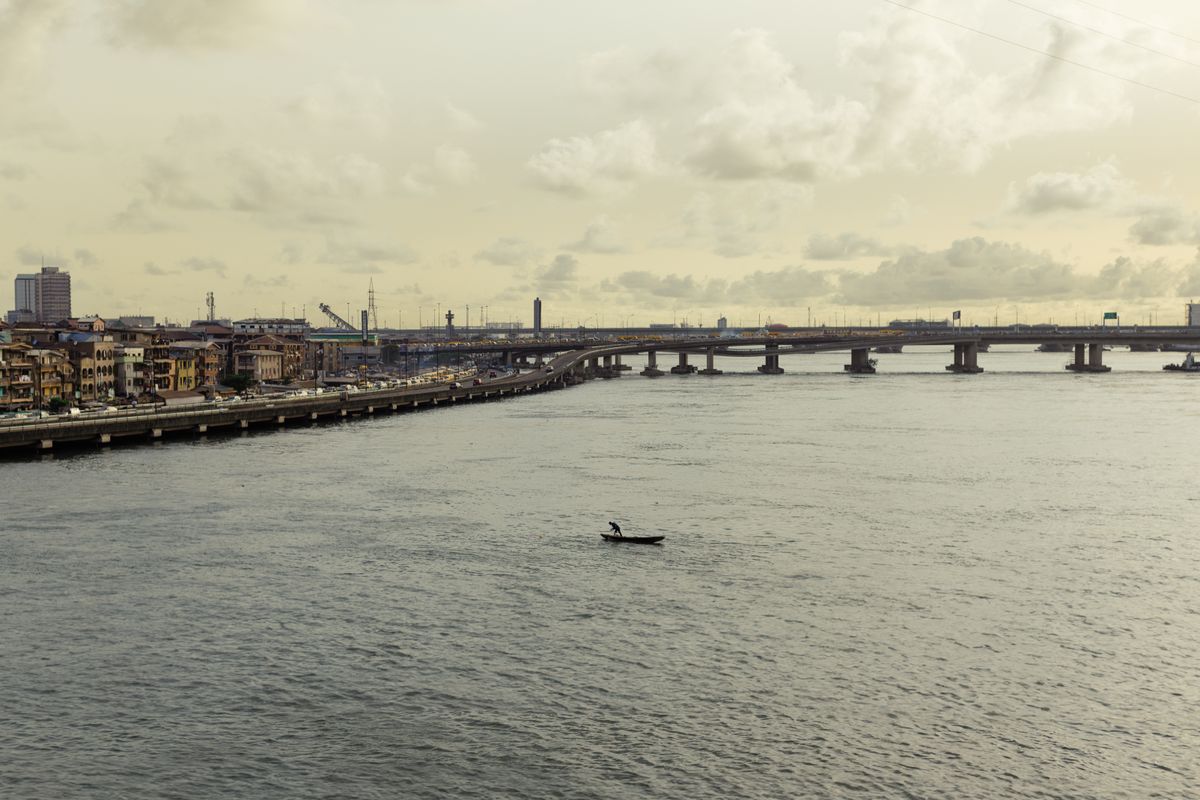
Skyline of Lagos with the Third Mainland Bridge over the lagoon
L visa: the group-tour requirement Nigerian travelers often miss
If you are planning a leisure trip, budget extra time to find a China-based travel agency willing to organize the tour and issue the invitation letter, since the consulate's Lagos guidance names this as the standard route for Nigerian tourist-visa applicants rather than an alternative. In practice, Nigerian travel agents that regularly send clients to China keep relationships with partner agencies on the Chinese side, so working through an established Lagos or Abuja agency, rather than approaching CVASC with a self-planned itinerary, saves a round of correspondence.
Along with the group invitation letter, expect to submit:
- A passport valid for at least 6 months with 2 blank visa pages
- A completed online application form (visaforchina.cn/ABV3_EN)
- A recent color photo with a white background
- A detailed day-by-day itinerary matching the group's tour plan
- Confirmed (not just held) hotel bookings and a return air ticket
A vague itinerary is one of the most common reasons applications stall at the review stage, since the officer has no group tour to match it against.
M visa: what the invitation letter must contain
For business travel, the invitation letter is the document that carries the application. Per the consulate's own guidelines, it needs to include:
- The traveler's full name, gender, date of birth, and passport number
- Purpose of the visit, planned dates, and cities or sites to be visited
- The traveler's relationship to the inviting company or person
- The source of funding for the trip
- The inviting company's name, address, and contact details, with an official seal and an authorized signature
Applicants also submit a bank statement covering the last 6 months and a paid itinerary showing confirmed flights and hotel bookings. If you have visited China before on a business visa with the same host, the consulate may waive the fresh invitation letter requirement for a repeat visit, though supporting documents are still expected. For anyone attending a specific trade event, such as the Canton Fair, bring the event's own invitation letter alongside the company documents. Missing a seal, a signature, or a stated financial source on the invitation letter is the single most common M-visa rejection reason CVASC staff report.

Two businesspeople shaking hands in an office meeting
How to apply: CVASC Lagos and Abuja step by step
Since April 28, 2025, the whole process for both jurisdictions starts online rather than with a walk-in appointment:
- Create an account and complete the application form at visaforchina.cn/ABV3_EN, then upload scanned documents for initial review.
- Wait for the system to mark your file "passport to be submitted." This first review typically takes about 2 working days.
- Visit the CVASC in person to submit your physical passport, provide fingerprints (short-stay applicants are currently exempt from fingerprinting through December 31, 2026), and pay the visa fee plus the center's service charge.
- Collect your passport once processing finishes, typically about 4 working days after in-person submission, subject to the visa officer's review.
Nigeria has two CVASC locations:
- Abuja: Churchgate Plaza, Plot 473, A0 Cadastral Zone, Constitution Avenue, Central Business District, FCT Abuja. Submission 9:00-15:00, collection 9:00-16:00, Monday to Friday.
- Lagos: Second Floor, The Manor, Plot 110, Admiral Ayinla Way, Lekki Phase 1, Lagos. Same hours, Monday to Friday.
Both centers close on Saturdays, Sundays, and Nigerian and Chinese public holidays. Express processing is available for an extra fee, but it only speeds up the stage after your documents pass the initial in-person review, not the online screening.

Close-up of a hand signing a printed application document
Visa fees for Nigerian applicants in 2026
China has extended a visa-fee reduction for Nigerian applicants (alongside a handful of other nationalities) through December 31, 2026. The current published fees for regular passport holders are:
| Visa type | Fee (naira) |
|---|---|
| Single entry | 10,500 |
| Double entry | 15,750 |
| Multiple entry, 6 months | 21,000 |
| Multiple entry, 12 months | 31,500 |
This is the consular fee only. The CVASC charges a separate service fee at the time you submit your passport in person, billed in naira and adjusted periodically for exchange-rate movement, so confirm the current amount on the day you book your appointment rather than budgeting from an old figure. Both the M and L visa categories use the same fee table; the price difference comes from how many entries and how long a validity you request, not from the visa type itself.
Common mistakes
- Assuming a solo tourist visa works. Nigerian L-visa applicants need a group tour and agency-issued invitation letter, not just a flight and hotel booking.
- Believing Nigeria joined the 2026 visa-free wave. That policy runs through European, Gulf, and a few American and Oceanian countries. No African country, Nigeria included, is on it.
- Confusing the 30-day visa-free wave with 240-hour transit. The transit exemption only helps travelers passing through China to a third country, not someone whose destination is China itself.
- Submitting an invitation letter without a seal or signature. An M-visa invitation letter missing the company seal, an authorized signature, or a stated financial source is a frequent rejection trigger.
- Forgetting the CVASC service charge. The naira fee table above covers the consular fee; the center adds its own charge on submission day.
- Sending a vague day-by-day itinerary. For the L visa especially, the itinerary needs to match the group tour plan, not read as a rough sketch.
Who this is for
This guide is for Nigerian ordinary-passport holders planning a business trip (sourcing, a trade fair, supplier visits, meetings) or a leisure trip to mainland China in 2026. It does not cover the Z (work), X (student), or diplomatic/official visa categories, which follow different document lists, or travelers who only need the 240-hour transit exemption because China is not their final destination. If you hold a diplomatic or official passport, or you are a Nigerian resident applying from a third country, check that country's CVASC jurisdiction instead, since requirements can differ by where you legally reside rather than by citizenship alone.
For arrival logistics once the visa is sorted, many travelers pick up a China-specific eSIM before departure so data works the moment they land, since local SIM registration can take longer to sort out in person.
FAQ
Is China visa-free for Nigerian citizens in 2026? No. Nigeria is not part of China's unilateral 30-day visa-free policy, which as of 2026 covers roughly 50 countries across Europe, the Gulf, and the Americas but no African nation. Nigerian citizens need a visa for any trip to mainland China.
Can a Nigerian citizen apply for a Chinese tourist visa alone, without a group? The consulate's published guidance for Nigerian applicants asks for a group of five or more people organized through a licensed Chinese travel agency, with the agency submitting the tourism invitation letter. This is the standard route rather than an optional add-on.
How much is the Chinese visa fee in Nigeria? For regular passport holders, the reduced consular fee (in effect through December 31, 2026) runs from 10,500 naira for a single-entry visa to 31,500 naira for a 12-month multiple-entry visa. A separate CVASC service charge applies on top and is confirmed at the time of submission.
What documents does the China business visa need from a Nigerian applicant? An invitation letter from the Chinese host naming the traveler, purpose, dates, and itinerary, carrying the host's seal and signature; a bank statement covering the last 6 months; and a paid itinerary with confirmed flights and hotel bookings. Repeat visitors to the same host may sometimes skip a fresh invitation letter.
How long does the China visa process take in Nigeria? After online submission, the initial review typically takes about 2 working days before you are asked to visit the CVASC in person. From that in-person submission, standard processing runs about 4 working days, with an optional paid express service for the post-submission stage.
Not sure if you even need a visa?
Check your China visa-free eligibility →
Sources
- Chinese Visa Application Guidelines for Nigerian Citizens · Consulate-General of China in Lagos, Nigeria
- Notice on Extension of Visa-Fee Reduction Policy · Embassy of China in Nigeria
- List of Countries Covered by Unilateral Visa Exemption · National Immigration Administration of China