China Visa for Pakistani Citizens in 2026: How to Apply From the UAE, UK, Saudi Arabia or Australia
Quick answer: Pakistani ordinary passport holders do not get visa-free entry to China in 2026. A wave of posts claims China dropped visa requirements for Pakistan alongside its 30-day visa-free expansion, but Pakistan is not on that list (which now covers 50 countries including the UK from February 17, 2026) and not on China's separate 240-hour transit-free list either. You still need a full Chinese visa, tourist (L) or business (M), whether you apply inside Pakistan or at a Chinese visa center abroad. The one real perk Pakistan does have: the Chinese government's official visa fee is waived for ordinary Pakistani passports, though the visa center's own service charge still applies.
Is China visa-free for Pakistani citizens in 2026?
No. Check the source most people are misreading: China's National Immigration Administration keeps an official list of countries covered by its unilateral visa exemption, and as of mid-2026 it names 50 countries across Europe, the Americas, and a handful in Asia-Pacific (Australia, Japan, South Korea, Saudi Arabia, the UK since February 17, 2026, and others). Pakistan is not on it. A separate list covers 240-hour (10-day) visa-free transit for onward travelers; Pakistan is not on that one either.
What Pakistan does have is older and narrower: a 1987/1988 mutual exemption that applies only to diplomatic, official, and public-affairs passports, plus a standing bilateral agreement that waives the Chinese government's visa fee for ordinary Pakistani passport holders. That fee waiver gets misquoted online as "visa-free entry," which is not the same thing. If you hold an ordinary Pakistani passport, you still submit a full application, photo, supporting documents, and biometrics, you simply are not charged the government's portion of the fee.
Where overseas Pakistanis apply
This is the part most guides skip, and it is the actual angle worth knowing if you live outside Pakistan. China's visa rule is residence-based: you apply where you are legally resident, not at any Chinese mission you choose, and not automatically in Pakistan just because that is your home country.
UAE. Pakistani residents of Dubai, Abu Dhabi, Sharjah, and the other emirates all route through the Chinese Visa Application Service Centre (CVASC) in Dubai (Al Barsha). You need your UAE residence visa valid at least 30 days beyond your planned travel, your Emirates ID, and your passport with at least six months' validity and two blank pages. Abu Dhabi residents can alternatively apply directly through the Chinese Embassy in Abu Dhabi. Walk-ins are not accepted; book an appointment through the CVASC's online system first.
Saudi Arabia. The Riyadh CVASC opened in August 2024 and now handles ordinary-passport applications for the central region; Jeddah's Chinese Consulate-General covers the western province. Bring your Iqama (residence permit) with enough remaining validity, plus the same passport and photo requirements as anywhere else.
UK. There are four CVASC branches: London, Manchester, Edinburgh, and Belfast, split by consular district based on where you legally reside. Non-British applicants need proof of UK immigration status (BRP, visa vignette, or equivalent) alongside the application form and biometrics, which are collected in person except for children under 14 and adults over 70.
Australia. This changed recently and catches people out: since September 15, 2025, only the Sydney and Melbourne CVASCs remain open. Canberra, Perth, and Brisbane closed permanently. Sydney handles New South Wales, the ACT, the Northern Territory, and Queensland; Melbourne covers the rest. If an old blog tells you to visit the Canberra visa center, it's outdated.
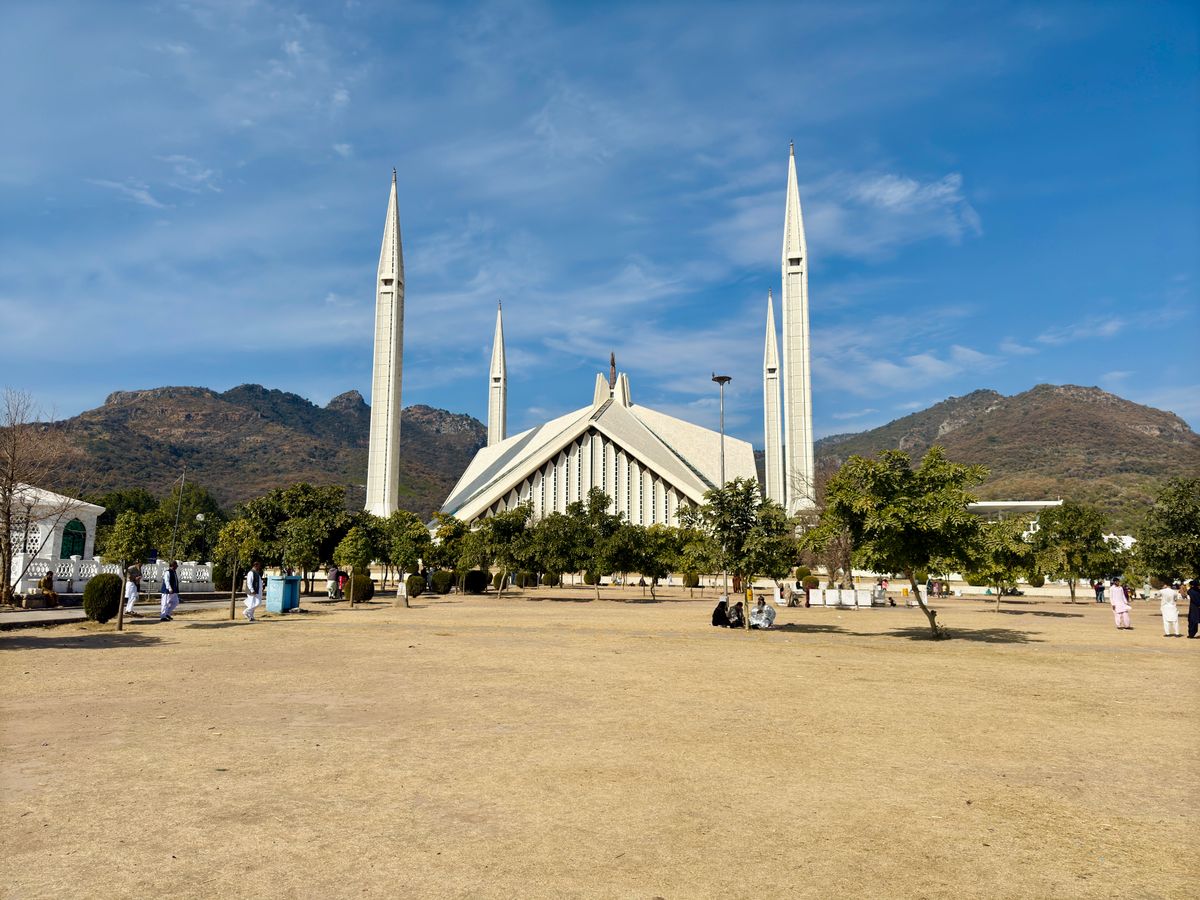
Faisal Mosque in Islamabad, a starting point for Pakistan-based visa applicants
Documents for the tourist (L) visa
China trimmed a lot of paperwork over 2023 to 2024, and most CVASCs no longer demand a locked-in hotel and flight itinerary for a straightforward L visa. Standard documents are:
- Passport valid 6+ months with 2+ blank pages, plus a copy of the data page
- Completed online application form (submitted through the CVASC portal, printed and signed)
- One recent passport photo (specs vary slightly by CVASC, so check the local one)
- Proof of legal residence in the country where you're applying (UAE residence visa, Iqama, UK BRP, Australian visa grant, etc.)
- Travel history page or copy of your previous Chinese visa, if you have one
- A rough itinerary or hotel booking is still commonly requested even where it's not strictly mandatory, so bring one
Processing at most CVASCs runs about 4 working days for standard service, 2 to 3 days express, with a postal option in some countries taking up to 10 working days.
Business (M) visa: CPEC travel and trade trips
Pakistan sends a steady stream of business travelers to China tied to CPEC (China-Pakistan Economic Corridor) projects, joint ventures, and factory sourcing trips, and this traffic doesn't fit neatly into "tourist visa" guides that assume leisure travel only. The M visa process runs through the same CVASCs listed above, with one extra requirement: an invitation letter from the inviting Chinese company, industry association, or government body, stating the purpose of the visit, dates, and relationship to the applicant's employer. If you're traveling for a CPEC-linked project, ask your employer or the Chinese partner entity for this letter well before your appointment since some invitations take longer to issue than the visa itself.
M visa applicants abroad go through the same residence-based CVASC rule as tourists: a Pakistani engineer based in Riyadh applies through the Riyadh center, not through the embassy in Islamabad.
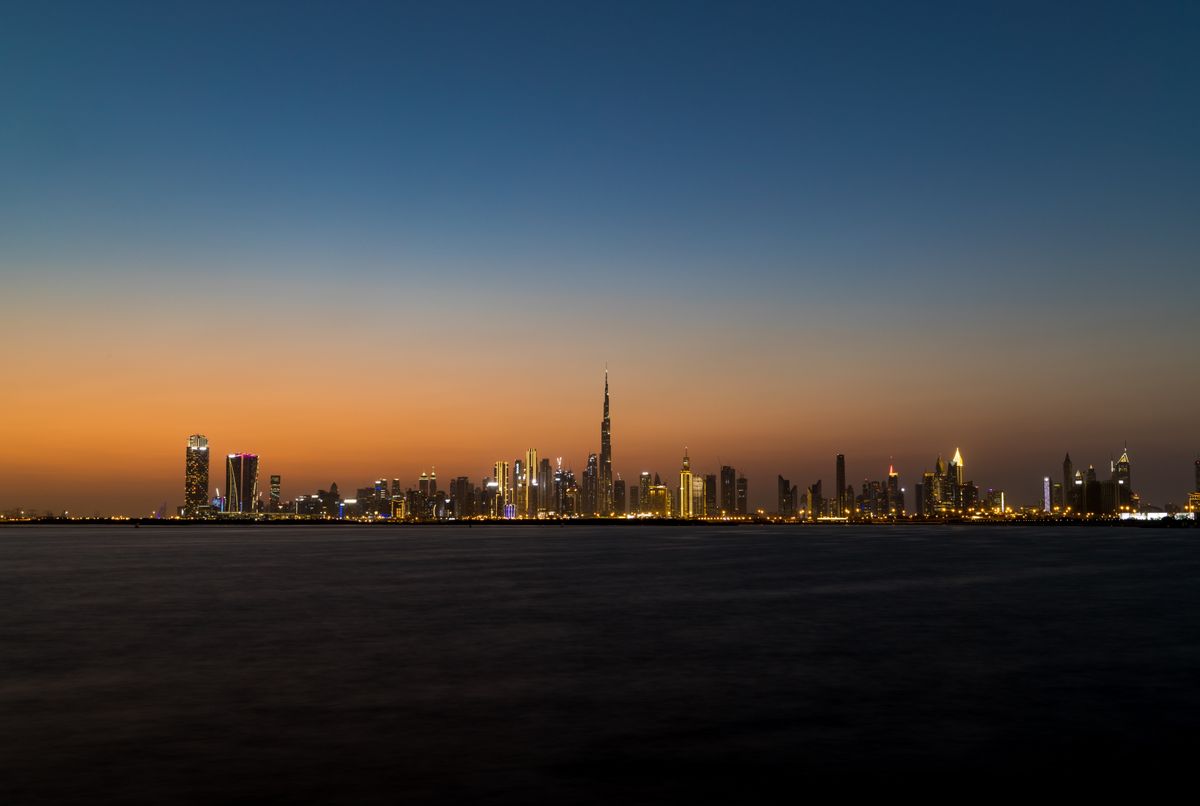
Dubai skyline at dusk, home to the CVASC serving UAE-based Pakistani applicants
Fees and processing times
The Chinese government's own visa fee is waived for ordinary Pakistani passports under the bilateral fee agreement, confirmed on the Chinese Embassy in Islamabad's own visa pages. What you still pay is the visa center's service fee, which is charged separately by whichever CVASC or embassy processes your file and is not waived. In Pakistan, that service fee runs around PKR 13,200 for regular processing and PKR 19,800 for express, through the government-appointed application center.
Overseas, the picture is less consistent. Some UAE-based visa agencies advertise Pakistani applicants paying roughly AED 250 to 350 total, which suggests the fee waiver is not applied uniformly at every CVASC outside Pakistan, or that agencies are folding their own charges into that figure. Don't assume the waiver carries over automatically. Confirm the current fee breakdown for your specific CVASC (visaforchina.cn lists each center separately) before you book your appointment, and budget for the service fee either way.
Common mistakes
- Trusting "China is now visa-free for Pakistan" articles. These conflate the fee waiver with visa-free entry, or copy outdated claims about a supposed November 2025 announcement that doesn't appear in any official Chinese government visa-exemption list.
- Applying at the wrong CVASC. Your country of legal residence decides where you apply, not your passport, and not your travel agent's convenience. A Pakistani applicant living in Jeddah cannot submit at the Riyadh center's online slots meant for central-region residents without checking jurisdiction first.
- Assuming the Australia process hasn't changed. Canberra, Perth, and Brisbane visa centers closed in September 2025. Old guides and forum posts still point people there.
- Skipping the invitation letter for business travel. M visa applications without a proper Chinese-side invitation letter get bounced back, costing a week or more in reapplication time, which matters if your CPEC project has a fixed start date.
- Assuming zero government fee means zero total cost. The service center charge is mandatory and separate from the waived government fee.
- Not checking passport validity margins. Six months' validity plus two blank pages is the standard ask across every CVASC in this guide; a passport close to expiry gets rejected on the spot.
Who this is for
This guide is for Pakistani passport holders who live outside Pakistan (in the UAE, Saudi Arabia, the UK, or Australia) and need to apply for a Chinese visa through the CVASC covering their place of residence, rather than through the embassy or consulate in Pakistan. It also covers Pakistan-based business travelers heading to China for CPEC-linked work, trade delegations, or supplier visits who need the M visa process rather than the standard tourist route. If you're a Pakistani citizen applying from inside Pakistan for a straightforward tourist visa, the core documents and fee-waiver rules here still apply to you, but your nearest CVASC is Gerry's in Islamabad, Karachi, or Lahore rather than one of the overseas centers.
FAQ
Does Pakistan have visa-free access to China in 2026? No. Pakistan is not on China's 50-country unilateral visa-free list or its 240-hour transit-free list as of mid-2026. Ordinary Pakistani passport holders need a visa for any visit to mainland China.
Can a Pakistani living in Dubai apply for a China visa from the UAE? Yes. You apply through the CVASC in Dubai (or the Chinese Embassy in Abu Dhabi if you're an Abu Dhabi resident), using your UAE residence visa and Emirates ID as proof of legal residence, not through the embassy in Pakistan.
Is the Chinese visa fee free for Pakistani citizens? The Chinese government's own visa fee is waived for ordinary Pakistani passports under a bilateral agreement. You still pay the visa center's service fee, which is separate and not waived.
What documents does a Pakistani business traveler need for the M visa? The same base documents as the tourist L visa, plus an invitation letter from the Chinese host company or organization stating the purpose, dates, and relationship to your employer. This applies whether you apply in Pakistan or through an overseas CVASC.
Which Australian city should a Pakistani applicant use since the Canberra center closed? Sydney (covering NSW, the ACT, the Northern Territory, and Queensland) or Melbourne (covering the rest of the country), since September 15, 2025.
Not sure if you even need a visa?
Check your China visa-free eligibility →
Sources
- Visa Processing Time and Fee · Chinese Embassy in Pakistan
- List of Countries Covered by Unilateral Visa Exemption · National Immigration Administration, China
- China travel advice: entry requirements · UK Government (GOV.UK)
- Chinese Visa Application Service Center, Riyadh · Chinese Embassy in Saudi Arabia