China Visa for Vietnamese Citizens: 2026 Requirements and Land Border Rules
Quick answer: Vietnamese citizens need a visa to enter mainland China for tourism or business. Vietnam is not on China's 30-day visa-free list, so skip any blog that says otherwise. Apply through a Chinese Visa Application Service Center (CVASC) in Hanoi, Ho Chi Minh City, or Da Nang before you travel. A single-entry L (tourist) visa runs $45-82 in embassy fees plus a fixed service fee in VND, and the same visa works whether you fly into Beijing or cross overland at a land border like Huu Nghi Quan/Youyiguan or Lao Cai/Hekou.
Vietnamese travelers cross into China by land more than almost any other nationality, thanks to shared borders in Lang Son and Lao Cai provinces. That overland option changes a few practical details (opening hours, how the immigration check works, what counts as proof at the gate) without changing whether you need a visa in the first place. Here's what's accurate for 2026, checked against the National Immigration Administration and the Chinese Visa Application Service Center's own fee schedule.
Do Vietnamese citizens need a visa for China in 2026?
Yes, in almost every case. China extended its unilateral 30-day visa-free policy through December 31, 2026, but that list covers roughly 50 countries, mostly in Europe plus a short Asia-Pacific group (Japan, South Korea, Brunei, Bahrain, Kuwait, Oman, Saudi Arabia) and a few in the Americas (Canada, Argentina, Brazil, Chile). Vietnam is not on it. If you see a claim that ASEAN citizens travel visa-free to China, that's describing something narrower, not a blanket rule for Vietnamese passport holders.
Two adjacent policies get confused with a general visa waiver, and neither helps most travelers:
- 240-hour visa-free transit: Vietnamese passport holders are on this list, but it only applies if you're transiting through China to a third country (not Vietnam, not staying in China) within 240 hours, entering and exiting through one of the approved ports. If China is your destination, or you're flying home to Vietnam afterward, this doesn't apply to you.
- ASEAN group visa-free schemes in Guilin and Xishuangbanna: groups of two or more Vietnamese nationals, booked through a licensed Chinese travel agency, can enter and exit visa-free through Guilin's airport (144 hours) or Xishuangbanna's airport and its Laos-facing land ports (144 hours). These do not cover Huu Nghi Quan, Hekou, or independent travel, so they're irrelevant if you're crossing solo at a Vietnam-facing land border.
Outside those narrow cases, you need a standard Chinese visa before you travel, full stop.
Which visa type: L, M, or something else
Most Vietnamese travelers need one of two categories:
- L visa (tourism): sightseeing, visiting friends or family informally, short leisure trips.
- M visa (business): trade fairs, meetings, factory visits, anything backed by a business invitation letter from a Chinese company or trade partner.
Longer stays fall under different categories: Z (work), X (study), Q (family visit tied to a Chinese citizen or permanent resident relative). This guide covers L and M, since they cover nearly all tourism and short business trips.
How and where to apply
Vietnamese citizens apply through the Chinese Visa Application Service Center (CVASC), not directly at the embassy counter. Centers operate in:
- Hanoi (Truong Thinh Building, Trang An Complex, Phung Chi Kien Street, Cau Giay District)
- Ho Chi Minh City (Saigon Trade Center, Ton Duc Thang Street, District 1)
- Da Nang
Since June 30, 2025, every applicant must first create an account and complete the application form online at visaforchina.cn, then bring the printed confirmation, passport, and supporting documents to the center in person. Centers accept submissions on weekday mornings only (roughly 9:00-14:30), closed weekends and public holidays. Regular processing takes about 4 working days; express and urgent options exist but need consular approval.
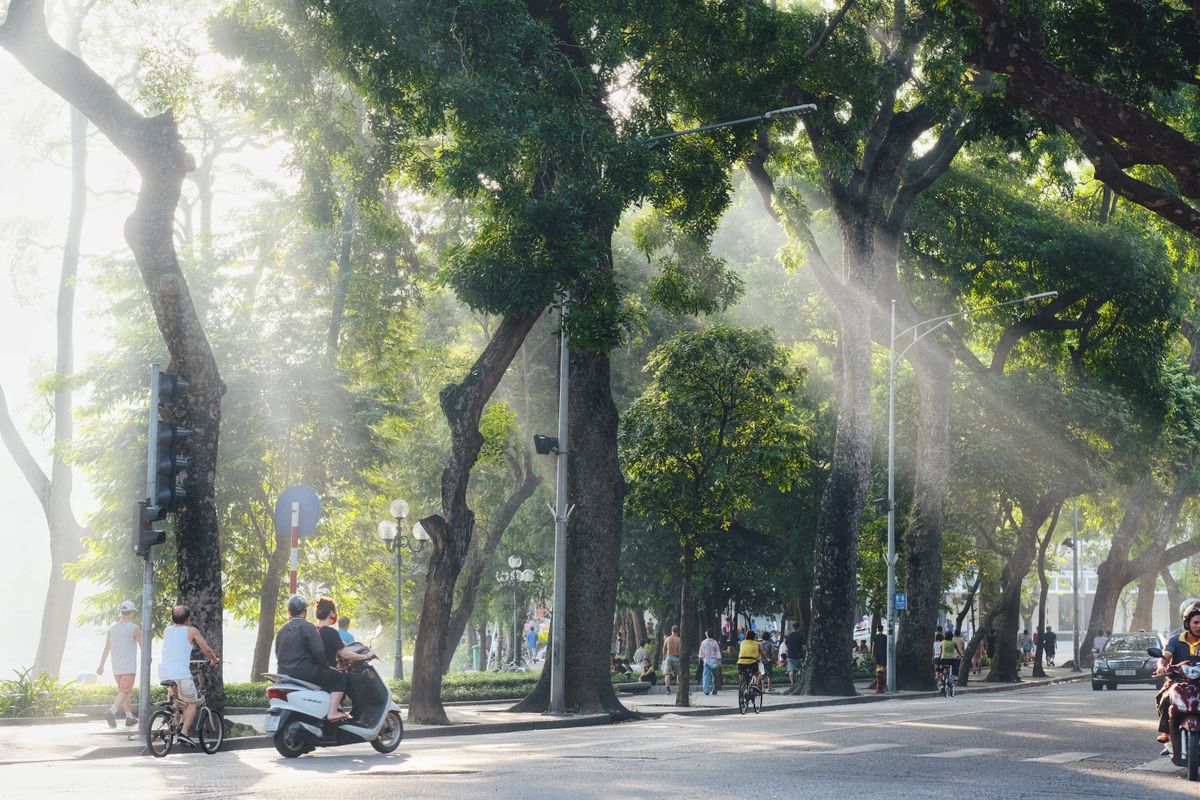
Street in Hanoi, Vietnam, a common starting point before applying for a China visa
China visa fees for Vietnamese citizens (2026 CVASC schedule)
Fees have two separate parts: the embassy visa fee (paid in USD when you collect your passport) and the CVASC service fee (paid in VND when you submit your application, non-refundable regardless of outcome). Current published rates for Vietnamese citizens:
| Entries | Visa fee (regular) | Visa fee (express) | Visa fee (urgent) | Service fee (VND, all speeds) |
|---|---|---|---|---|
| Single entry | $45 | $70 | $82 | 690,000 / 1,040,000 / 1,380,000 |
| Double entries | $68 | $93 | $105 | 690,000 / 1,040,000 / 1,380,000 |
| Multiple entries, 6 months | $90 | $115 | $127 | 690,000 / 1,040,000 / 1,380,000 |
| Multiple entries, 12 months | $135 | $160 | $272 | 690,000 / 1,040,000 / 1,380,000 |
For comparison, US citizens pay $139-176 for the same categories and Canadian citizens pay $60-97, so Vietnamese applicants sit in the middle of the fee range, not at the top or bottom.
Documents you'll need
- Passport valid for at least 6 months past your planned entry, with 2 or more blank visa pages.
- Completed online application form (from visaforchina.cn) plus a recent color photo meeting the size and background specs.
- Round-trip flight itinerary or entry/exit travel plan (land-border travelers should still show a booked or planned exit).
- Hotel bookings or a signed invitation letter if staying with someone in China.
- For M visas: an invitation letter from the host Chinese company, on letterhead, with your passport details, purpose, and dates.
- Bank statement or proof of funds, requested case by case rather than universally.
Crossing by land: what changes at Huu Nghi Quan/Youyiguan and Hekou/Lao Cai
The two crossings Vietnamese travelers use most:
- Huu Nghi Quan (Vietnam) / Youyiguan (China), also called the Friendship Pass, links Lang Son province with Pingxiang in Guangxi. It's the busiest China-Vietnam land port and also where the Nanning-Hanoi international train (T8701/T8702) crosses.
- Lao Cai (Vietnam) / Hekou (China, Yunnan), connected by the China-Vietnam Friendship Bridge over the Red River, popular with backpackers heading toward Kunming.
None of this changes whether you need a visa. It changes the logistics:
- No visa on arrival at either crossing. Your Chinese visa must already be issued and in your passport before you reach the gate, exactly as if you were flying in.
- Your Chinese visa isn't tied to a specific port. This trips people up because Vietnam's own e-visa system requires naming an exact entry/exit gate when you apply. A Chinese visa doesn't work that way: once issued, it's valid at any of China's designated land, air, or sea ports, so you don't need to declare in advance that you'll cross at Youyiguan versus flying into Guangzhou.
- Fixed operating hours, unlike a 24-hour airport. Huu Nghi Quan/Youyiguan runs roughly 7:00 AM-7:00 PM. Hekou-Lao Cai runs about 7:00 AM-10:00 PM Vietnam time (8:00 AM-11:00 PM China time, since China is one hour ahead of Vietnam). Arrive with plenty of buffer, especially around Tet or China's Golden Week, when queues stretch long.
- The crossing itself is on foot or by short shuttle, not a drive-through. At Hekou-Lao Cai you walk across the Friendship Bridge between the two immigration halls. At Huu Nghi Quan you can go by bus or car to the gate, then walk through checkpoints, or take the overnight international train, which stops at Pingxiang and Dong Dang stations around 2:00-5:00 AM for passengers to disembark with all luggage for manual immigration checks on both sides.
- No automated e-channels for foreign passports at these smaller ports, unlike the self-service gates at major airports in Beijing, Shanghai, or Guangzhou. Every foreign passport gets a manual check and stamp, so build in extra time versus a big-city airport arrival.
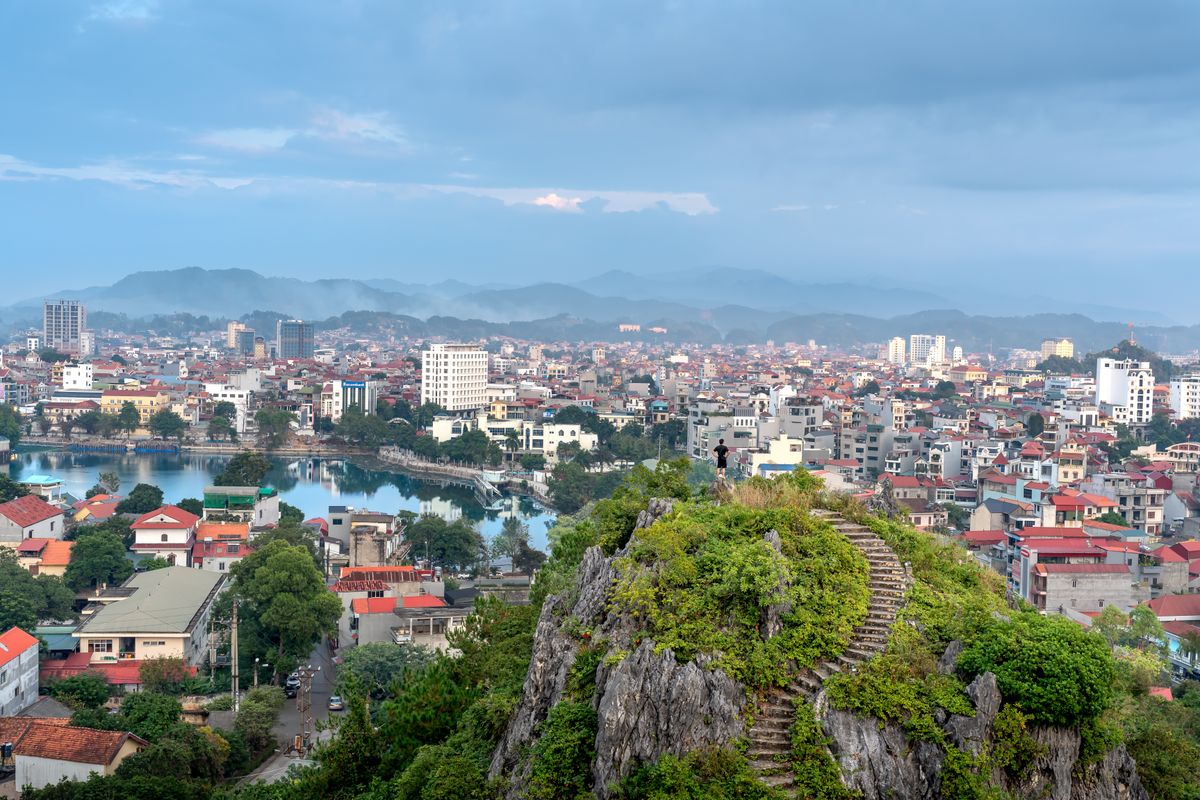
Lang Son, Vietnam, the city next to the Huu Nghi Quan/Youyiguan land crossing into China
A practical add-on: grab a local eSIM before you cross. Vietnamese and Chinese mobile networks don't reach much past their own side of the checkpoint, and you'll want working maps and a translation app for the immigration paperwork and any onward train or bus booking.
Common mistakes
- Assuming ASEAN membership means visa-free entry to China. It doesn't, except for the narrow Guilin/Xishuangbanna group-tour schemes, which don't cover Huu Nghi Quan or Hekou.
- Confusing the 240-hour transit rule with a general visa waiver. It only helps travelers continuing to a third country, not those staying in China or returning to Vietnam.
- Thinking the Chinese visa needs a declared port of entry, the way a Vietnamese e-visa does. It doesn't; one visa works at any port.
- Arriving at Hekou or Youyiguan late in the day and finding the gate closed for the night, especially outside of peak holiday periods when hours can run shorter than expected.
- Booking a same-day onward flight or train right after a land crossing, leaving no buffer for immigration queues that build up fast during Tet or Golden Week.
- Applying with a passport that has fewer than 6 months' validity or no blank visa pages, both of which cause a same-day rejection at the CVASC counter.
Who this is for
Vietnamese passport holders planning a tourism or business trip to China, particularly travelers based in northern Vietnam (Hanoi, Lang Son, Lao Cai) who are weighing a land crossing instead of flying, and anyone who's run into conflicting "visa-free" claims about Vietnam and China online and wants the actual current rule.
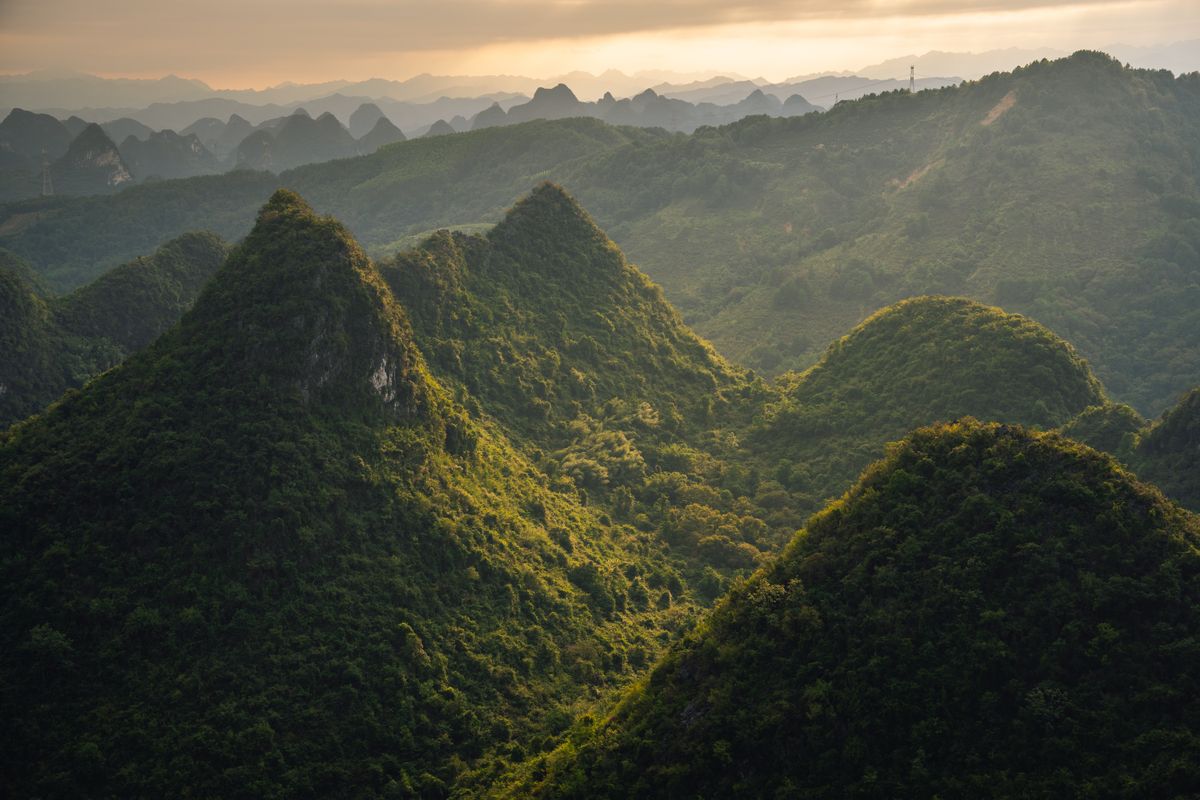
Karst mountains near Guilin, Guangxi, one of the narrow ASEAN group visa-free destinations
FAQ
Do Vietnamese citizens need a visa to enter China? Yes. Vietnam is not covered by China's unilateral 30-day visa-free policy, so you need a standard L (tourist) or M (business) visa before you travel, whether you fly in or cross by land.
Can I get a Chinese visa on arrival at Huu Nghi Quan or Hekou? No. There's no visa on arrival at either land crossing. Your visa must already be issued and in your passport before you reach the border.
How much does a China tourist visa cost for Vietnamese citizens? A single-entry L visa costs $45 (regular processing) in embassy fees plus a 690,000 VND CVASC service fee. Express and urgent processing raise the embassy fee to $70 and $82.
Is Vietnam on China's 30-day visa-free list? No. That list covers about 50 countries, mostly in Europe, plus a small Asia-Pacific and Americas group. Vietnam isn't one of them, despite some online claims to the contrary.
Can I use the Guilin or Xishuangbanna ASEAN visa-free scheme to cross at Hekou or Youyiguan? No. Those schemes only apply to group tours of two or more people booked through a licensed Chinese agency, entering and exiting through Guilin's airport or Xishuangbanna's airport and Laos-facing land ports, not Vietnam-facing crossings.
Not sure if you even need a visa?
Check your China visa-free eligibility →
Sources
- List of Countries Covered by Unilateral Visa Exemption · National Immigration Administration of China
- Consular Services - Visa Application · Embassy of the People's Republic of China in Vietnam
- Schedule of Fee - Hanoi Chinese Visa Application Service Center · Chinese Visa Application Service Center (visaforchina.cn)