Luoyang Culture and Traditions: 7 Ways to Understand the City (2026)
Luoyang makes more sense when you stop treating it as the remains of one dynasty. The city served as a capital for 13 dynasties across more than 1,500 years, so its identity contains several overlapping stories: imperial planning, Buddhist exchange, Yellow River traditions, peony cultivation, ceremonial food, archaeological art, and a modern enthusiasm for Hanfu.
This guide explains what those traditions mean and how to experience them without reducing Luoyang to costumes and reconstructed palaces. It avoids current ticket prices and opening hours because those details change. Check each venue’s official notice before visiting.
Why does Luoyang matter in Chinese culture?
Luoyang developed near the meeting area of the Yellow River and the Luo River. The term Heluo culture refers to the traditions associated with this central plain and appears as a central theme in Luoyang Museum. It is useful shorthand, but not a single historical period. It connects archaeology, political institutions, ritual objects, literature, settlement patterns, and ideas about the origins of Chinese civilization.
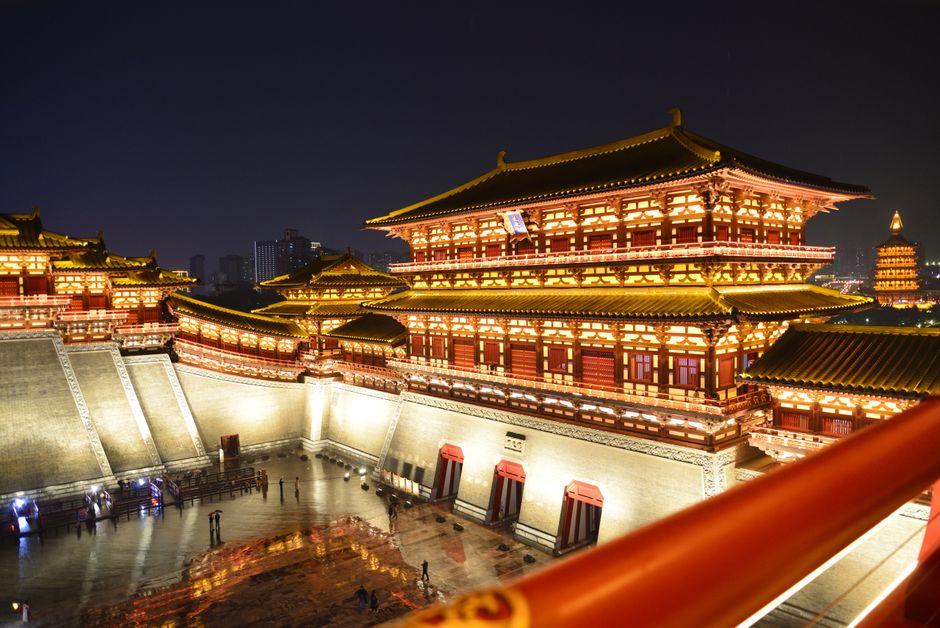
Luoyang’s repeated role as a capital explains why cultural sites from different centuries sit within the same metropolitan area. The Sui and Tang Dynasties City Ruins preserve the plan of a large imperial city, while museum collections place those remains beside earlier bronzes, ceramics, tomb objects, and later works.
For a first visit, keep three distinctions in mind:
- Archaeological remains show physical evidence recovered or preserved at a historical site.
- Museum objects provide context that is difficult to see among foundations and ruins.
- Modern reconstructions and performances interpret the past for present-day audiences. They can be enjoyable without being mistaken for untouched ancient buildings or rituals.
This distinction does not make one experience better than another. It simply helps you understand what you are looking at.
What do Longmen Grottoes reveal about Luoyang?
The Longmen Grottoes are the clearest place to see how religion, political power, patronage, and art came together. According to UNESCO, the cliffs contain more than 2,300 caves and niches, almost 110,000 Buddhist stone statues, over 60 stupas, and about 2,800 carved inscriptions. The most intensive carving took place from the late fifth century to the mid-eighth century, especially during the late Northern Wei and early Tang periods.
Do not view Longmen only as a row of large Buddha images. Changes in facial expression, clothing, body proportions, attendants, inscriptions, and cave layout reflect different patrons and artistic periods. Small niches matter as much as monumental sculptures because they show how individuals and groups participated in Buddhist devotion.
A respectful visit is straightforward:
- Do not touch carvings, inscriptions, or painted surfaces.
- Keep food and drinks away from protected areas.
- Follow barriers even when a better camera angle appears to be within reach.
- Avoid blocking narrow viewing points while taking portraits.
- Read the inscription panels before focusing on the largest figures.
Longmen is both an artwork and an archaeological record. A slower visit usually reveals more than a rapid checklist of famous caves.
How is White Horse Temple different from Longmen?
White Horse Temple, called Baima Si in Chinese, represents another part of Luoyang’s Buddhist story. An official cultural account describes it as the first government-funded temple built after Buddhism entered China during the Eastern Han period. It is associated with early scripture translation and is honored in Chinese Buddhist tradition as an ancestral temple.
The contrast with Longmen is useful. Longmen presents Buddhist belief through cliff carving, inscriptions, and patronage across centuries. White Horse Temple centers on monastic space, translation traditions, worship, and stories of religious exchange. Visit it as a religious site, not only as historical scenery.
Inside worship areas, lower your voice and follow posted photography rules. Do not step between a worshipper and an altar to take a picture. If a ceremony is taking place, watch from a respectful distance unless staff invite participation. Incense is not a requirement for appreciating the site, and visitors should not imitate gestures they do not understand merely for a photograph.
Some narratives about the temple combine historical records, religious tradition, and later retelling. Presenting them as traditions associated with the temple is more accurate than insisting that every detail functions as a modern historical document.
Why are peonies central to Luoyang’s identity?
Peonies are not seasonal decoration added for tourists. Cultivation in Luoyang is traced to the Sui period, and flower appreciation had become connected with poetry, painting, calligraphy, legends, and dress by the Tang and Song periods. The flower came to symbolize prosperity, good fortune, and happiness.
Luoyang has held a spring peony fair since 1983. In 2026, the 43rd China Luoyang Peony Cultural Festival opened on April 1 and continued through the month, combining flower viewing with Tang-themed culture, performances, and Hanfu. Dates and bloom conditions vary by year, so use the annual government announcement instead of assuming that one April weekend will always be the peak.
The cultural practice is as important as the flower bed. Visitors pause to compare named varieties, photograph family members, and connect blossoms with poems or familiar symbols. If you visit during the season:
- Stay on marked paths rather than entering planting beds for portraits.
- Avoid pulling petals or moving identification labels.
- Photograph crowded displays efficiently so other visitors can approach.
- Check the current festival program because exhibitions and cultural activities may be spread across several venues.
Outside the flowering season, museum displays, decorative motifs, local products, and public art still show how strongly the peony is tied to the city.
Is wearing Hanfu in Luoyang respectful?
Hanfu has become a visible part of contemporary cultural tourism in Luoyang. Recent peony festivals have deliberately connected traditional clothing with Tang heritage and flower viewing. This is a modern form of participation inspired by historical dress, not proof that every outfit reproduces one dynasty with archaeological precision.
Visitors can take part respectfully. Choose an outfit because you are interested in its form and context, not to parody a historical character. Ask before photographing another person, especially children or someone participating in a private portrait session. At temples, tombs, and memorial spaces, let the setting determine your behavior rather than treating every background as a stage.
If historical accuracy matters to you, ask which period inspired the robe, hairstyle, and accessories. “Tang style” can describe a modern visual interpretation as well as a carefully researched reproduction. Knowing the difference makes the experience more interesting and avoids exaggerated claims.
| Cultural experience | What it expresses | How to approach it |
|---|---|---|
| Longmen Grottoes | Buddhist art, patronage, and inscription traditions | Observe details, respect barriers, and read the site interpretation |
| White Horse Temple | Monastic life and traditions of scripture translation | Dress and speak respectfully in active worship areas |
| Peony viewing | Seasonal appreciation, symbolism, poetry, and civic identity | Check annual dates and protect planted areas |
| Hanfu portraits | Present-day participation in historical aesthetics | Ask before photographing people and distinguish inspiration from reconstruction |
| Water Banquet | Local hospitality and a structured sequence of soup-rich dishes | Share with a group and discuss dietary needs before ordering |
| Museum collections | Archaeological context for Heluo and imperial history | Use labels to connect objects with sites and periods |
What is the Luoyang Water Banquet?
The Luoyang Water Banquet, or Luoyang shuixi, is one of the city’s best-known food traditions. “Water” does not mean a banquet centered on drinking. The name refers to dishes arriving one after another like flowing water and to the large role of soups and semi-soup dishes.
A traditional account describes a 24-course format, with roughly one third of the dishes served as soup or semi-soup preparations. Sour and spicy flavors are characteristic. The opening dish, often translated as “Luoyang swallow dish,” uses finely cut turnip with other ingredients in broth. Restaurant menus and group sizes can differ, so ask what the offered set includes rather than assuming every meal follows the complete ceremonial format.
The banquet works best as a shared experience. Tell the restaurant about allergies, vegetarian requirements, and restrictions before ordering. A vegetable-looking dish may still contain meat, meat stock, or other animal ingredients. Ask staff to write down essential dietary restrictions in Chinese if spoken communication is uncertain.
Pay attention to sequence as well as flavor. The continuous arrival of dishes is part of the tradition. Instead of trying to finish each bowl immediately, serve small portions, share, and leave room for later courses.
Where can you understand Luoyang crafts and archaeology?
Luoyang Museum provides the broadest introduction to the city’s archaeological layers. Its long-running Heluo culture exhibition connects objects with the region around the Yellow and Luo rivers. This context helps when visiting palace ruins or cave temples afterward because names of dynasties, materials, and ritual forms are no longer abstract.
Look for Tang sancai, the tri-color-glazed ware strongly associated with archaeological discoveries around Luoyang. Surviving examples include human and animal figures, burial objects, vessels, and other wares. The term refers to a glazing tradition rather than a rule that every object must display exactly three colors.
Museum labels can also correct a common mistake: treating every object from imperial Luoyang as a palace luxury. Tomb figures, religious carvings, ritual vessels, roof components, and domestic objects had different functions. Note where an item was excavated and whether it was made for burial, worship, administration, architecture, or daily use.
How should you plan a culture-focused visit?
Use themes instead of collecting unrelated landmarks. One day can focus on Buddhist Luoyang through Longmen and White Horse Temple. Another can connect Luoyang Museum with the Sui and Tang city ruins, followed by a Water Banquet meal. During peony season, give the gardens and festival activities their own block rather than squeezing them between distant sites.
Before each visit:
- Check the venue’s current official notice for reservations, closures, and photography restrictions.
- Save the Latin-script names Longmen Grottoes, White Horse Temple, Luoyang Museum, Sui and Tang Luoyang City, and Luoyang Water Banquet.
- Carry a short written explanation of allergies or access needs.
- Allow time for interpretation panels and museum labels.
- Treat performances as present-day interpretations unless the organizer identifies a documented ritual or reconstruction method.
Frequently asked questions about Luoyang culture
Is Luoyang mainly a Tang Dynasty city?
No. Tang culture is highly visible, but Luoyang served as a capital under many dynasties. Northern Wei Buddhist art, Eastern Han religious traditions, Sui and Tang city planning, and archaeological material from other periods all contribute to its identity.
When is the best time to experience peony culture?
The public festival is associated with spring, especially April, but exact events and flowering conditions change each year. Consult the current festival announcement before booking a trip around peak bloom.
Can foreign visitors wear Hanfu?
Yes. Approach it as cultural participation, learn which period inspired the outfit, and behave appropriately at religious or memorial sites. Ask permission before including strangers in close photographs.
Is the Water Banquet suitable for solo travelers?
Its traditional multi-dish format is designed for sharing. A solo visitor can ask whether the restaurant offers smaller portions or selected dishes. Confirm ingredients before ordering if you have dietary restrictions.
Which place gives the best introduction before visiting the ruins?
Luoyang Museum is the clearest starting point for chronology and archaeological context. Longmen then adds Buddhist sculpture and inscriptions, while the Sui and Tang ruins explain the scale and organization of an imperial capital.
A respectful way to leave Luoyang
Choose one thread and follow it carefully: Buddhist translation, stone carving, peony symbolism, imperial urban design, ceramics, or ceremonial food. Record the names of objects and practices rather than only photographing backgrounds. Luoyang’s culture becomes clearer when each temple, flower, dish, and artifact is placed within the period and community that gave it meaning.
Sources
- Oriental Capital of Museums: Luoyang the Magnificent · The People’s Government of Henan Province
- Longmen Grottoes · UNESCO World Heritage Centre
- Baima Temple in Luoyang · State Council Information Office of China
- Capital Ruins of Luoyang from Sui to Tang Dynasties · The People’s Government of Henan Province
- Luoyang Peony, Queen of Flowers · State Council Information Office of China
- Luoyang Peony Festival Blooms with Tang Dynasty Flair · The People’s Government of Henan Province
- Luoyang Water Banquet · ChinaCulture.org
- Luoyang Museum · China Daily Government Portal
- The Golden Age of the Tang Dynasty: Tricolor-glazed Wares from Luoyang · Ministry of Culture, Taiwan