Chinese Festivals and Public Holidays: A Traveler's Guide (2026 Dates)
China's biggest traditional festivals are also its most disruptive: they fill the streets with red lanterns, dragon boats and the smell of festival food, and at the same time they empty offices, pack every train to capacity and push travel prices to their yearly peak. Knowing when the holidays fall, and what each one involves, lets you decide whether to dive into the celebration or plan around it. Here is a clear rundown of China's public holidays and traditional festivals, with confirmed 2026 dates.
The seven public holidays and two Golden Weeks
China has seven official public holidays: New Year's Day, Spring Festival, Qingming (Tomb-Sweeping Day), Labour Day, Dragon Boat Festival, Mid-Autumn Festival and National Day. New Year's Day itself is a modest break in 2026, running 1 to 3 January. Two of the other holidays expand into week-long breaks known as "Golden Weeks": Spring Festival in winter and National Day in early October. During those two periods hundreds of millions of people travel within days of each other, in what is routinely described as the largest annual human migration anywhere in the world. Expect packed trains, sold-out hotels and crowded sights; book everything well ahead, or plan your trip for the quieter weeks on either side.
One quirk that catches visitors off guard: China "borrows" weekend days to stitch a holiday into one continuous block, then pays them back later as a working Saturday or Sunday. In 2026, for example, 14 and 28 February are official workdays either side of the nine-day Spring Festival break, and 10 October is a working Saturday after National Day. It rarely affects tourist sights or transport, which run every day regardless, but it can catch you out if you assumed a given weekend meant closed banks or government offices.
Spring Festival (Chinese New Year)
2026 public holiday: 15-23 February. Lunar New Year's Day: 17 February (Year of the Horse).
Spring Festival is the biggest holiday of the year, Christmas, New Year and a national homecoming rolled into one. Families gather for a reunion dinner on New Year's Eve, exchange red envelopes (hongbao) of lucky money, set off firecrackers and paste red couplets beside their doors. The 40-day travel window around it, called chunyun, sees billions of trips as people head home, officially recognized as the world's largest seasonal movement of people. For visitors it is fascinating but tricky: temple fairs and lantern displays are wonderful, yet many small shops and family restaurants close for several days and transport is at its tightest. Major cities and big tourist sights stay open throughout.
Lantern Festival
2026 date: 3 March (not a public holiday).
The Lantern Festival, on the fifteenth day of the lunar new year, marks the official end of the Spring Festival season. Parks and old towns glow with elaborate lantern displays, people puzzle over riddles written on the lanterns, and everyone eats tangyuan, sweet glutinous rice balls that symbolize family togetherness. Because it is not a public holiday, it is an easy, atmospheric celebration to catch without the travel chaos.
Qingming (Tomb-Sweeping Festival)
2026 public holiday: 4-6 April.
Qingming is when families visit ancestors' graves to tidy them and leave offerings. It also marks the arrival of spring, so it is a traditional time for outings, kite-flying and enjoying the blossom. The three-day break makes for a busy travel weekend, but nothing on the scale of the Golden Weeks.
Labour Day
2026 public holiday: 1-5 May.
A five-day break in pleasant late-spring weather, Labour Day has become a major domestic travel period in its own right. Popular cities and scenic spots get crowded and prices rise, though less dramatically than during the two Golden Weeks.
Dragon Boat Festival
2026 public holiday: 19-21 June.
This festival honors the ancient poet Qu Yuan with dragon boat races: long, narrow boats with carved dragon heads, paddled hard to the beat of a drum. The traditional food is zongzi, sticky rice wrapped in bamboo or reed leaves. Races are held on rivers and lakes across the country and are free to watch.

A dragon boat race, with teams paddling to the beat of a drum
Mid-Autumn Festival
2026 public holiday: 25-27 September.
Held under the year's brightest full moon, Mid-Autumn is a festival of family reunion and thanks for the harvest. People gather outdoors to admire the moon and share mooncakes, dense round pastries filled with lotus-seed paste, red bean or salted egg yolk. In 2026 it falls just a week before National Day, so the two run together into an exceptionally busy autumn travel stretch.
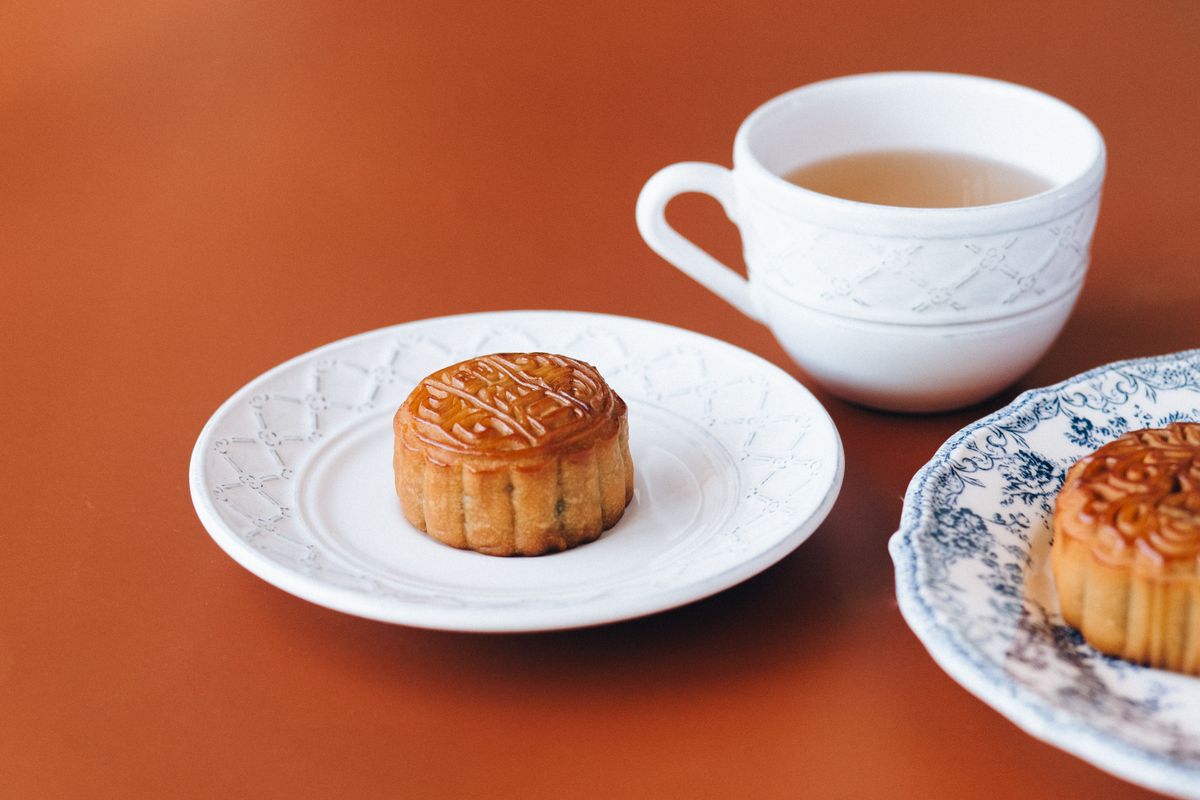
Traditional mooncakes served with tea for the Mid-Autumn Festival
National Day and Golden Week
2026 public holiday: 1-7 October.
National Day marks the founding of the People's Republic of China in 1949. The seven-day Golden Week that follows is the single busiest domestic travel period of the year: trains and flights sell out weeks ahead, hotel prices spike, and landmark sights such as the Great Wall and the Forbidden City reach their absolute peak. If your trip must fall in early October, book transport the moment the booking window opens.
How to plan around the holidays
If you want the festive atmosphere, time your visit for Spring Festival lanterns or a Dragon Boat race, but accept the crowds and book far ahead. If you want smooth travel and lower prices, aim for the weeks just before or after a Golden Week. Train tickets go on sale 15 days in advance and the best ones can vanish within minutes during peak periods, so set a reminder and buy the moment the window opens. Banks and government offices close on the public-holiday dates, though ATMs, mobile payments, hotels and transport keep running throughout.
Book trains and hotels ahead
English app · foreign Visa/Mastercard · small per-ticket fee
Some links are affiliate links; we may earn a commission at no extra cost to you.
Quick takeaways
- China's two Golden Weeks (Spring Festival and National Day) are the busiest and most expensive weeks to travel; the weeks just before or after are far calmer.
- Lunar New Year 2026 falls on 17 February; the official holiday runs 15-23 February.
- Train tickets release 15 days before departure and can sell out within minutes for Golden Week routes.
- Major sights and city malls stay open through the holidays; small family-run shops often do not.
- A Saturday or Sunday next to a holiday may quietly be a working day (China's tiaoxiu system), which can affect bank and office hours even though transport and attractions run as normal.
Frequently Asked Questions
When is Chinese New Year in 2026? Chinese New Year's Day falls on 17 February 2026, the start of the Year of the Horse. The official public holiday runs from 15 to 23 February.
Should I avoid traveling in China during the holidays? The two Golden Weeks (Spring Festival and early October) are crowded and expensive, so if you can, travel in the weeks just before or after. That said, experiencing a festival like Spring Festival or Mid-Autumn first-hand can be the highlight of a trip; just book everything early.
Do shops and attractions close during Chinese New Year? Major sights, big-city malls and chain restaurants generally stay open, but many small shops and family-run restaurants close for the first few days, especially in smaller towns. Banks and offices close on the public-holiday dates.
How hard is it to book trains during Golden Week? Hard: popular routes can sell out within minutes of tickets being released, 15 days ahead. Book the instant the window opens, or consider flying, or traveling on the festival day itself when demand dips slightly.
Why are some Saturdays and Sundays not normal weekends in China? Because of a scheduling practice called tiaoxiu, China shifts a nearby weekend day to a working day so that a public holiday can be stitched into one longer, uninterrupted break. It is set annually by the State Council; for 2026 the swapped workdays include 14 and 28 February (around Spring Festival) and 10 October (after National Day). It mostly matters for office and bank hours, not for visiting sights.