Hangzhou
Lingyin Temple
Behind the incense smoke and the old camphor trees, Lingyin is still a working Chan (Zen) monastery, not a restored showpiece. Robed monks cross the courtyards, pilgrims light joss sticks, and low chanting carries out of the halls. Worshippers have climbed these wooded hills northwest of West Lake for close to 1,700 years, and since December 2025 the whole scenic area around the temple is free to enter, so long as you reserve a time slot first.
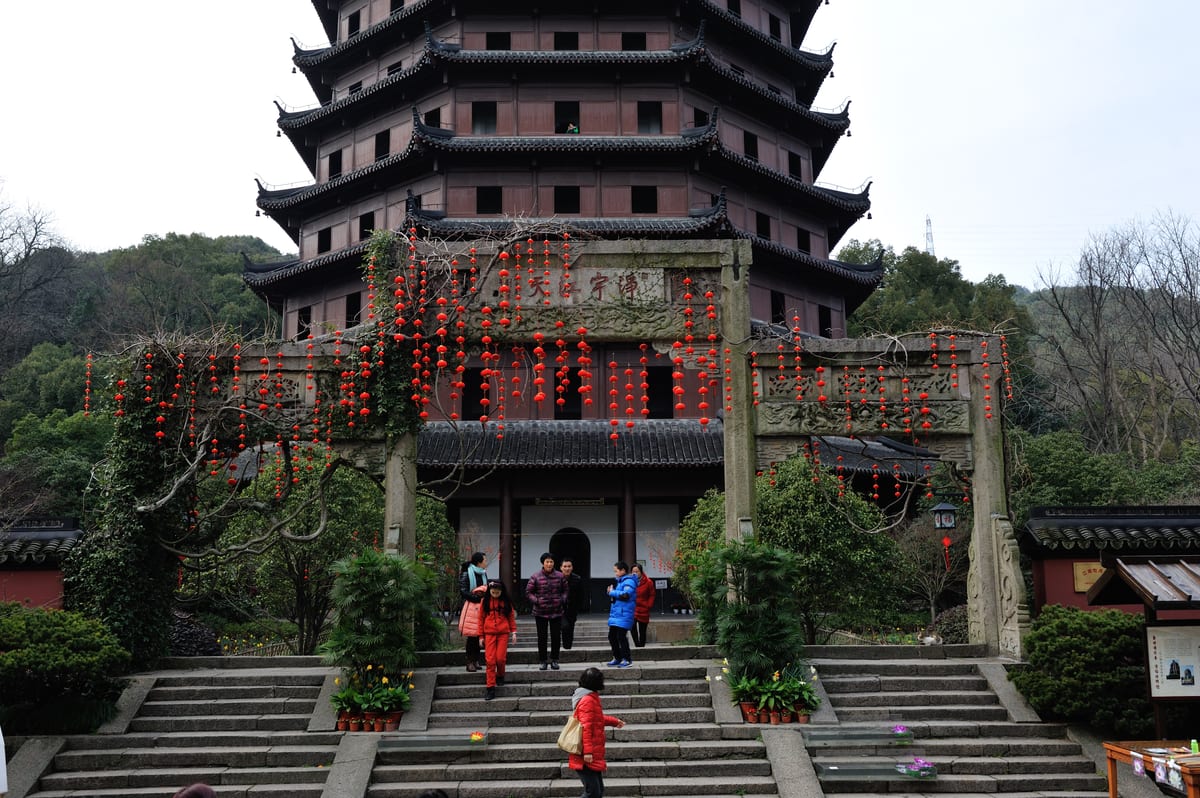
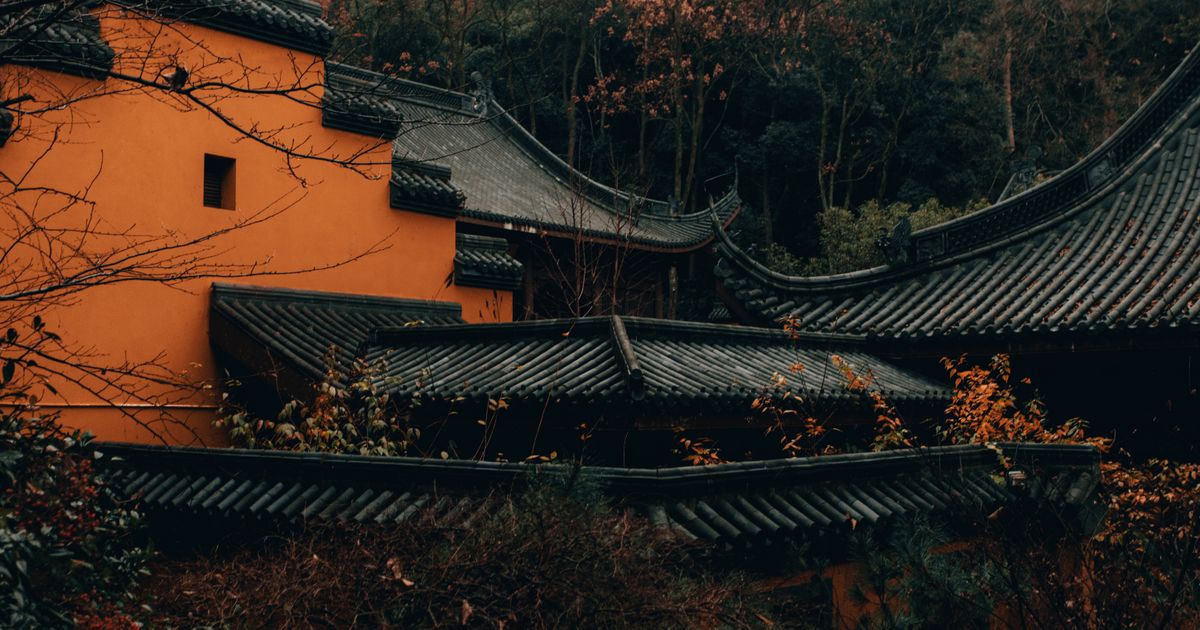
Lingyin Temple's tiered roofs and ochre walls amid forested hills near Hangzhou
A monastery since 328 AD
An Indian monk named Huili founded Lingyin in 328 AD, during the Eastern Jin dynasty, after the surrounding peaks struck him as a haven fit for immortals. It grew into one of the largest and wealthiest Chan temples in the country, at its height home to thousands of monks. War and dynastic change destroyed and rebuilt it many times over, so the grand halls climbing the hillside today are a careful, much later restoration of a very old foundation.
The halls and the great Buddha
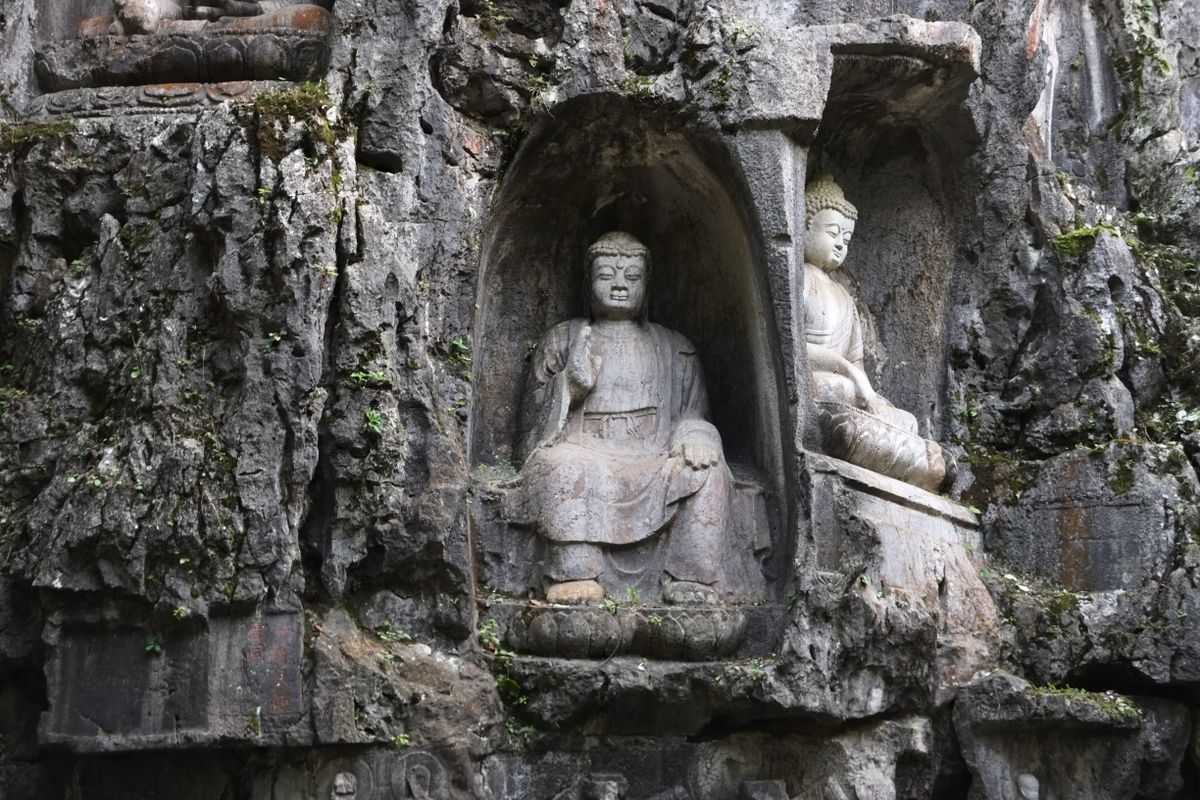
Stone Buddhist carvings on the cliffs of Feilai Feng at Lingyin Temple
Past the Hall of the Heavenly Kings stands the Mahavira Hall (the Grand Hall of the Great Sage), the temple's core. Inside sits a gilded Sakyamuni Buddha assembled from some two dozen blocks of camphor wood, about 24.8 metres tall and among the largest seated wooden Buddha statues in China. Around it, stacked halls, drum and bell towers, and quiet courtyards reward an unhurried walk uphill.
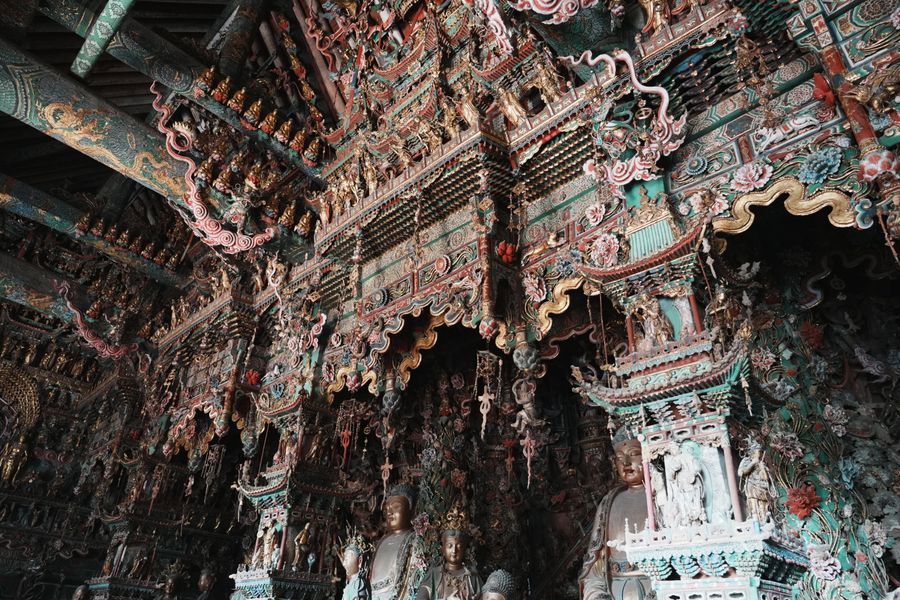
Ornately painted and carved temple hall interior at Lingyin
Feilai Feng and its cliff carvings
Facing the temple rises Feilai Feng, the "Peak that Flew Here," a limestone crag riddled with caves. Its real treasure is the rock art: more than 470 Buddhist carvings from the 10th to 14th centuries, of which over 300 survive in good condition, making it one of the most important groups of grotto sculpture in southern China. The best known is the round, grinning Maitreya, the Laughing Buddha, cut into the rock beside the streamside path. For many visitors, the shaded walk past these weathered figures beats the halls themselves.
Beyond the main temple
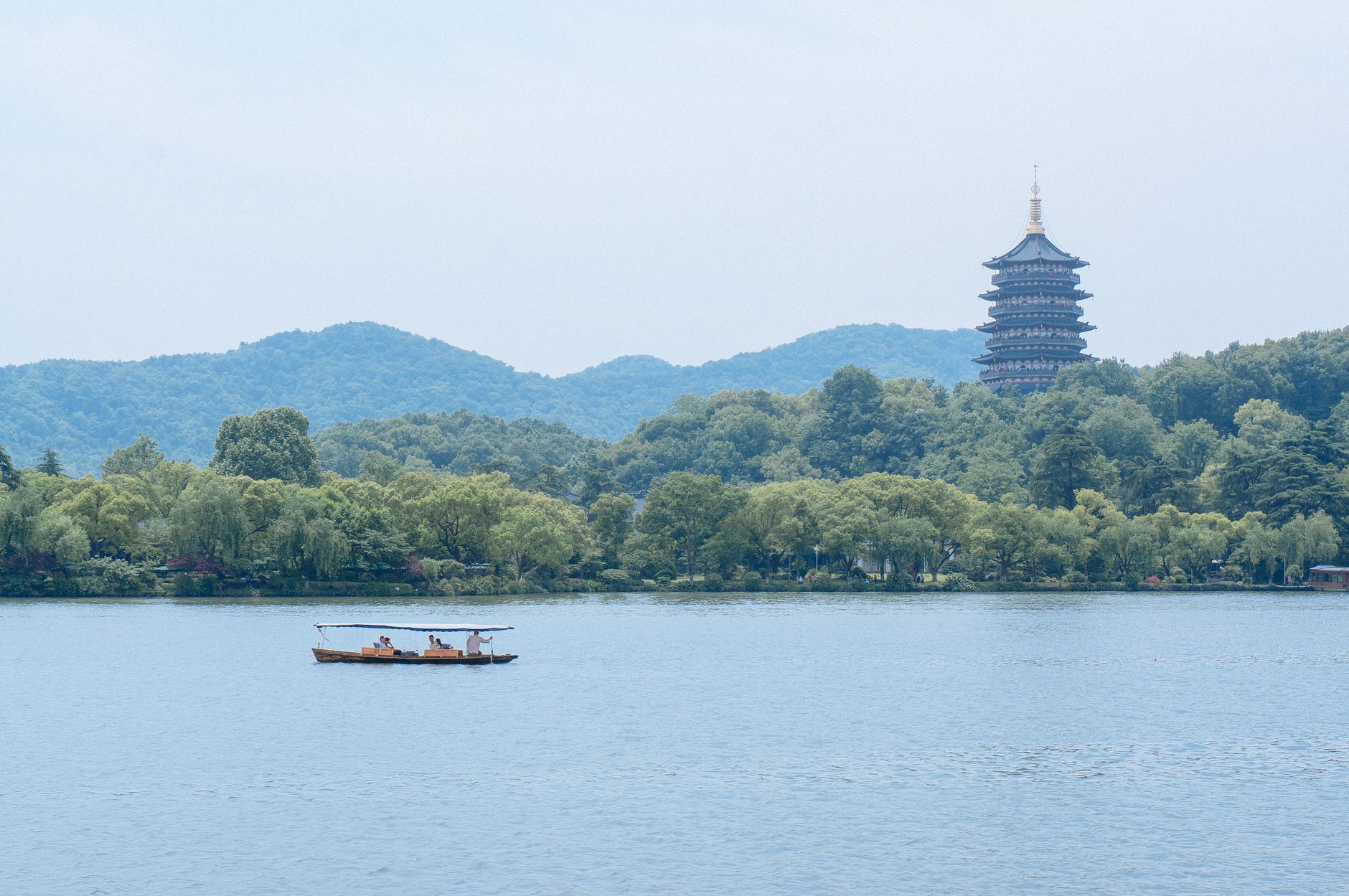
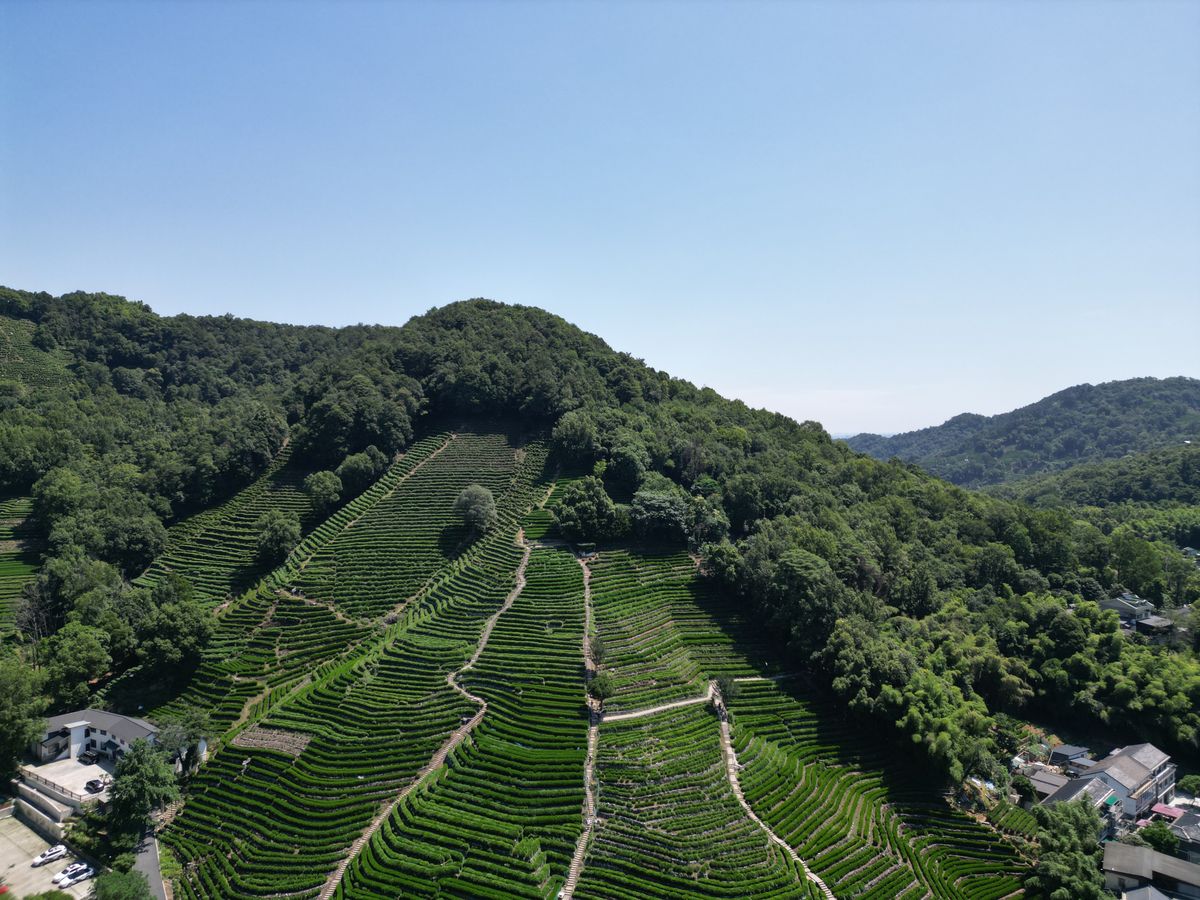
Lingyin anchors a wider scenic area worth slowing down for. Higher up the slopes, quieter sister temples such as Yongfu and Taoguang look out over the valley with far fewer people around. The hills roll straight into Hangzhou's Longjing tea country, so the air often carries the green scent of the tea gardens. Because this is a living temple rather than a museum, the atmosphere of daily worship is the point, and it tends to stay with you.
Planning your visit
Entry to the whole Lingyin and Feilai Peak area has been free since December 2025, but it runs on real-name, time-slot reservation with a daily cap, so book before you turn up. Reserve through the official "Hangzhou Lingyin Feilai Peak" mini-program on Alipay or WeChat, from a day ahead up to about a week out; overseas visitors can book with a passport. As of 2026, a no-show can lock your account out of new bookings for a month, and on-site same-day windows have largely closed, so treat the reservation as essential. Aim for an early slot for cool air, thinner crowds, and the sight of monks and pilgrims at prayer. The temple pairs naturally with a West Lake day and the nearby Longjing (Dragon Well) tea villages.
Highlights
- A living Chan (Zen) monastery founded in 328 AD, active for close to 1,700 years
- A gilded 24.8m camphor-wood Sakyamuni Buddha in the Mahavira Hall
- Feilai Feng cliffs with 470+ carvings (10th-14th c.), over 300 well preserved
- The rock-cut Laughing Buddha (Maitreya) on the streamside trail
- Free entry to the whole scenic area since December 2025, by timed reservation
- Quieter sister temples (Yongfu, Taoguang) and Longjing tea hills close by
Travel Tips
Book a time slot first
Entry is free but by real-name, timed reservation with a daily cap. Reserve through the official 'Hangzhou Lingyin Feilai Peak' mini-program on Alipay or WeChat, from a day ahead up to about a week; overseas visitors can use a passport.
Don't skip your reservation
As of 2026 a no-show can block new bookings for a month and same-day on-site windows have largely closed, so only reserve slots you will actually use.
Go early and combine it
An early slot means cooler air and thinner crowds. Pair the visit with West Lake and the nearby Longjing (Dragon Well) tea villages.