Hangzhou
Six Harmonies Pagoda
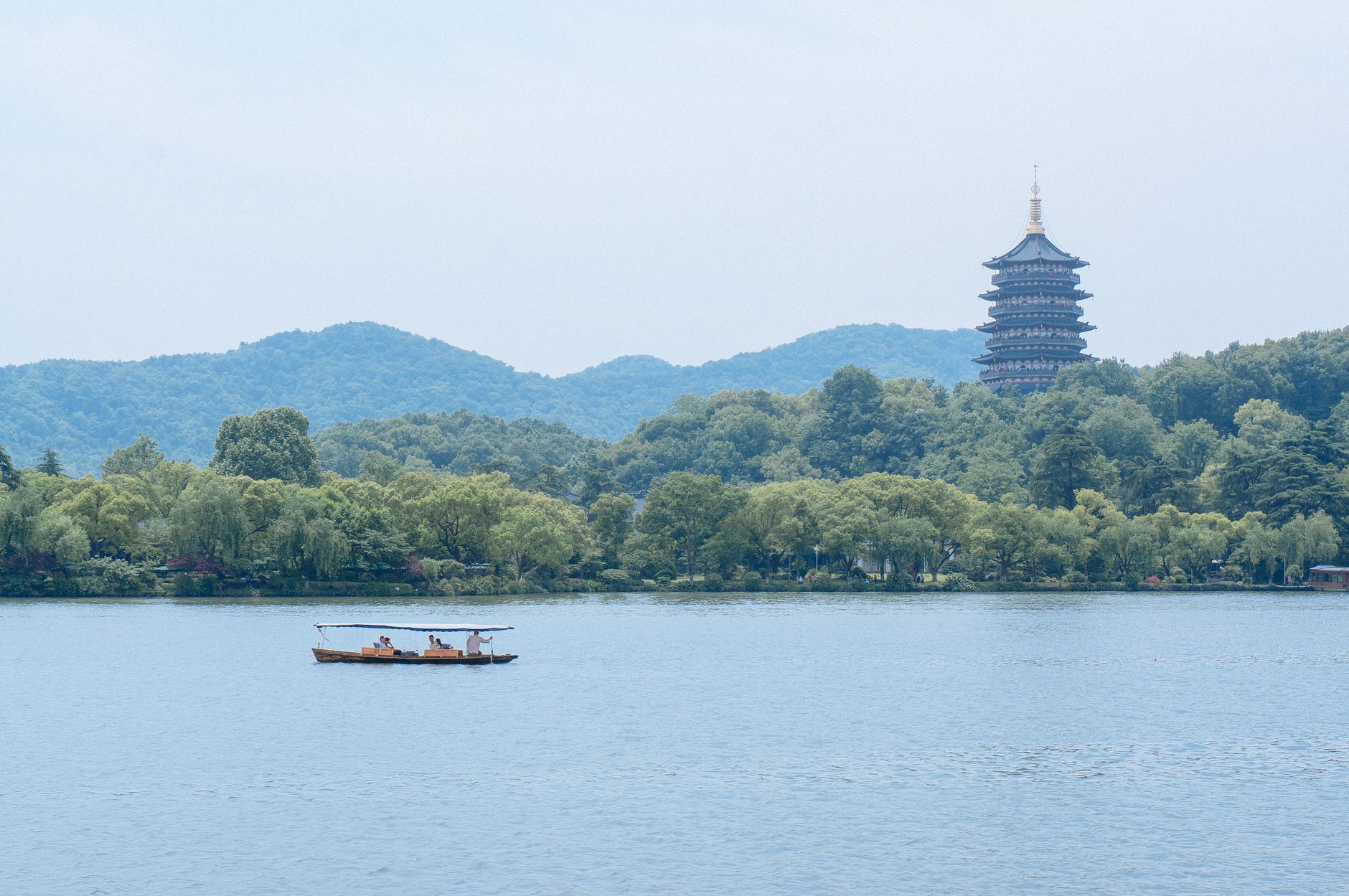
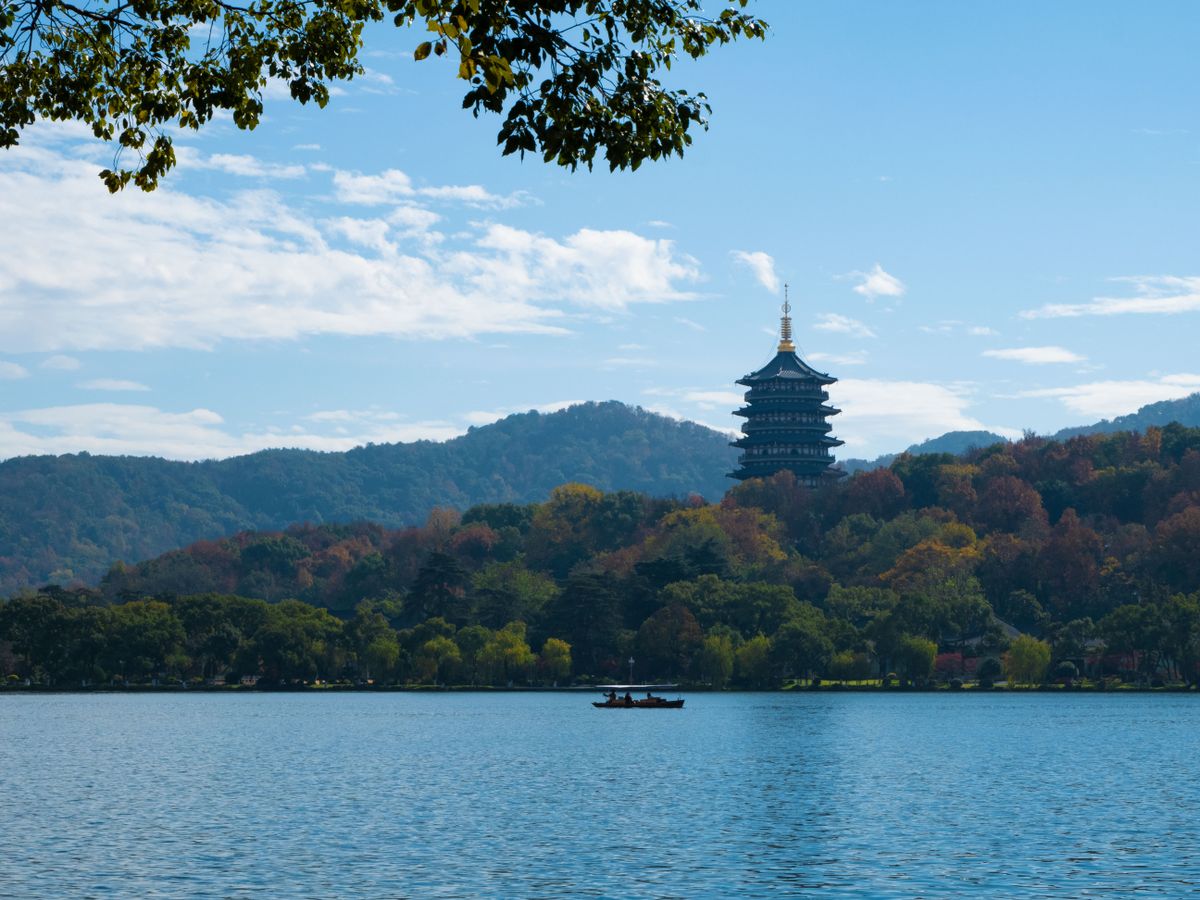
Every old pagoda in China has a story, but few had a job. The Six Harmonies Pagoda (Liuhe Ta) was raised in 970 AD by the Buddhist kingdom of Wuyue with two practical purposes: to calm the Qiantang River's ferocious tidal bore, and to work as a lighthouse for boats running the estuary after dark. It still stands on Yuelun Hill southwest of central Hangzhou, nearly 60 metres of brick and timber watching the river it was built to tame. The name comes from the Buddhist six harmonies, and the tower has been Hangzhou's favourite river lookout since the Song dynasty.
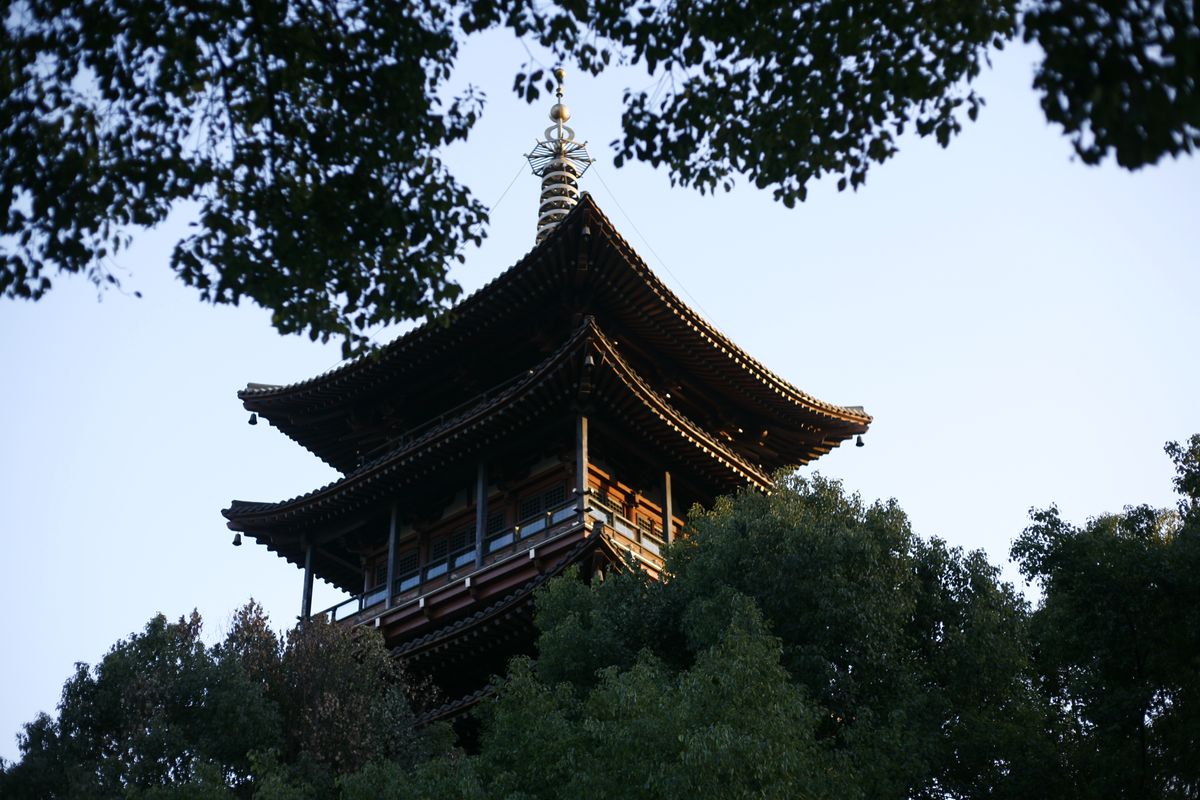
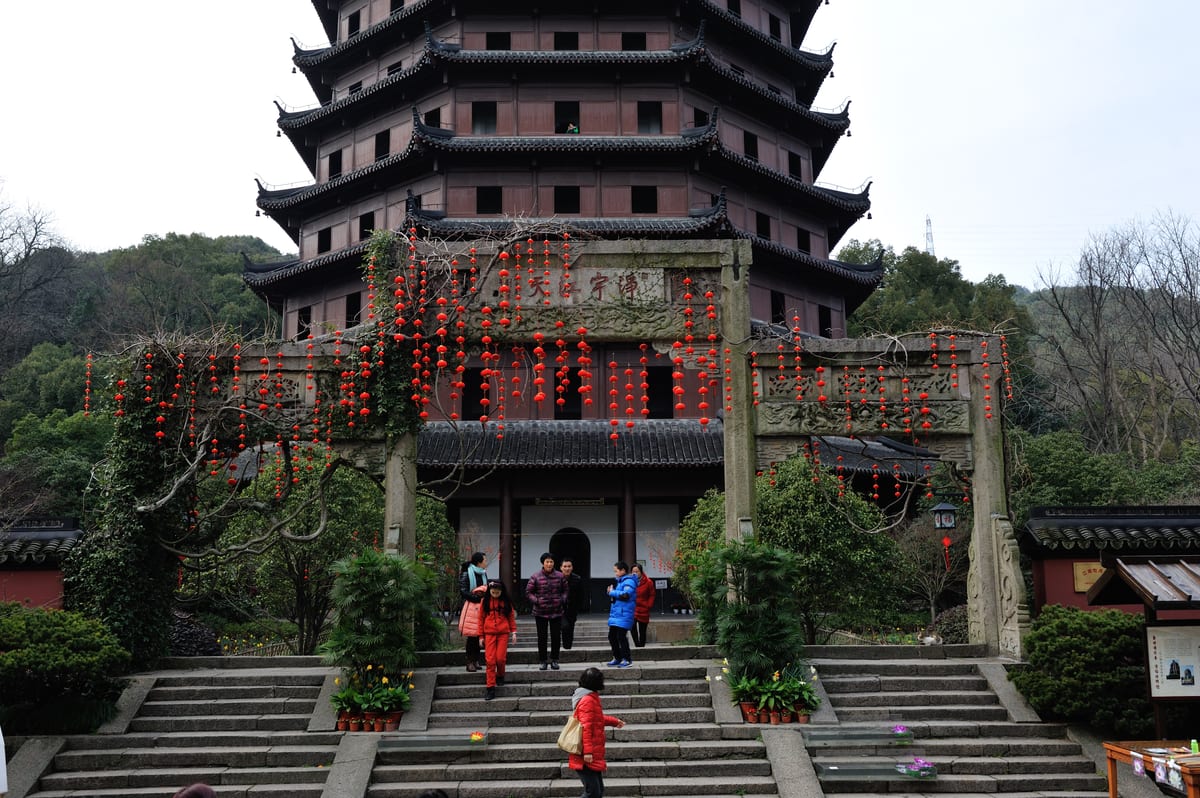
The multi-eaved Six Harmonies Pagoda decorated with lanterns
An optical illusion in brick and wood
Count the eaves from outside and you get thirteen storeys. Climb the spiral staircase inside and you find only seven, one of the neatest architectural tricks of its era. The octagonal tower measures 59.89 metres, and 104 iron bells hang from the corners of its eaves. What you climb today is really two buildings in one: the original pagoda was destroyed in fighting in 1121, the brick core was rebuilt under the Southern Song, a job finished by 1165, and the skirt of dark wooden eaves was added around it in 1900, in the final years of the Qing dynasty. Each interior floor keeps its carved ceiling of birds, flowers and beasts, decoration praised since Song times.
The view: a river, a bore and a 1937 bridge
The upper galleries look straight down on the Qiantang River Bridge, finished in September 1937 as the first major double-deck road and rail bridge designed by Chinese engineers, under Mao Yisheng. Months after opening, Mao himself had it blown up to slow the Japanese advance; rebuilt after the war, it still carries trains beneath your feet. For raw drama, come around the eighth lunar month (usually September), when the Qiantang tidal bore surges upriver, the very phenomenon the pagoda was meant to pacify. On the hillside around the tower, the Liuhe Pagoda Cultural Park displays a collection of miniature pagodas modelled on famous towers from across China.
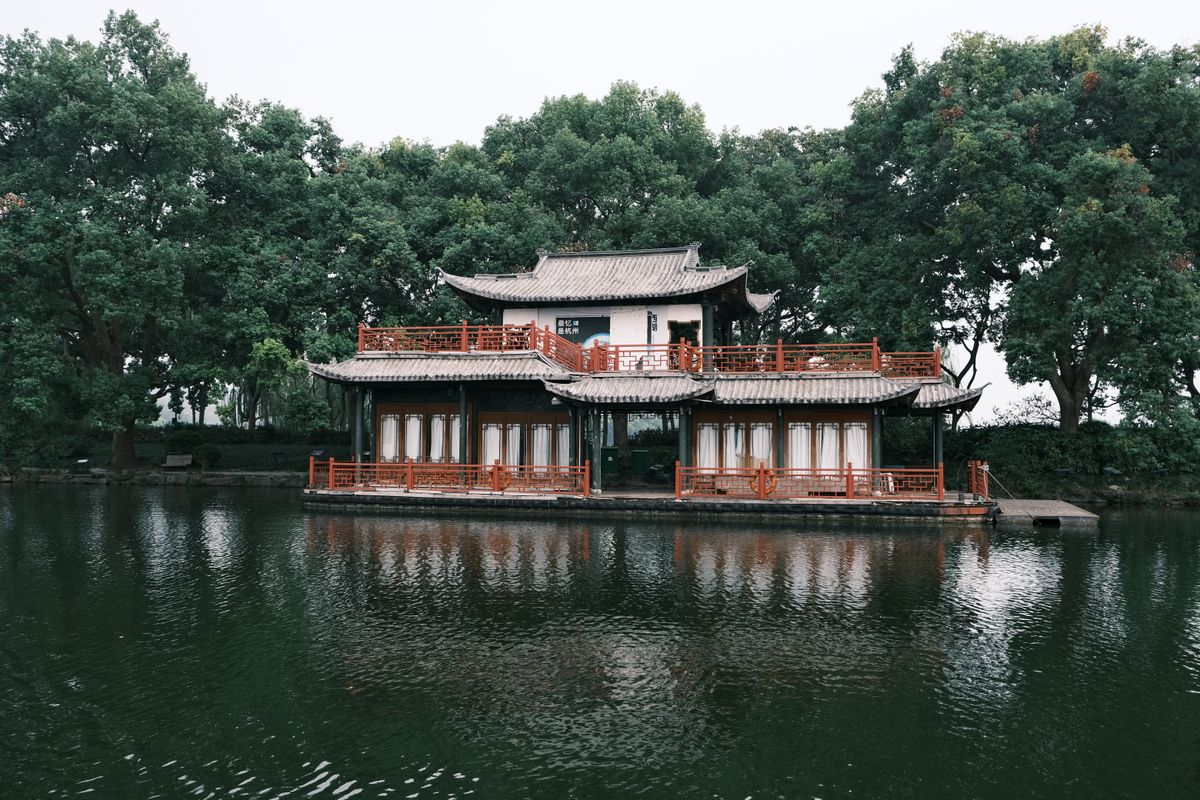
Riverside pavilion in the parkland around the pagoda
Hours, tickets and the climb
As of 2026 the grounds open from about 6:30 in the morning to late afternoon, closing around 17:30 and somewhat earlier in winter, so plan the climb well before closing. Ticketing comes in two layers: a modest fee for the park grounds, then a separate, smaller ticket sold at the pagoda if you want to climb it. Both cost little; check current figures on site or on the ticket platforms. Keep the climbing ticket handy on the stairs.
Getting there
The nearest metro stop is Shuichengqiao on Line 4; leave by Exit B, and bus 318 or 334 (or a five-minute taxi) covers the last stretch to the Liuhe Ta stop; bus 4 and several other city routes stop at Zhijiang Road nearby. A taxi or ride-hail from the West Lake area takes about 15–20 minutes. The pagoda base itself sits up a flight of stone steps from the entrance, so allow a few extra minutes and wear decent shoes.
When to go
Spring and autumn bring the clearest air for the river panorama. Summer haze can flatten the view, and winter afternoons end early. Photographers get the best full-height shot of the tower from the park paths just east of the base, with the eaves stacked against the hillside greenery.
Highlights
- Towering pagoda first raised in 970 AD by the Wuyue kingdom above the Qiantang River
- Clever design: thirteen eaves outside but only seven interior storeys
- Southern Song brick core (finished by 1165) wrapped in wooden eaves added in 1900
- Carved ceilings of birds, flowers and beasts on every interior floor
- Sweeping views of the Qiantang River and its historic 1937 bridge
- Hillside Cultural Park with a collection of miniature pagodas from across China
Travel Tips
Two tickets to climb
The grounds ticket only covers the park and pagoda base; a separate, smaller climbing ticket is sold at the tower itself. Both cost little, so just budget for the pair.
Time the tidal bore
Around the eighth lunar month the Qiantang tidal bore surges past; an unforgettable add-on if your dates line up.
Wear good shoes
Reaching the pagoda base means climbing stone steps up the hill, and the interior staircase is steep, so comfortable footwear helps.