Hangzhou
West Lake (Xi Hu)
There is no gate and no ticket booth at West Lake. The shoreline, the willow-lined causeways and most of the classic views are free and open around the clock, which surprises first-time visitors expecting China's most famous lake to be fenced and ticketed. What you are walking into is a UNESCO World Heritage cultural landscape that poets and painters have worked over for a thousand years, and the real planning question is not whether to go but how much of the roughly 15-kilometre shoreline to attempt.
The ten scenes, and why you should not chase all of them
Chinese tradition catalogues West Lake as ten classic scenes, each tied to a season and a time of day: spring dawn on the Su Causeway, lingering snow on the Broken Bridge, the autumn moon over the still water. Treating them as a checklist is the standard mistake. Pick a stretch of shoreline and a pace instead; the lake rewards two slow hours more than eight rushed ones.
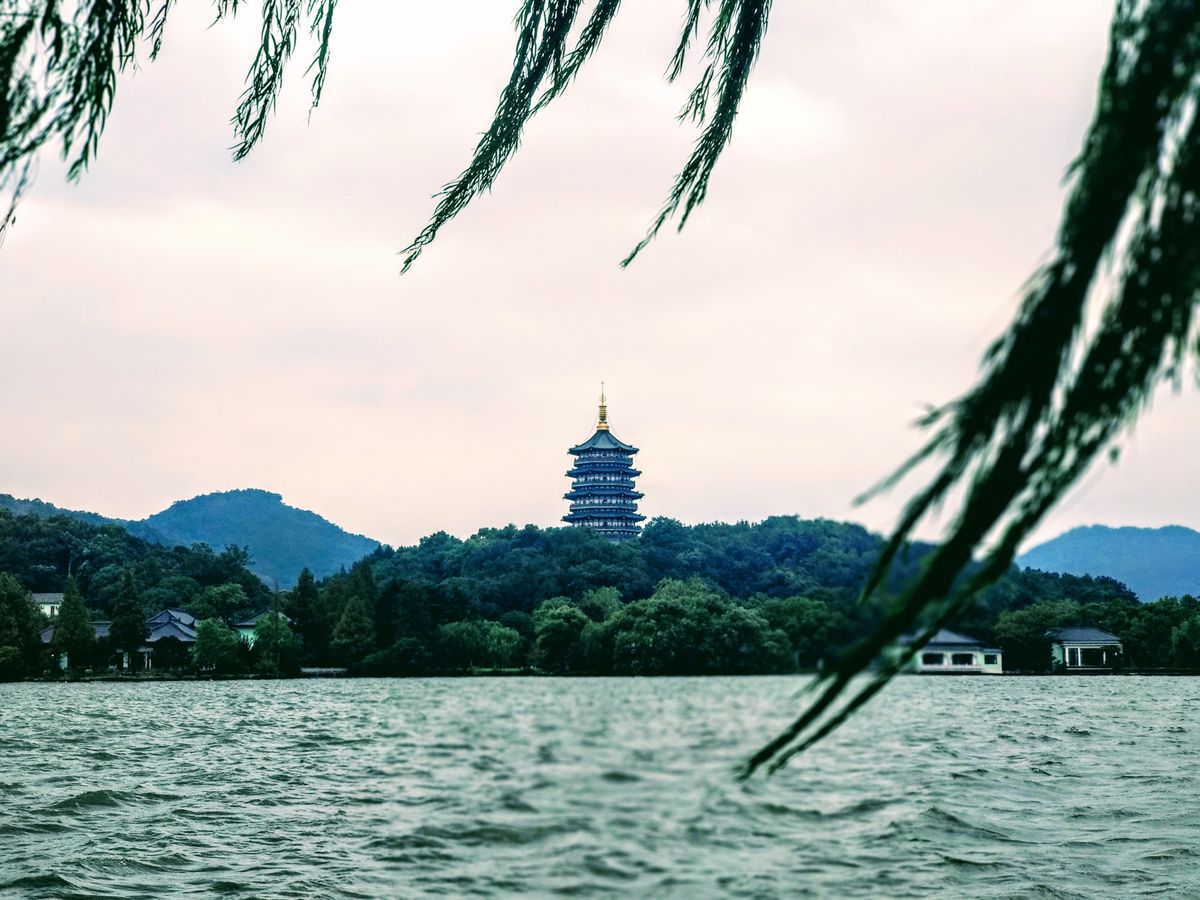
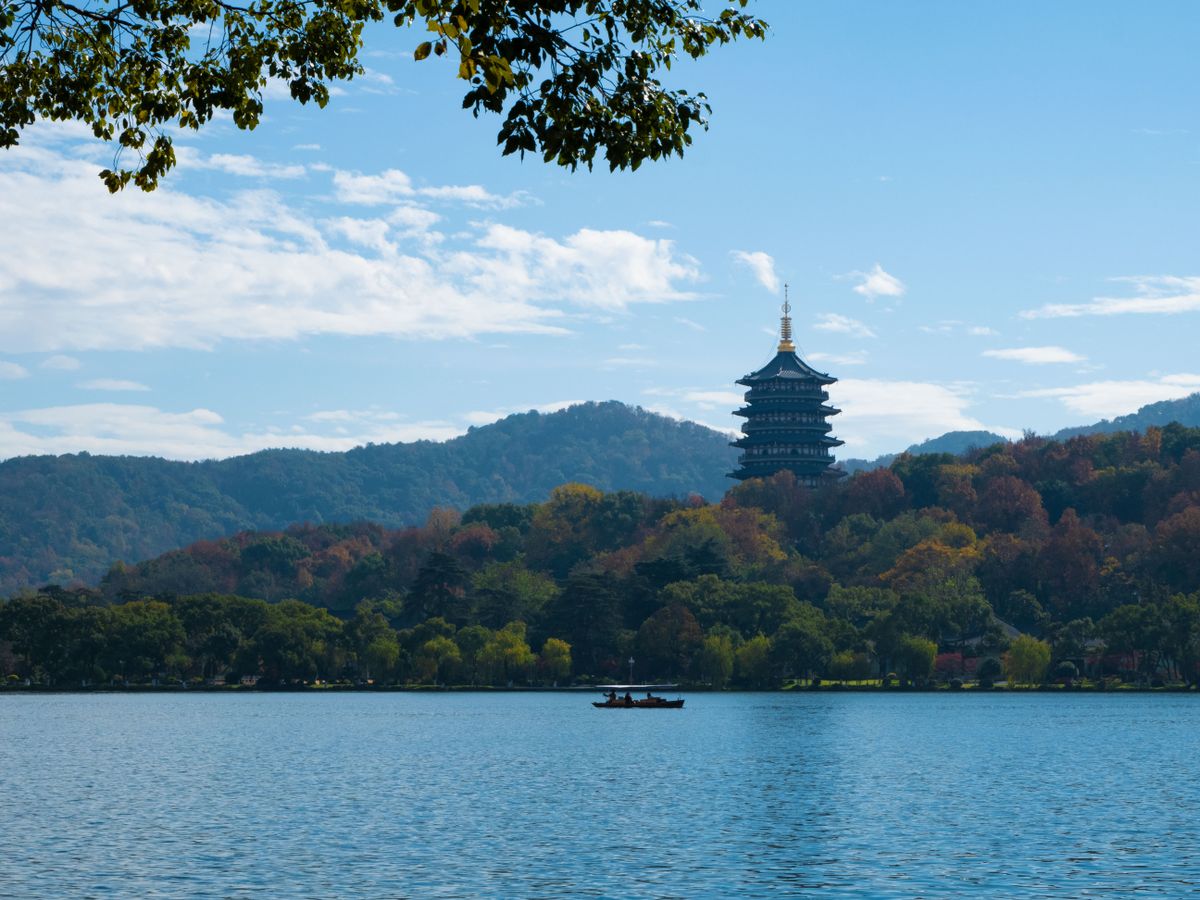
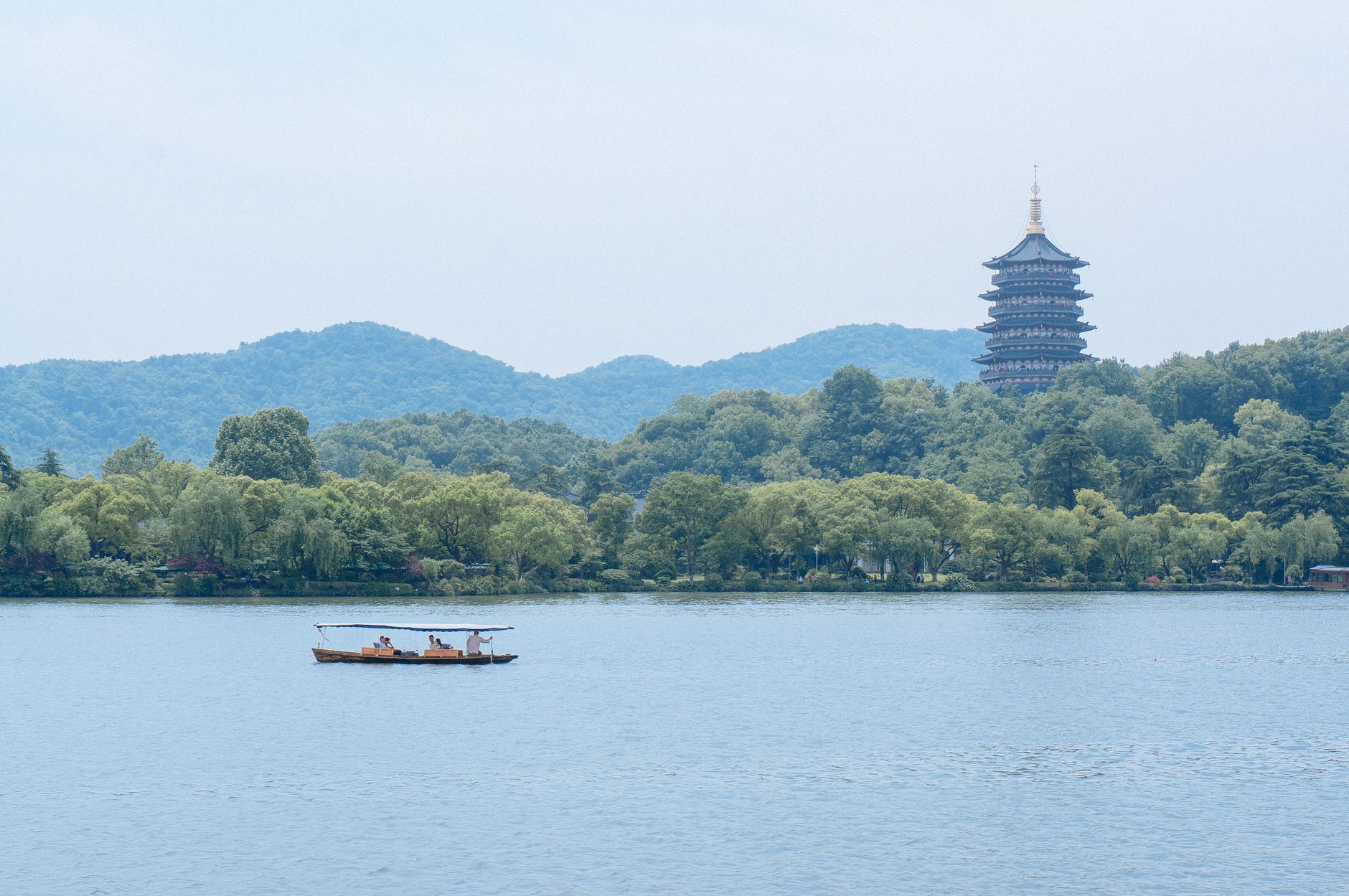
Leifeng Pagoda framed by willow branches over West Lake
What to see around the lake
- Leifeng Pagoda: the tower on the south shore looks ancient from across the water but is a 2002 rebuild, raised over the excavated ruins of the original 975 pagoda, which collapsed in 1924 after decades of visitors prying out its bricks. There are lifts inside, and the upper balconies give the best high view of the lake. Entry is ticketed separately from the free shoreline.
- Su Causeway and Bai Causeway: tree-lined walking dykes named for the poet-governors Su Dongpo and Bai Juyi, and the nicest way to cross the water on foot or by bike.
- Three Pools Mirroring the Moon: three small stone pagodas standing in the water off Lesser Yingzhou island, the scene printed on the back of the 1-yuan note.
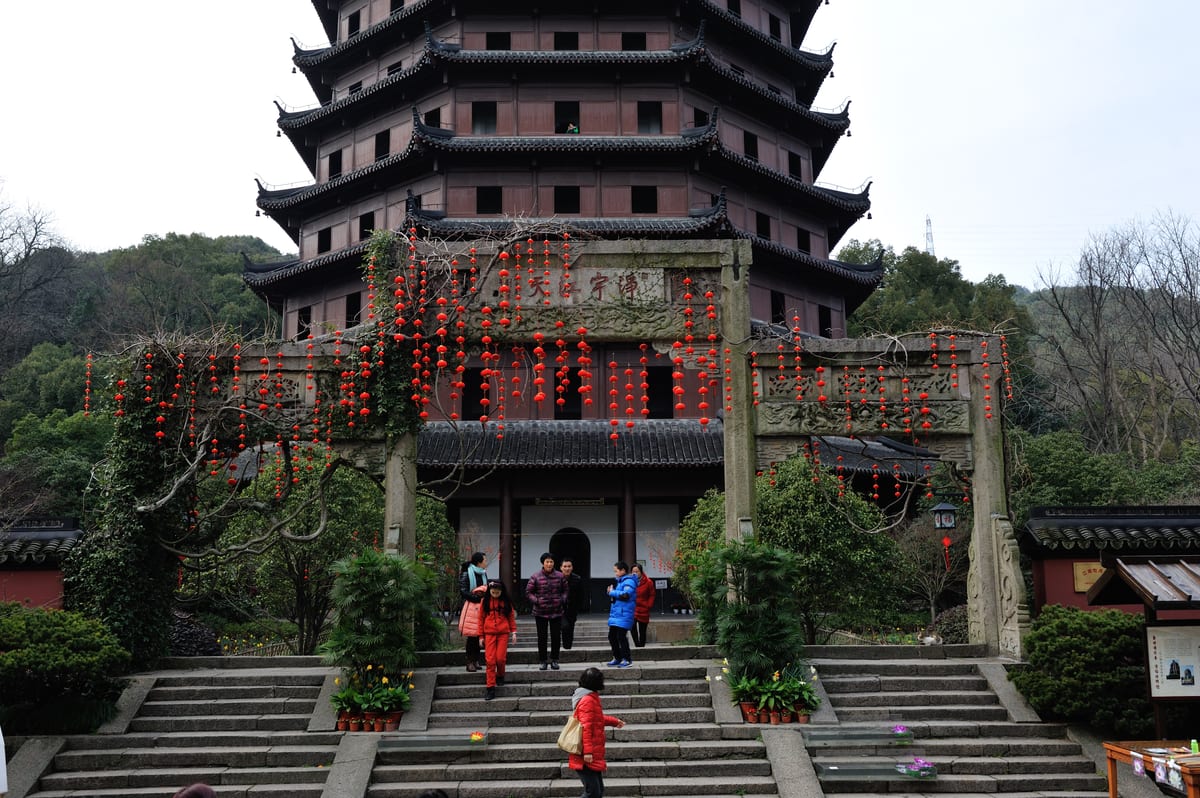
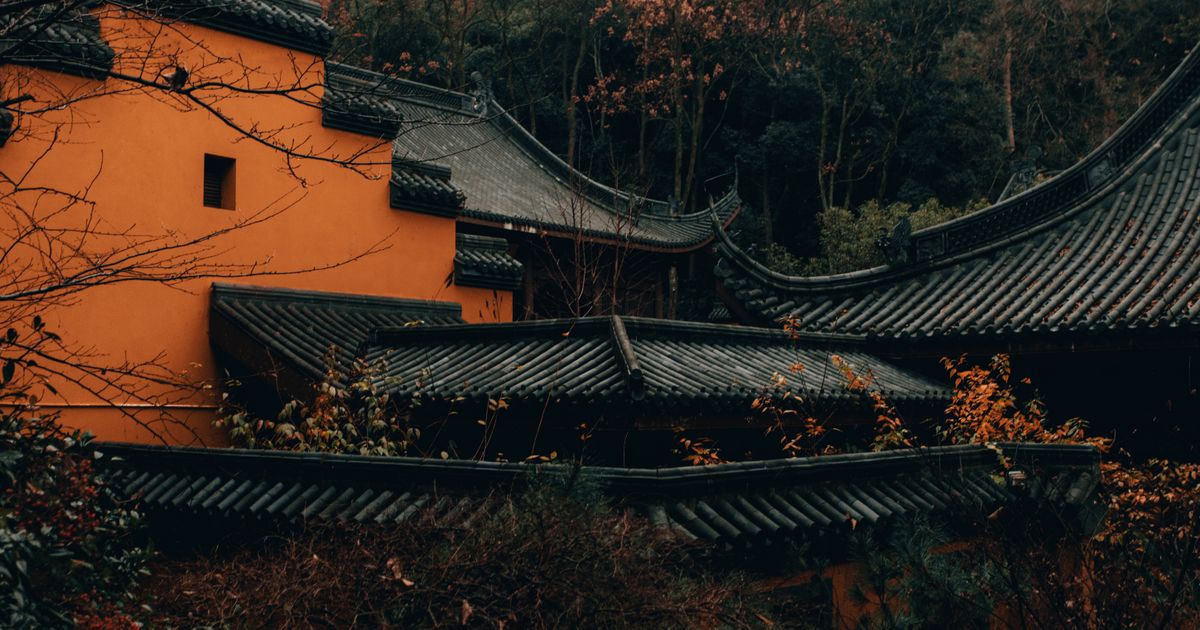
- Lingyin Temple: one of the most important Buddhist temples in China, a short ride into the hills west of the lake.
How the boats work
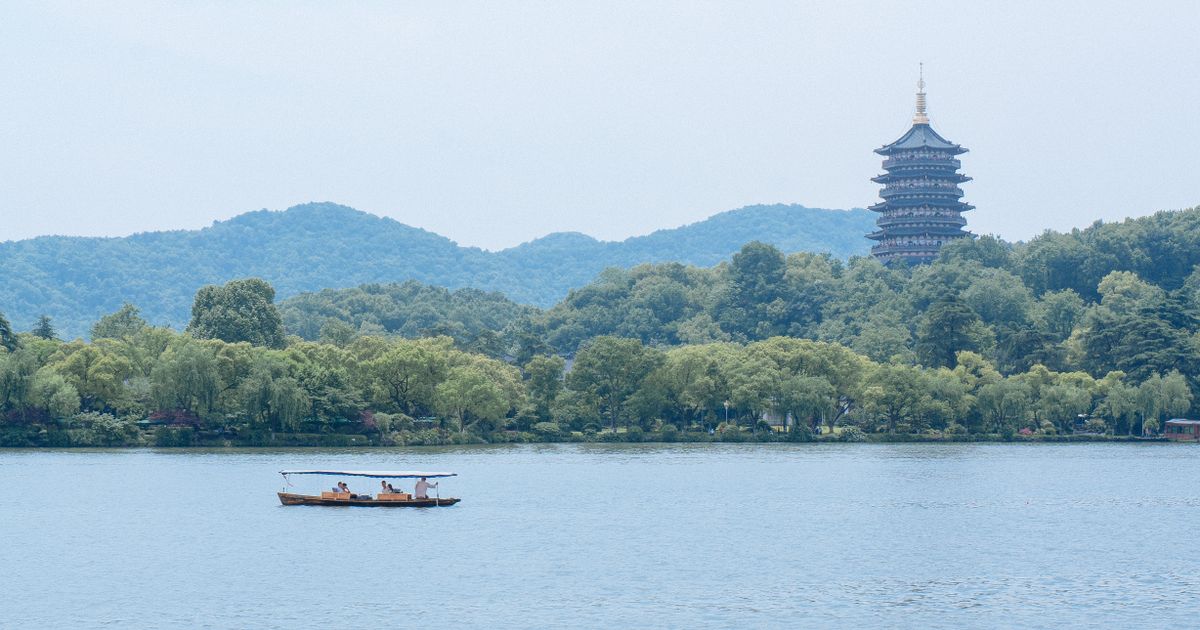
Walking the shore costs nothing, but the classic move is a boat out to Lesser Yingzhou island. Several grades of public boat leave from piers around the lake, and island admission is normally bundled into the fare; prices are posted at the pier and change by boat type, so check on the day. Boats run through the daytime only, and the last departures to the island leave in the late afternoon, so do the water portion before you settle into a teahouse, not after.
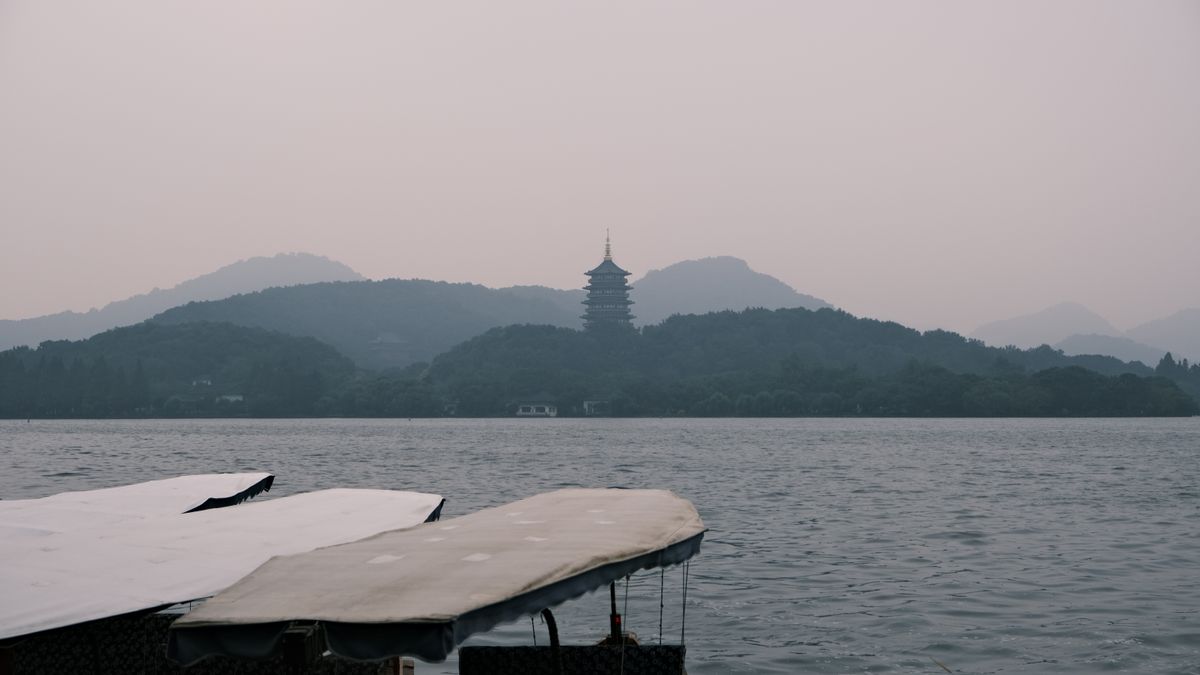
Misty view of West Lake with a traditional boat
Best time to visit
Late March to early May brings willow green and blossom along the causeways. Autumn, October and November, gives the crispest air and the moon views the poets wrote about. Summer is hot, humid and crowded, but the lotus beds along the northern shore are at their peak. In any season the hour after dawn is the quietest, before the tour groups arrive.
Getting there
Hangzhou is around an hour from Shanghai by high-speed rail, which makes West Lake a workable day trip and a better overnight. Seats on the Shanghai trains sell out at weekends, so book a day or two ahead on Trip.com or at the station. From Hangzhou East station, Metro Line 1 runs direct to Longxiangqiao station in about twenty minutes; exit C puts you a short walk from the eastern shore. Around the lake itself, walking and shared bikes beat any vehicle, and electric sightseeing carts loop the shore for a small fee if your legs give out.
Tea hills and temples nearby
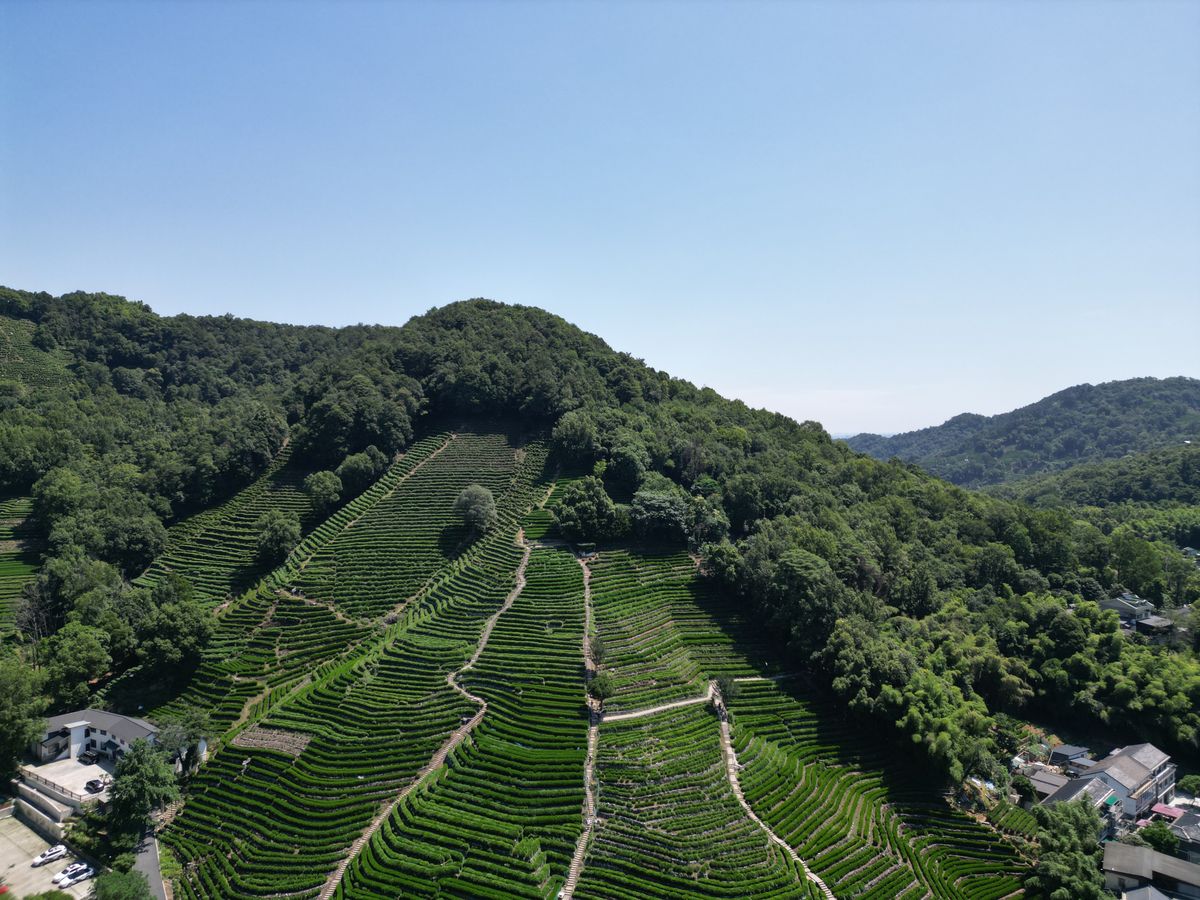
Just west of the water, the terraced hills of Longjing (Dragon Well) village grow the tea bushes behind Hangzhou's famous green tea; you can walk between the rows and stop at a farmhouse for a freshly brewed cup. A short ride further on, Lingyin Temple sits against forested cliffs carved with hundreds of Buddhist grotto figures. Together with the lake they justify two days in Hangzhou on any eastern China route.
Practical notes
The full shoreline loop is about 15 kilometres, far more than most people expect, so comfortable shoes matter. Set up a payment app linked to your card before you come, since boat tickets, shared bikes and teahouses rarely take foreign cash happily. In summer, carry an umbrella that can serve for both sun and the frequent afternoon showers. And resist seeing everything: one causeway, one boat and one pot of Longjing make a better day than the whole circuit at a march.
Highlights
- Free, always-open UNESCO World Heritage lakeside landscape
- Leifeng Pagoda, a 2002 rebuild over the ruins of the 975 original
- The Su and Bai causeways, walkable or bikeable across the water
- Three Pools Mirroring the Moon, the scene on the 1-yuan note
- About an hour from Shanghai by high-speed train
Travel Tips
The lake is free
Shoreline, causeways and views cost nothing and never close; only sights like Leifeng Pagoda and the island boats are ticketed.
Boat before tea
Last boats to the island leave in the late afternoon, so do the water crossing early and save the teahouse for after.
Beat the tour groups
The hour after dawn is the quietest on the causeways; a shared bike helps cover the 15 km shoreline.
Suggested itineraries
Related reading
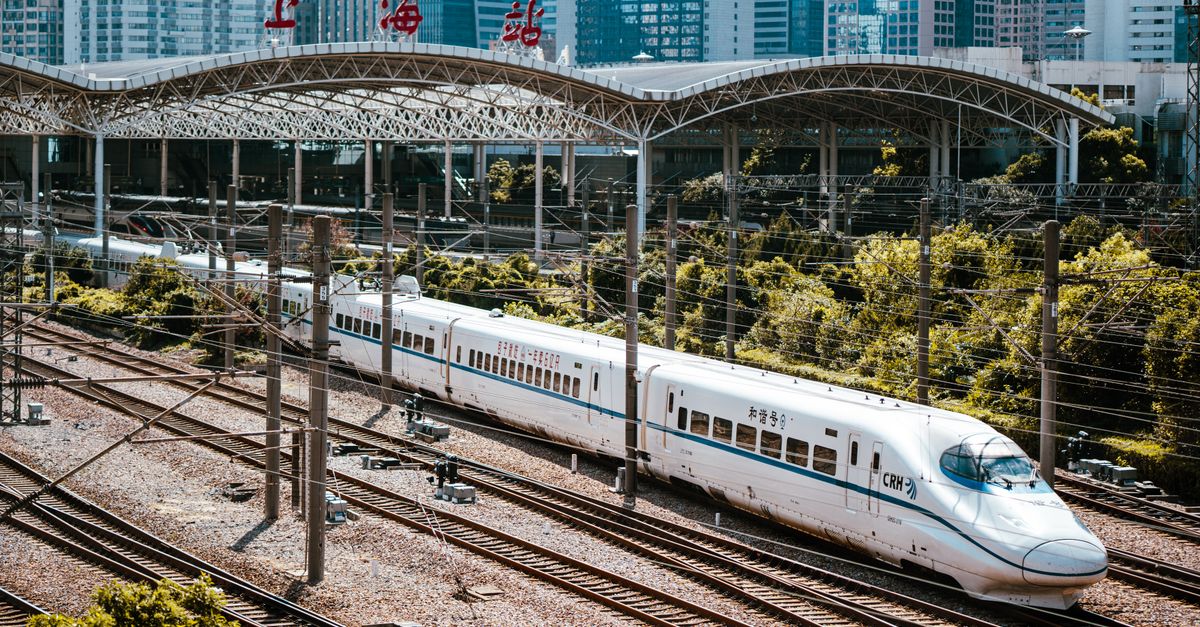
How to Book China's High-Speed Trains (12306 & Trip.com): 2026 Guide
8 min read
Essential Apps to Download Before You Travel to China (2026)
12 min read
China Itinerary: The Perfect 10 Days for First-Time Visitors (Beijing, Xi'an & Shanghai)
9 min read
Where to Stay in China: Hotels, Booking & the Police Registration Rule (2026)
9 min read