Hangzhou
Grand Canal & Gongchen Bridge, Hangzhou
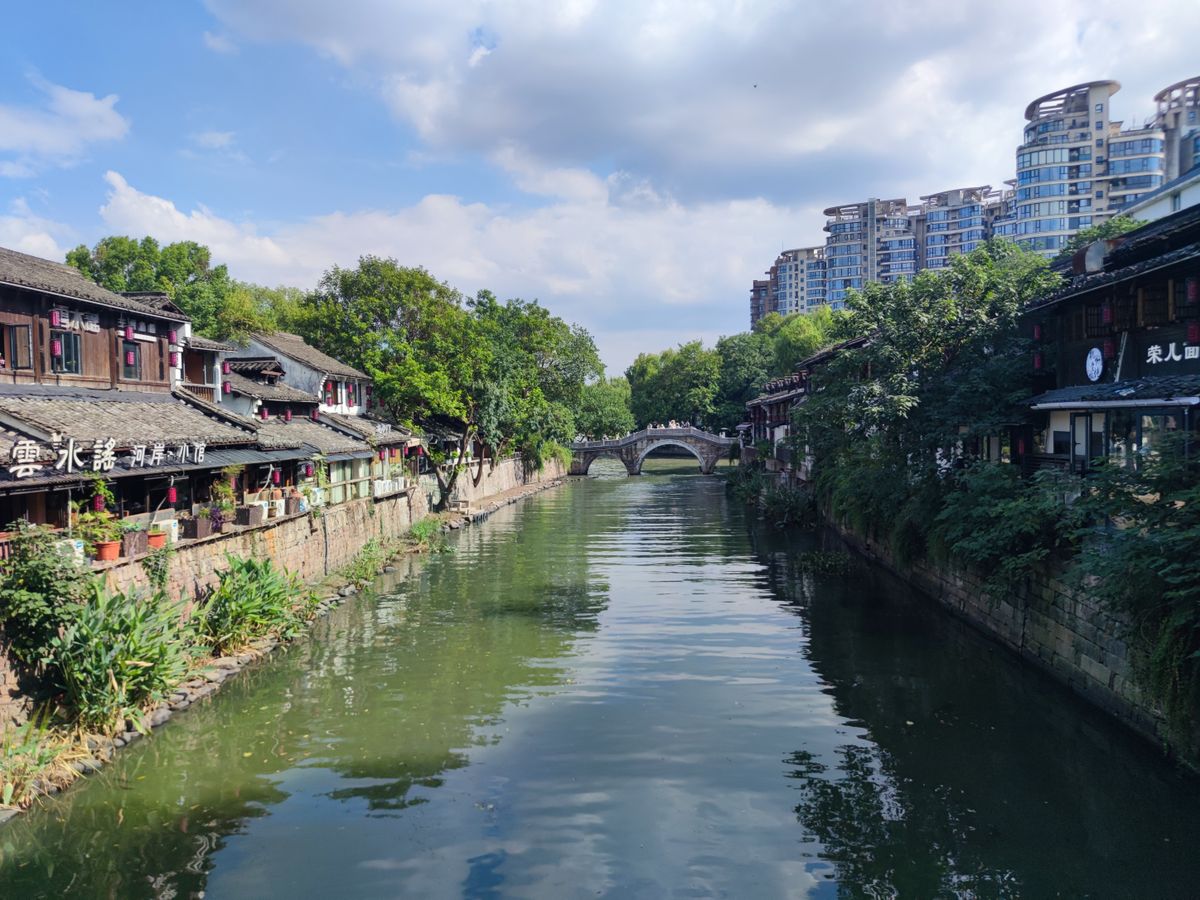
Hangzhou is the southern terminus of the Grand Canal, the centuries-old waterway that once linked Beijing to the Yangtze delta and made this city rich on trade, a UNESCO World Heritage Site since 2014. The clearest sense of that history sits around the Gongchen Bridge, a steep three-arched stone span built in the Ming dynasty that has carried foot traffic over the canal for more than four centuries, with the old warehouse district it anchors now restored into museums, tea houses, and craft workshops rather than left to decay.
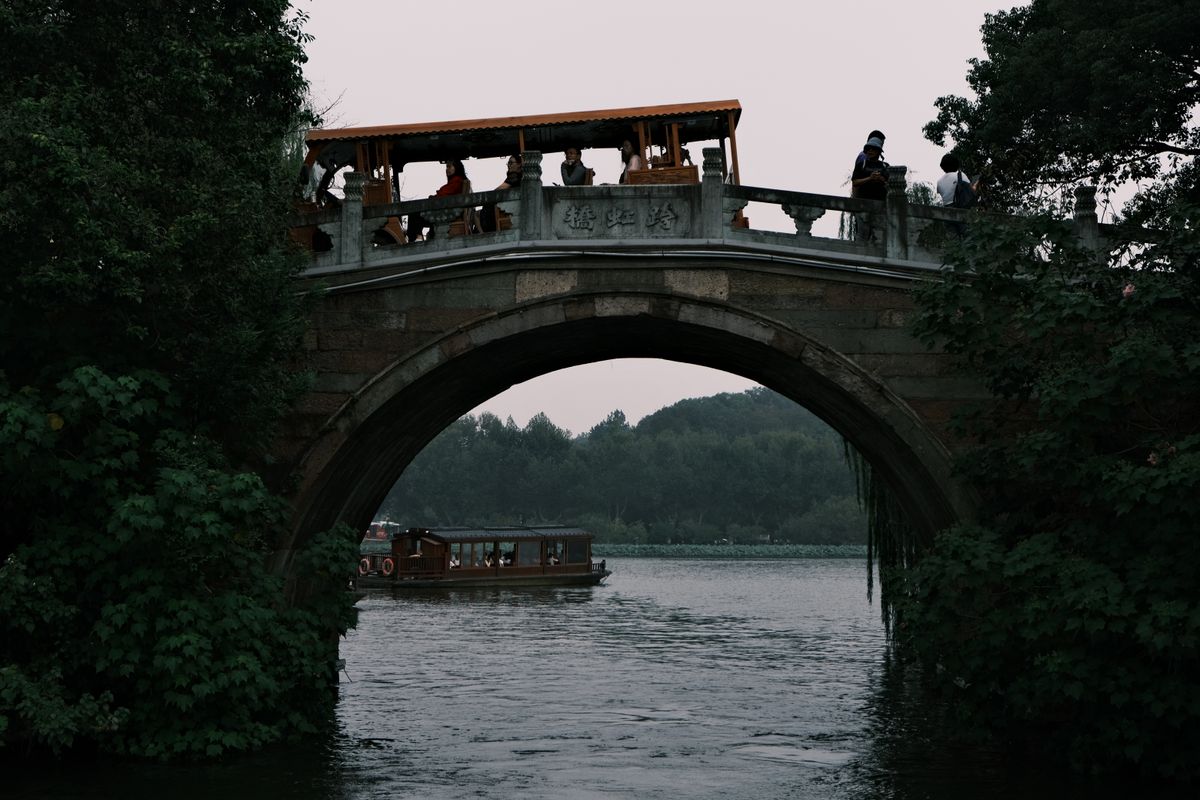
The Grand Canal in Hangzhou with traditional houses, a stone arch bridge and modern towers
Qiaoxi and Xiaohe: warehouses turned museums
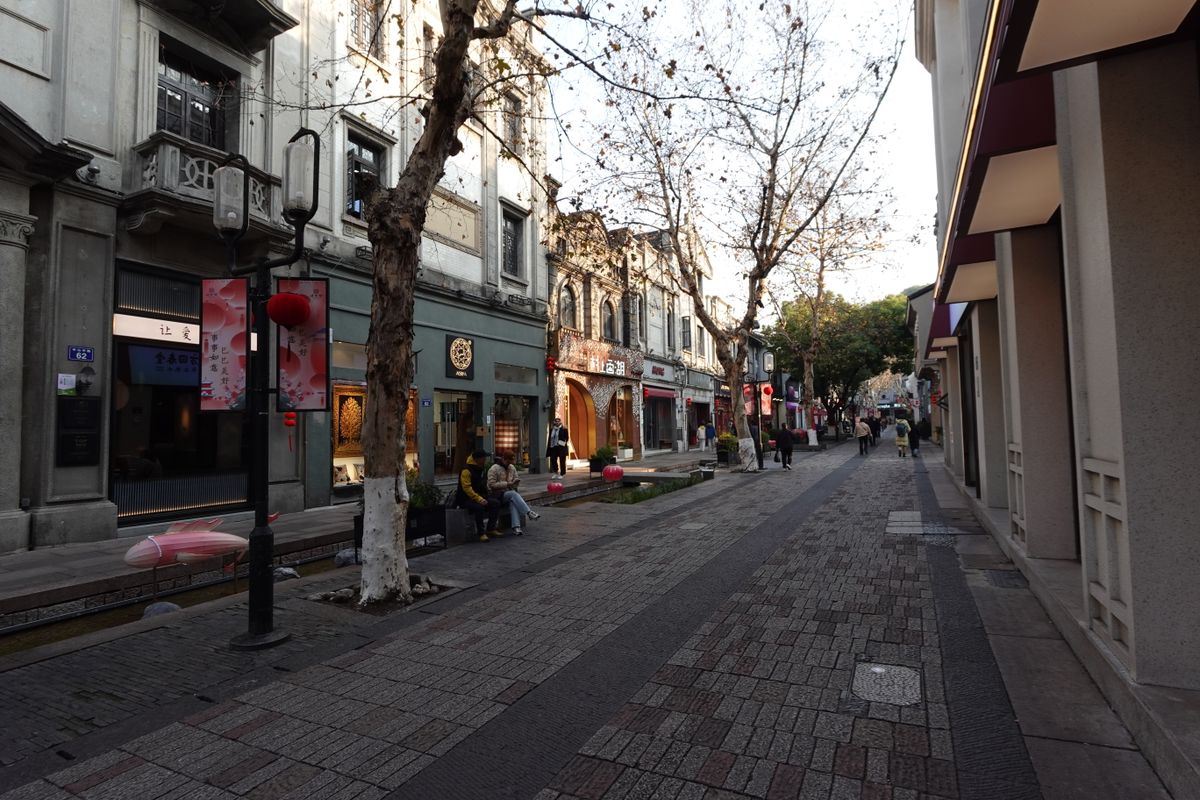
Cross the steep Gongchen Bridge into the Qiaoxi Historic Block and Xiaohe Street, where old canal-side warehouses now hold half a dozen small museums, among them the Grand Canal Museum, the China Knife-Scissors-Sword Museum, the Fan Museum, and the Umbrella Museum, alongside tea houses and craft workshops. Entry is free, but Qiaoxi's museums generally want a slot reserved a day ahead through the block's official WeChat account, and visitors who work through all of them can collect a stamp at each; the workshop floor charges separately for hands-on crafts like paper cutting or cross-stitch. Xiaohe Street itself never closes, though most shops and restaurants wind down by mid to late evening.
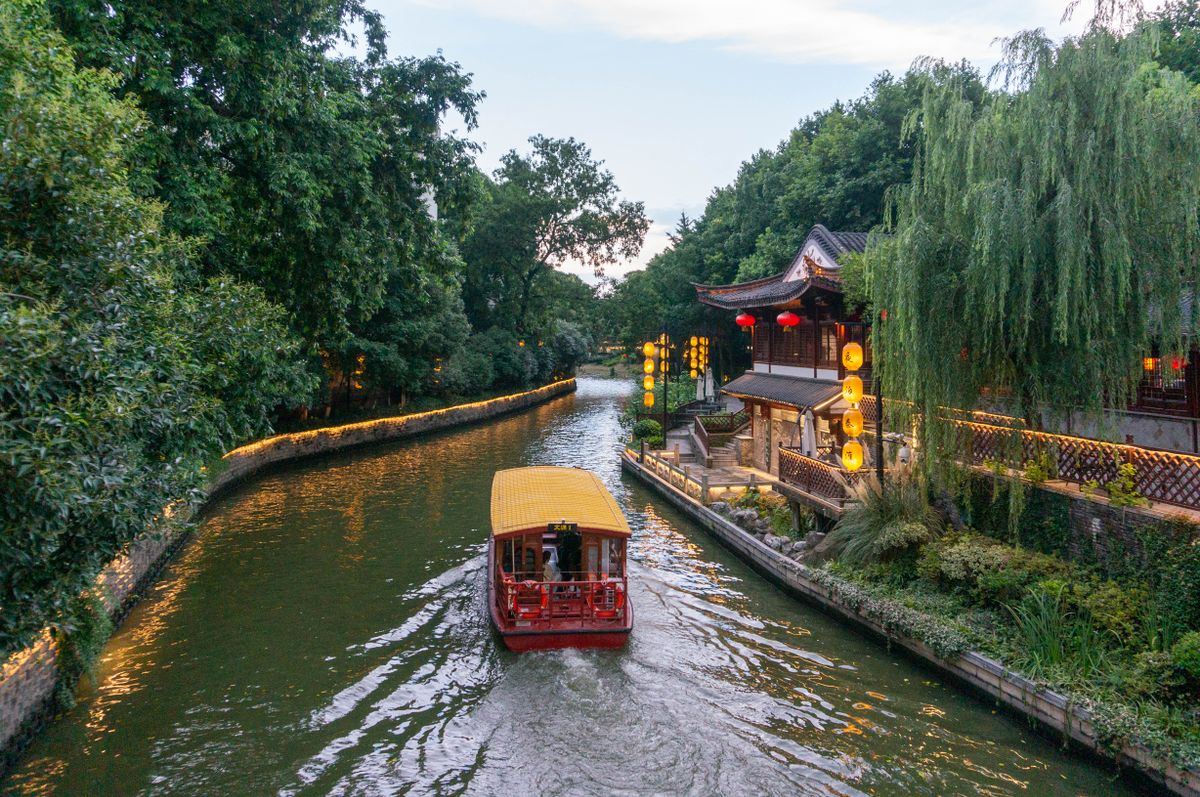
A traditional canal boat passing lantern-lit banks at dusk
Getting there: metro, or the water bus locals actually use
Metro and bus routes reach the Gongchen Bridge and Xiaohe Street area directly in northern Hangzhou. For a slower, more scenic approach, the public water bus (Line 1) runs between Wulinmen Wharf in the city centre and Gongchen Bridge roughly every 20 to 30 minutes from about 7am to 6pm, priced as an ordinary city ferry rather than a tourist attraction; the dedicated evening cruises that cover the same stretch after dark are ticketed and priced separately, for a different, more polished experience.
When to go
Evening is the draw here: lanterns reflect on the water once the sun goes down, and that is when the tourist cruises run. The themed museums keep daytime hours, generally Tuesday to Sunday from around 9am to 4:30pm, closed on Mondays, while the canal banks and bridge themselves stay open and free around the clock. Spring and autumn bring the most comfortable weather for walking the towpaths by day.
Highlights
- Southern terminus of the UNESCO-listed Beijing-Hangzhou Grand Canal
- The Ming-dynasty Gongchen Bridge, a 400-year-old three-arched stone span
- Qiaoxi Historic Block and Xiaohe Street of restored canal warehouses
- Free themed museums: Grand Canal, Fan, Umbrella, and Knife-Scissors-Sword
- The public water bus, an everyday city ferry that doubles as a scenic ride
- Evening lantern-lit cruises along the canal after dark
Travel Tips
Reserve the free museums ahead
Qiaoxi's museums are free but generally want a slot booked a day ahead through the block's official WeChat account; visit all of them and collect a stamp at each.
Take the water bus, not just the cruise
Line 1 of the public water bus runs from Wulinmen Wharf to Gongchen Bridge every 20 to 30 minutes and costs an ordinary city-ferry fare, far less than the separately ticketed evening tourist cruises.
Check Monday closures
The themed museums keep roughly Tuesday-to-Sunday daytime hours and close on Mondays; the canal banks and bridge stay open and free at all times.
Come at dusk
Evening is the prettiest hour, when lanterns reflect on the canal and the tour boats begin their runs.