Hangzhou
Longjing Tea Plantations & National Tea Museum, Hangzhou
Longjing Village gets the name and the tour buses, but the more rewarding half of this tea country lies one valley over in Meijiawu: a broader, greener valley with more terraces to wander and far fewer people doing the wandering. Together the two villages, and the China National Tea Museum between them, cover the hills that have grown Longjing (Dragon Well), China's most celebrated green tea, for more than a thousand years, and once supplied the imperial court.
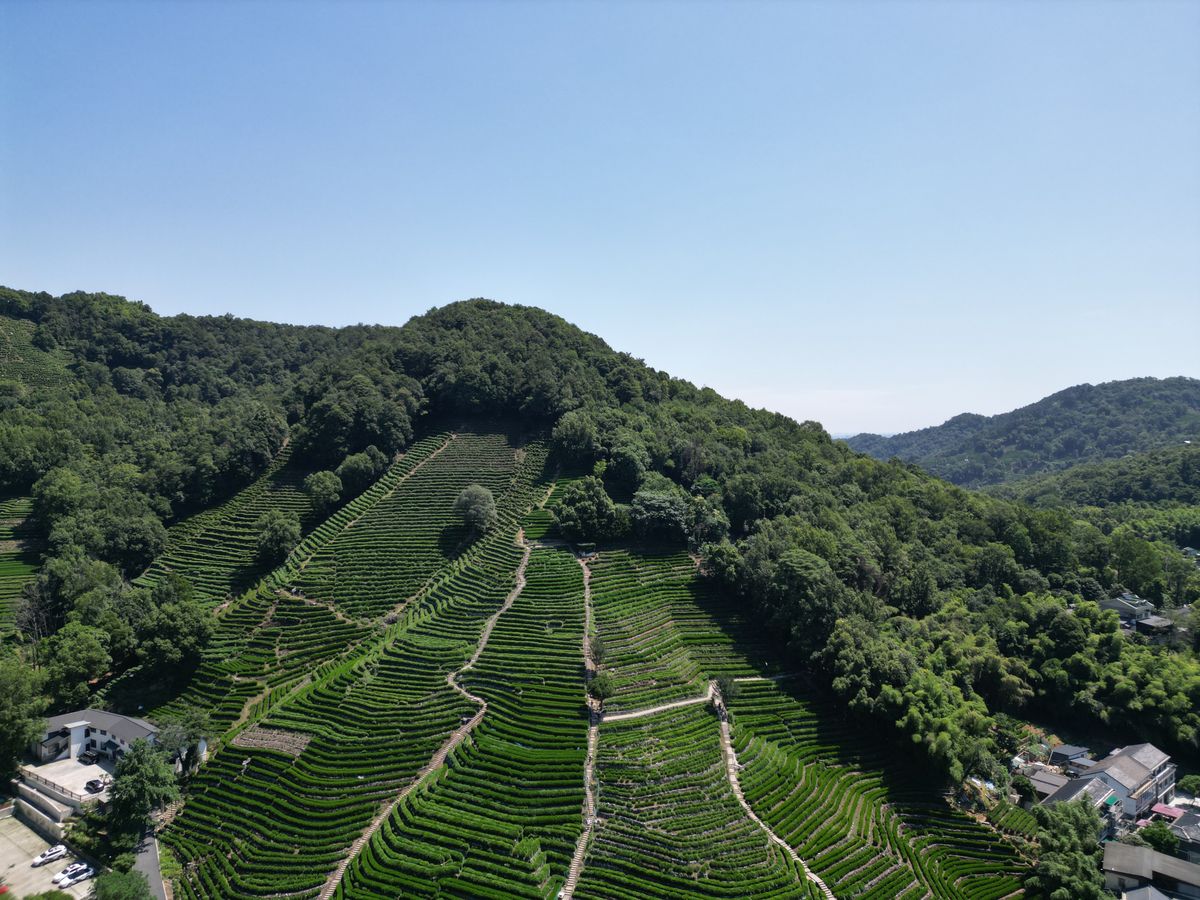
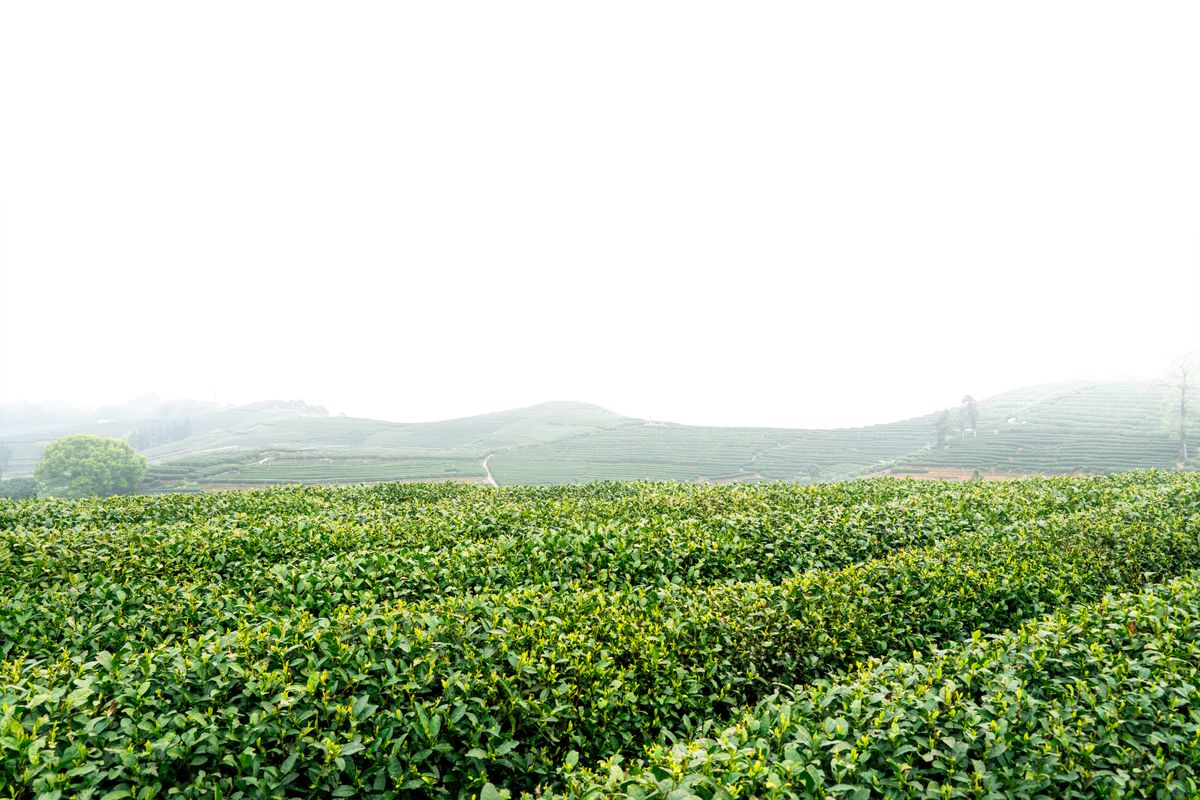
Aerial view of the terraced Longjing tea plantations in the Hangzhou hills
What's actually here
Terraced tea rows climb the hillsides between Longjing Village and Meijiawu, laced with footpaths and small tea houses. The China National Tea Museum sits between the two, its free galleries covering tea's history, varieties, and ceremony across landscaped grounds; look for the original Dragon Well spring near Longjing Village and the "Eighteen Imperial Tea Bushes," said to have been honoured by Emperor Qianlong. A popular loop links the museum, the tea terraces, and the Longjing Ancient Trail into a walk of roughly 5 km.
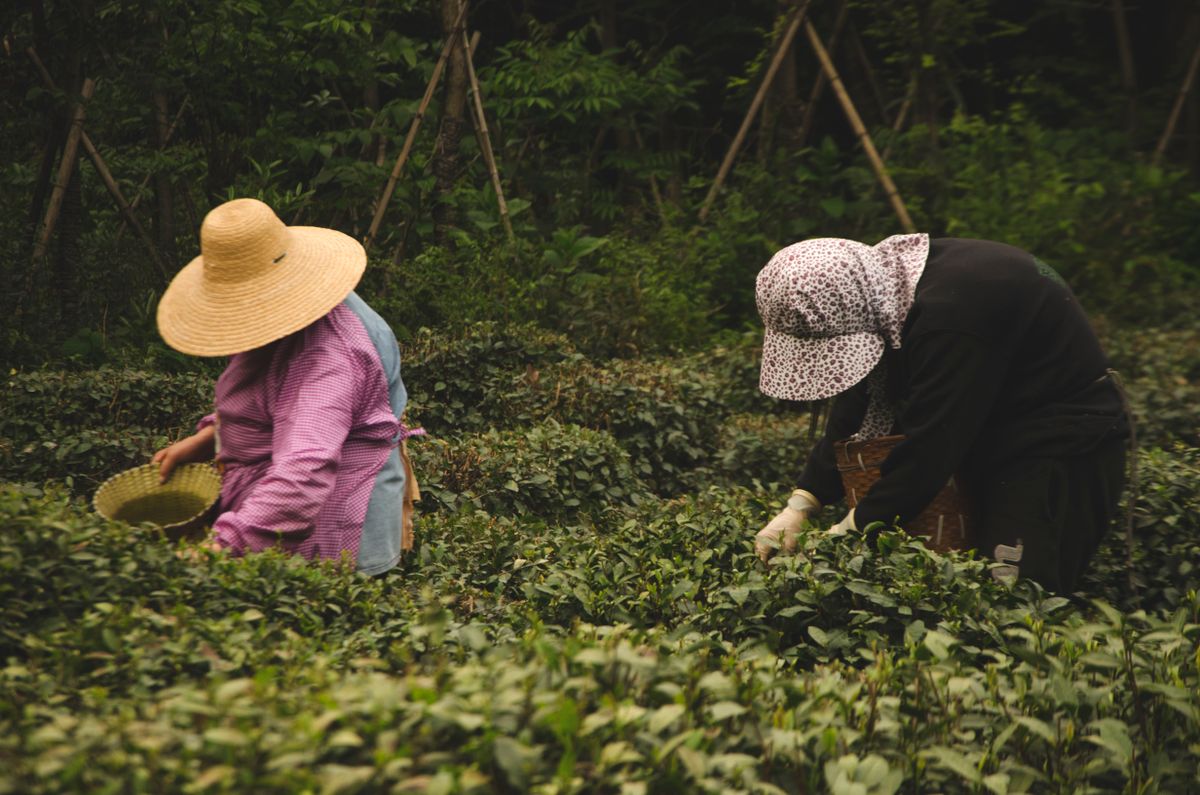
Tea pickers working the green plantation rows
Free to walk, paid to drink
Walking the hills and villages, and entering the China National Tea Museum, costs nothing; the museum keeps slightly longer hours in the warmer months (roughly 9am to 5pm from May to October, 8:30am to 4:30pm the rest of the year) and closes on Mondays. Tea tasting, guided picking, and buying leaves are the paid part, and prices are negotiable, not fixed, so agree the grade and the price per jin (500g) before anything is weighed.
Getting there
Bus Y3 and regular routes 27 and 87 run to Longjing Village and the museum, with the Y3 stop at Shuangfeng particularly convenient for the museum; a taxi from West Lake takes about 15 minutes. Many visitors walk in from the lake's southwest shore instead and treat the tea hills as a half-day hike rather than a bus trip.
When to go
Spring is the season that matters here: the prized pre-Qingming (mingqian) harvest runs from late March to early April, when the hills are busiest with pickers and the freshest leaves cost the most. Autumn trades the crowds for quiet, golden walks with little tea activity to watch.
Buying tea without getting fleeced
Genuine West Lake Longjing is a limited, expensive crop, so cheap tea sold roadside as "authentic Longjing" is almost always ordinary tea from elsewhere, and leaves picked after the Qingming festival sometimes get rebranded and sold as the pricier pre-Qingming grade. Buy from village co-ops, the museum shop, or an established tea house rather than roadside touts, taste before you commit, and for packages of 250g or more, check for an official certificate with a scratch-off authentication code you can verify online.
Highlights
- Longjing Village and the quieter, greener Meijiawu valley next door, source of China's most famous green tea
- The free China National Tea Museum, with galleries on tea history, varieties, and ceremony
- The original Dragon Well spring and Qianlong's 'Eighteen Imperial Tea Bushes'
- A roughly 5-km walking loop linking the museum, tea terraces, and the Longjing Ancient Trail
- The spring pre-Qingming (mingqian) harvest, the year's most prized picking season
- Village tea houses for tasting freshly picked Longjing with a hillside view
Travel Tips
Meijiawu over Longjing Village
If the crowds at Longjing Village put you off, walk one valley over to Meijiawu for wider, greener terraces and far fewer visitors.
Agree the price before you taste
Tasting, picking, and buying leaves are the only paid parts of a visit; settle the grade and price per jin before any tea is weighed, and be wary of cheap tea sold as 'authentic' West Lake Longjing.
Check the certificate
For packages of 250g or more, look for an official certificate with a scratch-off code you can verify online; it is the only real guard against tea rebranded from a later, cheaper harvest.
Museum hours shift with the season
The China National Tea Museum is free, closes on Mondays, and keeps slightly longer hours from May to October than in the cooler months.
Come pre-Qingming
Late March to early April brings the mingqian harvest, with pickers working the hills at their liveliest; autumn trades that activity for a quiet, golden walk.