Nanjing
Presidential Palace (Zongtongfu)
Zongtongfu is the compound where the Republic of China's government sat, and it holds more layers of Chinese political history than almost any other single site in the country: a Ming dynasty princely mansion, the Taiping Heavenly King's palace, and Sun Yat-sen's seat of power, all inside one walled compound in central Nanjing.
Six centuries of power on one plot
The ground has held a seat of authority since the early Ming dynasty, when it was the residence of a Ming prince. Later it became the official yamen of the Qing dynasty's Liangjiang Viceroy, one of the empire's most powerful regional governors. During the mid-19th-century Taiping Rebellion it was seized and rebuilt as the palace of the Heavenly King, Hong Xiuquan, and traces of that violent, idealistic decade survive in the grounds. In 1912 Sun Yat-sen was sworn in here as provisional president of the new republic, and for the following decades it housed the Nationalist government. Few places in China let you stand in rooms where so many different regimes held power.
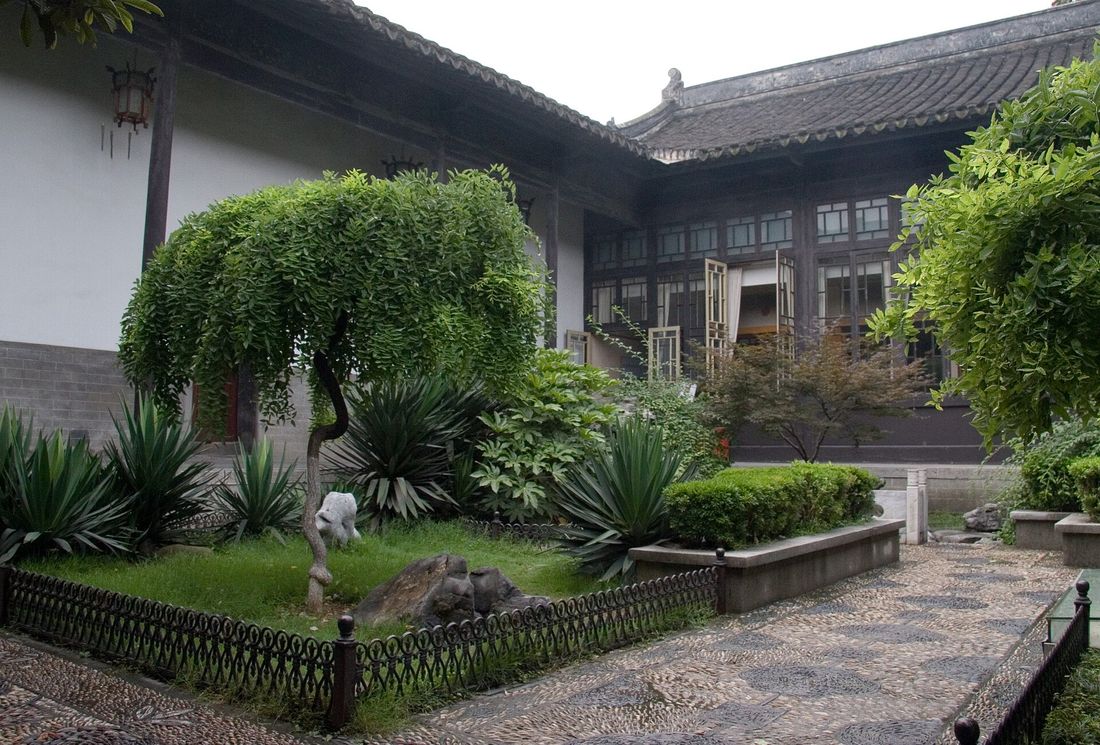
A classical Chinese courtyard garden inside the Presidential Palace
What you will see
The compound rewards slow wandering. You can step into Sun Yat-sen's preserved office, walk through long colonnaded administrative buildings, and visit exhibition halls that trace the late Qing collapse and the republican era. Behind the formal buildings lies Xu Garden (Xuyuan), a small classical landscape of ponds, pavilions and rockeries that once belonged to the Ming princely estate. The mix of European-influenced civic architecture at the front and traditional Chinese garden design at the back sums up the site's split personality.
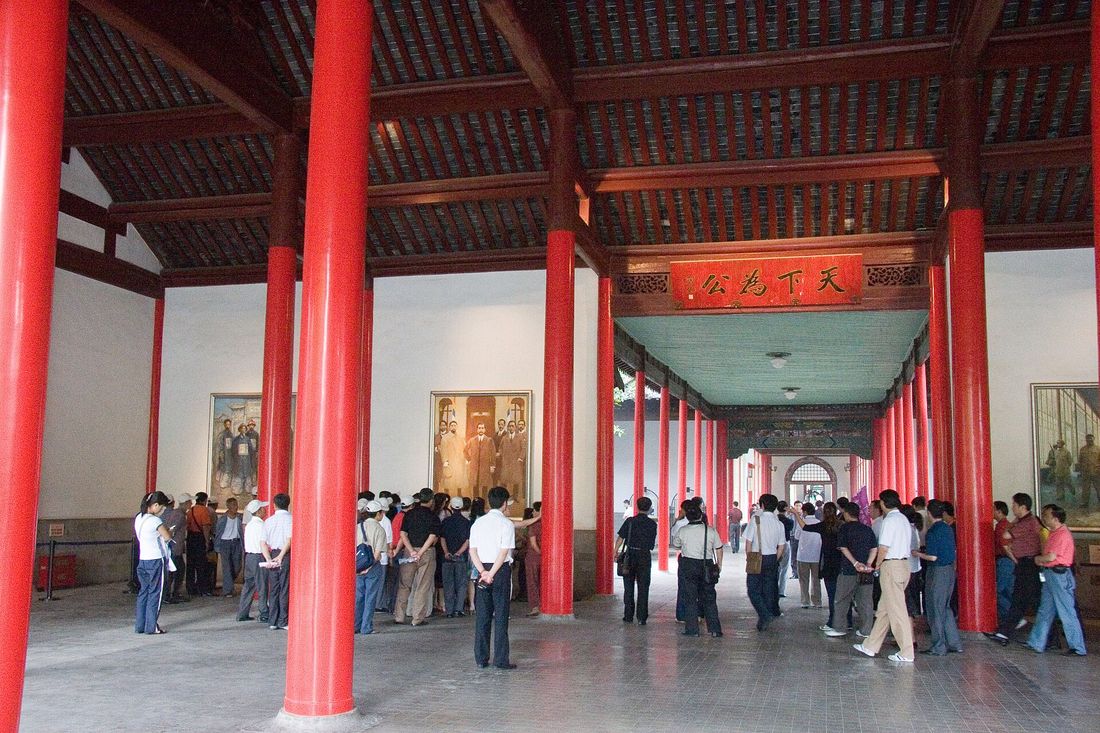
A historic hall within the Presidential Palace complex
Getting in: the entrance has moved
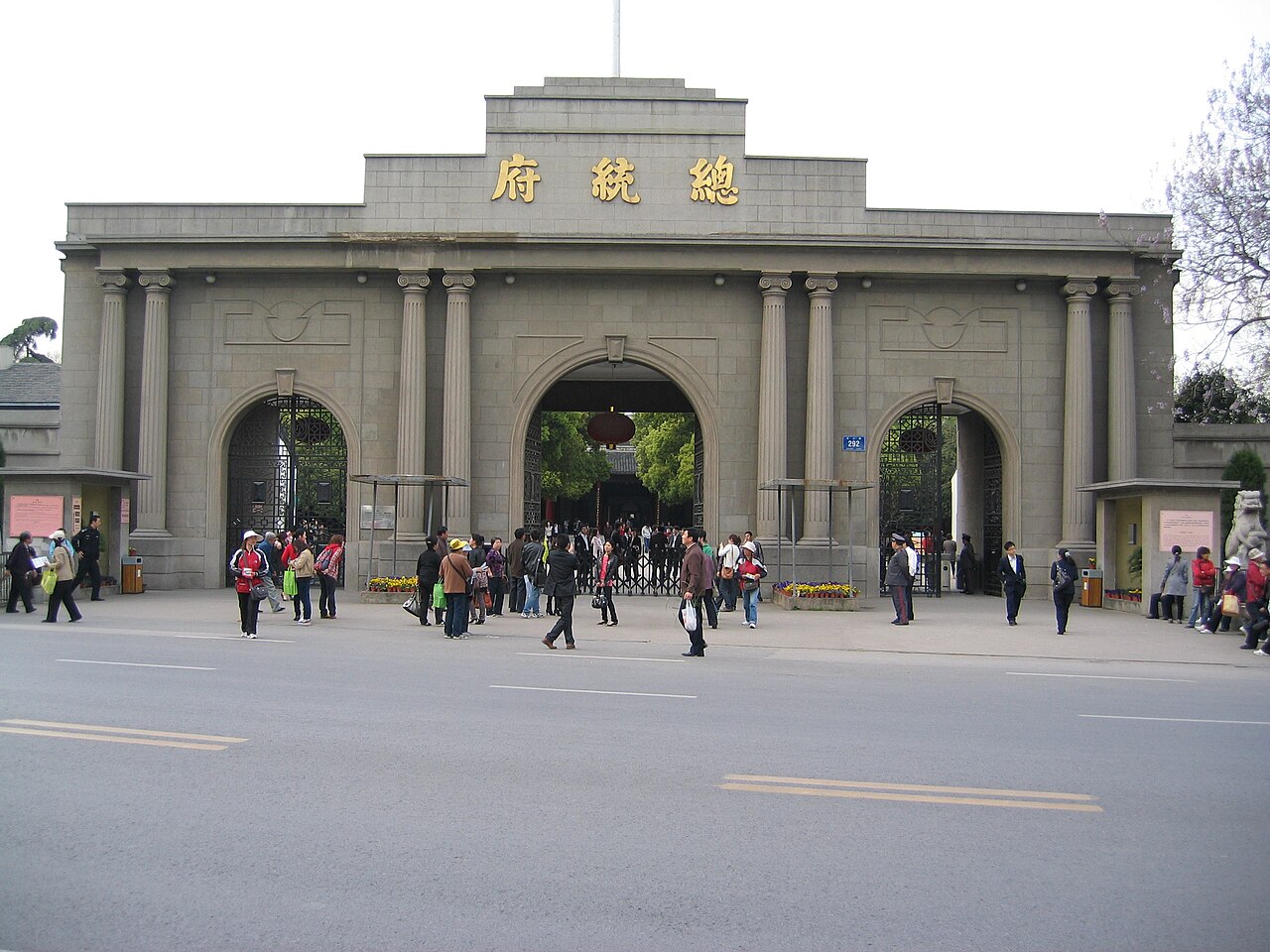
Since December 2024, the palace's iconic 1929 gatehouse, built on the site of the old Qing viceroy's ceremonial gate, is closed to visitors and kept as a photo backdrop only. The working entrance is now roughly 100 metres to the west, still on Changjiang Road. Group tours use a separate east gate near Dongjiaotao. If you show up expecting to walk through the archway you have seen in photos, budget a few extra minutes to find the actual door.
Visiting details
Hours run longer in the warmer months, roughly 8:30am to 6pm from March through October, and 8:30am to 5pm from November through February, with the ticket counter closing an hour before the gates. The palace is shut on Mondays, aside from national holidays, and on Chinese New Year's Eve. Admission is a modest fee that runs a little higher in the spring and autumn peak weeks than in the off season; check current pricing on-site or through a booking platform before you go, since museum fees here get revised from time to time.
Tickets are usually reserved online a few days ahead through the palace's official WeChat mini-program, and entry is checked against the passport you registered with. If the WeChat system is giving you trouble or the closest slots are full, Klook sells English-language tickets to the same site, a reasonable workaround for visitors without a China-linked phone number.
How long to spend
Give yourself two to three hours. There is a lot of reading if you want the full story, and the garden alone deserves a slow loop. English captions cover the headline exhibits but thin out in places, so a translation app helps you get more from the smaller displays.
Getting there
The palace sits on Changjiang Road in the city centre, a short walk from Daxinggong metro station on lines 2 and 3. It pairs well with the nearby Nanjing Museum if you want a full day of history, or with a stroll along the leafy streets of the old government quarter. Of all Nanjing's sights, this is the one that best connects the dynastic past with the country's turbulent modern story.
The garden and the Taiping years
Do not rush Xu Garden at the back of the compound. Centred on a small lotus pond, its centrepiece is a roughly 14-metre stone boat known as the "unmoored boat" (buxi zhou), carved in 1746 on the orders of a Qing provincial governor and personally named and inscribed by the Qianlong Emperor during one of his southern tours. The garden itself long predates the republic and was part of the Ming princely estate that stood here originally. During the Taiping Rebellion, when Nanjing served as the rebel capital for more than a decade, this same corner became the palace of the Heavenly King, and a few structures and exhibits recall that chapter. Standing between the quiet garden and the later government offices, you can feel how many different versions of China have laid claim to the same patch of ground. Photographers should come on a weekday morning, when low light catches the pond and the crowds are thinnest.
Highlights
- Seat of the Republic of China's government and Sun Yat-sen's 1912 inauguration
- Layers of history from a Ming princely mansion to a Qing viceroy's yamen to the Taiping Heavenly King's palace
- Xu Garden's 1746 stone boat, personally named by the Qianlong Emperor
- A mix of European-style civic architecture and Chinese garden design
- A 2024 entrance relocation, with the historic 1929 gatehouse now viewable only from outside
Travel Tips
Use the new entrance, not the old gatehouse
Since December 2024 the iconic 1929 gate is closed to visitors; the working entrance is about 100 metres west on Changjiang Road. Group tours use a separate east gate near Dongjiaotao.
Book online, or use Klook if slots are full
Reserve a few days ahead via the official WeChat mini-program and bring the passport you registered with. If WeChat gives you trouble, Klook sells English-language tickets to the same site.
Allow two to three hours
There is a lot to read and Xu Garden deserves a slow loop. A translation app helps with the smaller exhibits, where English captions thin out.
Pair it with the Nanjing Museum
Both sit near Daxinggong metro station, making an easy full day of history in the city centre.