Nanjing
Confucius Temple (Fuzimiao) & Qinhuai River
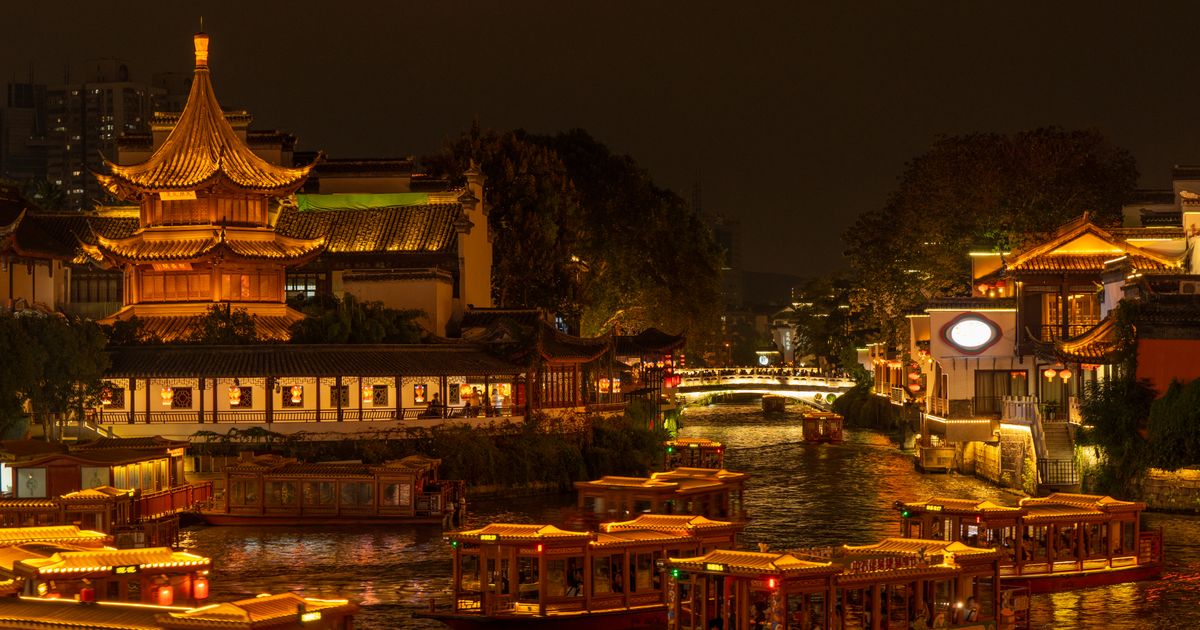
Come to Fuzimiao twice if you can. Once in daylight, when it reads as a grey-tiled temple quarter of souvenir lanes and snack stalls, and once after the red lanterns switch on and the whole waterfront doubles itself in the black water of the Qinhuai. Most first-time visitors only catch the night version. The daytime layer, the Confucius temple itself and the exam museum beside it, is what gives the neighbourhood its weight.
The temple and the exam hall that graded an empire
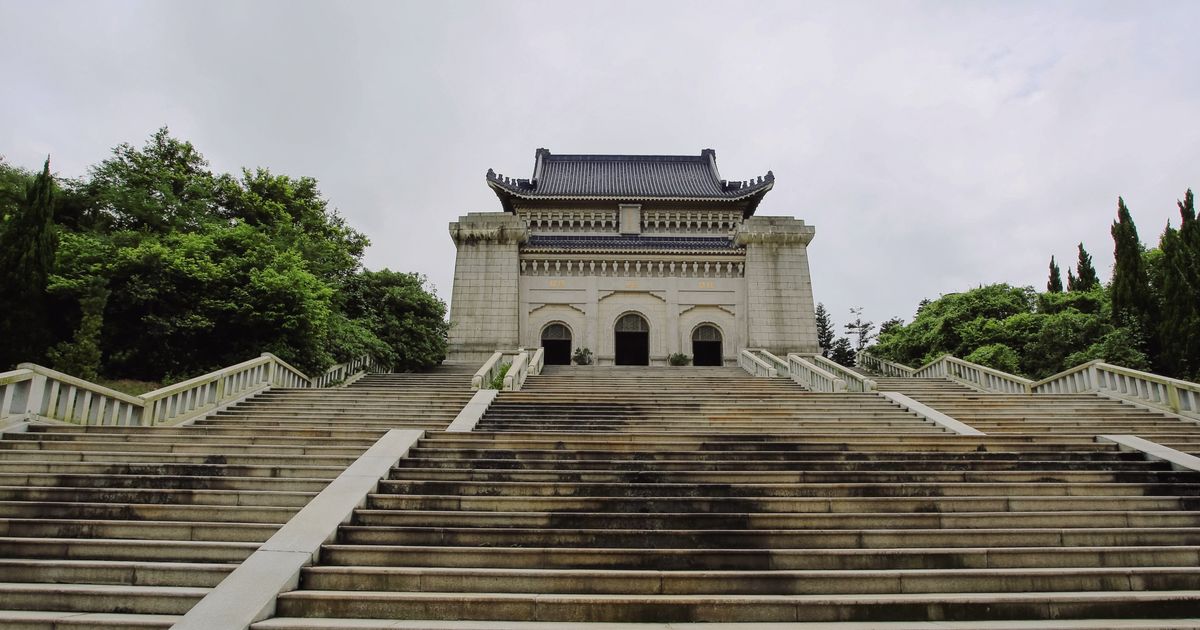
A temple to Confucius has stood on this spot since the 1030s, rebuilt many times after fire and war. What sets the site apart is its neighbour: the Jiangnan Examination Hall, for centuries the largest venue in China for the imperial civil-service exams. At its Qing-dynasty peak it held more than twenty thousand cells (20,644 by the count of the 1860s and 70s), each one barely wide enough to sit in, where candidates were sealed in for days at a stretch to write the essays that could lift a whole family's standing.
The modern museum built into the grounds, the Imperial Examination Museum of China, is worth planning your visit around. It opened in 2017 and sits almost entirely below ground: you descend four floors along a ramp roughly 130 metres long, one metre for each decade of the exam system's 1,300-year run, under a roof that is really a shallow reflecting pool at street level. It turns an abstract slice of history into something you physically walk down into. Nanjing's busier museums increasingly use timed, passport-name booking, so check for an online reservation before you turn up.
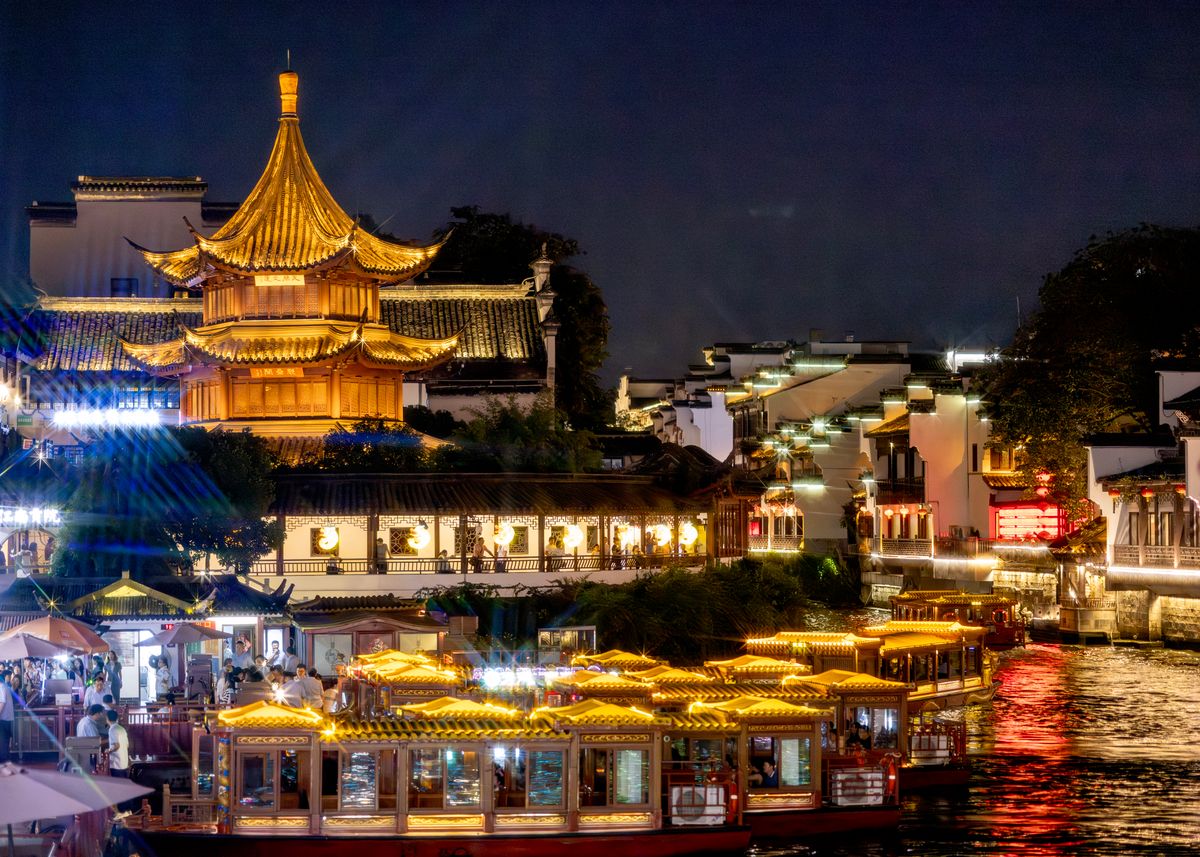
Lantern-lit traditional architecture reflected in the Qinhuai River
The Qinhuai after dark
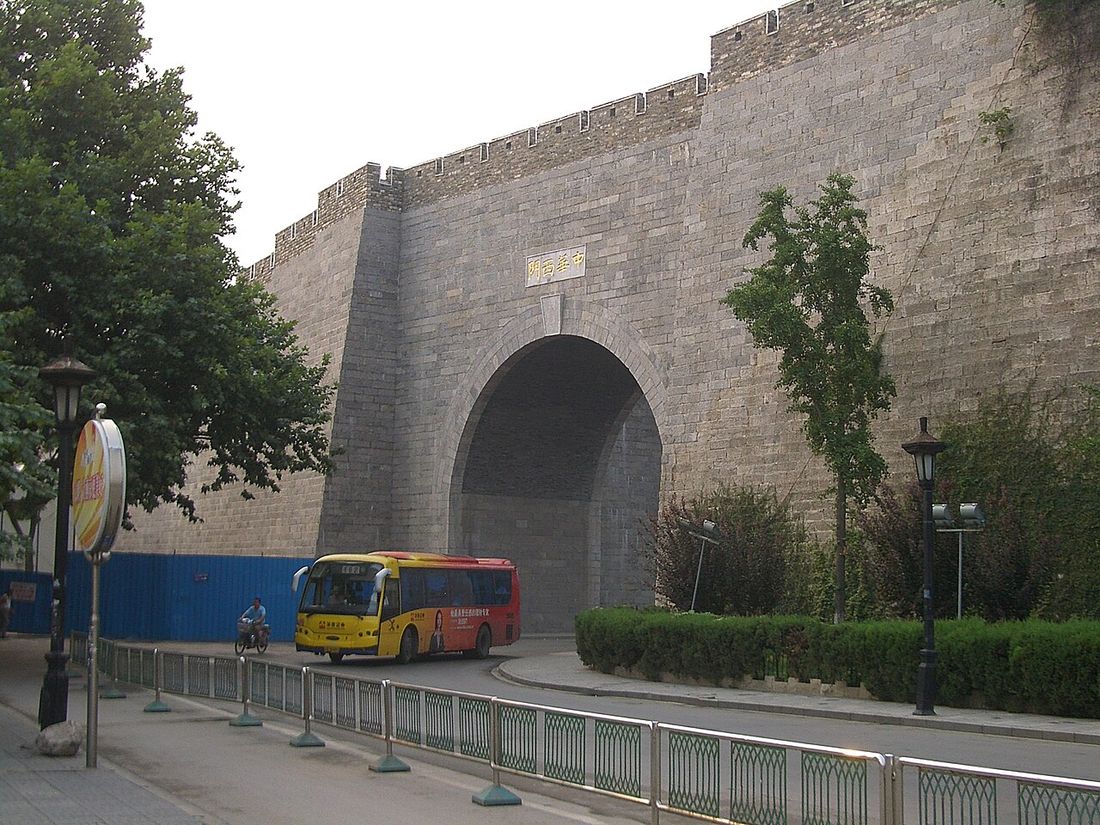
The river is the reason to aim for dusk. Wooden tour boats with curved canopies board at Panchi Wharf, right in front of the temple's main hall, then drift past floodlit mansions, arched bridges and the old Zhonghua Gate before looping back; a full circuit runs around three-quarters of an hour. It is unashamedly touristy and still lovely, and it is the easiest way to see why poets have written about this stretch of water for a thousand years. Boats fill up fast on lantern-lit evenings and holidays, so reserving a cruise ticket ahead saves you the wharf queue.
Some links are affiliate links; we may earn a commission at no extra cost to you.
If you would rather stay on land, walk the embankment and watch the boats slide under Wende Bridge instead.
Eating your way along the lanes
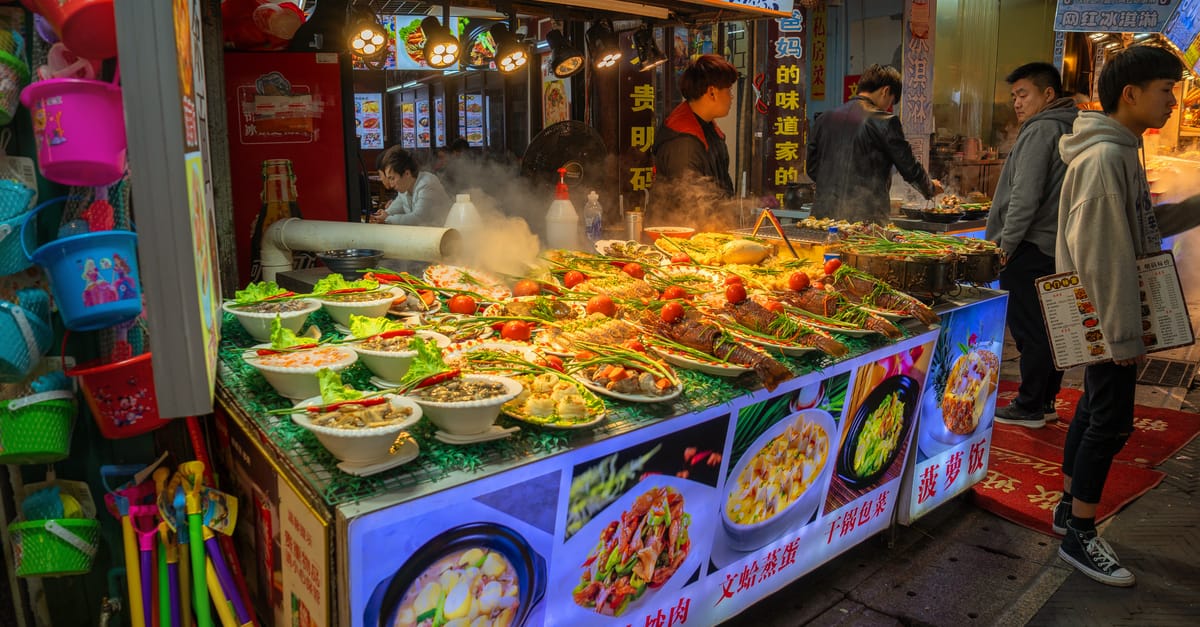
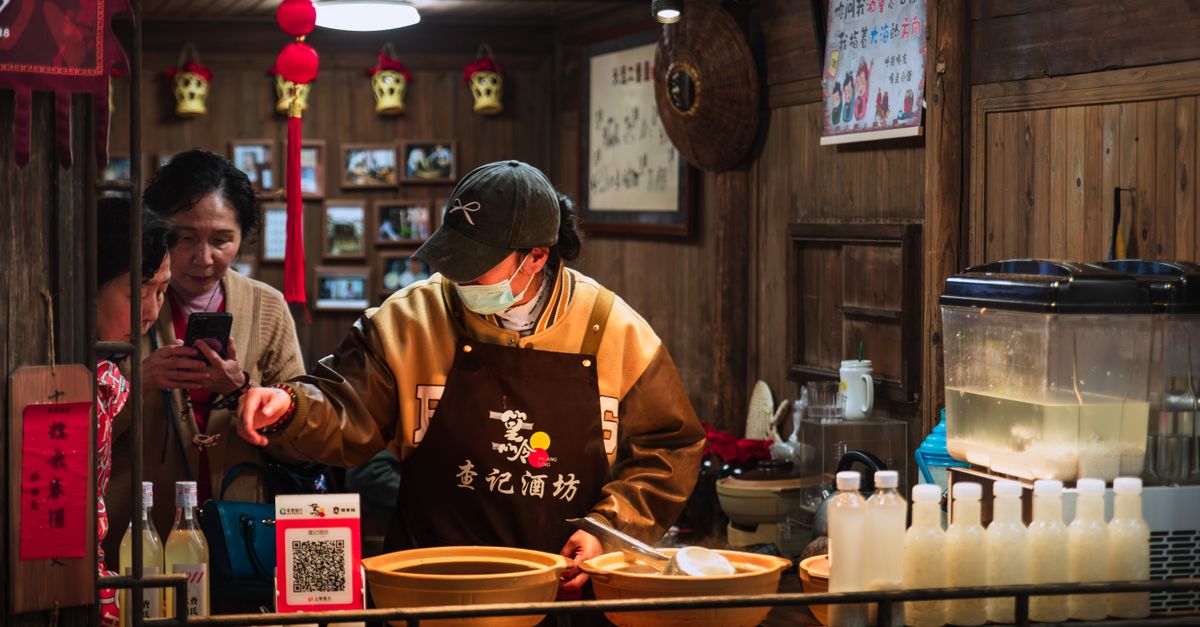
This is one of Nanjing's best places to graze. Look for duck-blood vermicelli soup, sweet osmanthus rice cakes, savoury dried tofu, and the small steamed and pan-fried buns the city does so well. Many stalls sell single portions, so you can taste widely without filling up too fast. The crowds are part of the fun rather than something to endure.
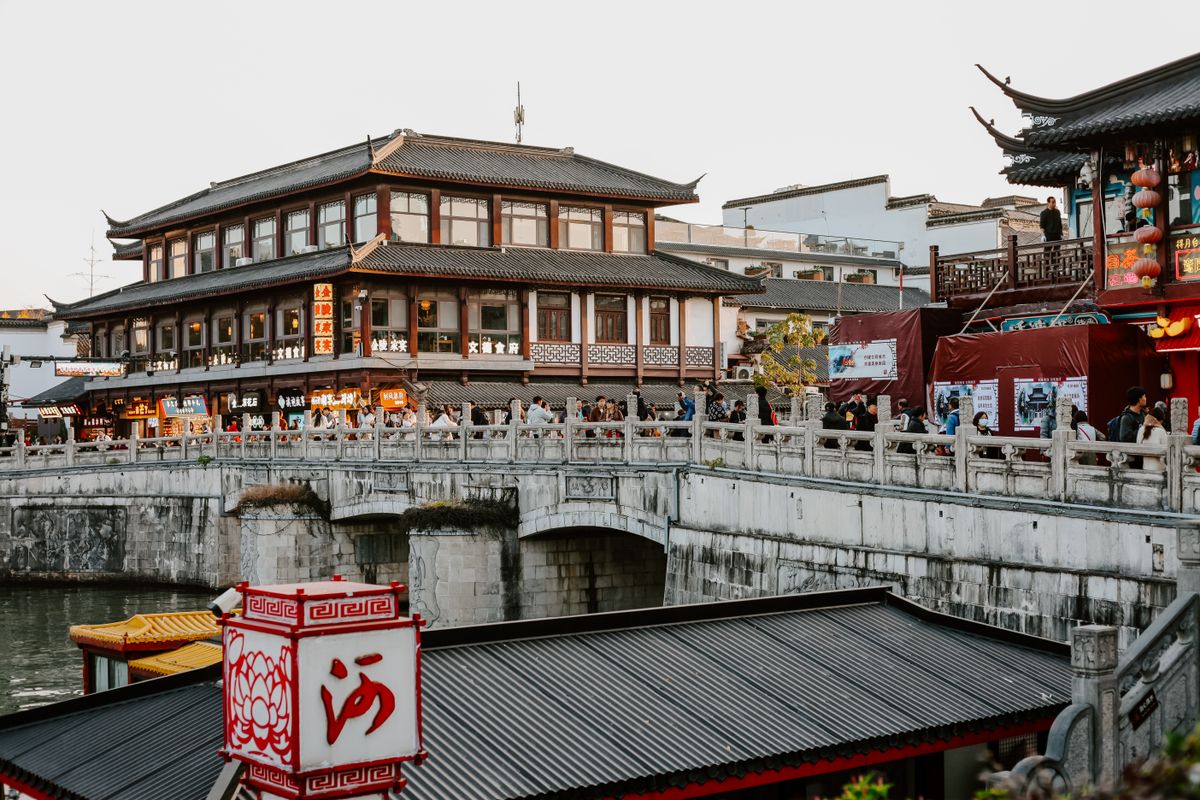
Traditional Chinese architecture in the Confucius Temple quarter
When to go, and what costs what
The outdoor district is free to wander at any hour, and much of the atmosphere costs nothing. The temple's main halls and the examination museum charge a modest ticket and keep long hours that run into the evening. Boat cruises are sold separately at kiosks along the water and cost more after dark, when the lanterns are lit. Weekends and Chinese public holidays get extremely crowded, so a weekday evening is the sweet spot.
Getting there
Take metro Line 3 to Fuzimiao station and follow the signs; the river is a few minutes away on foot. The station became a Line 3 and Line 5 interchange in 2025, which makes it an easy hop from much of the city. Come around dusk to catch the quarter in both daylight and full illumination, then settle in for dinner once the lanterns come on. Keep an eye on your belongings in the thick of the crowd, and you are set for one of the most memorable evenings in the city.
More than a night market: the old Qinhuai
For centuries the Qinhuai waterfront was the cultural heart of Nanjing, lined with teahouses, theatres and the homes of scholars who came to sit the imperial exams next door. It was famous, too, for its courtesan houses, and the so-called Eight Beauties of Qinhuai became lasting figures in Chinese literature and opera. Novelists set their stories here, and the blend of learning, commerce and pleasure gave the area a reputation that still colours how locals talk about it. Most of the buildings you see today are careful reconstructions, since war and fire took a heavy toll over the centuries, but the layout follows the historic street pattern. Reading a little of that backstory before you arrive turns a stroll past souvenir shops into a walk through one of the most storied neighbourhoods in the country.
Highlights
- A Confucius temple beside the Jiangnan imperial examination hall
- Red-lantern night scenes and boat cruises on the Qinhuai River
- The Imperial Examination Museum of China, built four floors underground
- One of Nanjing's best street-food districts
- Free to wander, with a modest ticket for the temple and exam museum
Travel Tips
Arrive at dusk
Come around sunset to see the quarter in daylight and then fully lit. Cruises cost more after dark, but the lanterns are worth it.
Graze, don't commit
Many stalls sell single portions, so sample duck-blood vermicelli soup, osmanthus cakes and steamed buns without filling up too fast.
Pick a weekday, book the boat
Weekends and Chinese holidays are packed; a weekday evening is far calmer. Reserve the river cruise ahead on lantern-lit nights, and watch your bag in the crowd.