Chinese Dining Etiquette: A Foreigner's Guide to the Table
Where do I sit? Who eats first? What do I do with these chopsticks? Every first-time guest at a Chinese table has the same silent questions, because sharing a meal here is a genuinely social act, not just refueling: families reconnect over it, friendships get sealed over it, and business gets quietly settled over it. The reassuring part is that hosts in China are warm and forgiving with foreign guests, and a handful of habits will carry you through almost any meal with real grace.
This guide walks through the etiquette that matters at the table in 2026, from seating and chopsticks to toasting and paying the bill.
Seating and Starting the Meal
Chinese meals are usually served family-style on a round table, often with a rotating glass turntable (a "Lazy Susan") in the middle holding the shared dishes. Seating is not random. At a formal dinner the guest of honor takes the most prominent seat, typically the one facing the entrance and furthest from the door, while the host sits nearer the door so they can greet staff and manage the meal. As a visitor you don't need to memorize the hierarchy; simply wait to be shown to your seat rather than choosing one yourself.
A few opening cues to watch for:
- Wait for the host to begin. Don't pick up your chopsticks until the host invites everyone to start, often with a phrase meaning "please eat" (qing chi).
- Let elders and the guest of honor go first. Offering the first serving of a new dish to the eldest person at the table is a quiet sign of respect.
- Turn the turntable gently and clockwise, and never spin it while someone is still serving themselves.
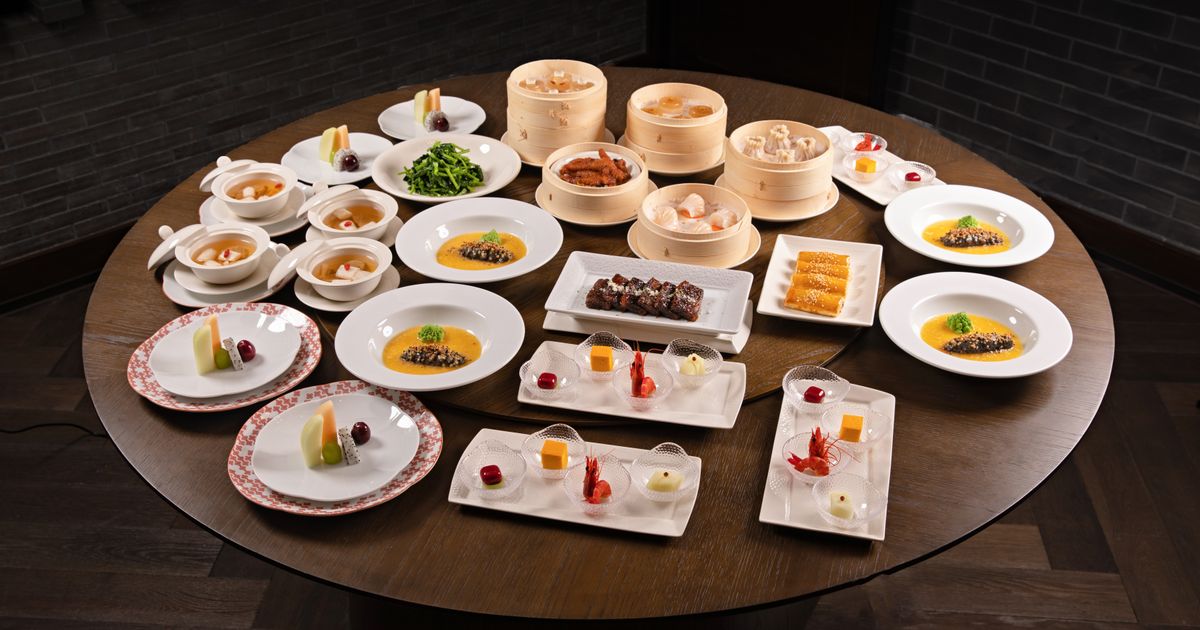
A round restaurant table set family-style with many shared Chinese dishes and bamboo steamers of dim sum
Mastering Chopsticks (and the Taboos)
Using chopsticks reasonably well is one of the fastest ways to put a Chinese host at ease. Nobody expects perfection, but a few habits are worth avoiding because they carry funeral or beggar associations that can genuinely unsettle people at the table:
- Never stick chopsticks upright in a bowl of rice. Standing them vertical in rice evokes the incense sticks burned as offerings to the dead.
- Avoid passing food chopstick-to-chopstick. Many diners associate this with funeral ritual, so it's considered unlucky. To give someone food, place it on their plate or use the serving chopsticks.
- Don't tap or drum your bowl with your chopsticks. It echoes how beggars once rattled a bowl to ask for food, so at a shared table it can read as a complaint about slow service rather than a harmless habit.
Everyday good manners with chopsticks include:
| Do | Avoid |
|---|---|
| Rest chopsticks on the holder or across your bowl | Drumming, pointing, or waving them |
| Use the communal serving spoon or chopsticks for shared plates | Spearing food like a fork |
| Pick up food gently and bring the bowl close to your mouth | Digging through a dish to find the best piece |
If a dish has communal serving chopsticks (gongkuai), use them rather than your own; this is increasingly the norm in cities and appreciated for hygiene. Hotpot tables raise the stakes a little further, since everyone is dipping into one shared simmering pot; see the hotpot guide for how that plays out in practice.
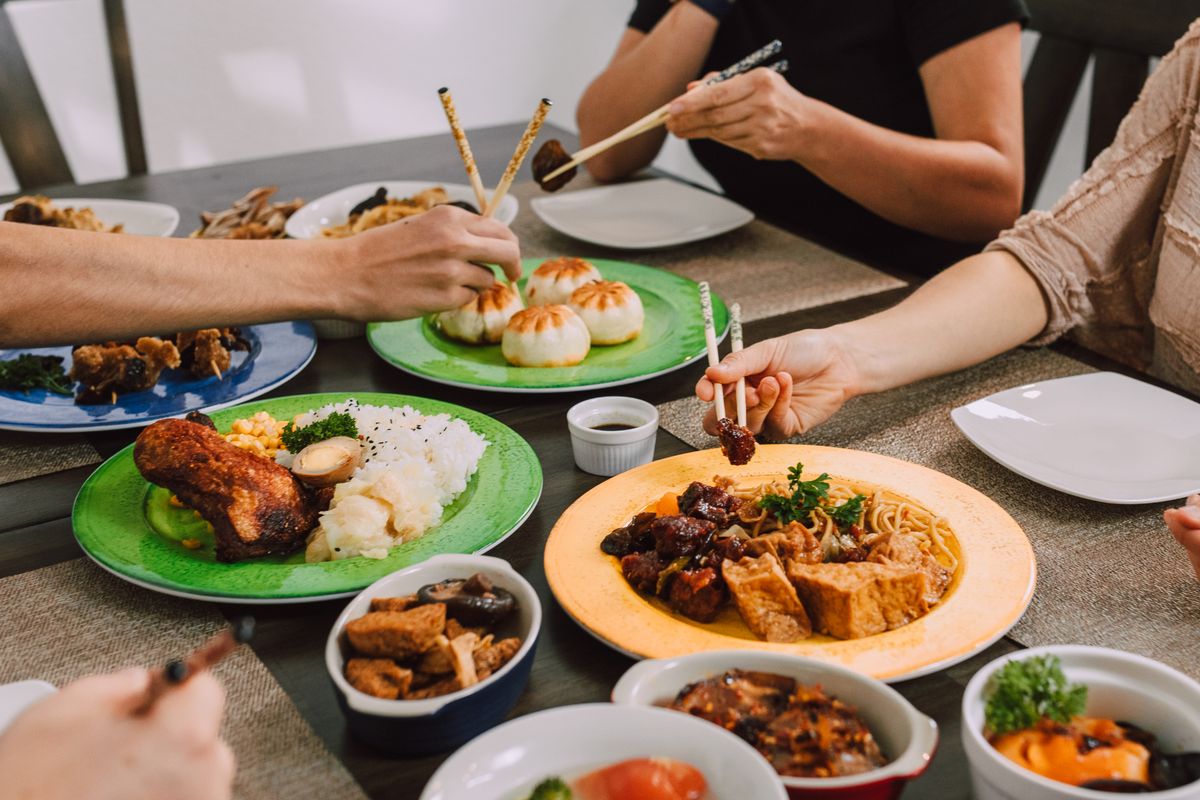
Several diners reaching across a table of shared dishes with chopsticks, including steamed buns and noodles
Sharing, Serving, and Showing You Enjoyed It
Generosity is the language of a Chinese table. Dishes are meant to be shared, so take modest portions and leave plenty for others, especially before everyone has tasted a dish. If you're a guest, your host may pile food onto your plate or into your bowl. This is affection, not pressure; you can accept graciously, and it's fine to slow down once you're full.
How much you eat sends a quiet signal, though the custom has shifted in a specific, traceable way. Traditionally, leaving a small amount uneaten at a generous banquet showed your host had provided more than enough. Since 2021, though, China has had a national Anti-Food Waste Law behind its "Clean Plate" (guangpan) campaign: restaurants are legally allowed to charge a waste-handling fee when a table visibly over-orders and leaves food behind, and a follow-up food security law plus a government conservation plan keep pushing smaller portion sizes and packing up leftovers to take home (dabao). In practice, many hosts, especially younger ones, are now happy to see plates emptied or boxed up. When in doubt at a formal meal, leaving a bite or two is a safe, polite middle ground; at a casual meal, finishing your own bowl is perfectly fine.
Tea, Toasting, and Drinking
Tea is poured for the table, not just for yourself; keep an eye on your neighbors' cups and top them up when low. When someone refills your cup, a well-known thank-you, especially common in southern China and among Cantonese speakers, is to tap two bent fingers gently on the table. As the story goes, the gesture dates back to an incognito Qing-dynasty emperor pouring tea for his own servant, who couldn't kowtow without blowing his cover, so he tapped two bent fingers on the table instead, a silent stand-in for kneeling that stuck. True story or polished legend, it's the reason you'll see it at tables across Guangdong and beyond today.
Toasting matters at bigger meals: the host usually offers the first toast, and "ganbei" literally means "dry the cup," an invitation to finish your glass. You're never obliged to match shot for shot. Holding your glass slightly lower than an elder's when you clink is a graceful sign of respect, and toasting with tea or a soft drink instead of alcohol is completely acceptable.
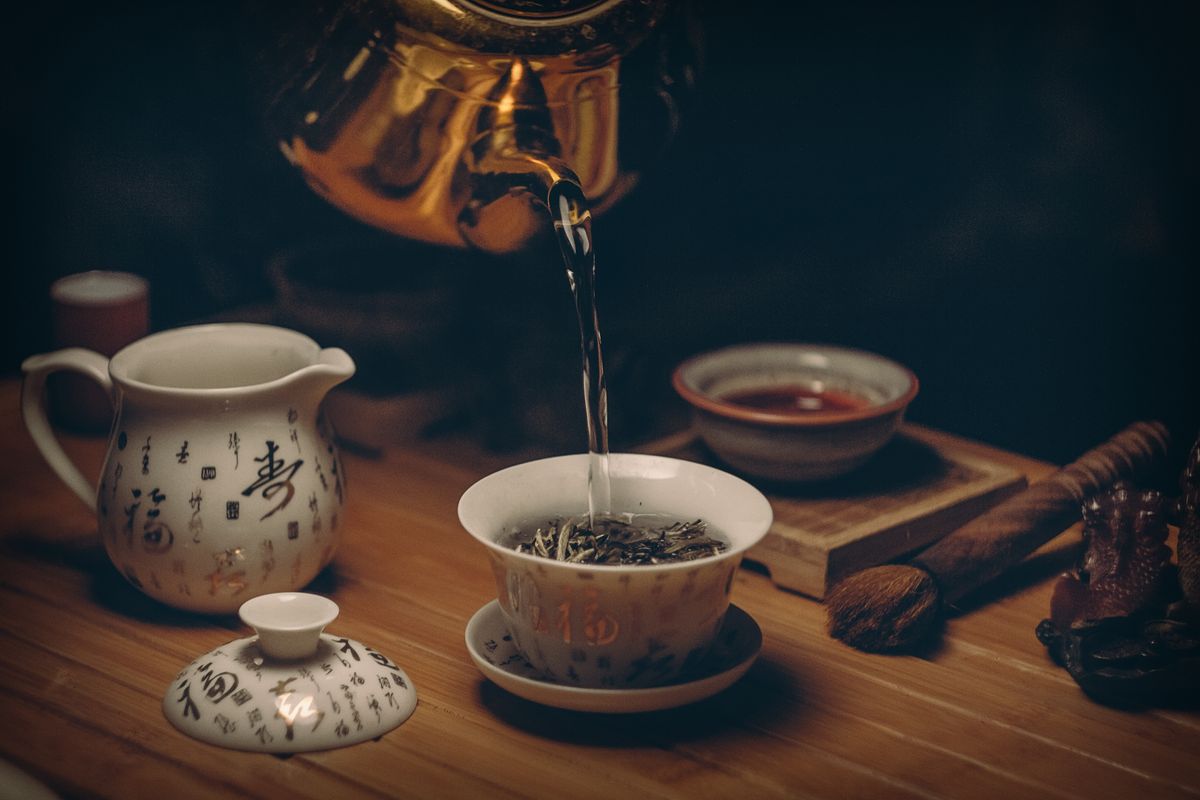
Tea being poured into a lidded gaiwan cup beside a pitcher decorated with Chinese calligraphy
Ordering and Paying in 2026
Two practical realities shape eating out in China today. First, many restaurants have moved to scan-to-order: a small code sits on the table, you open WeChat or Alipay, view the menu, and order from your phone, sometimes paying in the same step (our guide to ordering food in China covers the mechanics in more detail). Staff will still happily take an order the traditional way if you ask. Second, tipping isn't expected in mainland China and can even cause mild confusion; staff are paid a regular wage and the price you see is the price you pay. A few upscale or Western-style venues add a service charge automatically, which already covers any gratuity, so there's nothing extra to work out on top of it.
When the bill comes, expect a friendly tussle over who pays. In Chinese culture, picking up the whole bill is a gesture of status and warmth, so splitting the check (going "AA") is more common among young friends than at a formal dinner. If someone has invited you, let them treat you and offer to host the next round.
The Bottom Line
You don't need to master every nuance to be a welcome guest. Wait for the host to start, handle your chopsticks respectfully (never upright in rice, no tip-to-tip passing, no drumming on the bowl), share generously, keep your neighbor's tea topped up, and don't reach for your wallet to tip. Do those few things and your hosts will see the effort and warmth behind them, which is exactly what a Chinese meal is about.
Frequently Asked Questions
Do you tip in China restaurants? No. Tipping isn't expected at restaurants in mainland China and can even cause mild confusion, because staff are paid a regular wage and the menu price is the price you pay. A small number of upscale or Western-style venues add a service charge automatically, which already covers any gratuity.
What does sticking chopsticks upright in a bowl of rice mean? Standing your chopsticks vertically in a bowl of rice is a serious taboo because it resembles the incense sticks burned as offerings to the dead. It carries funeral associations and can genuinely unsettle others at the table, so always rest your chopsticks on the holder or across your bowl instead.
Is it rude to leave food on your plate in China? Customs are shifting, and there's now a law behind the shift. Traditionally, leaving a little uneaten at a generous banquet showed the host had provided more than enough, but China's "Clean Plate" (guangpan) anti-waste campaign, backed by a national law since 2021, means many hosts, especially younger ones, are happy to see plates emptied or leftovers boxed up to take home (dabao). At a formal meal, leaving a bite or two is a safe middle ground; at a casual meal, finishing your own bowl is perfectly fine.
What does "ganbei" mean? "Ganbei" literally means "dry the cup," an invitation to finish your glass in one go during a toast. You're never obliged to match shot for shot, and toasting with tea or a soft drink instead of alcohol is completely acceptable.
Where should you sit at a Chinese dinner table? Seating is not random at a formal dinner: the guest of honor takes the most prominent seat, usually facing the entrance and furthest from the door, while the host sits nearer the door to greet staff and manage the meal. As a visitor you don't need to memorize the hierarchy; simply wait to be shown to your seat rather than choosing one yourself.
Sources
- Guide to table etiquette in China · Shanghai Municipal Government
- Dining Etiquette for Visiting Relatives and Friends · Ministry of Culture and Tourism of the People's Republic of China
- Eating and Drinking in China · China Highlights