China's Regional Cuisines: A Traveler's Guide to the 8 Great Culinary Traditions (2026)
Order what you'd get in a Cantonese restaurant back home while sitting in a Chengdu diner, and you'll get a mouth-numbing shock instead of the mild, soy-forward food you expected. That's the first thing to understand about Chinese food: there isn't one "Chinese cuisine." There are at least eight distinct regional culinary traditions, commonly grouped as the "eight great cuisines," and they differ from each other roughly as much as Italian cooking differs from Scandinavian cooking. Knowing which region you're in tells you what to order, and knowing what each region does well tells you where to go looking for it.
This guide breaks down the eight traditions by what actually distinguishes them: flavor profile, signature dishes, and the cities where you can eat the real version rather than a flattened export copy. If you also want the mechanics of ordering once you're at the table, see how to order food in China and Chinese dining etiquette; this article is about which region tastes like what.
China's Eight Great Culinary Traditions at a Glance
| Region | Flavor Profile | Signature Dish | Best City to Try It |
|---|---|---|---|
| Sichuan (Chuan) | Numbing and spicy (mala), bold chili and peppercorn | Mapo tofu, kung pao chicken | Chengdu |
| Hunan (Xiang) | Straight chili heat, smoked and cured, no numbing | Steamed fish head with chopped chili | Changsha |
| Cantonese (Yue) | Mild, fresh, natural ingredient flavor | Dim sum, roast goose | Guangzhou |
| Fujian (Min) | Seafood-forward, subtly sweet and sour | Buddha Jumps Over the Wall | Fuzhou / Xiamen |
| Zhejiang | Light, fresh, sugar-vinegar balance | Dongpo pork, West Lake fish | Hangzhou |
| Jiangsu (Su) | Delicate, balanced, "intense but not greasy" | Nanjing salted duck, lion's head meatballs | Nanjing / Suzhou |
| Shandong (Lu) | Savory, scallion and vinegar forward, braised | Braised sea cucumber with scallion | Jinan / Qingdao |
| Anhui (Hui) | Earthy, wild mountain ingredients, slow-cooked | Stinky mandarin fish | Huangshan |
Sichuan and Hunan: China's Spicy Heartland
Sichuan cuisine is the one most travelers already know by reputation, and it earns it. The defining trait is mala, the combination of dried chili heat with Sichuan peppercorn, which doesn't just add spice, it produces an actual tingling numbness on the tongue. Mapo tofu (soft tofu and ground pork in a fiery red sauce), kung pao chicken, dan dan noodles, and Sichuan-style hot pot are the dishes to order. Chengdu is the city to do it in: street-level Sichuan restaurants there serve food far more intense than the toned-down versions common outside the province. If you want to go deeper on the hot pot side specifically, we've covered it separately in our Chinese hot pot guide.
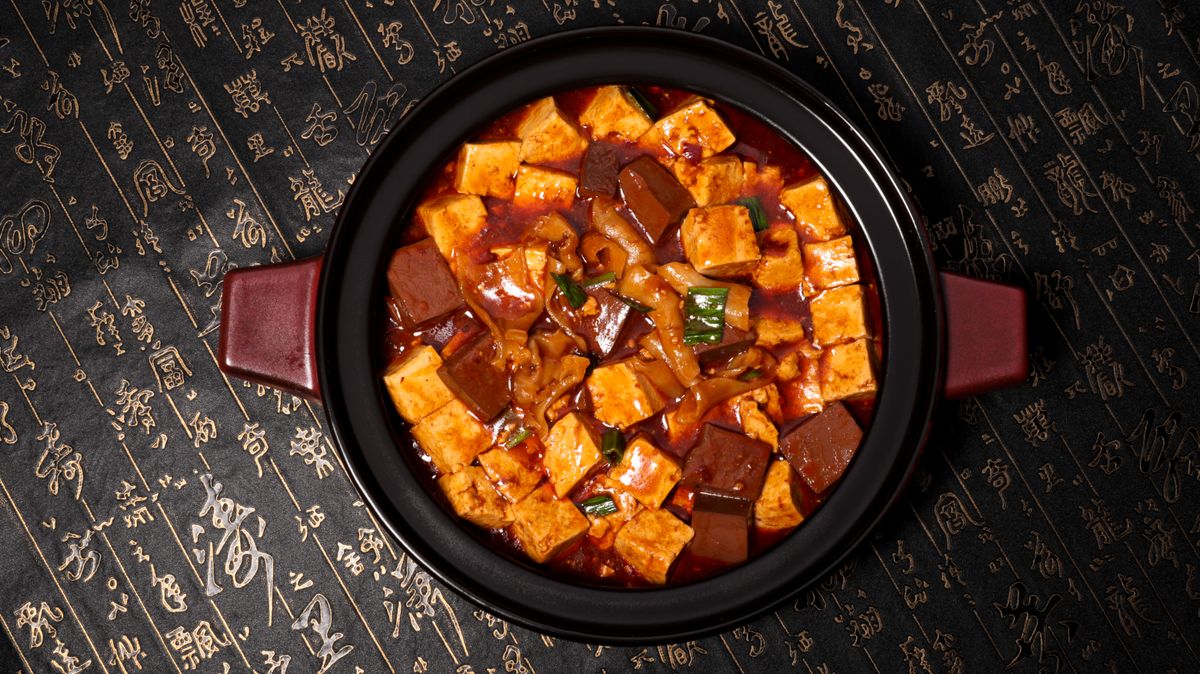
Mapo tofu in a clay pot, a defining Sichuan dish combining chili heat with numbing Sichuan peppercorn
Hunan cuisine (Xiang) gets confused with Sichuan constantly, and it shouldn't. Hunan food is chili-forward without the numbing peppercorn: it's straight, sustained heat, often built on fresh chilies, smoked meats, and cured pork. Chairman Mao's red-braised pork (hong shao rou), steamed fish head piled with chopped chilies (duo jiao yu tou), and stir-fried smoked bacon are the dishes that define it. Changsha is the base for trying it properly, and Hunan restaurants there tend to serve food noticeably hotter and more aggressive than the Hunan dishes exported to other provinces.
Cantonese, Fujian, and Zhejiang: Coastal Freshness and Delicate Technique
Cantonese cuisine (Yue), centered on Guangzhou and the Pearl River Delta, is built around the opposite instinct from Sichuan: preserve the natural flavor of the ingredient rather than mask it. Steaming, roasting, and double-boiling are the core techniques. Dim sum (small steamed or fried plates ordered in multiples, usually for breakfast or lunch), roast goose, char siu (barbecued pork), and steamed whole fish are the dishes to seek out. Guangzhou itself is worth building a stop around for this reason; see our Guangzhou destination guide for where to base yourself. It's also worth knowing that most "Chinese food" served abroad is a Cantonese-American or Cantonese-British adaptation, sweeter and more heavily sauced than what's actually served in Guangzhou, so don't expect the takeout version to match.
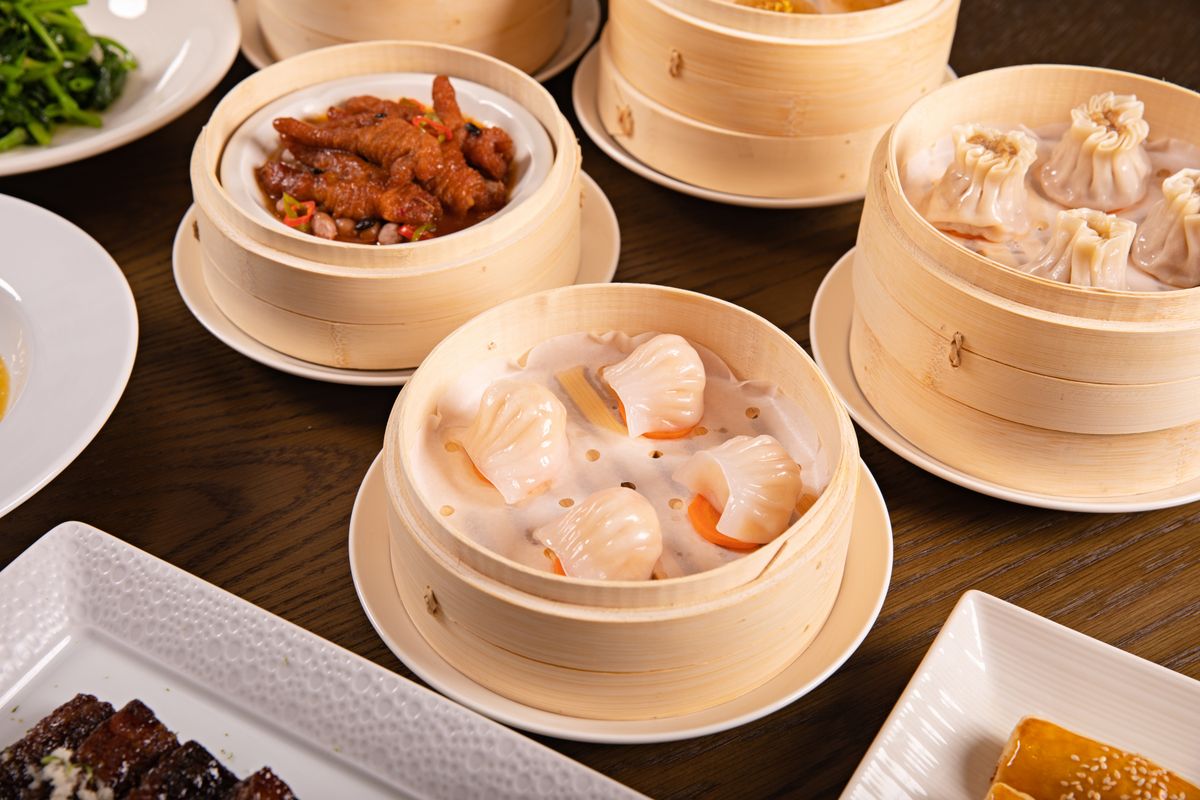
Dim sum served in traditional bamboo steamers, including shrimp dumplings and other small Cantonese plates
Fujian cuisine (Min) is less internationally known but distinctive: it leans on seafood, mountain ingredients, and a subtle sweet-and-sour balance rather than heavy spice. The showcase dish is Buddha Jumps Over the Wall (fo tiao qiang), a slow-simmered soup built from over thirty ingredients including abalone, sea cucumber, dried scallops, and fish maw, layered and cooked for a full day or two in a sealed jar with Fujian rice wine. It's a banquet dish, not everyday food, and it's worth booking ahead for at a proper restaurant in Fuzhou or Xiamen rather than expecting to find it casually.
Zhejiang cuisine sits geographically and stylistically next to Jiangsu: light, fresh, often served close to raw or barely cooked, with a characteristic sugar-vinegar balance. Dongpo pork, a square of slow-braised pork belly named for the poet Su Dongpo, and West Lake fish in vinegar sauce (xihu cuyu, a whole freshwater fish poached and finished with a sweet-sour glaze) are the two dishes worth seeking out specifically in Hangzhou, where both originated.
Jiangsu, Shandong, and Anhui: The Refined Inland and Northern Kitchens
Jiangsu cuisine (Su) spans Nanjing, Suzhou, Yangzhou, and Zhenjiang, and the local description of a properly made Jiangsu dish is that it should taste "intense but not greasy, light but not bland." Nanjing salted duck (a cold, brined and air-dried duck, not roasted) and lion's head meatballs (oversized pork meatballs braised in broth) are the dishes to order. Nanjing and Suzhou are both good bases, and Suzhou in particular is worth combining with a stop for its gardens.
Shandong cuisine (Lu) is the oldest of the eight traditions and historically the backbone of northern Chinese cooking, including much of what became Beijing's imperial court cuisine. It favors scallion and vinegar as base flavors, along with careful braising. Braised sea cucumber with scallion and sweet-and-sour carp are classic examples. The broader imperial banquet style that Shandong chefs helped establish is also the lineage that dishes like Peking duck grew out of, even though Peking duck itself is specifically a Beijing dish rather than a Shandong one.
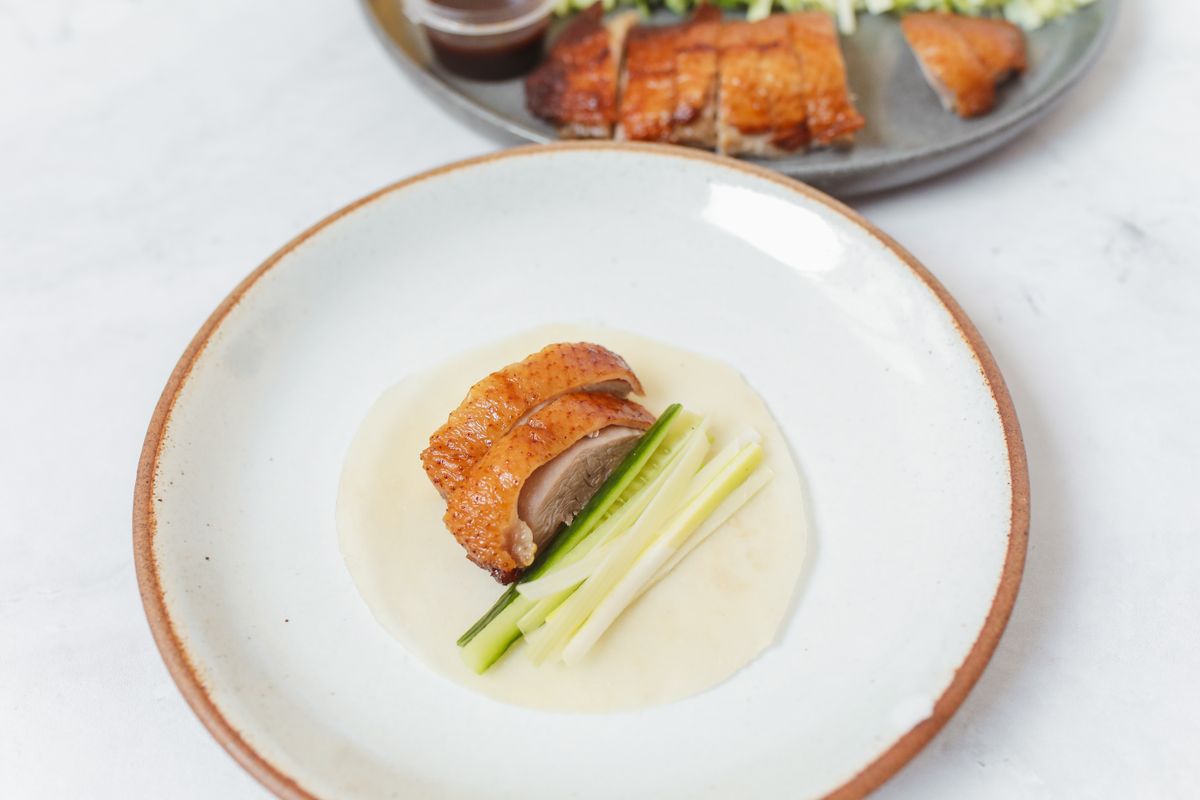
Sliced roast duck served with cucumber batons on a plate, in the imperial northern Chinese banquet style
Anhui cuisine (Hui) is the least urban of the eight, built on ingredients pulled from the mountains and rivers around Huangshan: wild herbs, bamboo shoots, river fish, and stone-fried tofu. Its most famous dish, stinky mandarin fish (chou guiyu), sounds alarming in translation but isn't rotten. It's a mildly fermented fish, salted and left to cure for several days before frying, which produces a sharp aroma but a firm, savory result once cooked. Huangshan city is the natural base for trying Anhui food alongside the mountain scenery.
If You Only Have Time for Three Regions
If your trip only touches three cuisines, prioritize Sichuan, Cantonese, and one more chosen by your route. Sichuan (Chengdu or Chongqing) gives you the most distinctive flavor profile in the country and the one every other regional cuisine defines itself against. Cantonese (Guangzhou) gives you the widest range of technique, the freshest seafood, and the version of "Chinese food" most different from what you've eaten outside China. For the third slot, pick based on geography rather than trying to force in a fourth city: if your route runs through Shanghai, Hangzhou, or Suzhou, add Zhejiang or Jiangsu for the contrast in subtlety; if you're staying in the south-central corridor near Sichuan, add Hunan instead for a second, sharper kind of spice.
FAQ
What is the spiciest Chinese cuisine? Hunan is generally hotter in raw chili intensity than Sichuan, since it relies on sustained chili heat without the numbing counterbalance of Sichuan peppercorn. Sichuan feels different rather than necessarily milder, because the peppercorn's numbing effect changes how the heat registers rather than simply adding more of it.
What's the difference between Sichuan and Hunan food? Sichuan uses mala, the combination of chili and Sichuan peppercorn that produces a numbing sensation alongside the heat. Hunan uses chili alone, often paired with smoked or cured meat, for a sharper, more direct spiciness without the numbing effect.
Is Cantonese food the same as Chinese takeout? No. Most Chinese takeout and Chinese-American or Chinese-British restaurant menus descended from Cantonese cooking, but they were adapted over decades with sweeter, thicker sauces and deep-fried preparations to suit local tastes abroad. Real Cantonese food in Guangzhou centers on steaming, roasting, and letting the ingredient's natural flavor lead.
Which Chinese regional cuisine is mildest? Jiangsu and Zhejiang cuisines are the least spicy of the eight, built around delicate, balanced flavors rather than chili. Cantonese cuisine is also mild in most of its everyday dishes, though certain specialty items can vary.
Will I be served something too unusual, like shark fin or turtle? Not unless you specifically order a high-end banquet dish like Buddha Jumps Over the Wall, which is a special-occasion item you'd need to seek out and pay for deliberately, not something that turns up on a standard menu. Shark fin trade is also heavily restricted in China now, and most modern versions of these banquet dishes use substitute ingredients.
Sources
- Eight Major Cuisines of China · Academy of Contemporary China and World Studies
- Welcome to China · National Immigration Administration of the People's Republic of China
- Shanghai Hosts Culinary Culture Session · Shanghai Municipal Government