Chinese Hotpot: A First-Timer's Guide for Travelers
Sit down at a hotpot table in China and nobody hands you a finished dish. You get a pot of simmering broth built right into the table, a tray of raw ingredients, and the expectation that you'll cook it yourself, in whatever order you like. It's the most hands-on meal you'll eat in the country: once you understand how the ordering, the sauce bar, and the timing work, it's also one of the easiest to walk into cold.
This guide covers the regional styles, how to order (including the tablet or QR menu most places use now), the DIY sauce bar, and the etiquette, so you can sit down at any hotpot restaurant and order like you've done it before.
What exactly is hotpot?
Hotpot is less a single dish than a method. You're given a pot of broth kept at a rolling simmer by a burner built into the table. Around it arrive raw ingredients: paper-thin sliced meat, seafood, vegetables, mushrooms, tofu, noodles, which you swish and simmer to your own taste, fish out, dip in sauce, and eat. It's meant to be slow, shared, and a little noisy, often stretching over a couple of hours with friends or family.
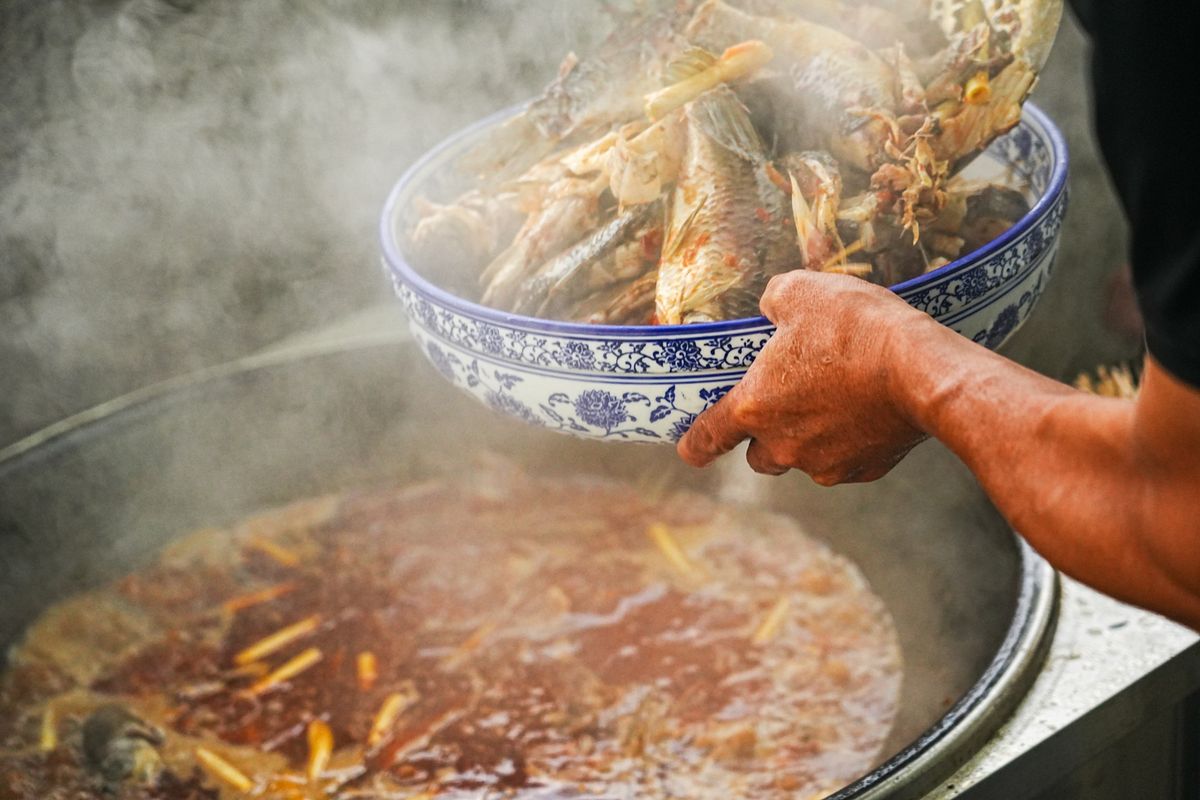
A spicy Sichuan-style hotpot cauldron
The main styles you'll meet
China has dozens of regional hotpots, but a handful come up again and again:
- Sichuan / Chongqing mala hotpot is the famous fiery one. Mala means "numbing and spicy": the heat comes from dried chillies, the tingling, lip-buzzing numbness from Sichuan peppercorns. Chongqing's version uses a rich beef-tallow base and leans bold and oily; Chengdu's leans on rapeseed oil and aromatic spices for a slightly more fragrant burn. The old-school way to serve it is a grid pot, a single pot divided into compartments by a few iron bars. The idea traces back to dockworkers at Chongqing's Chaotianmen wharf, who split one shared pot of offal and broth into equal portions with iron dividers; restaurant owners later refined it into the nine-square grid still used today, handy for portion control and for keeping quick-cooking cuts in the scalding center square while slower ones sit toward the cooler edges.
- Clear and mild broths: chicken, mushroom, or tomato bases that let delicate ingredients shine. Good if you don't want chilli at all.
- Beijing-style instant-boiled mutton: a copper pot of plain broth, thin-sliced lamb, and a sesame-paste dip. Simple and warming.
- Cantonese seafood hotpots in the south and sour Yunnan mushroom pots up in the southwest: every region has its own take.
Nervous about the spice? Order a yuanyang pot: a divided pot, usually shaped like a yin-yang, with fiery broth on one side and mild on the other. It's the single most useful phrase for a first-timer.
How to order
Ordering happens in three parts:
- Choose your broth(s). Spicy, mild, or a split yuanyang pot.
- Choose your ingredients. Menus are grouped: sliced meats (beef, lamb, pork), seafood, offal (tripe, beef aorta, a Chongqing classic), leafy greens, mushrooms, tofu and its cousins, noodles and potato slices. Order a few things to start, you can always add more.
- Build your dipping sauce (see below).
Most chain and mid-range restaurants have swapped paper menus for a tablet at the table or a QR code you scan with WeChat or Alipay's built-in scanner. You browse photos, tap to add, and can keep ordering through the meal without flagging anyone down; see how ordering food in China works if you haven't used one yet. Older, more local spots may still be paper-only or picture-menu only, and pointing works fine there too.
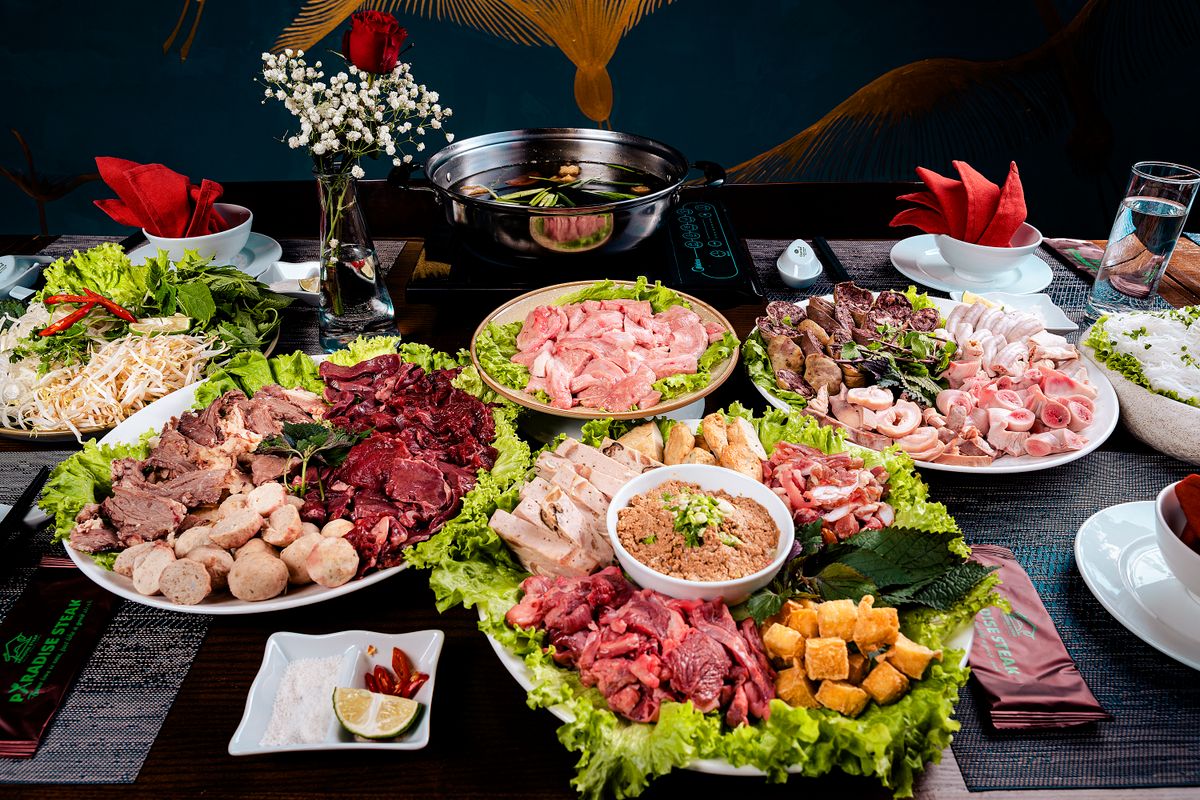
A spread of raw hotpot ingredients ready to cook
The dipping-sauce bar
Half the fun is the DIY sauce station. Two broad traditions:
- Sichuan style: sesame oil poured into a bowl with minced garlic, coriander, spring onion, and a little oyster sauce. The oil coats and cools the spicy food.
- Northern style: a thick sesame paste dip, sometimes with fermented tofu and chive flower.
There's no wrong answer, mix your own. A safe starting combo is sesame oil, garlic, coriander, and a spoon of the chilli oil from the pot.
How to cook and eat it
- Mind the cooking times. Thin meat needs only a few seconds, swish lamb or beef until it just changes colour. Leafy greens take under a minute; potato, lotus root, and meatballs need several minutes. Cook seafood and offal all the way through.
- Use the communal ladle or "serving" chopsticks to add raw food, and your own chopsticks to eat; many restaurants give you two pairs so you're not dipping personal chopsticks into the shared pot (more on shared-table manners in Chinese dining etiquette).
- Pace the spice. Sip the broth sparingly, it gets spicier as it reduces. Soy milk, sour-plum juice, or chrysanthemum tea cut through chilli oil better than water does.
- It's communal and relaxed. There's no rush, and nobody expects you to finish fast.
Where to try it
- Chongqing is the spiritual home of fiery beef-tallow hotpot; the riverside city eats it year-round, even in summer. See the Chongqing guide for where to base yourself.
- Chengdu offers a slightly more aromatic Sichuan version and is the easier place to ease in; the Chengdu guide covers neighborhoods to build a meal around.
- Nationwide, the chain Haidilao built its reputation on over-the-top service: free snacks and manicures while you wait, tableside noodle-pulling performances, and English-friendly tablet menus, a comfortable first hotpot. Busy locations get a real wait at peak hours; most branches let you join the queue remotely through Haidilao's WeChat mini-program before you even leave your hotel, so the wait doesn't have to be dead time.
Some links are affiliate links; we may earn a commission at no extra cost to you.
Frequently Asked Questions (FAQ)
Is all Chinese hotpot spicy? No. Sichuan and Chongqing styles are famously fiery, but chicken, mushroom, tomato, and Beijing mutton broths are mild. Order a split yuanyang pot to have both at once.
What should a first-timer order? A yuanyang (split) pot, thin-sliced beef or lamb, some leafy greens and mushrooms, tofu, a potato or lotus-root plate, and a sesame-oil-and-garlic dip. Add more as you go.
How do I tell the staff I can't handle much spice? Point to the mild side, or say "bu la" ("not spicy") or "wei la" ("mildly spicy"). Most spicy-hotpot restaurants can adjust the heat level for you.
Is hotpot safe if I have a sensitive stomach? Because you cook everything yourself in boiling broth, hotpot is generally fine, just make sure meat, seafood, and offal are cooked all the way through. Sticking to busy, well-reviewed restaurants over an empty storefront is the simplest safeguard.
Roughly how much does it cost? A casual sit-down hotpot is inexpensive by Western standards; well-known, service-heavy chains like Haidilao cost noticeably more. You pay separately for the broth base, each ingredient plate, and the sauce bar, so the final bill scales with how much the table orders rather than a flat per-person price.
Sources
- Guide to Hotpots in Western Beijing · Beijing Municipal Government
- Cold Days, Warm Bites: Discover Beijing's Cozy Autumn Eats! · Beijing Municipal Government
- Food and Water Precautions for Travelers · U.S. Centers for Disease Control and Prevention
- China: Traveler View · U.S. Centers for Disease Control and Prevention
- Instant-Boiled Mutton · Beijing Municipal Government