Shanghai
Yu Garden
The most valuable thing in Yu Garden is a rock. Yu Linglong, the Exquisite Jade Rock, is a four-metre column of porous Taihu limestone riddled with 72 holes, and it is said to be a stray from the rock convoys that Song emperor Huizong sent south to build his palace garden nine centuries ago; it reached the Pan family of Shanghai as part of a dowry. Around it, in 1559, the Ming official Pan Yunduan began a garden for his ageing father, took nearly twenty years to finish it, and named it Yu, comfort and peace. It remains the finest classical garden in Shanghai, a few blocks of Ming rockery and ponds folded into the Old City west of the Bund.
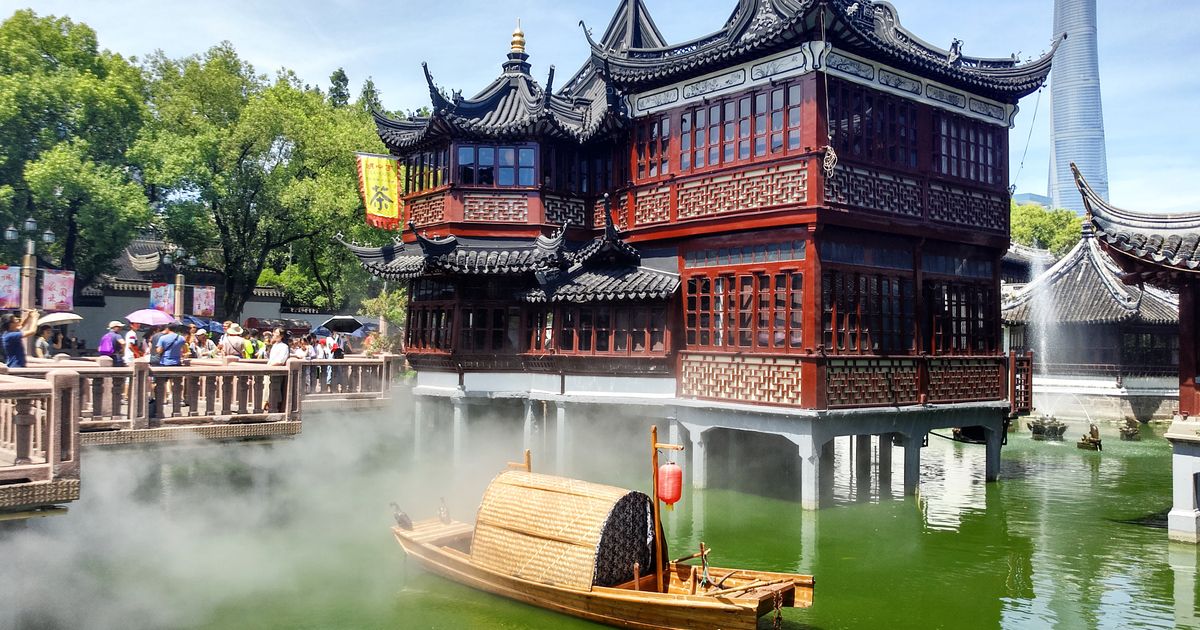
Yu Garden's Mid-Lake Pavilion teahouse and zigzag bridge in Shanghai
Inside the garden
The garden works at close range. There are no sweeping vistas; instead you turn a corner and a moon gate frames a pond, a covered walkway hugs a whitewashed wall, a courtyard holds one gnarled tree. Five dragon walls, white and rolling with grey-tiled dragon heads riding their crests, slice the plot into intimate scenes, which is how a modest site manages to feel endlessly deep. The Grand Rockery near the entrance, a 14-metre artificial mountain of yellow stone, is among the best surviving Ming rockeries in southern China, and the halls between the ponds keep their carved screens, latticework and antique furniture.
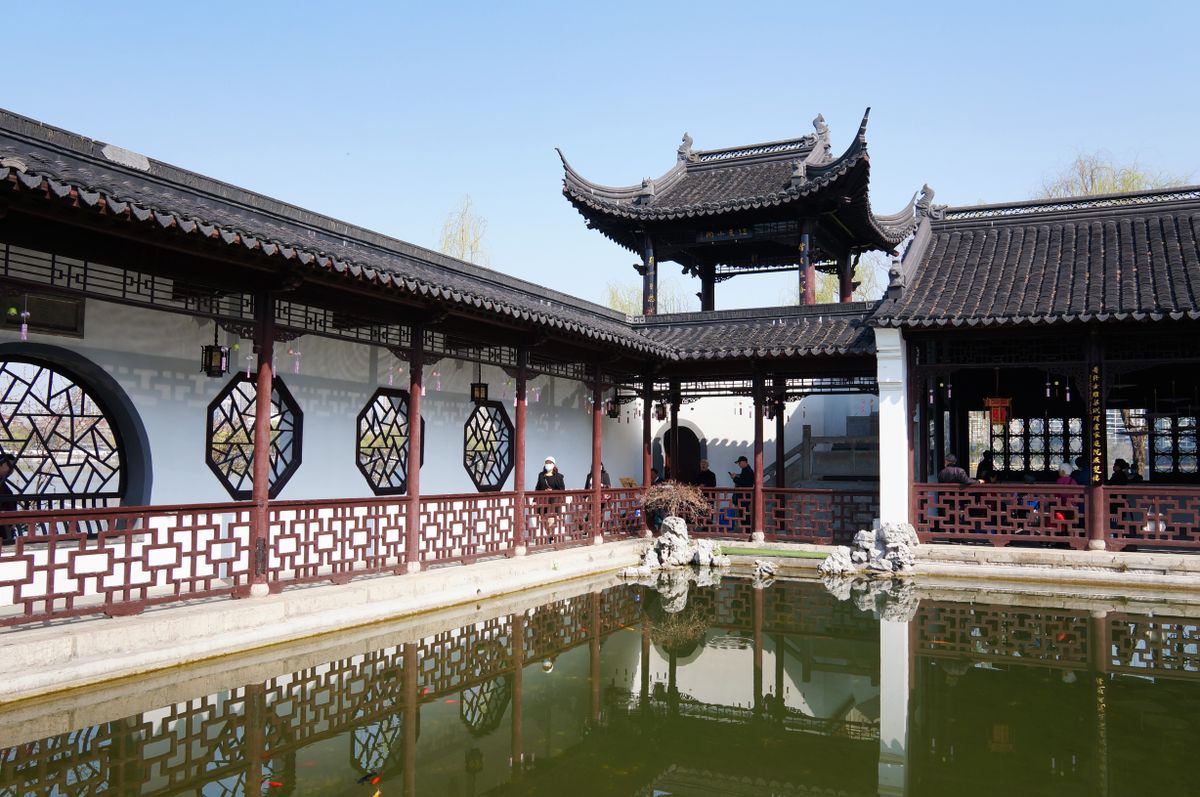
A classical garden pavilion reflected in a pond at Yu Garden
Give the Exquisite Jade Rock a moment when you find it, in front of the Yuhua Hall: connoisseurs classified great rocks by whether they were wrinkled, porous, leaky and thin, and this one scores on all four. Pour water in the top, the old test goes, and it weeps from every hole.
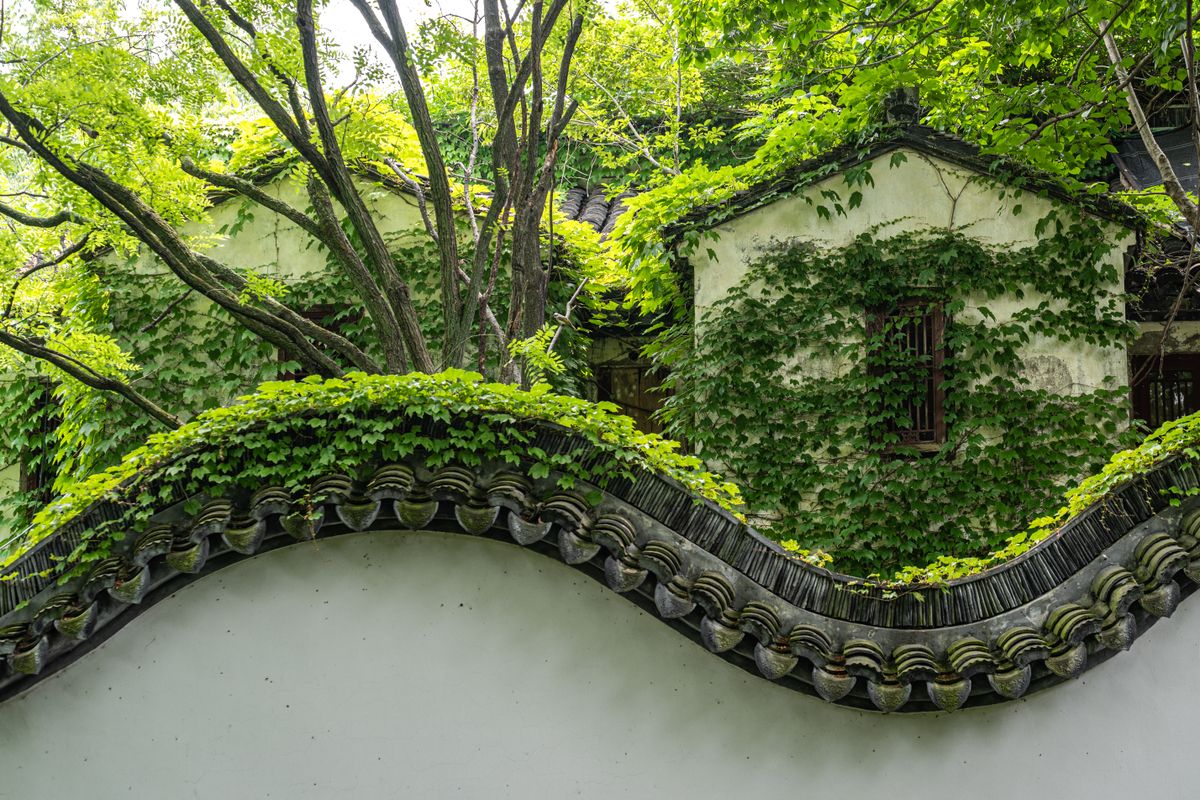
An undulating tiled garden wall draped in greenery at Yu Garden
The bazaar, the bridge and the teahouse
Everything you have seen on postcards, the zigzag Bridge of Nine Turnings and the Huxinting teahouse sitting mid-pond, is actually outside the ticketed garden, in the free Yuyuan Bazaar that wraps around it. The bridge bends, tradition says, because evil spirits travel only in straight lines. The bazaar's Ming- and Qing-style lanes are given over to snack stalls and souvenir shops, tourist-priced but fun, and they stay open on Mondays when the garden itself rests. Around Chinese New Year the whole quarter becomes the Yuyuan Lantern Festival, a lantern spectacle that has run for decades and now stretches over about five weeks, with ticketed entry on the busiest nights; it is the single most atmospheric time to come, and the most crowded.
Planning the visit
The garden closes on Mondays except during public holidays, and the ticket office shuts well before the gates, so treat mid-afternoon as your deadline: core hours run from 9:00 with last entry around 16:00, and some seasons add evening opening on certain days, so check the current schedule. Admission is a modest fee, a little higher in the spring and autumn peak months; you can pay at the gate or book ahead on the official WeChat account or platforms such as Trip.com when you want a guaranteed slot. Metro Lines 10 and 14 both stop at Yuyuan Garden station, a short signposted walk away.
Weekday mornings are calmest; by late morning the tour groups have arrived and the bazaar is at full boil. One to two hours covers the garden itself. The City God Temple stands beside the bazaar, and the Bund is a fifteen-minute walk east, so classical Shanghai and the colonial riverfront pair naturally in a single half-day.
Highlights
- A Ming garden begun in 1559 by Pan Yunduan for his ageing father
- The Exquisite Jade Rock: 72 holes and a Song-dynasty imperial legend
- A 14-metre Ming yellowstone rockery, among the best in southern China
- Five rolling dragon walls dividing the garden into intimate scenes
- The zigzag bridge and Huxinting teahouse sit in the free bazaar outside the walls
- The Yuyuan Lantern Festival takes over the quarter around Chinese New Year
- Metro Lines 10 and 14 stop at Yuyuan Garden station
Travel Tips
Mind the Monday closure
The garden rests on Mondays except public holidays, and last entry is around 16:00. The surrounding bazaar, bridge and teahouse stay open every day.
Book or pay at the gate
Tickets are a modest fee, higher in spring and autumn peak months. The official WeChat account or platforms like Trip.com let you book a slot ahead of busy days.
Go early, then walk east
Weekday mornings beat the tour groups. Pair the garden with the City God Temple next door, then walk about fifteen minutes to the Bund.
New Year means lanterns
Around Chinese New Year the bazaar hosts the Yuyuan Lantern Festival for roughly five weeks: spectacular, ticketed on peak nights, and extremely crowded.