Shanghai
Tianzifang
Tianzifang has no gate, no ticket booth and no obvious front door. It is three connected lanes of 1930s shikumen (stone-gate) houses off Taikang Road in the former French Concession, now holding roughly 200 small businesses: craft shops, galleries, tea houses, bars and design studios. People still live upstairs, and the laundry drying above the shop signs tells you what sets it apart from Shanghai's polished retail streets: this stayed a working neighborhood.
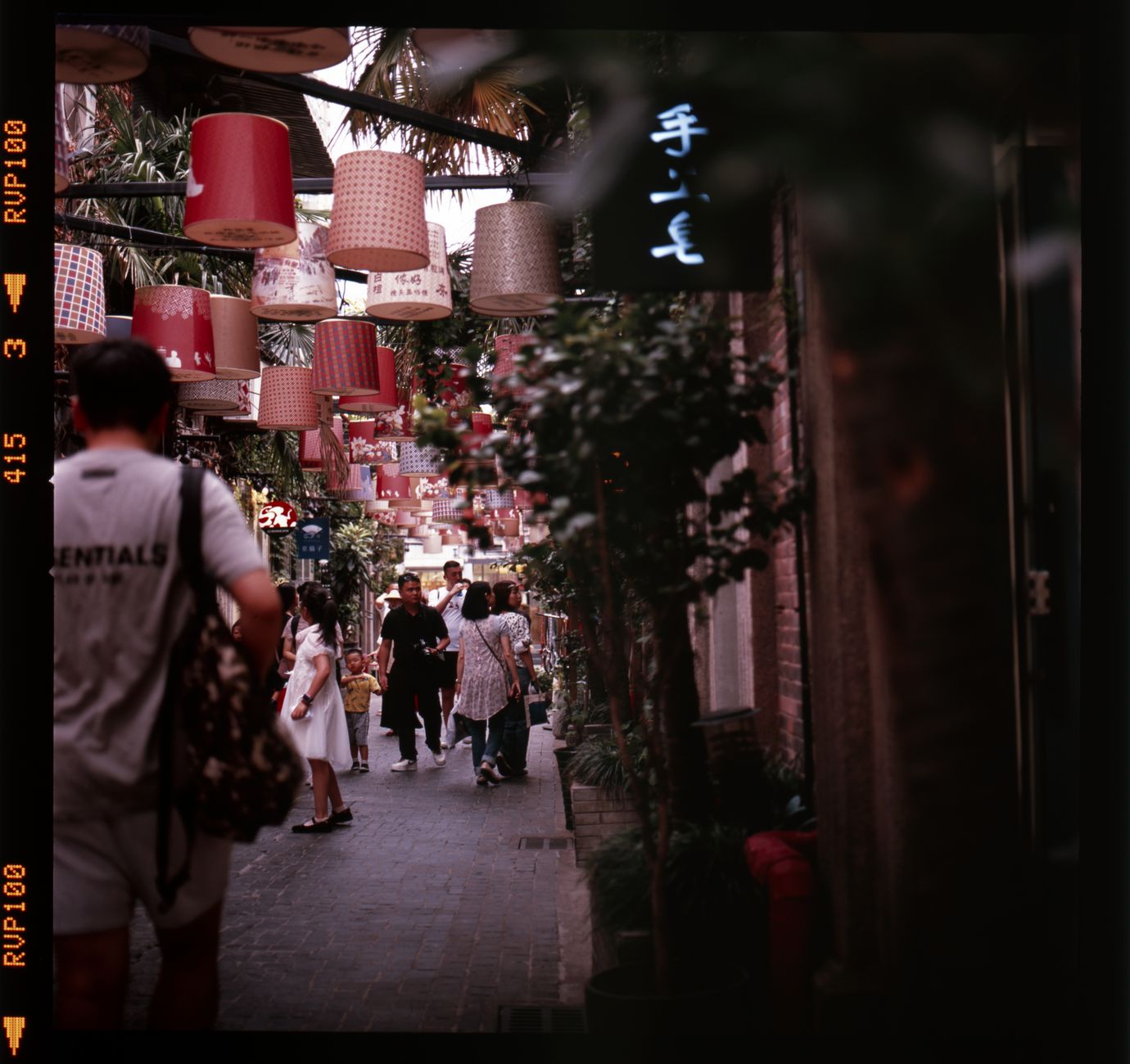
Lantern-strung lane in Tianzifang
Three lanes, one maze
The quarter is three parallel lanes joined by cross-alleys: Lane 210 (Tianzifang proper, where most people enter), Lane 248 (Tianchengli) and Lane 274 (Pingyuanfang). Inside, they branch into passages barely two people wide. Skip the map. The area is small enough that you cannot stay lost for long, and the best finds, a rooftop bar, a courtyard tea house, a one-room photography gallery, sit down the side branches rather than on the main drag.
From wet market to art quarter
Until the late 1990s this was an ordinary residential block with small workshops and a busy street market. In 1998 the painter Chen Yifei turned abandoned factory space in Lane 210 into his studio; other artists followed, and in 2001 the artist Huang Yongyu coined the current name, a play on Tian Zifang, a painter mentioned in ancient Chinese texts. That artistic cluster is why the block was redesignated a creative quarter instead of being demolished like most shikumen housing of its era.
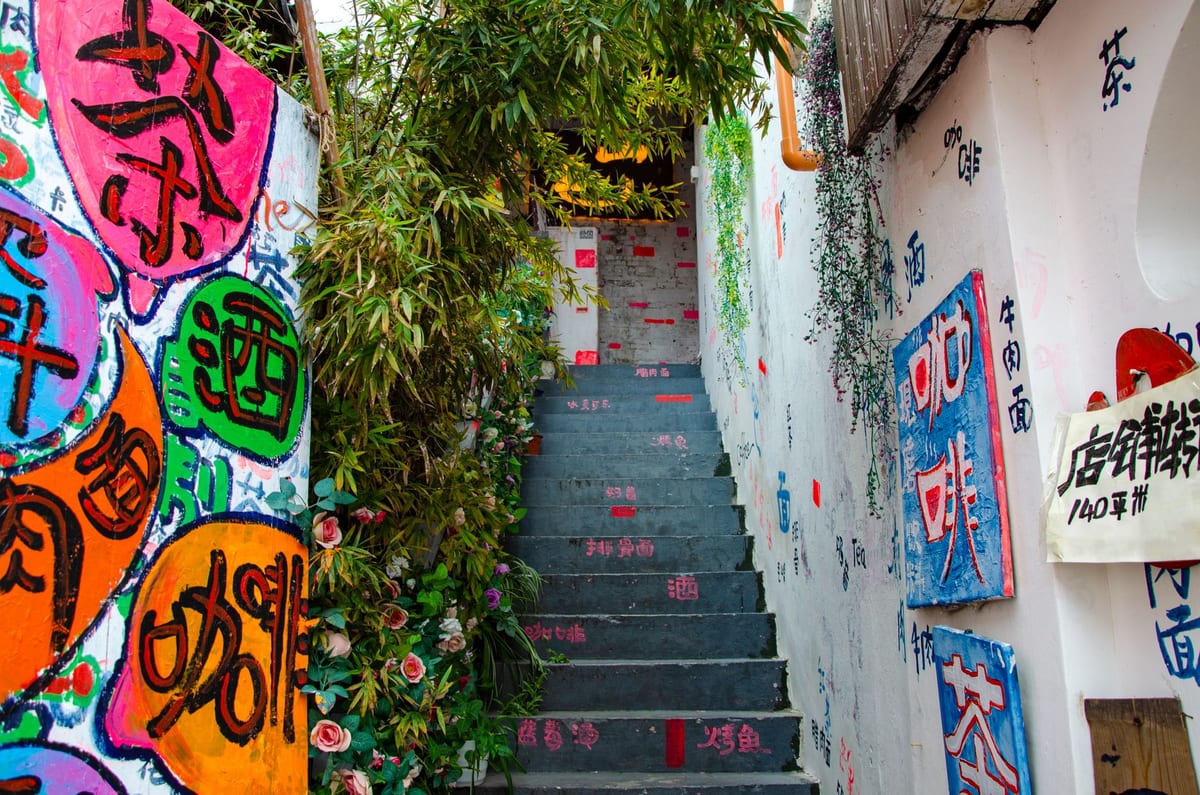
Graffiti-decorated alley steps in the quarter
Hours and cost
The lanes are public, free to enter and never close. Most shops and galleries open mid-morning, around 10:00, and wind down by around 22:00; bars keep going after that. For photos of the bare architecture, arrive before the shops open and the tour groups arrive. For atmosphere, come at dusk when the lanterns switch on.
Getting there
Take Metro Line 9 to Dapuqiao station and use exit 1; the Taikang Road entrances are directly across the street. On foot, Tianzifang chains naturally with Sinan Mansions and Xintiandi into a half-day French Concession walk.
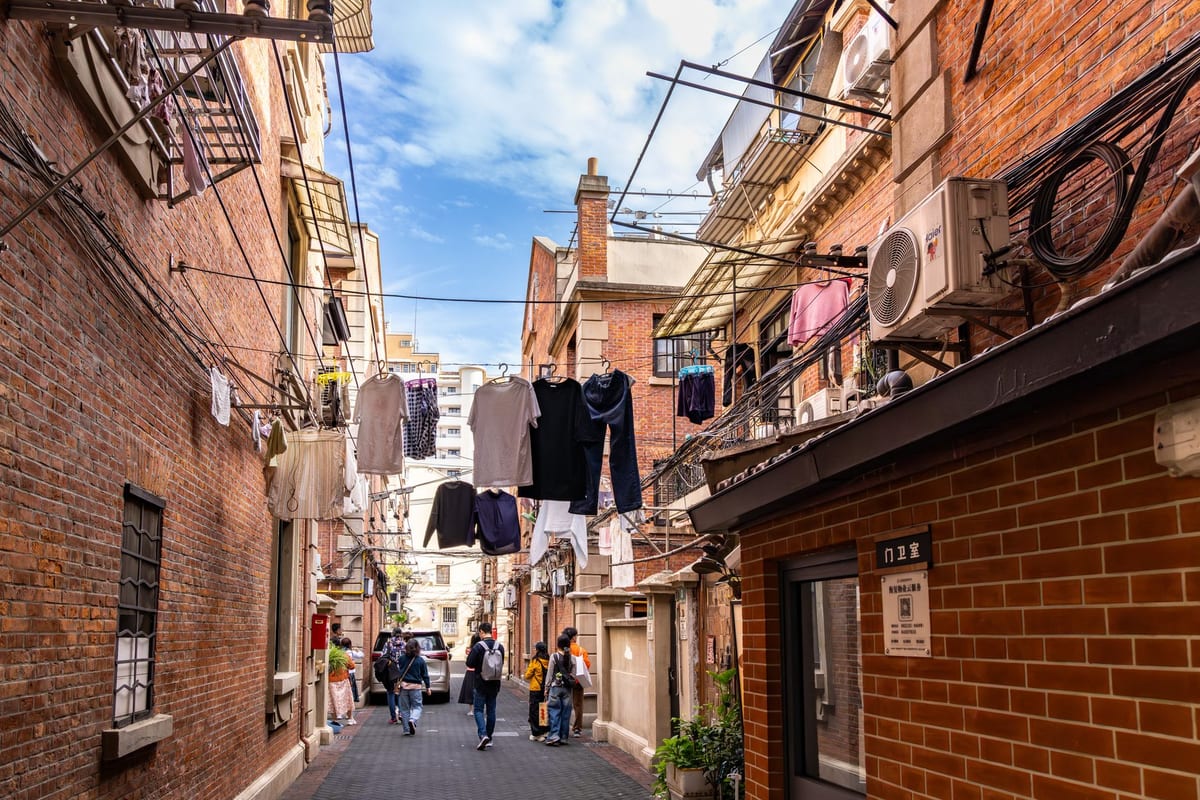
Old brick lane with shops and pedestrians
When to go
Pick a weekday if you can; weekends pack the narrow lanes shoulder to shoulder. Ninety minutes is enough to cover all three lanes without rushing, longer if you stop for tea or a drink.
Highlights
- Three connected shikumen lanes (210, 248 and 274) off Taikang Road, free to enter
- Roughly 200 small businesses: craft shops, galleries, studios, tea houses and bars
- A working neighborhood, residents still live above the shops
- Chen Yifei's 1998 studio in Lane 210 sparked the art-quarter conversion
- Red-lantern alleys barely two people wide, draped with laundry
- Preserved Chinese-European hybrid shikumen facades
Travel Tips
Come before the shops open
Arrive in the early morning for photos of the bare lanes; tour groups build up from late morning.
Avoid weekends
The lanes are narrow and weekends get shoulder-to-shoulder; weekdays are far more comfortable.
Take the side branches
Rooftop bars, courtyard tea houses and tiny galleries hide off the main drag, not on it.
Stay for dusk
The lanterns switch on at nightfall, the most atmospheric and photogenic hour.