Shanghai
Jing'an Temple
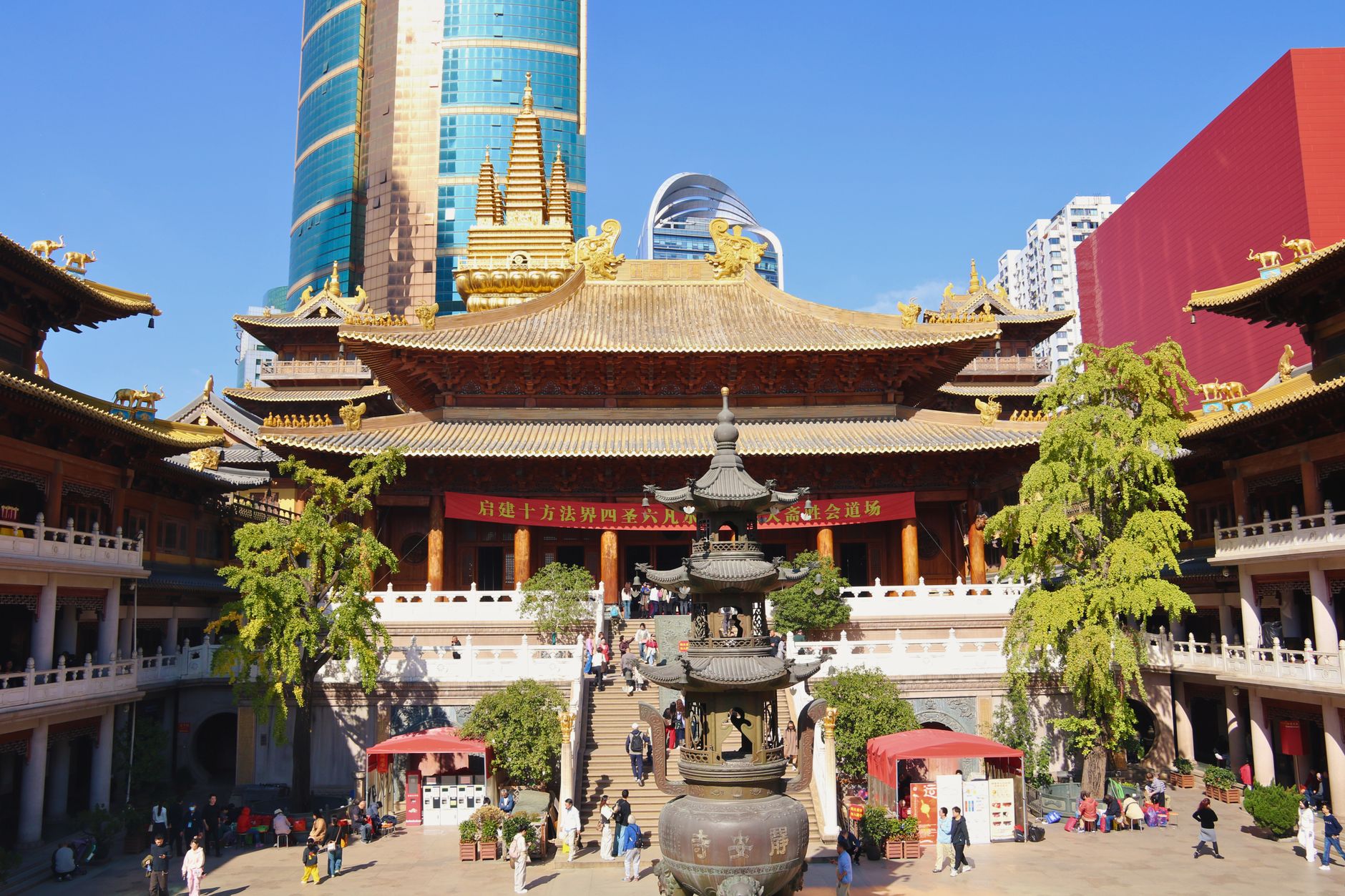
Jing'an Temple sits directly on top of its own metro station, which tells you most of what makes it unusual: this is a working Buddhist monastery that never left when the city grew around it. The name means "Temple of Peace and Tranquillity", the founding date is 247 AD under the Kingdom of Wu, and the community moved to this spot beside today's West Nanjing Road in 1216. What you see now is mostly rebuilt: the temple was closed and put to industrial use during the Cultural Revolution, then reconstructed from the 1980s onward in a Song-style palace idiom with heavy timber brackets, vermilion columns and copper-sheathed roofs. The gilded pagoda against a wall of glass towers is the single most photographed old-meets-new frame in Shanghai.
Jing'an Temple's golden hall beneath skyscrapers
What to see inside
The Mahavira Hall holds a silver Buddha weighing around 15 tonnes, installed in 2009, one of the heaviest in the country. A separate hall keeps a white-jade Buddha carved from a single block of Burmese jade, and a massive bronze incense burner anchors the central courtyard, usually wreathed in smoke. Don't miss the rooftop walkway: circling the upper level puts the golden eaves at eye height with the skyscrapers behind them, the best photo position on the site.
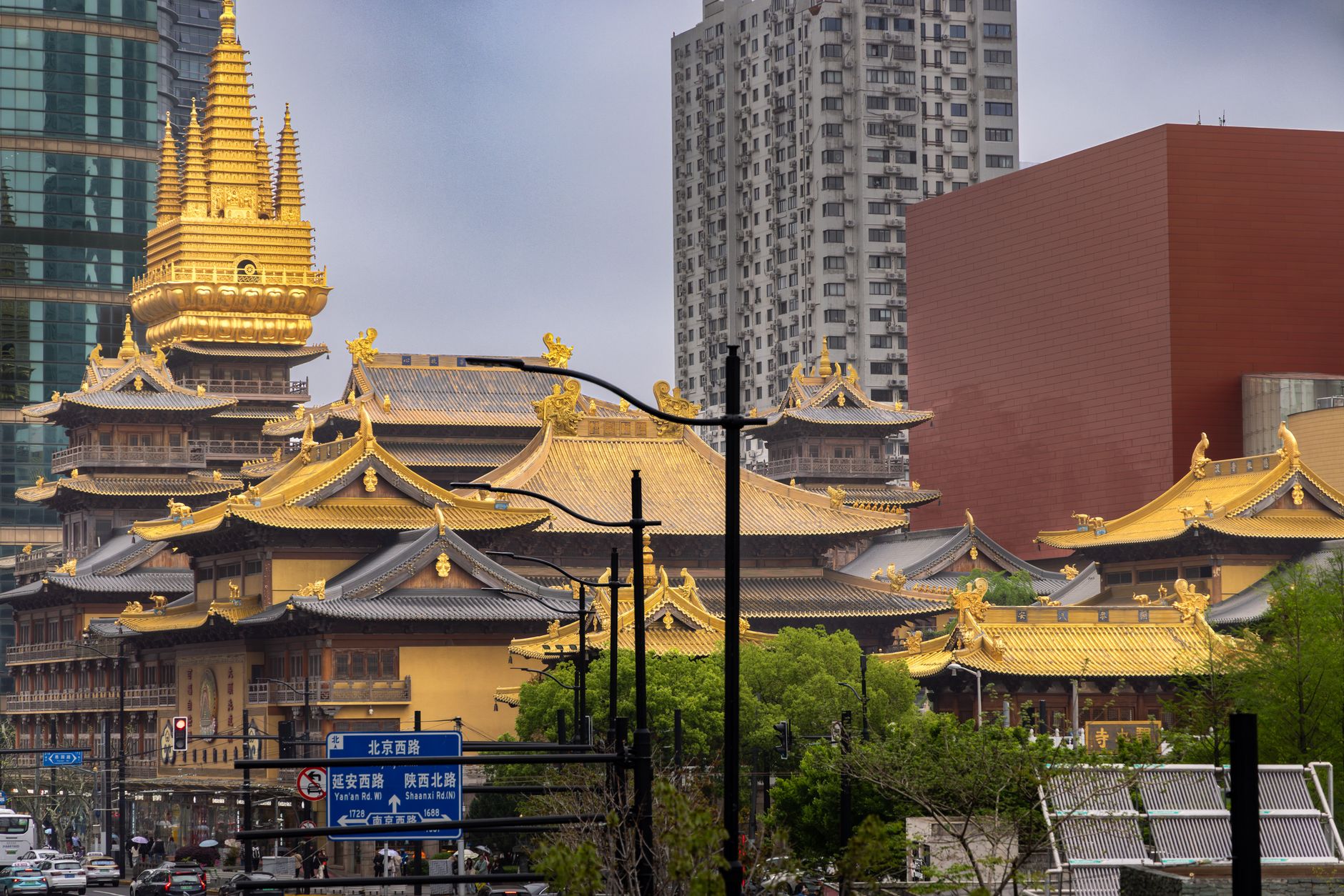
Golden temple rooftops framed by modern towers
Hours, tickets and incense days
The temple opens daily, roughly 07:30 to 17:00 with last entry around 16:30. There is a modest entry fee; children below counter height and the oldest seniors typically enter free, and the gate ticket includes three free incense sticks from the counter just inside. On the 1st and 15th of each lunar month, the traditional incense days, entry has been free, and those days plus Buddhist festivals bring the temple at its fullest and most alive. Queues at the gate are rare outside holidays; for Golden Week dates you can reserve ahead through Trip.com if you want certainty.
Etiquette that matters here
This is an active monastery, not a museum. Cover shoulders and knees, keep flash off inside the halls, and put the camera away entirely when monks are chanting. Light incense at the courtyard burner rather than carrying it into the halls.
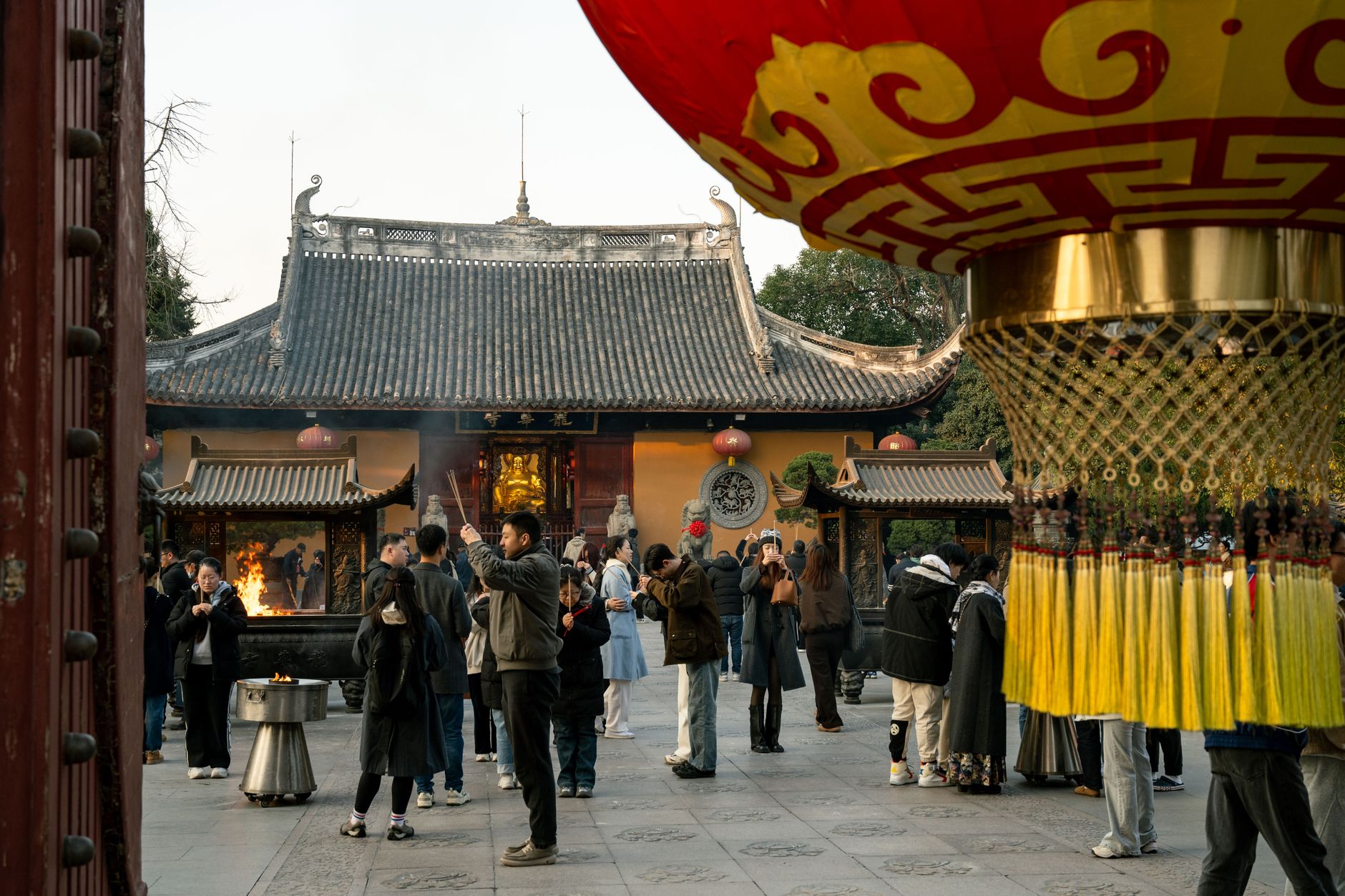
Courtyard with incense burner and visitors
Getting there and when to go
Jing'an Temple metro station (Lines 2, 7 and 14) sits directly beneath the complex; follow the signposted exit and you surface at the gate. Come on a clear morning between 8 and 9 for the morning chants and low sun on the copper roofs, or near closing for golden-hour light from the rooftop walkway. The temple pairs naturally with a walk east along West Nanjing Road's shopping streets or a quiet hour in Jing'an Park across the road.
Highlights
- Golden-roofed halls set directly beneath glass skyscrapers, Shanghai's old-meets-new in one frame
- A silver Buddha of around 15 tonnes in the Mahavira Hall, installed in 2009
- White-jade Buddha carved from a single block of Burmese jade
- Rooftop walkway with eye-level views of the gilded eaves against the towers
- Founded in 247 AD and on this site since 1216, still an active monastery
- Song-style palace architecture with copper roofs and vermilion columns
Travel Tips
Use the rooftop walkway
The upper-level walkway puts the golden eaves at eye height with the skyscrapers behind, a better shot than anything from street level.
Time it for chants
Between 8 and 9 in the morning you catch the chanting with few tour groups; near closing the rooftop gets golden-hour light.
Dress and camera etiquette
Cover shoulders and knees, skip the flash indoors and stop photographing while monks are chanting; this is a working temple.
Know the incense days
The 1st and 15th of each lunar month are the traditional incense days: entry has been free then, but they are also the most crowded mornings.