Chinese Breakfast Guide: What to Eat, Where to Find It, and How to Order
Quick answer: Breakfast in China is savory, cheap, and served early. The classics are steamed buns (baozi), fried dough sticks (youtiao) with warm soy milk, rice porridge (congee), and a stuffed savory crepe called jianbing. A filling breakfast runs about 5 to 20 RMB, and most breakfast stalls wind down by 9 or 10am, so set an early alarm.
The biggest breakfast mistake first-time visitors make is sleeping in and then looking for eggs and toast. Chinese breakfast is its own world, mostly hot and savory, and it is some of the best cheap eating you will do all trip. Skip the hotel buffet at least once and eat where the morning queue forms.
The core dishes you will see everywhere
A handful of items show up in nearly every city:
- Baozi: soft steamed buns filled with pork, greens, or a touch of sweet bean paste. You buy them by the piece from a bamboo steamer.
- Youtiao: long, airy fried dough sticks, best dunked in warm sweetened or savory soy milk (doujiang). This pairing is the bacon and eggs of China.
- Congee (zhou): rice slow-cooked to a soft porridge, plain or with pork and preserved egg, topped with scallions and served with little pickles.
- Jianbing: a thin savory crepe cooked to order on a hot griddle, cracked with an egg, brushed with sauce, folded around a crisp cracker and scallions. It is the great Chinese street breakfast.
- Doufunao / douhua: silky tofu pudding, savory in the north, sweet in the south.
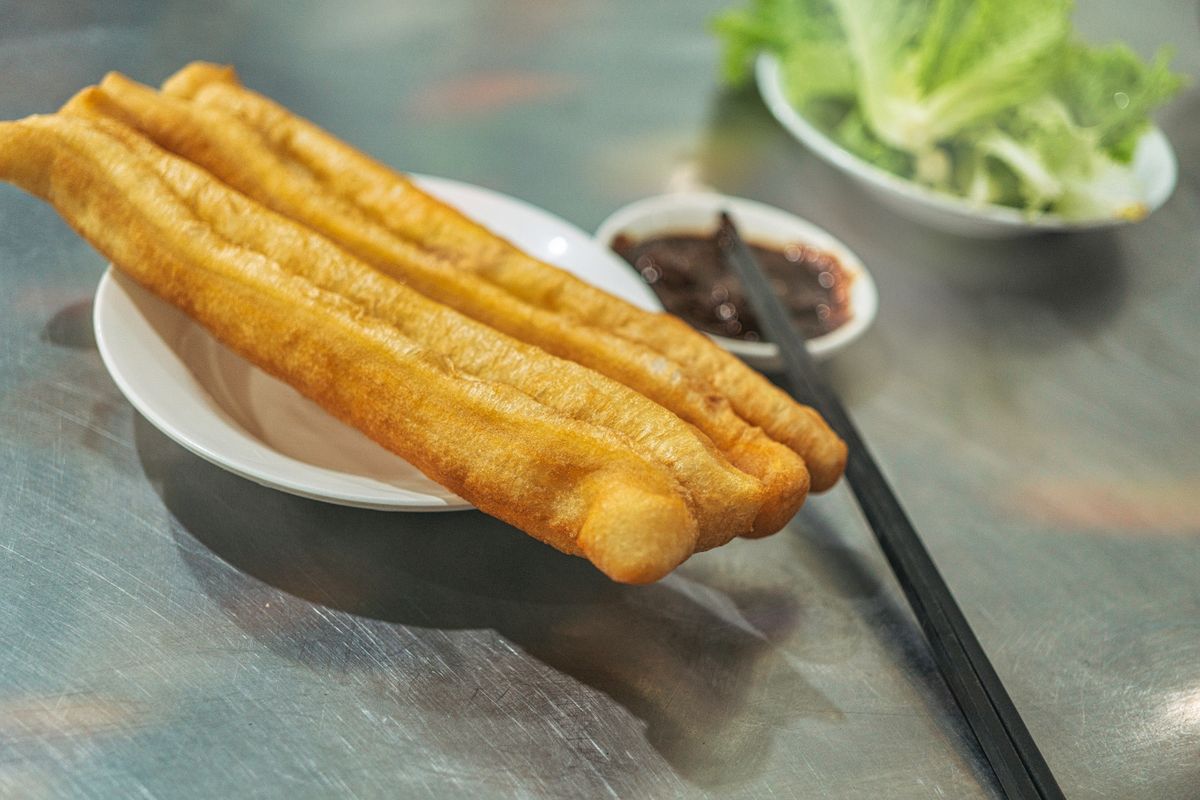
Golden fried youtiao dough sticks on a plate with dipping sauce and greens
North versus south
China's breakfast splits along the same wheat-and-rice line as the rest of its cooking.
In the north, wheat rules: baozi, youtiao, sesame flatbreads (shaobing), and hearty options like Henan's peppery hulatang soup or Xi'an's roujiamo, a flatbread stuffed with braised meat. Portions are big and filling.
In the south, rice takes over. Cantonese cities do dim sum, or yum cha, for breakfast: steamed shrimp dumplings (har gow), pork siu mai, char siu buns, and rice noodle rolls (changfen) washed down with tea. Elsewhere in the south you find rice noodles everywhere, from Guilin rice noodles to Yunnan's crossing-the-bridge noodles and Changsha's spicy bowls. Shanghai adds pan-fried shengjianbao and soup dumplings.
Wuhan deserves its own mention for reganmian, hot dry noodles tossed in sesame paste, the city's beloved morning fuel.
Where to actually find breakfast
You are rarely more than a block from breakfast in the morning, if you know where to look:
- Street stalls and carts near metro exits and residential lanes, busiest from 6:30 to 8:30am.
- Small breakfast shops (zaocan dian) with a steamer out front and a few stools inside.
- Wet markets, which almost always have a breakfast corner used by locals.
- Chains like Yonghe King for a clean, English-friendly plate of youtiao and soy milk if the stalls feel intimidating.
- Convenience stores (a decent fallback) with tea eggs, baozi, and hot drinks.
The one rule that never fails: eat where locals are lining up. Turnover means freshness.
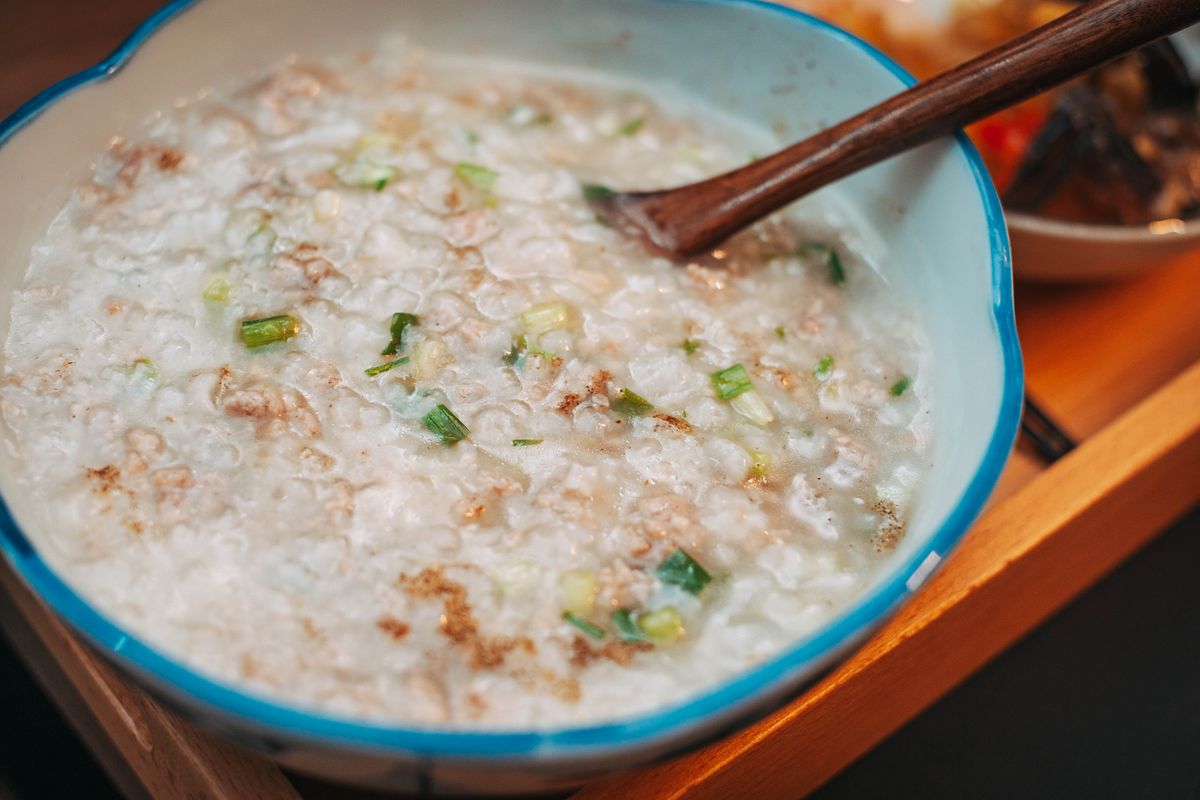
A bowl of Chinese rice congee with pork and scallions and a wooden spoon
How to order and pay
Most breakfast spots are point-and-pay, so language is rarely a barrier:
- Point at what you want in the steamer or on the griddle and hold up fingers for quantity.
- Prices are low and usually posted. Expect 2 to 4 RMB for a bun, 8 to 15 RMB for a made-to-order jianbing.
- Payment is mobile-first. Alipay and WeChat Pay QR codes are the norm, so set one up before you travel. Small stalls may take cash, but do not count on change for a large note.
- Grab a spot early. Many stalls simply sell out and pack up mid-morning.
Is street breakfast safe to eat?
Generally yes, and it is often safer than it looks because the food is cooked hot to order and turns over fast. Follow the same instincts you would anywhere: choose busy stalls, favor items served piping hot off the griddle or steamer, and go easy on raw garnishes if your stomach is sensitive. Drink bottled or boiled water rather than tap. A hot bowl of congee is one of the gentlest things you can eat on a first morning in China.
Frequently asked questions
What do Chinese people eat for breakfast? Mostly hot, savory food: steamed baozi buns, fried youtiao with soy milk, rice congee, and savory jianbing crepes. Southern cities add dim sum and rice noodles, northern cities add flatbreads and noodle soups.
Is Chinese street breakfast safe for tourists? Usually yes. It is cooked hot to order and sells fast, so choose busy stalls, eat things served piping hot, and stick to bottled or boiled water.
How much does breakfast cost in China? Very little. A bun is 2 to 4 RMB and a made-to-order jianbing is 8 to 15 RMB, so a full breakfast rarely tops 20 RMB per person.
Are there vegetarian breakfast options? Yes. Vegetable baozi, plain congee, doufunao (tofu pudding), youtiao, and many rice-noodle bowls can be vegetarian, though broths may contain meat, so ask if it matters to you.
What time is breakfast served in China? Early. Stalls are busiest from about 6:30 to 8:30am and many sell out and close by 9 or 10, so do not plan to eat street breakfast at 11.