Chinese Street Food Guide for First-Timers: What to Eat & Where
Follow the smell of charcoal and cumin down any Chinese city street after dark and you will find the best meal of your trip, cooked in front of you for the price of a coffee. Street food is where China eats, from a jianbing grabbed on the way to work to a midnight table of skewers and cold beer. For a first-time visitor it can look intimidating, all unfamiliar names and no English menus, so here is how to dive in with confidence, what to order, and where to find the good stuff.
How to eat street food in China
The single biggest change from a few years ago is payment. Almost every stall, even a lone cart, now takes payment by QR code through Alipay or WeChat Pay, and many no longer handle cash at all. Link a foreign Visa or Mastercard to one of those apps before your trip and you can pay by scanning a code like everyone else. Carry ¥50 to ¥100 in small notes as a backup for the rare cash-only vendor.
Beyond that, the rules are simple: eat where the locals line up, order what you can see being made, and do not overthink it. Portions are small and cheap, so graze across several stalls instead of committing to one big plate.
Dishes to try first
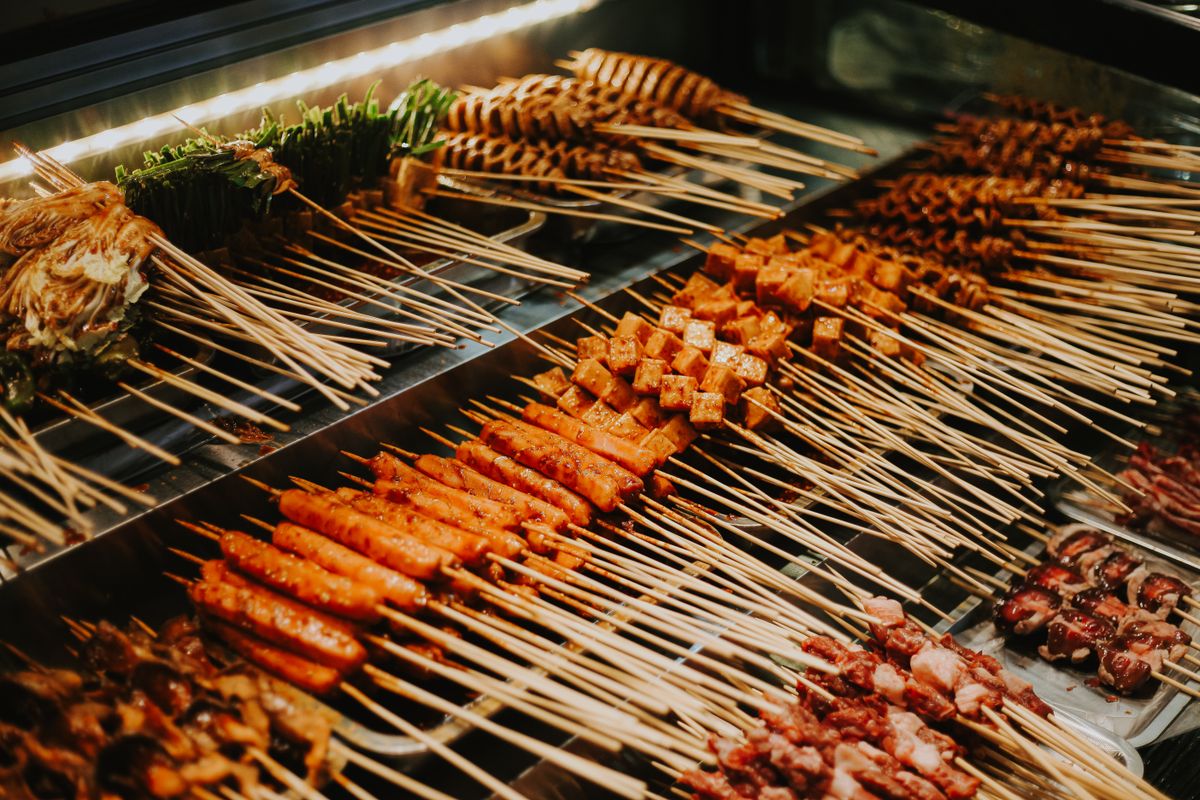
A grill loaded with Chinese street food skewers
These are the snacks that turn first-timers into street food converts, with typical prices:
- Jianbing (¥8–12). China's favorite breakfast. A thin crepe of mung-bean and wheat batter is spread on a hot griddle, cracked with an egg, painted with sweet bean and chili sauce, scattered with scallions, then folded around a crisp fried cracker. Eaten hot from a paper sleeve.
- Roujiamo (¥12–18). Often called the Chinese hamburger and originally from Xi'an, this is slow-braised, spiced pork chopped and stuffed into a crisp flatbread. Lamb and beef versions are common too.
- Chuanr (¥3–10 per skewer). Grilled skewers dusted with cumin and chili, most famously lamb, but also chicken, beef, tofu, and vegetables. The signature taste of a Chinese night market.
- Baozi (¥2–5 each). Soft steamed buns filled with pork, vegetables, or sweet red-bean paste. A cheap, filling breakfast or snack.
- Tanghulu (¥5–10). Skewered hawthorn berries or fruit coated in a hard, glassy sugar shell. Tart, sweet, and crunchy, and hard to resist once you see the bright red sticks.
- Shengjianbao (¥6–12). Pan-fried pork buns with a crisp bottom and a burst of hot soup inside. A Shanghai specialty. Bite carefully.
- Stinky tofu (¥8–15). Fermented tofu deep-fried and served with chili and pickles. It smells far stronger than it tastes, and plenty of travelers end up loving it.
Most single items cost ¥5 to ¥15 (US$1 to US$2), so a satisfying street food dinner across a few stalls rarely tops ¥50.
Where to find the best street food
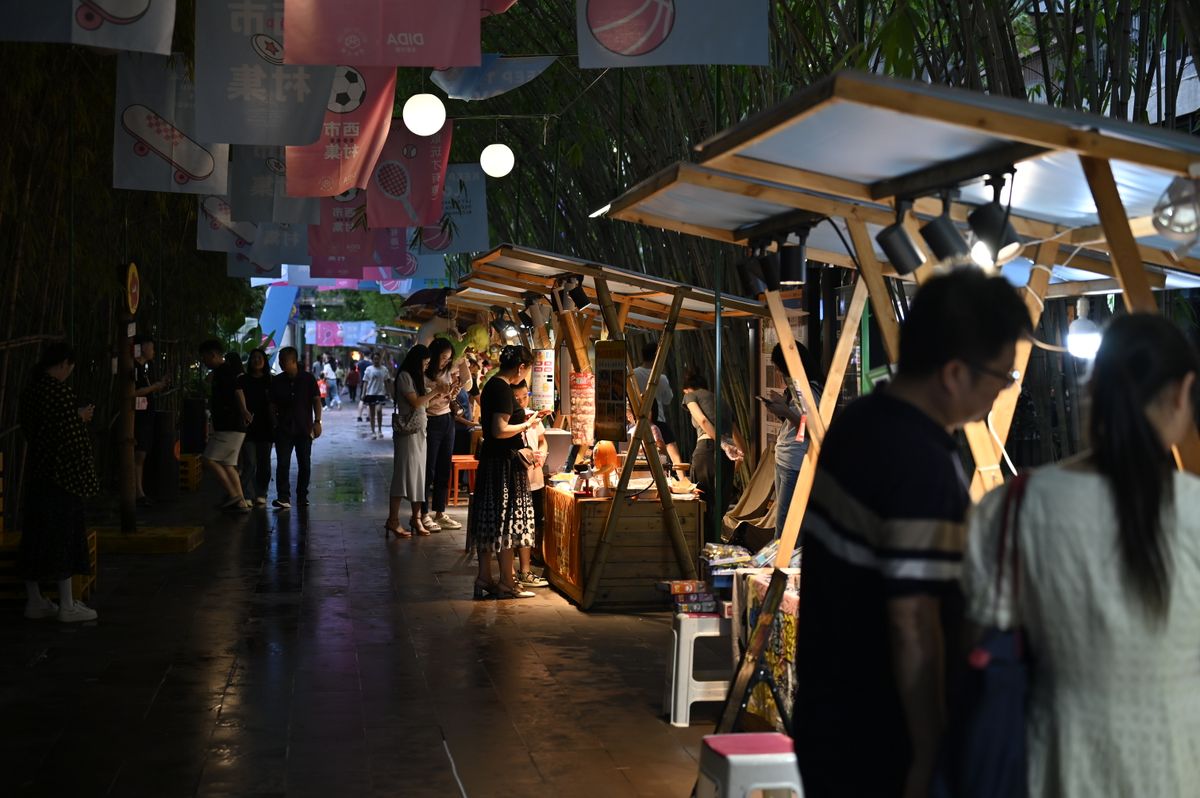
A busy night market with food stalls
Street food clusters in night markets and a few famous eating streets. Some standouts:
- Beijing, Ghost Street (Guijie). A kilometer of over a hundred restaurants and stalls that runs deep into the night, known for spicy crayfish and chuanr.
- Xi'an, Muslim Quarter. The most famous street-food lane in China, lined with roujiamo, hand-pulled noodles, lamb skewers, and persimmon cakes.
- Chengdu. The home of numbing Sichuan flavors, with night markets and snack streets full of spicy skewers (chuan chuan) and cold noodles.
- Shanghai. Head to Shouning Road or the lanes around the old town for shengjianbao, crayfish, and seafood.
- Guangzhou and the south. Late-night markets serve congee, rice rolls, and Cantonese barbecue.
Smaller cities and towns often have a lively evening market too, so ask your hotel where locals go after dark.
Is Chinese street food safe?
For most travelers, yes, with a little common sense. Follow these habits:
- Choose busy stalls with high turnover. Fast-moving food is fresh food, and a crowd of locals is the best hygiene rating you will get.
- Eat it hot and freshly cooked. Grilled, steamed, and fried-to-order items are the safest bets. Be more cautious with anything sitting out at room temperature.
- Pay by QR code so you are not handling cash right before eating.
- Ease in gently. Give your stomach a day or two to adjust before an all-out street food crawl, and drink bottled or boiled water, not tap.
Ordering when you do not speak Chinese
You rarely need to. Point at what you want or at what the person next to you is eating, hold up fingers for how many, and scan the QR code to pay. A translation app with a camera mode helps you read stall signs, and learning a couple of words goes a long way: zhège (this one) and xièxie (thank you) will carry you through most orders with a smile.
Frequently asked questions (FAQ)
What is the most popular street food in China? Jianbing, the savory breakfast crepe, and chuanr, the cumin-dusted grilled skewers, are two of the most beloved and widely available across the country.
How much does street food cost in China? Most single items run ¥5 to ¥15 (about US$1 to US$2). A full street food dinner across several stalls usually stays under ¥50 per person.
Can I pay with cash at street food stalls? Sometimes, but many stalls are now cashless and only take Alipay or WeChat Pay by QR code. Link a foreign card to one of those apps and keep a little cash as backup.
Is street food in China safe for tourists? Generally yes if you pick busy stalls, eat food that is hot and freshly cooked, and drink bottled or boiled water. Give your stomach a day to adjust to new flavors.
Where is the best street food in China? Xi'an's Muslim Quarter, Beijing's Ghost Street, and the night markets of Chengdu are among the most celebrated street food destinations.