Where to Stay in Nanjing: Xinjiekou vs Fuzimiao (2026 Guide)
Nanjing splits cleanly into two travel bases, and picking the wrong one costs you time every single day. Xinjiekou is the modern center: a Metro Line 1 and Line 2 interchange surrounded by shopping malls, business hotels, and the Presidential Palace. Fuzimiao, a short metro ride south along the Qinhuai River, is the historic quarter where the Confucius Temple and the night boat cruises live. Most visitors end up wanting time in both, so the real question is which one you sleep in.
Book Nanjing hotels on Trip.com
Free cancellation on most stays · compare neighborhoods
Some links are affiliate links; we may earn a commission at no extra cost to you.
Xinjiekou: the commercial center
Xinjiekou is where Nanjing's subway system converges. Line 1 and Line 2 cross here, and the station itself has 25 marked exits, more than any other stop on the network, because it feeds directly into Deji Plaza and the Golden Eagle International Shopping Center. If you're staying for business, connecting through Nanjing on a work trip, or want to be able to reach a metro platform in under five minutes no matter which direction you're headed, this is the base.
Hotel stock here skews toward international and domestic chains: a mid-range room runs roughly ¥300-500 ($42-70) a night, and 5-star options like the Jinling Hotel or the InterContinental Nanjing sit closer to ¥500-1000+. Budget chains (Hanting, Home Inn) near the Xinjiekou metro exits go for ¥180-280.
What you get: fast access to the Presidential Palace, Nanjing Museum, Purple Mountain (a short taxi or bus away), and both railway stations by metro without a transfer headache. What you don't get: much street atmosphere after dark. Xinjiekou is a business and shopping district, not a place people wander for the scenery.
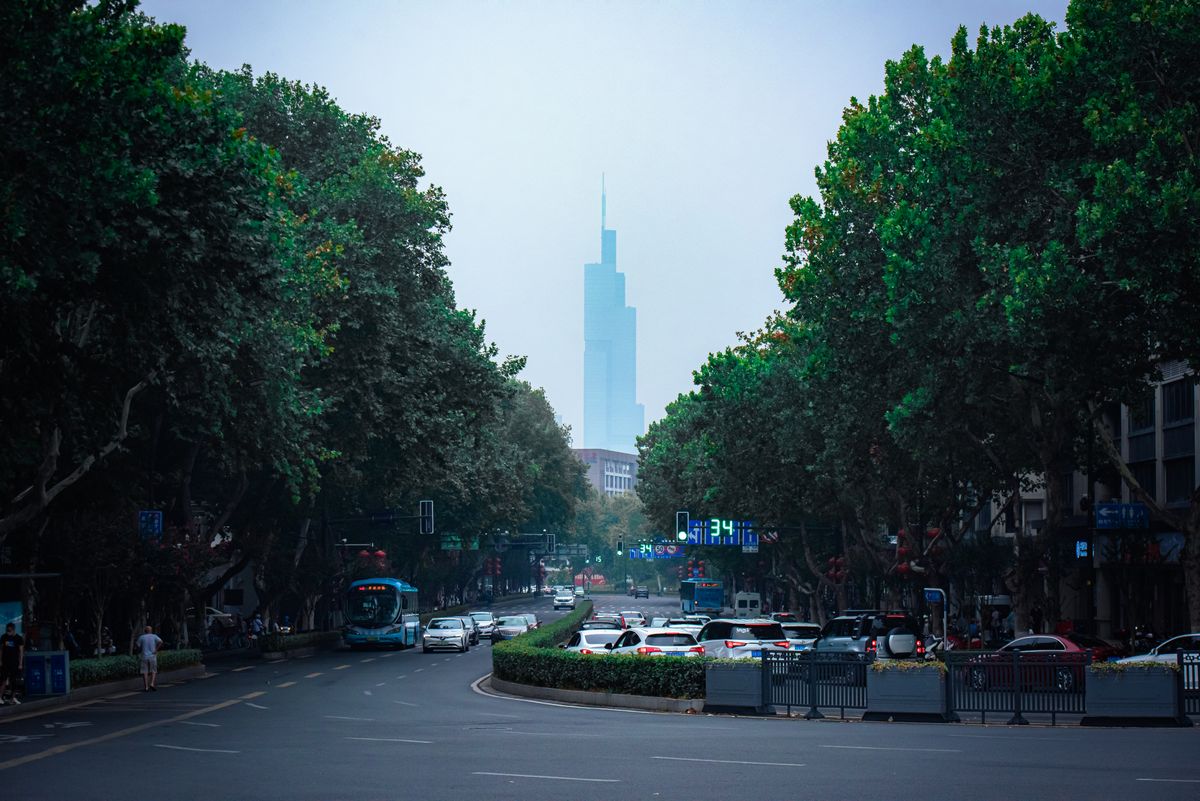
Tree-lined street in Xinjiekou with Nanjing's Zifeng Tower rising in the background
Fuzimiao and the Qinhuai River: where the postcard shots happen
Fuzimiao, the Confucius Temple, sits on the Qinhuai River in Qinhuai District, reachable via Metro Line 3 (Fuzimiao stop, exit 2). This was Nanjing's imperial examination academy and the intellectual center of the city for most of its history, and today it's surrounded by restored Ming and Qing-style buildings, pedestrian lanes, and the boats that make Nanjing's night skyline recognizable.
The river cruise costs around ¥80 for a daytime ride and ¥100 at night, and the painted boats run roughly 18:30 to 22:00, with pipa performances on some routes. If the lantern-lit Qinhuai River at night is the image that brought you to Nanjing in the first place, sleeping within a 10-minute walk of the water is worth the extra planning: the crowds thin out after the boats stop running, and you can walk down for a quieter look before breakfast.
Hotels here run cheaper than Xinjiekou on average, from roughly ¥150 for a basic guesthouse near the old town lanes (Laomendong) up to ¥450 for a well-reviewed boutique property with a river view. The tradeoff is noise and crowds, especially Friday and Saturday nights and any national holiday, when the pedestrian lanes fill up and lines form at the boat dock.
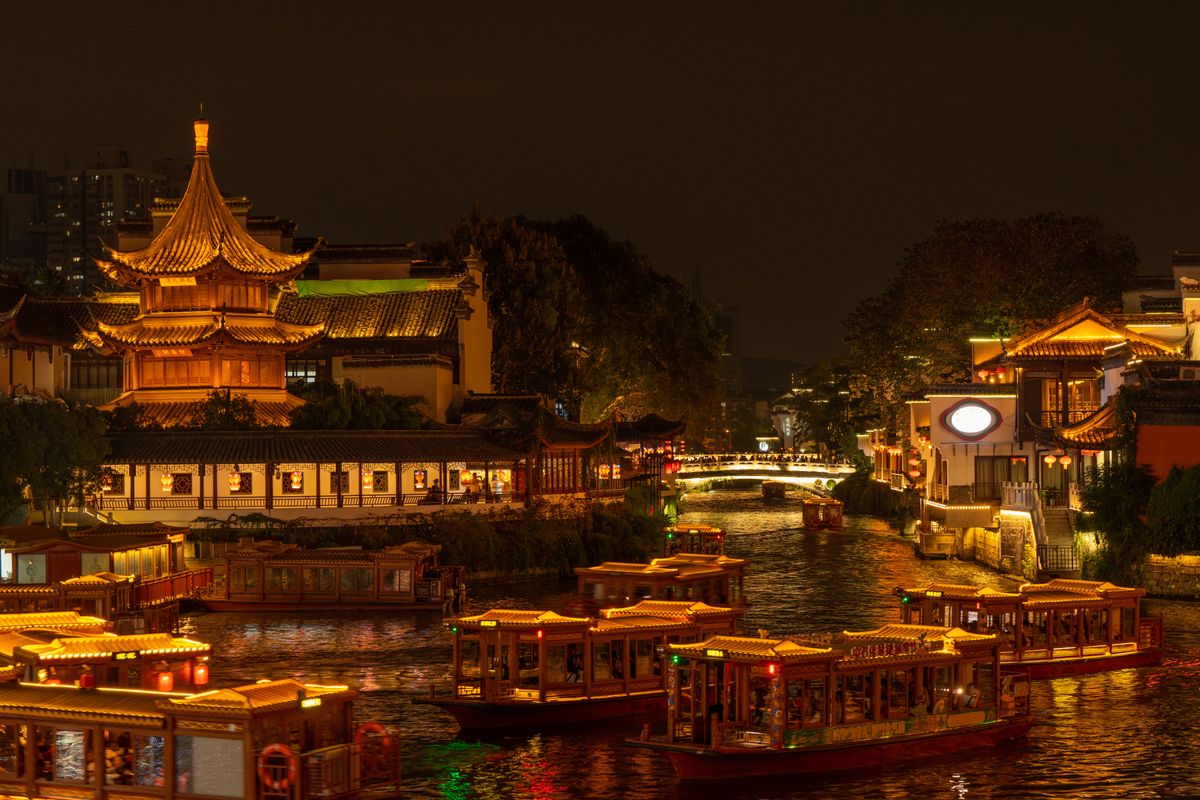
Illuminated boats on the Qinhuai River at night near the Confucius Temple in Nanjing
The train station question: South Station is not downtown
This is the detail that catches people out. Nanjing has two major stations, and they are not interchangeable.
Nanjing South Railway Station (Nanjing Nan) is the high-speed rail hub, in Yuhuatai District, about 7-8km south of Xinjiekou. It handles the Beijing-Shanghai and Nanjing-Hangzhou high-speed lines along with several others, with several hundred trains a day. Metro Lines 1, 3, S1, and S3 all stop here, so reaching the city center takes about 20-30 minutes by metro, no transfer needed if you catch Line 1 straight to Xinjiekou.
Nanjing Railway Station, the older, regular station, sits in Xuanwu District, about 4km northeast of downtown, next to Xuanwu Lake. It's closer to the center and handles regular D-trains and some of the Shanghai-Nanjing intercity services, plus a portion of high-speed departures. If your ticket says "Nanjing Zhan" rather than "Nanjing Nan Zhan," you're arriving here, and you're already closer to both Xinjiekou and the lakeside parks.
The practical rule: check which station your train uses before booking a hotel. If you're arriving at South Station with an early departure the next morning, staying near it saves you a metro ride each way, but it also means sleeping in a district with little to see or do outside the station itself. For everyone else, book in Xinjiekou or Fuzimiao and treat the metro ride to South Station as a normal part of departure day.
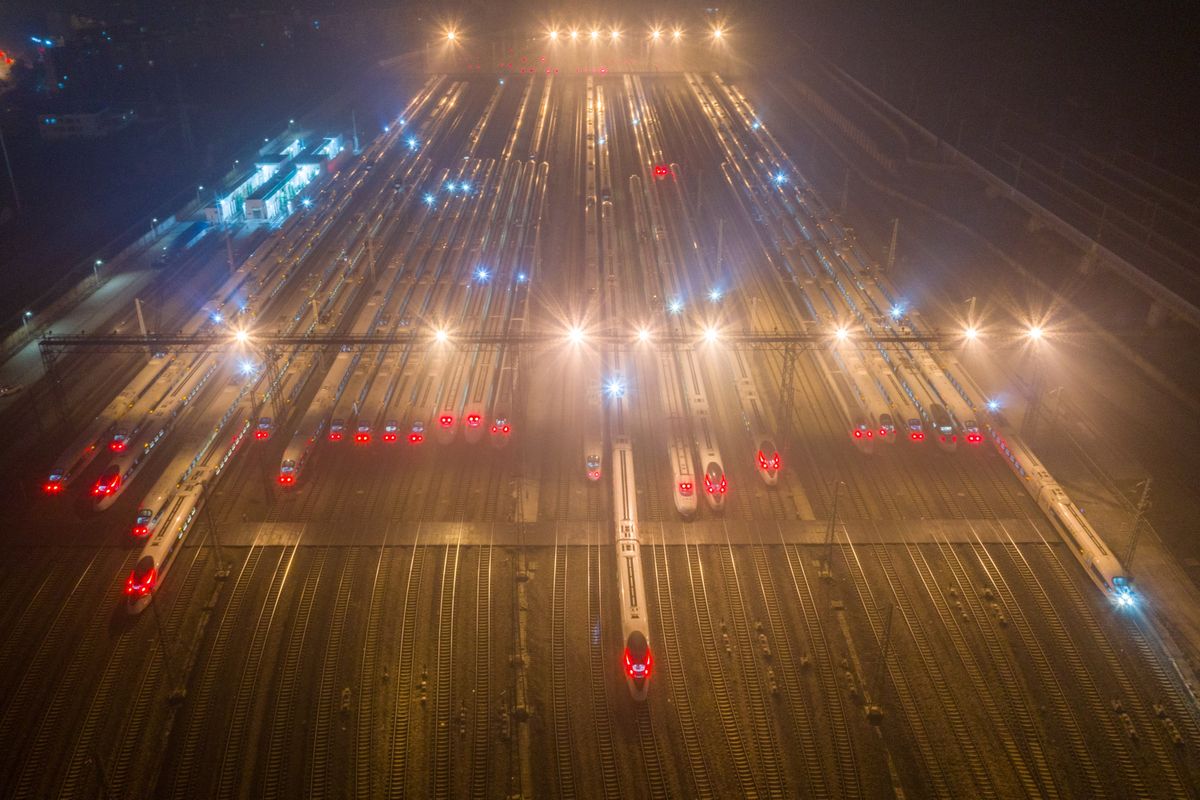
Aerial view of high-speed trains lined up at an illuminated railway station in Nanjing at night
Comparison at a glance
| Xinjiekou | Fuzimiao / Qinhuai | |
|---|---|---|
| Vibe | Modern, business, shopping | Historic, scenic, touristy |
| Best for | First-timers wanting central access, business travelers | Photography, night cruises, atmosphere |
| Price range | ¥180-1000+ | ¥150-450 |
| Noise at night | Low to moderate | Moderate to high on weekends |
| Metro access | Line 1 + 2 interchange | Line 3 (Fuzimiao) |
| Distance to South Station | About 20-30 min by metro | About 30-40 min by metro |
| Distance to regular Nanjing Station | About 10-15 min by metro | About 20-25 min by metro |
Arriving by air
Lukou International Airport connects to the city via Metro Line S1, which runs to Nanjing South Railway Station; from there you transfer to Line 1 or Line 3 to reach Xinjiekou or Fuzimiao. The full trip takes about 50 minutes and costs ¥7-10. A taxi from the airport to either downtown area runs closer to 45-60 minutes depending on traffic and costs roughly ¥130-160.
So where should you stay
- First visit, 2-3 nights, want to see everything: Xinjiekou. You're within metro reach of both stations and both historic districts, and you can ride to Fuzimiao for an evening river walk without needing to check out.
- Photography-focused trip or you specifically came for the Qinhuai River cruise: Fuzimiao. Book a room within walking distance of the water and go on a weeknight if you want fewer crowds.
- Early departure from Nanjing South the next morning: a hotel within one metro stop of South Station saves you the ride, but expect a functional, unremarkable neighborhood.
- Traveling with a Shanghai-Nanjing day-trip itinerary (Nanjing is about 70 minutes from Shanghai by high-speed train): Xinjiekou keeps your options open for a short stay. See our guide to where to stay in Suzhou if you're stringing together multiple Jiangsu cities on the same trip.
For a broader look at the city, including Purple Mountain and the Ming city wall, see the full Nanjing destination guide. And if you're planning stops across the country, the where to stay in China overview covers the same pattern city by city.
FAQ
Is Nanjing worth visiting for 2 days? Yes. Two days covers Fuzimiao and the Qinhuai River (half a day, more in the evening), Purple Mountain and the Ming tombs (a half to full day), and leaves time for the city wall or Xuanwu Lake. Three days lets you slow down and add a side trip to Yangzhou or Zhenjiang.
Where should I stay near Nanjing South Railway Station? Hotels cluster directly around the station's north and south exits, mostly budget and mid-range chains aimed at transit travelers. Only stay here if you have an early train or a late arrival; otherwise you're 20-30 minutes by metro from anything worth seeing.
How do I get from Nanjing South Railway Station to Xinjiekou? Take Metro Line 1 directly, no transfer required. It takes about 20-25 minutes and costs a few yuan.
Is the Fuzimiao area too touristy? It's busy, especially on weekends and holidays, but the crowds concentrate on the main pedestrian street and the boat dock. Side lanes and the Laomendong area a few minutes' walk away are quieter and still historic.
Which station do I need for trains to Shanghai or Suzhou? Most high-speed trains to Shanghai and Suzhou depart from Nanjing South Railway Station, though a handful use the regular Nanjing Railway Station. Check your ticket for "Nanjing Nan" (South) versus plain "Nanjing" before you head out.