Shenzhen to Hong Kong Train: Time, Price & Immigration (2026)
Quick answer: The Shenzhen to Hong Kong high-speed train takes 14 to 29 minutes between Shenzhen North (or Futian) and Hong Kong West Kowloon, with second-class fares around CNY 68 to 75. Both mainland Chinese and Hong Kong immigration are cleared inside the same West Kowloon building, an arrangement called "one location, two checkpoints" (one location, two checkpoints), so you never leave the building to switch borders. If you would rather skip the bullet train, the older Lo Wu and Futian land crossings on the MTR East Rail Line still work, cost less, and need no advance ticket.
Trains between Shenzhen North or Shenzhen Futian and Hong Kong West Kowloon run every few minutes for most of the day, with roughly 130 pairs of services daily. Nonstop trains cover the distance in as little as 14 minutes; trains that also call at Futian take up to 29 minutes. That beats driving the same route through the Huanggang or Shenzhen Bay road checkpoints during normal traffic.
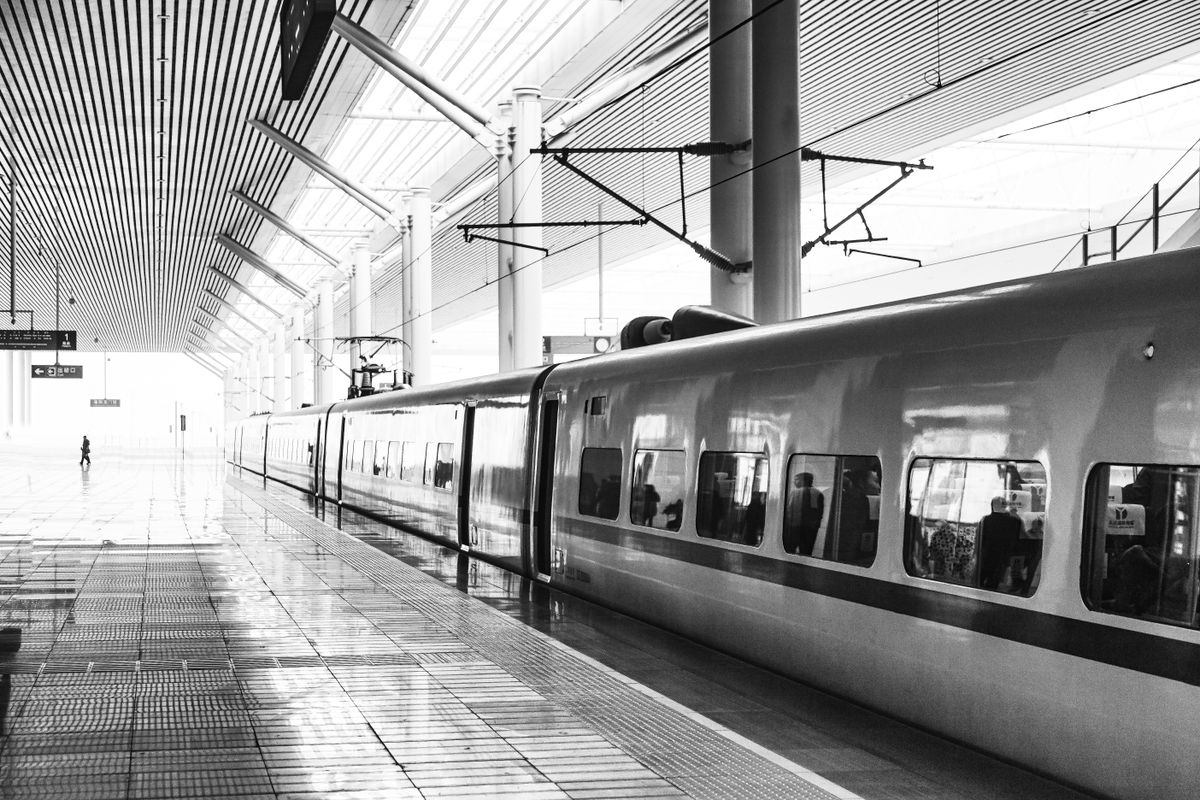
China high-speed train at a station platform
Book China train tickets
Compare fares and book the Shenzhen-Hong Kong high-speed train
Some links are affiliate links; we may earn a commission at no extra cost to you.
You can book the same train at the same price directly through China's official rail portal, 12306, with no service fee, though its English support and card payment options are more limited than Trip.com's. If you do not want the high-speed train at all, the MTR crossing at Lo Wu or Lok Ma Chau (next to Futian) needs no reservation and no advance ticket, covered in the comparison table below.
For step-by-step guidance on registering, choosing between 12306 and Trip.com, and boarding with only your passport, see our complete guide to booking China's high-speed trains.
Shenzhen to Hong Kong train time, price and distance
The high-speed line covers about 26 km between Shenzhen North/Futian and West Kowloon, one of the shortest cross-border rail hops anywhere. Trains run from roughly 6:30am to around 11pm, with departures a few minutes apart at peak times.
| Class | Fare (one-way) | Journey time |
|---|---|---|
| Second class | CNY 68-75 (approx. USD 9-11) | 14-29 min |
| First class | CNY 109-120 (approx. USD 16-18) | 14-29 min |
| Business class | CNY 204-226 (approx. USD 30-33) | 14-29 min |
Fares and schedules shift slightly by train number and season, so check exact times on 12306 or Trip.com before you travel. Around 130 train pairs a day connect Shenzhen North and Futian with West Kowloon, so seats are rarely hard to find outside Chinese public holidays.
How West Kowloon's one-location-two-checkpoints immigration works
West Kowloon station sits inside Hong Kong, but part of the building operates under mainland Chinese jurisdiction. That is the co-location arrangement (one location, two checkpoints, literally "one place, two inspections"): instead of clearing Hong Kong immigration in one building and mainland Chinese immigration in a separate building near the border, as happens at Lo Wu, you clear both inside West Kowloon, one after the other, before you reach the platform.
Leaving Hong Kong for the mainland works like this:
- Arrive at West Kowloon at least 45 to 60 minutes before departure on a weekday, and 60 to 90 minutes on a weekend or around a public holiday. Queues at the joint checkpoint stretch out on those days.
- On the departures level, your ticket is checked against your passport (the system is real-name, tied to the passport you booked with), then you pass through security screening, similar to an airport.
- You clear Hong Kong exit immigration first, at a manned counter or an e-channel if you are eligible.
- Immediately afterward, in the same corridor, you clear mainland Chinese entry immigration, showing your passport and, if you need one, your visa or your 240-hour transit paperwork.
- Only after both checkpoints do you reach the platform and board. At that point you have technically entered mainland China, even though you have not left the Hong Kong side of the harbor.
Arriving in Hong Kong from the mainland runs in reverse: after your train pulls into West Kowloon, you walk to the arrival hall and clear mainland Chinese exit immigration and Hong Kong entry immigration back to back, then walk out into Kowloon. There is no bus, taxi or extra building in between, which is the point of co-location: one stop instead of two.
Foreign passport holders should expect manned counters rather than e-channels on both sides, since e-channels are mostly reserved for Hong Kong and mainland ID holders and registered frequent travelers. Bring your physical passport; a photo on your phone is not accepted at either checkpoint.
Shenzhen North or Futian: which station to use
Two mainland stations connect to West Kowloon on this line. Shenzhen North (Shenzhenbei) is the bigger hub, with more daily departures and direct transfers to Shenzhen Metro Line 4 and Line 5. Shenzhen Futian sits closer to the actual border and to Shenzhen's central business district, and it is the better pick if your hotel is near Shenzhen Convention Center or Huaqiangbei. Both stations run the same classes of train to West Kowloon, and the ride from Futian usually runs a few minutes shorter than from Shenzhen North simply because Futian sits nearer the border.
Shenzhen skyline at night with illuminated skyscrapers
If you are staying in Shenzhen for a few nights before crossing over, pick whichever station is the shorter taxi or metro ride from your hotel. There is no meaningful price difference between the two stations for the same class of ticket.
High-speed train vs the MTR crossing at Lo Wu and Futian
The high-speed train is not the only way across. The MTR East Rail Line still runs to two land border crossings a short walk from mainland immigration: Lo Wu, which connects to Shenzhen's Luohu district, and Lok Ma Chau, which connects across a pedestrian bridge to Shenzhen Futian. Both have operated since long before the high-speed line opened in 2018, and both remain the cheaper, no-reservation option.
| High-speed train (West Kowloon) | MTR crossing (Lo Wu / Lok Ma Chau) | |
|---|---|---|
| Journey time | 14-29 min city to city | Roughly 45-50 min from central Hong Kong to the border, plus your onward metro ride in Shenzhen |
| Price | CNY 68-226 depending on class | A standard MTR fare to the border (roughly HKD 30-55 depending on where you board), no separate mainland fare |
| Booking | Advance ticket needed, real-name, sells out on holidays | No reservation, no advance ticket, walk up any time within opening hours |
| Immigration | Co-located: one building, both checkpoints back to back | Two separate immigration halls, cleared one after the other at the crossing itself |
| Best for | Speed, comfort, connecting onward by high-speed rail | Budget trips, last-minute crossings, simple point-to-point travel |
Lo Wu is open roughly 5:55am to midnight; Lok Ma Chau keeps shorter hours, about 6:40am to 11pm. Neither needs a booking, which makes either one a solid backup if your high-speed train sells out during Golden Week or Chinese New Year.
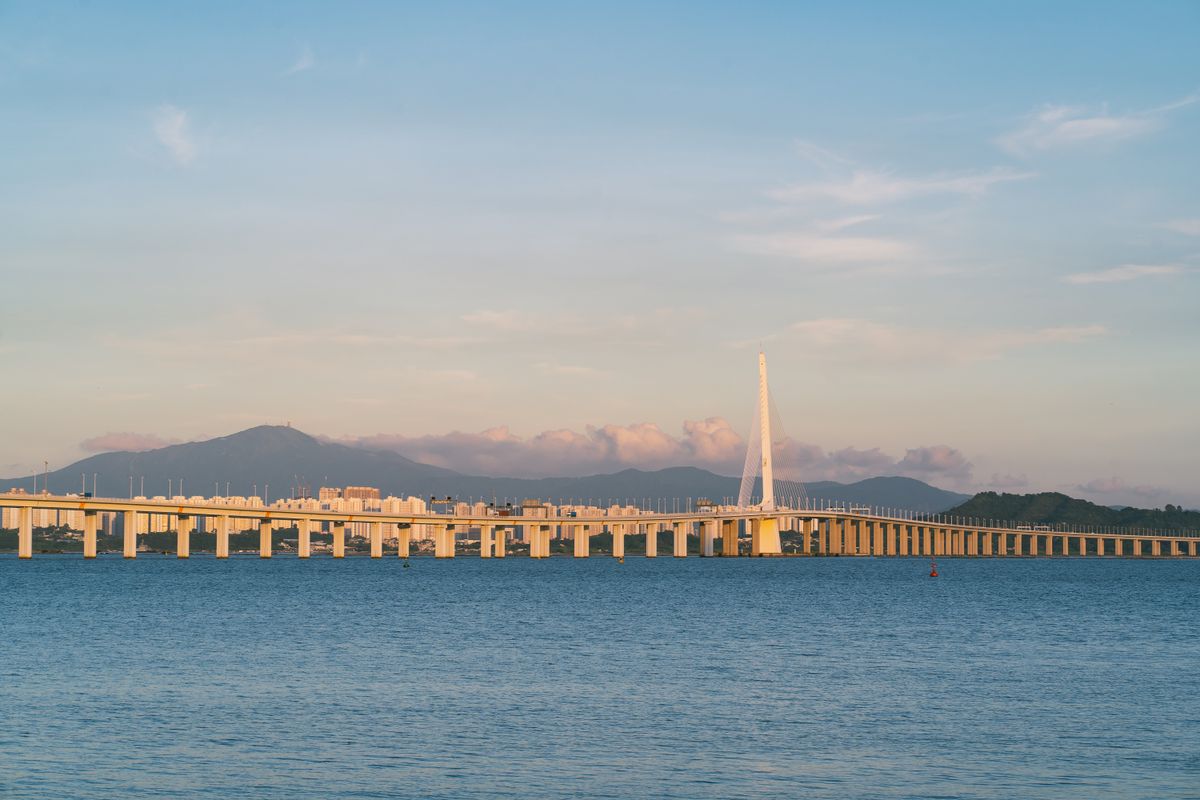
Cable-stayed bridge over water connecting Hong Kong and Shenzhen
Do you need a visa to cross from Shenzhen to Hong Kong
Hong Kong and mainland China run separate immigration systems, so the visa question has two parts.
Entering Hong Kong: most Western passport holders, including US, UK, EU, Canadian and Australian citizens, do not need a visa for tourism and get a stay of 30 to 90 days on arrival depending on nationality. This applies whether you fly in or arrive by train.
Entering mainland China: this is where travelers get caught out. A regular Chinese tourist visa, arranged in advance through a Chinese consulate or visa center, is still the default requirement for most nationalities. One major exception applies directly to this crossing: since November 5, 2025, West Kowloon station has been added to China's 240-hour (10-day) visa-free transit scheme. Under that scheme, citizens of 55 eligible countries (the EU, US, Canada, Australia, Japan, South Korea, Singapore and others) can enter mainland China without a visa for up to 240 hours, provided they hold an ordinary passport valid for at least 3 months and a confirmed onward ticket, by air, train or ship, to a third country or region within those 240 hours. A ticket back to your country of departure does not qualify, and Hong Kong and Macau count as separate regions for this purpose. On arrival, you fill out a Temporary Entry Foreigner Entry card at the immigration counter.
If your plan does not fit that pattern, for example you intend to stay in mainland China longer than 10 days, or your next stop after China is your home country rather than a third country or region, you need a standard Chinese visa arranged before you travel. See our Hong Kong and Macau entry guide for more on entry rules for this corridor. Visa policy does change, so confirm your specific nationality's requirements with a Chinese embassy or consulate close to your travel date rather than relying on older articles.
Common mistakes
- Assuming a Hong Kong MTR ticket or Octopus card covers the high-speed train. It does not: the bullet train needs its own separate ticket, booked in advance and tied to your passport.
- Showing up 15 or 20 minutes before departure. The double immigration check plus security routinely takes 45 minutes or more, longer on weekends.
- Booking a return ticket to your home country when you qualify for 240-hour visa-free transit to a third country or region instead. That return ticket disqualifies you from the visa-free scheme, and you will need a full visa instead.
- Forgetting a physical passport. Screenshots or photos of your passport photo page are not accepted at either checkpoint.
- Assuming Lo Wu and Lok Ma Chau are the same crossing. They are two different stations with two different immigration halls, so check which one lines up with your onward transport in Shenzhen before you walk over.
Who this is for
This route works well if you are splitting a trip between Shenzhen or Guangzhou and Hong Kong, doing a day trip across the border, or connecting onward to a high-speed train elsewhere in mainland China from West Kowloon. It matters less if your only goal is a quick shopping trip to Luohu Commercial City or Futian, where the MTR crossing at Lo Wu drops you closer to the action for less money and no advance booking. Business travelers on tight schedules generally prefer the high-speed train for its short, predictable journey time; backpackers and budget travelers often prefer the MTR crossing.
Frequently Asked Questions
Is the Shenzhen to Hong Kong train faster than the MTR crossing? Yes, for the ride itself: 14 to 29 minutes against roughly 45 to 50 minutes to reach the border from central Hong Kong on the MTR. Add immigration time on both sides and the gap narrows, especially on a busy weekend.
What is one location two checkpoints (one location, two checkpoints)? It is the arrangement at West Kowloon station where Hong Kong and mainland Chinese immigration operate inside the same building, so travelers clear both borders in one place instead of walking between two separate crossing points.
Do I need a visa for this train? For entering Hong Kong, most Western nationalities do not need a visa. For entering mainland China, you generally need a standard Chinese visa unless you qualify for the 240-hour visa-free transit scheme, which now includes West Kowloon as an eligible entry and exit port.
Can I buy a ticket on the day of travel? Sometimes, but seats sell out fast around Chinese public holidays and busy weekends. Booking a day or two ahead through 12306 or Trip.com is the safer approach.
Is the MTR crossing at Lo Wu or Futian cheaper than the high-speed train? Yes. A standard MTR fare to the border plus a Shenzhen metro fare on the other side costs a fraction of even the cheapest second-class high-speed ticket, though the total journey takes longer.
Sources
- High Speed Rail - Foreign Nationals Enjoy 240-Hour Visa-free Transit in the Mainland · MTR Hong Kong High Speed Rail
- MTR Cross Boundary Train Services (East Rail Line to Lo Wu / Lok Ma Chau) · MTR Corporation