Beijing
Beihai Park
Most first-time visitors treat Beihai Park as a green footnote to the Forbidden City next door. Beijingers see it the other way around: this lake garden is older than the palace itself, and it has worked as the city's living room since it opened to the public in 1925. The site goes back to 938 CE under the Liao dynasty, which makes it China's oldest imperial garden, and for close to a thousand years emperors of the Liao, Jin, Yuan, Ming and Qing dynasties kept it as a private retreat. Come early and you share the causeways with tai chi groups and ballroom dancers before the tour buses reach the neighbourhood.
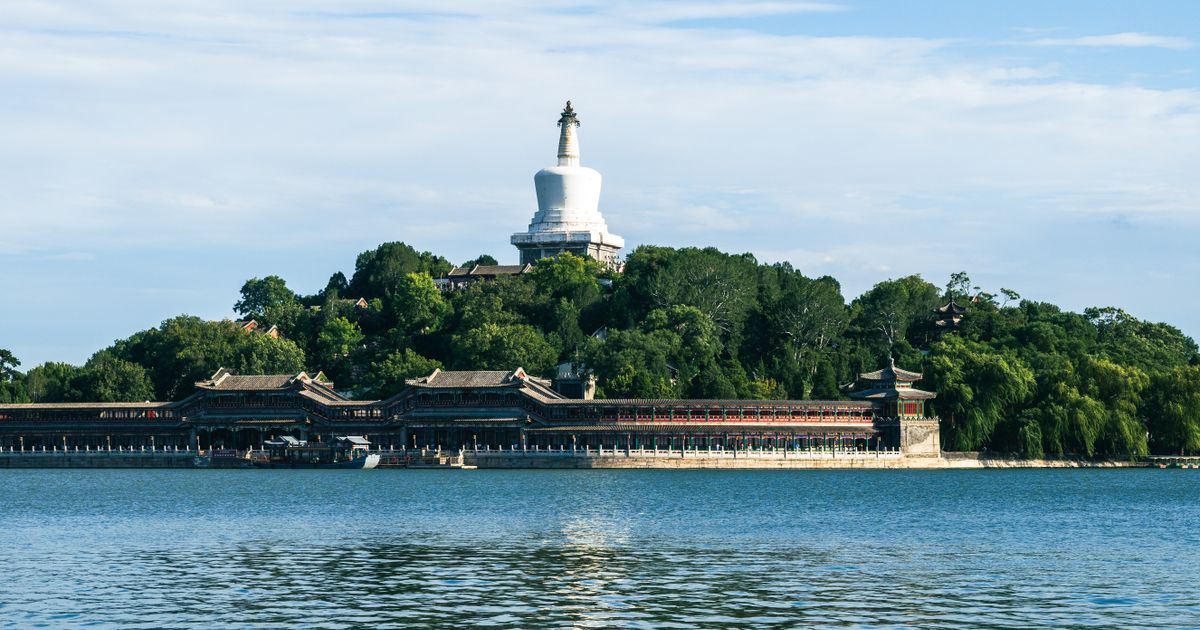
White Dagoba rising above Jade Islet across Beihai Lake
Shaped by ten centuries of emperors
The lake is not natural in its present form: generations of imperial landscaping dug it out and piled the spoil into Jade Islet (Qionghua Islet) at the centre. Kublai Khan made this area the heart of his Yuan dynasty capital, and tradition holds that the rocks stacked on the islet's hill were hauled all the way from Kaifeng in Henan. Later dynasties kept adding temples, halls and rockeries, so a walk along the shaded shoreline moves through layer after layer of Chinese garden design, with every bridge and framed view deliberately composed.
What to see
The park's landmark is the White Dagoba, a 36-metre Tibetan-style stupa built in 1651 on the crown of Jade Islet; legend places Kublai Khan's meeting with Marco Polo here. On the northern shore stands the Nine-Dragon Wall of 1756, a glazed-tile screen about 27 metres wide. China has three of these nine-dragon walls (the other two stand in the Forbidden City and in Datong, Shanxi), and Beihai's is the only one glazed with dragons on both faces. Also worth your time: the Five-Dragon Pavilions strung along the water, the Round City by the south gate, and quiet garden-within-a-garden corners like the Studio of the Quiet Heart. Renting a pedal or electric boat gets you the classic dagoba view from the water.
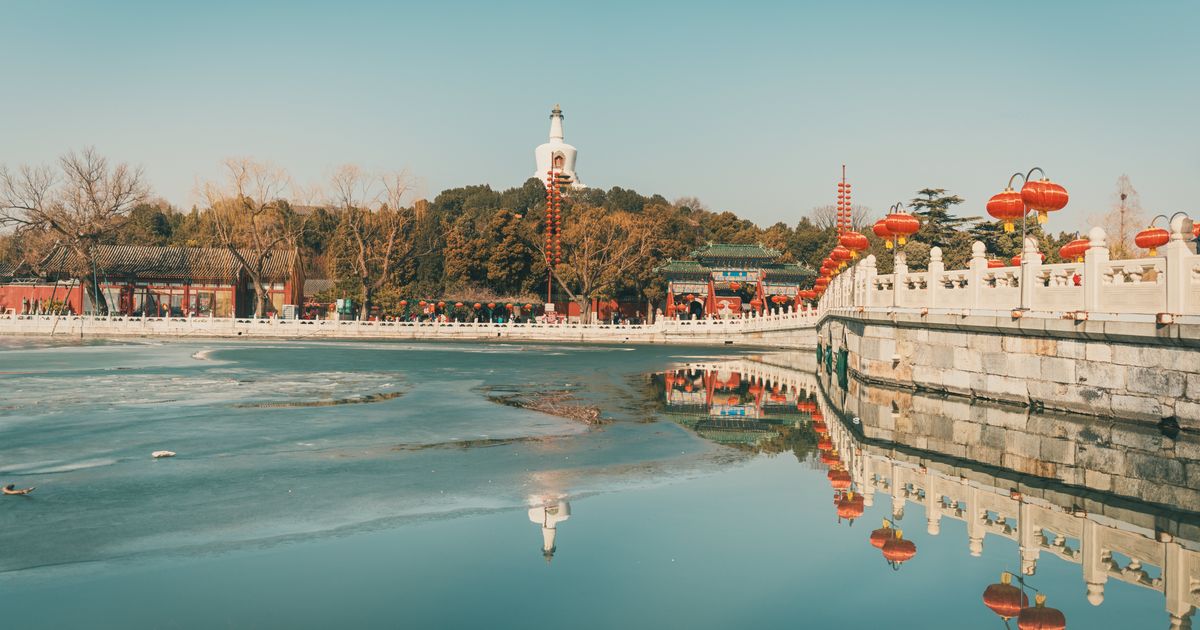
Winter view of the White Dagoba and red lanterns along the marble balustrade
Hours, tickets and the Monday catch
As of 2026 the park opens 6:00 to 21:00 from April through October (last entry 20:30) and 6:30 to 20:00 from November through March (last entry 19:30). The paid sights inside, such as Yong'an Temple on the islet, keep much shorter hours: 8:00 to 18:00 in peak season and 8:30 to 17:00 from November through March, with last entry half an hour before closing. Everything except the Round City also closes on Mondays outside public holidays. The park itself stays open every day.
Entry costs pocket change, with a slightly dearer combined ticket covering the inner sights; exact figures shift by season, so check when you book. Tickets sit on Beijing's official Visiting Beijing Parks platform (bjgyol.com.cn, also on WeChat), which accepts passport numbers from foreign visitors. On ordinary days you can usually buy at the gate as well, but around public holidays daily quotas can run out, so reserving a day or two ahead is the safer play.
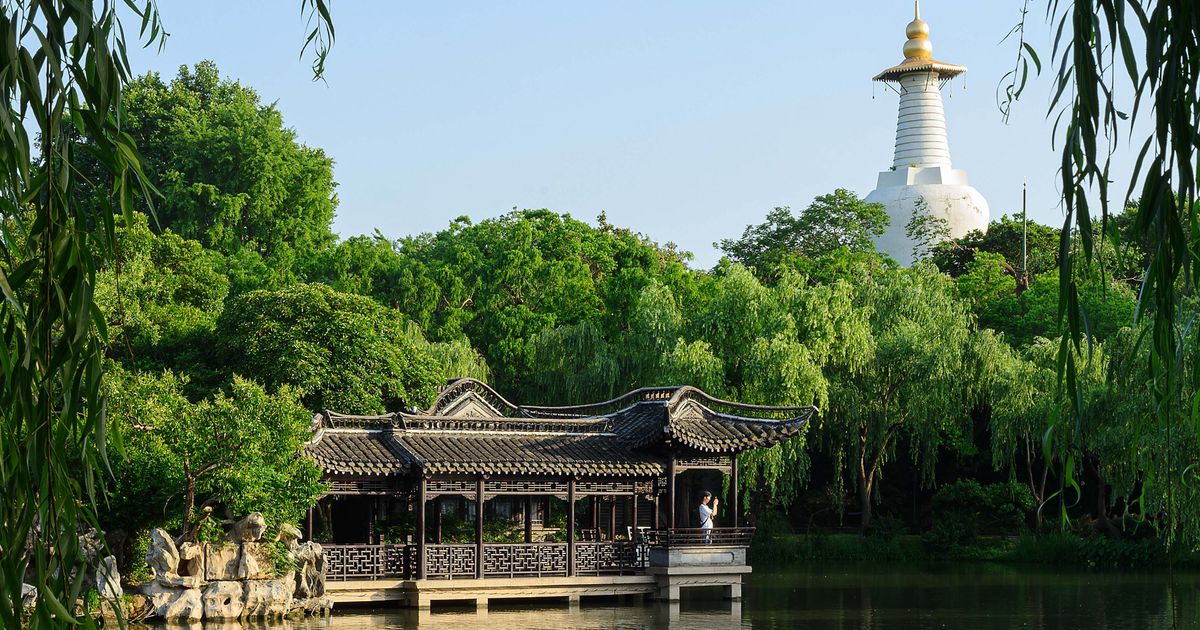
Lakeside pavilion framed by willows with the White Dagoba beyond
Getting there and building a route
Take subway Line 6 to Beihai North and leave via Exit B; the north gate is about five minutes on foot. Xisi on Line 4 and Zhangzizhonglu on Line 5 also leave you within walking distance. The south gate faces the stretch between Jingshan Park and the Forbidden City, so the natural plan is a half day along the central axis: palace first, Jingshan for the rooftop view, then Beihai to wind down by the water.
When to go
Late spring and early autumn bring the clearest skies for boating and photos. Summer covers the lake's northern reaches in lotus, at the cost of heat and weekend crowds. In winter the lake sometimes freezes and the park goes quiet, with red lanterns against snow if your timing is lucky. Whatever the season, the first two hours after opening are the best of the day: soft light on the dagoba, and the park still belonging to the locals.
Highlights
- The 36-metre White Dagoba (1651), a Tibetan-style stupa crowning Jade Islet
- The glazed Nine-Dragon Wall from 1756, the only double-sided one of China's three
- Boating on the broad imperial lake with summer lotus blooms
- The graceful Five-Dragon Pavilions stretched along the northern shore
- China's oldest and best-preserved imperial garden, dating to 938 CE
Travel Tips
Best photo spot
Shoot the White Dagoba from the eastern lakeshore or from a rented boat for the classic reflection across the water; early morning light is softest.
Mind the Mondays
The paid inner sights (except the Round City) close on Mondays outside public holidays. The park itself opens daily, so a Monday visit still works for the lake and causeways.
Book ahead on holidays
Entry is cheap, but daily quotas on the official Visiting Beijing Parks platform can sell out around public holidays; reserving a day ahead with your passport is the safer play.
Combine nearby sights
Beihai sits right next to Jingshan Park and the Forbidden City, so plan a half-day along the central axis rather than a single stop.