Beijing
Mutianyu Great Wall
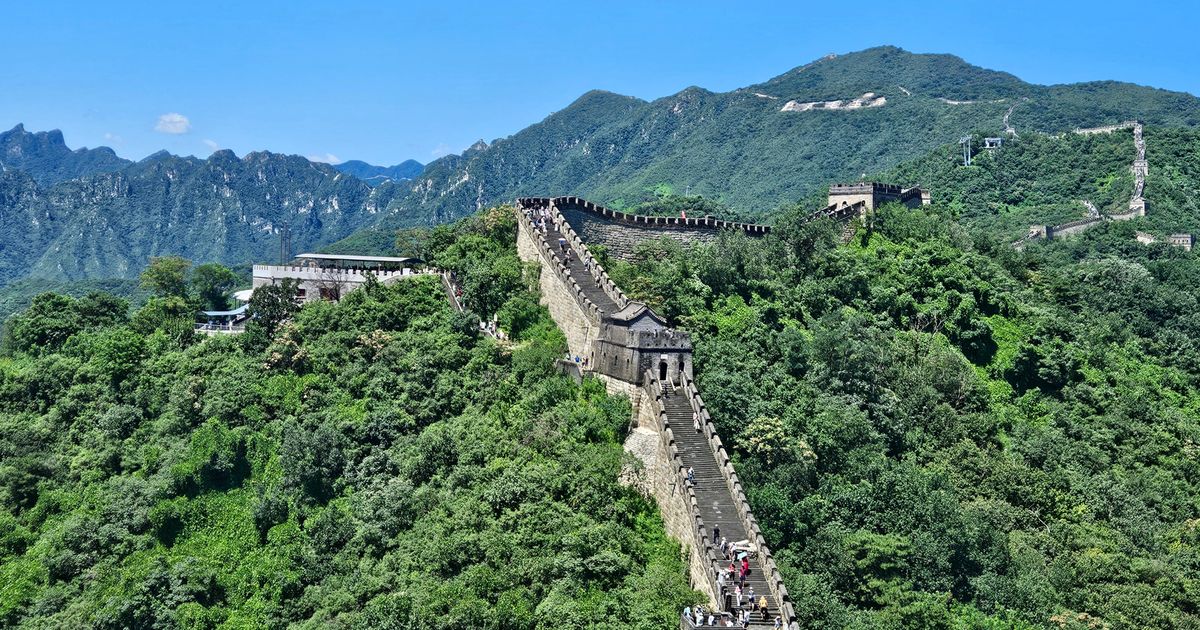
Every first Beijing trip runs into the same decision: which stretch of the Great Wall to see. For most travellers the answer is Mutianyu (Mutianyu Great Wall). It is the best-restored section within easy reach of the city, it draws far fewer tour groups than Badaling, and a cable car, a chairlift, and a toboggan run make it workable for almost any fitness level. The wall here rides forested ridges in Huairou District, about 70 km northeast of the centre, first built in the 6th century and substantially rebuilt in 1569 under the Ming as a shield for the capital.
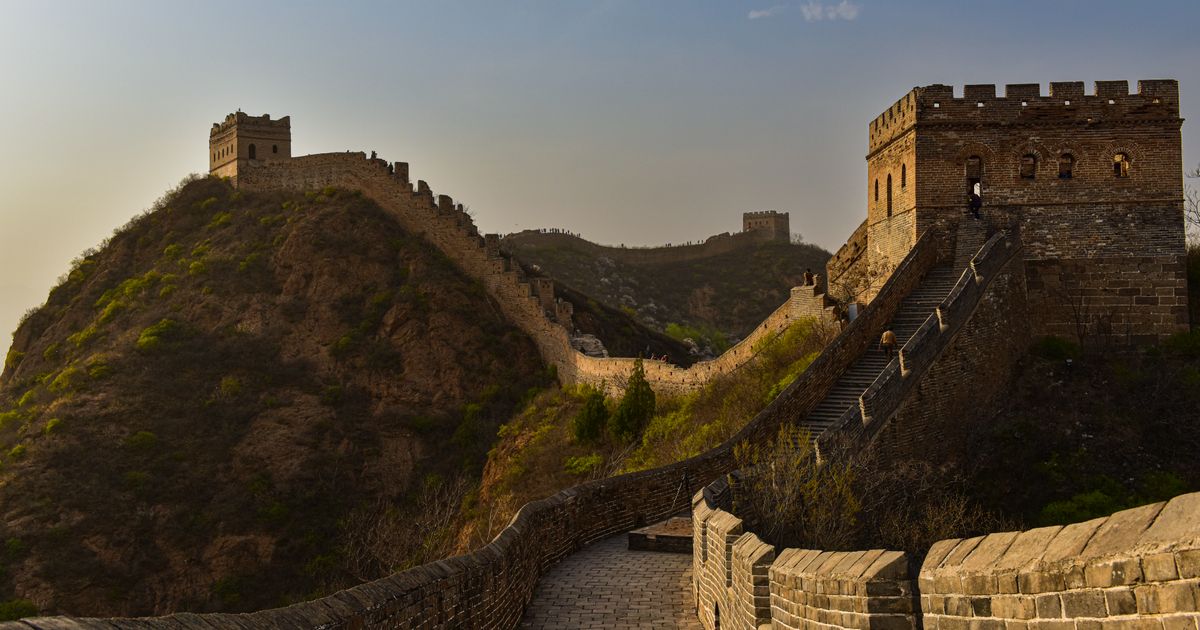
Aerial view of the Mutianyu Great Wall winding through green mountains
On the wall
Mutianyu's open section runs roughly 5.4 km and links 22 watchtowers, one of the densest concentrations anywhere on the Wall, with several stretches crenellated on both sides, a defensive design few other sections kept. The setting does half the work: dense forest turns emerald in summer and red-and-gold in autumn. Walk toward Watchtower 20, the highest point on the restored stretch, for the sweeping panoramas, or push east toward the partly wild towers beyond Tower 23, where the masonry gets rougher and the crowds thin to nothing.
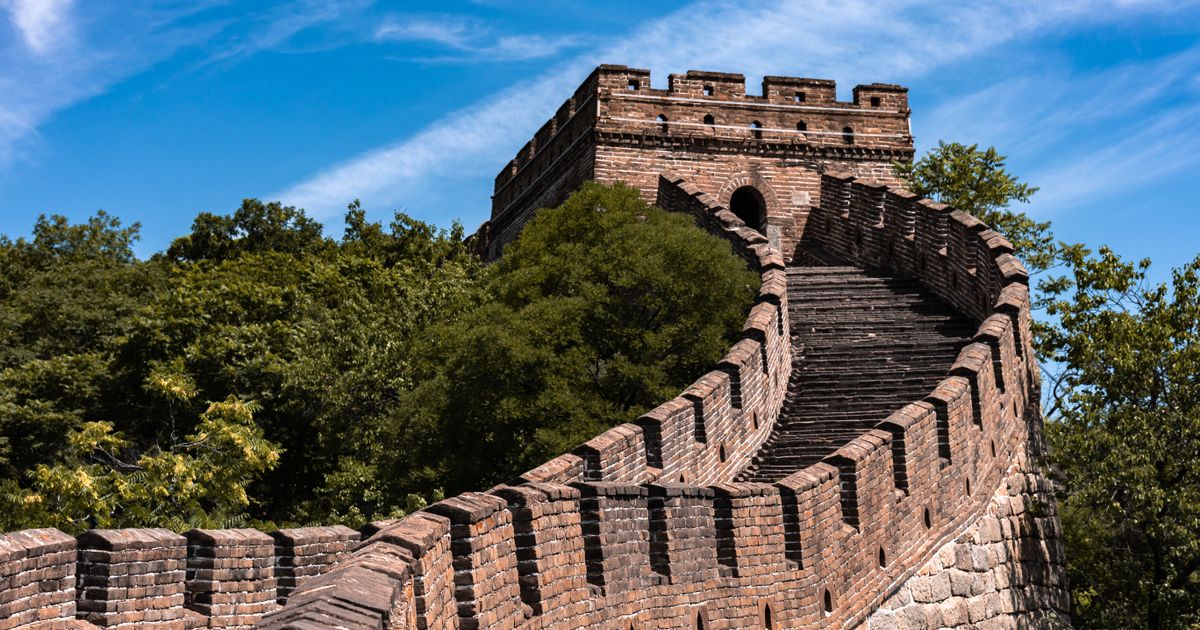
Stone watchtower and battlements of the Mutianyu Great Wall under a blue sky
Cable car, chairlift, or toboggan
Three ways up and down, and the choice shapes your day. The cable car (enclosed gondola) rises to the Tower 14 area and suits anyone avoiding stairs. The chairlift (open seats) reaches Tower 6 and pairs with the section's signature exit: a 1,580 m toboggan slide from the wall back to the valley, which is exactly as fun as it sounds. The classic route is chairlift up to Tower 6, walk the restored ridge toward Tower 20, then toboggan down. All three are ticketed separately from admission, and combo fares reward deciding your route before the ticket window. Rides pause in high winds or storms.
Tickets and hours
Admission to the scenic area is a modest fee, with discounts for children and seniors, and the shuttle bus between the parking area and the cable-car base costs a small amount extra; treat it as part of the ticket, because the walk it replaces is long and steep. The rides are each priced separately, so a family taking cable car and toboggan should expect the transport to cost more than the entry itself. Current prices are on the official site and at the ticket hall; booking online saves queueing in peak season. The scenic area opens year-round: roughly 7:30 to 18:00 from mid-March to mid-November and 8:00 to 17:30 in winter, with last entry about an hour before closing and ride hours slightly shorter. In summer 2026 the site is also running evening openings with illuminated watchtowers (25 June to 31 August); details current as of July 2026.
Getting there from Beijing
Count on about 1.5 hours each way. The lowest-effort option is a day tour with hotel-area pickup that bundles transport, entry, and usually the cable car; platforms such as Klook run several daily from Beijing. A direct tourist shuttle also leaves from the Dongzhimen transport hub, mainly in the main season. By public transport, take Bus 916 Express from Dongzhimen to Huairou, then transfer to a local H-line bus (H7, H23, H24, H35, or H36) or a short taxi to the scenic area; it is the cheapest way and the slowest. A ride-hail or chartered car splits the difference and lets you leave at dawn, which is the single best crowd tactic.
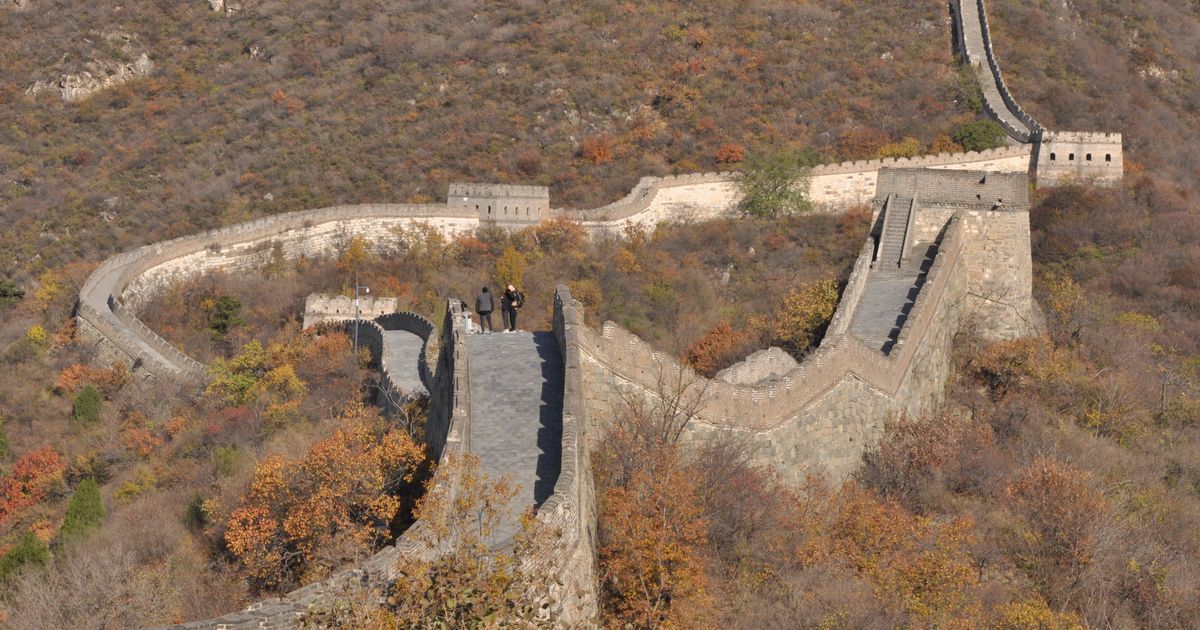
Autumn foliage along the Mutianyu Great Wall with visitors on the ramparts
When to go
Spring (April-May) and autumn (September-October) bring comfortable temperatures and clear skies, and late October sets the mountains on fire with foliage. Summer is lush but hot and sometimes hazy; winter is cold, quiet, and occasionally dusted with snow on the battlements, which photographs like nothing else. Give the early-October Golden Week a wide berth, and on any date aim to be on the wall before 10:00, ahead of the tour buses and the afternoon haze.
Wear proper shoes (the steps are uneven and steep in places), carry water and sun protection, and bring a light jacket: the ridge runs cooler and windier than the city below.
Highlights
- 22 closely spaced Ming-dynasty watchtowers along a forested ridge
- Best-restored, least-crowded major Great Wall section near Beijing
- Cable car, chairlift, and a 1,580 m toboggan slide down the Wall
- Sweeping autumn foliage and panoramic views from Watchtower 20
- Rare double-sided crenellations and well-preserved Ming battlements
Travel Tips
Beat the crowds
Arrive before 10:00 on a weekday and avoid early-October Golden Week, when visitor numbers peak sharply.
Best route up and down
Take the chairlift up to Tower 6, walk the restored section toward Tower 20, then ride the toboggan down for a fast, fun descent.
Dress for the ridge
Wear sturdy shoes for uneven, steep steps and bring a light jacket: it is cooler and windier on the Wall than in the city.