Guilin
Longji Rice Terraces
Longsheng County, roughly a two-hour drive northwest of Guilin, holds one of southern China's most striking landscapes: the Longji (Dragon's Backbone) Rice Terraces. Zhuang and Yao farmers have shaped these ridges for more than 700 years, stacking thousands of narrow paddies from the valley floor up past 1,000 metres. The name comes from the way the curving, terrace-ribbed ridgelines resemble the scales along a sleeping dragon's back.
This is not one viewpoint but a scenic area covering several villages. The two best-known sections are Ping'an Terraces, farmed by the Zhuang, and the higher, more dramatic Jinkeng (Dazhai) Terraces, farmed by the Red Yao. Each has its own ridgeline lookouts, timber stilt houses and trails linking village to village across the slopes.
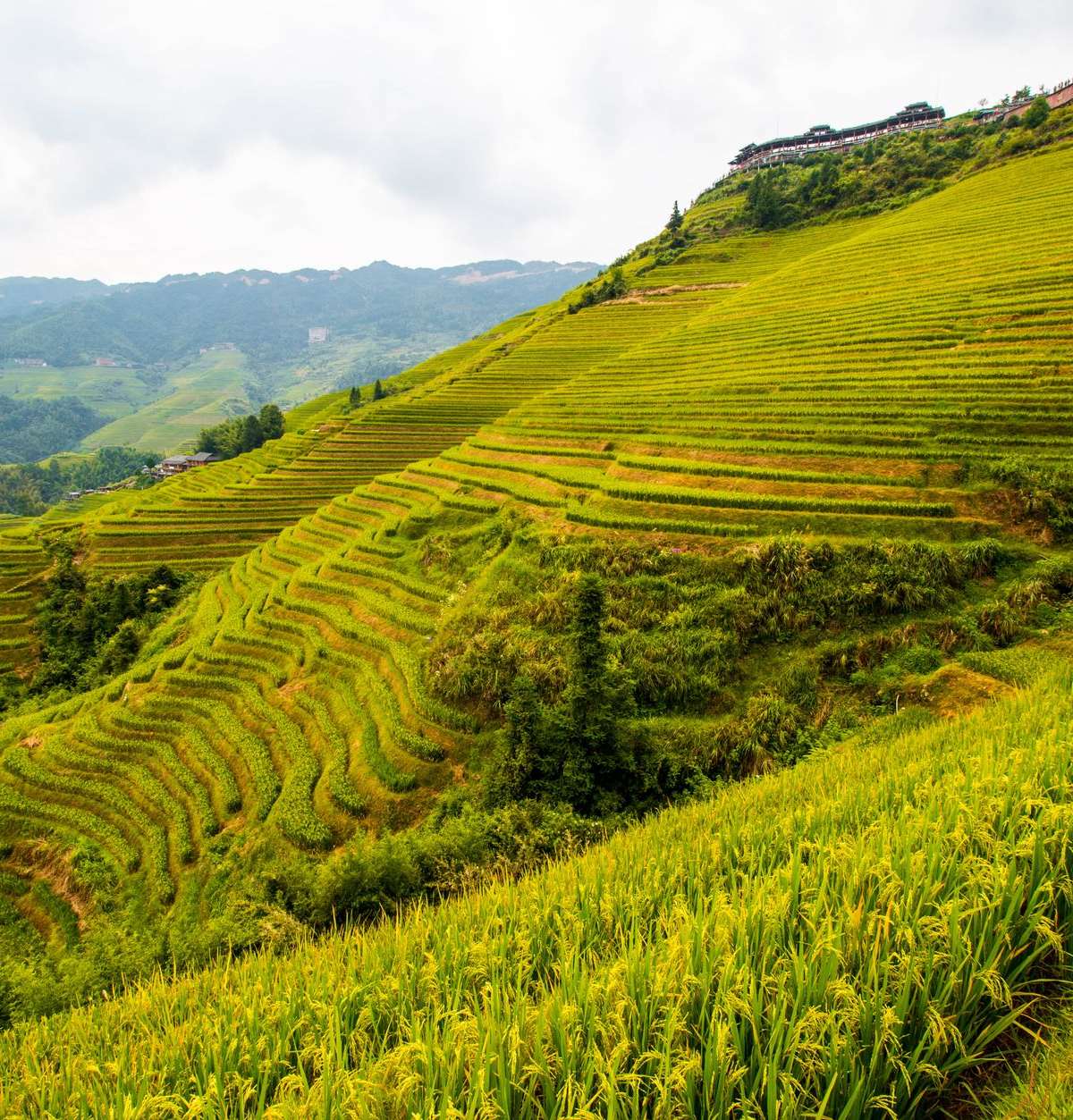
Green Longji rice terraces above Guilin in Guangxi
What to see
In Ping'an, the classic lookouts are known as "Nine Dragons and Five Tigers" and "Seven Stars Around the Moon." At Dazhai, "Golden Buddha Peak," "West Hill Music" and the "Thousand-Layer Terraces" viewpoint reward the climb, or the cable car, with sweeping curved amphitheatres of paddy. Beyond the fields, the Red Yao village of Huangluo is known for its women's exceptionally long hair, and wooden Zhuang and Yao houses, water buffalo and stone footpaths give the whole area a lived-in, unhurried feel.
Hours and tickets
The scenic area itself has no gate that closes, so sunrise and sunset shoots are possible if you stay in a village guesthouse overnight. Ticket booths generally operate from around 08:00–08:30 to somewhere between 17:30 and 18:00; the Dazhai cable car up to Golden Buddha Peak runs on broadly similar daytime hours and is charged separately from park admission.
A single entrance ticket covers Ping'an, Jinkeng/Dazhai and Huangluo Yao Village. It is meant to be usable across more than a single day if you want to split the sections over a two-day stay, though the exact validity window varies by source, so confirm it when you buy. Pricing is typically a little higher in the April–November peak season than in the December–March off-season; children under about 1.2 m are generally admitted free. Trip.com and Klook both list current combined tickets and cable car add-ons if you would rather book ahead than queue at the gate.
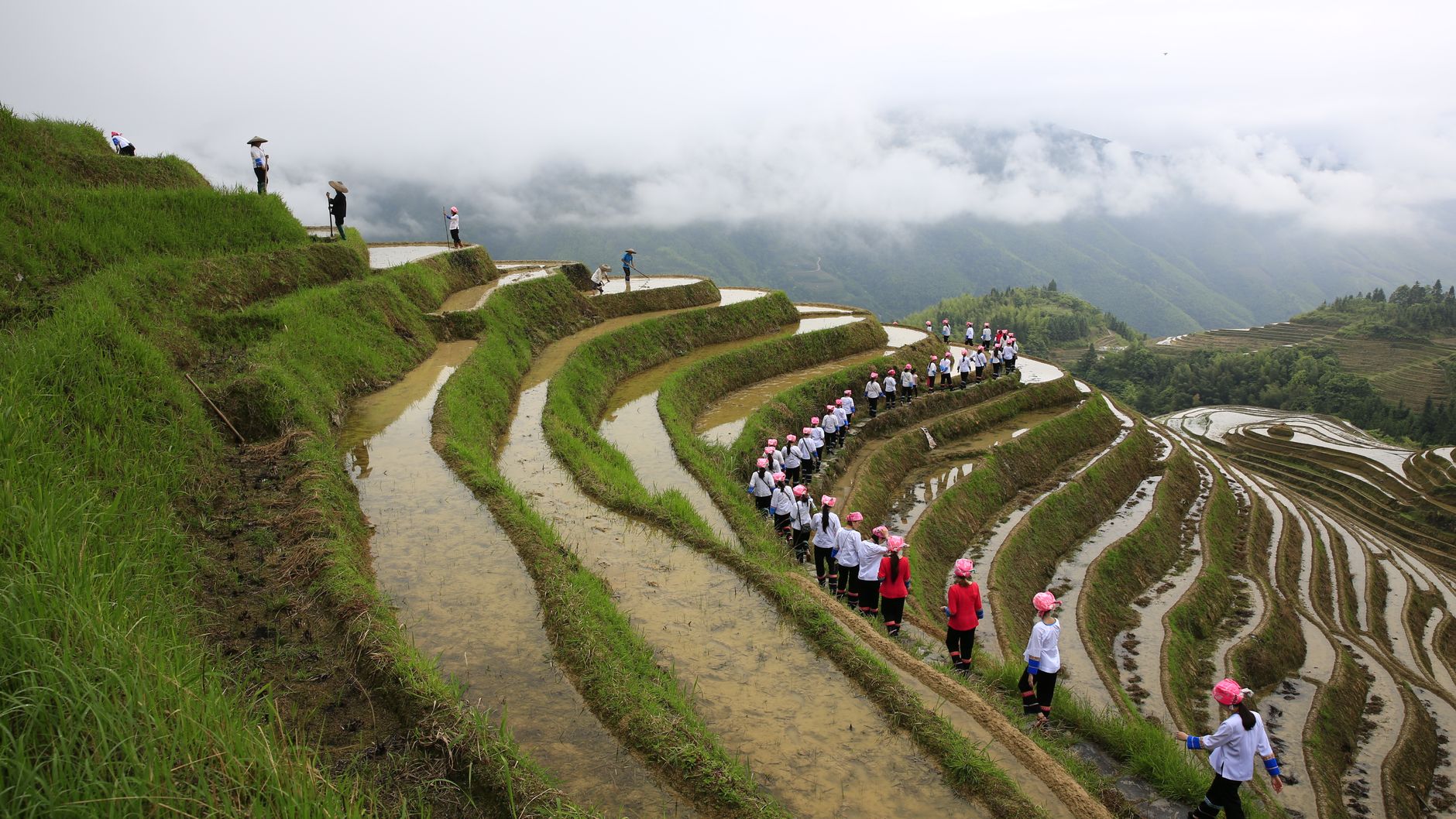
Red Yao women walking the curved terraces at Longji
Getting there
Direct buses to the terraces run from Guilin's Qintan bus station through the day, roughly every 20 minutes at peak times, taking around an hour and a half to Ping'an or Dazhai. An alternative route goes via Longsheng town with a local shuttle for the final stretch, which takes somewhat longer. Booking a car or a small-group day tour is the easiest way to reach Dazhai directly; staying overnight lets you catch the terraces at dawn without the day-trip crowds.
Best season
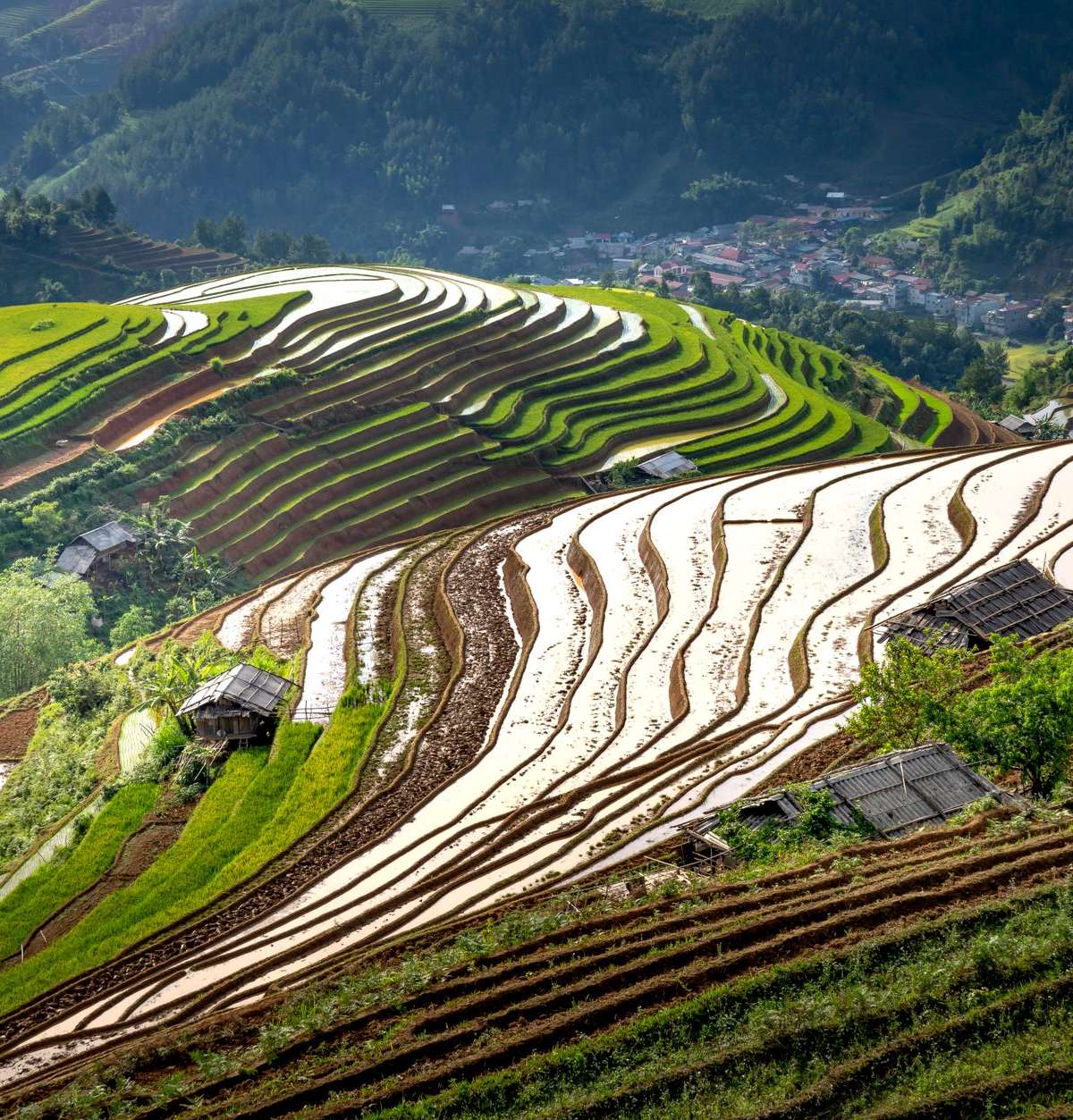
The terraces look different through the year. Water fills the paddies and mirrors the sky from mid-spring into early summer, before the rice grows in. The fields turn lush green over summer, then golden at harvest in mid-to-late autumn. Winter occasionally dusts the ridges with snow. Whichever season, the contrast between weathered village rooftops and the curved fields holds up in photos.
Frequently asked questions (FAQ)
How far is Longji from Guilin? About a two-hour direct bus or drive; longer if you go via Longsheng town with a transfer.
Is one ticket enough for Ping'an and Dazhai? Yes, a single ticket covers both sections plus Huangluo Yao Village, and is meant to be used across more than one day if you split your visit.
Do I need the cable car? No, but it saves a steep climb up to Golden Buddha Peak at Dazhai; it is ticketed separately from park admission.
Highlights
- Over 700 years of Zhuang and Yao terraced farming on dragon-like ridges
- Ping'an's 'Nine Dragons and Five Tigers' and 'Seven Stars Around the Moon' viewpoints
- Grander Jinkeng/Dazhai terraces with Golden Buddha Peak and a cable car
- Huangluo Red Yao village, famous for the women's exceptionally long hair
- Flooded mirror-like paddies in late spring and golden harvest in autumn
Travel Tips
Stay overnight for sunrise
Village guesthouses let you shoot dawn and dusk light without the day-tripper crowds.
One ticket covers all three sections
Your entrance pass covers Ping'an, Dazhai and Huangluo and is meant for multi-day use, so you can split the sections over two days; confirm the validity window when you buy.
Save your legs
Paths are steep and stepped; take the Dazhai cable car up and walk down, and wear proper shoes.