China
Guilin
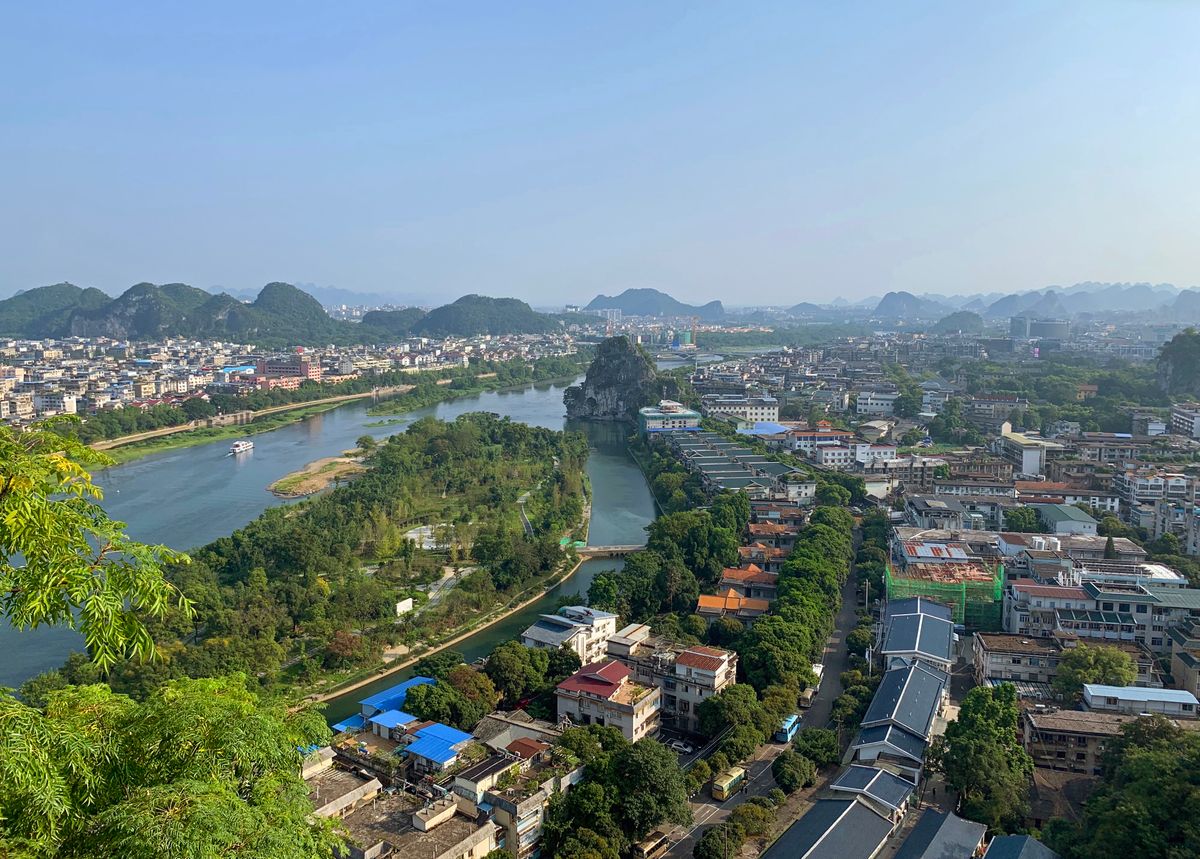
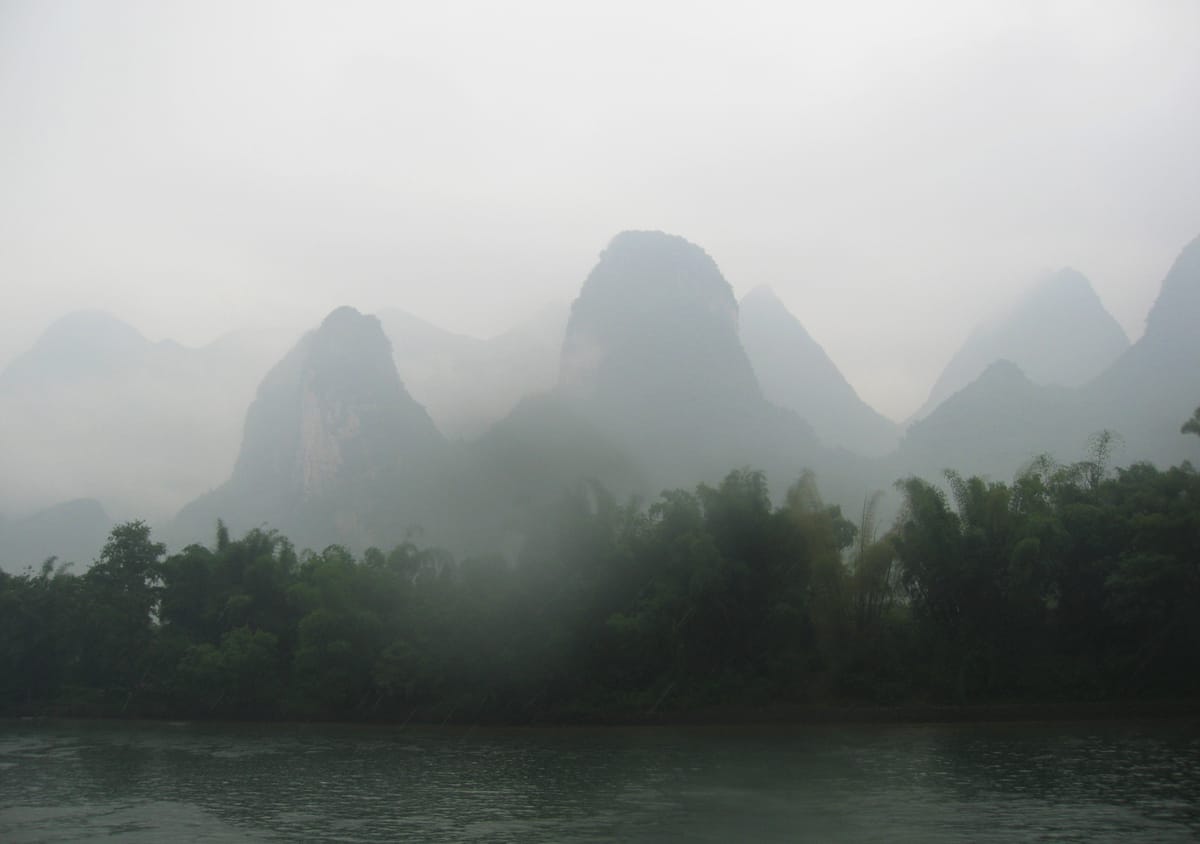
Guilin, in the far northeast corner of Guangxi, is really two places to plan around: the city itself, ringed by limestone karst hills beside the Li River, and Yangshuo, a smaller river town about 65 km south that most visitors end up preferring once they see it. Between the two runs the most photographed stretch of river in China, the same jagged peaks and green water printed on the back of the 20-yuan note. Our 3-day Guilin itinerary lays out one way to fit both halves into a short trip.
What to See
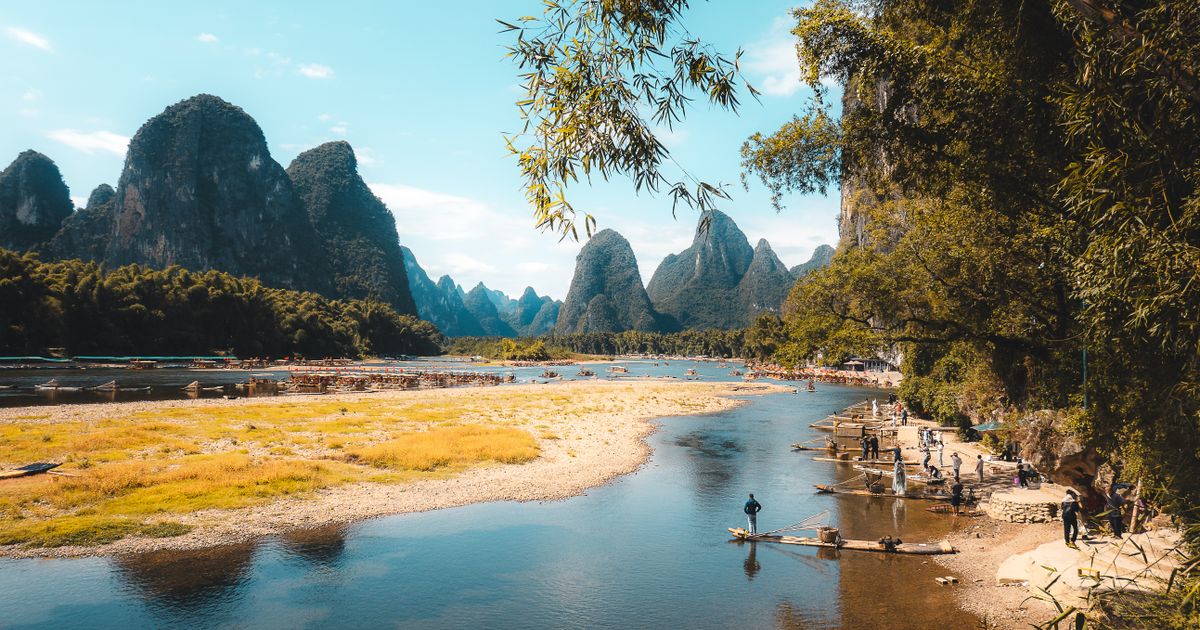
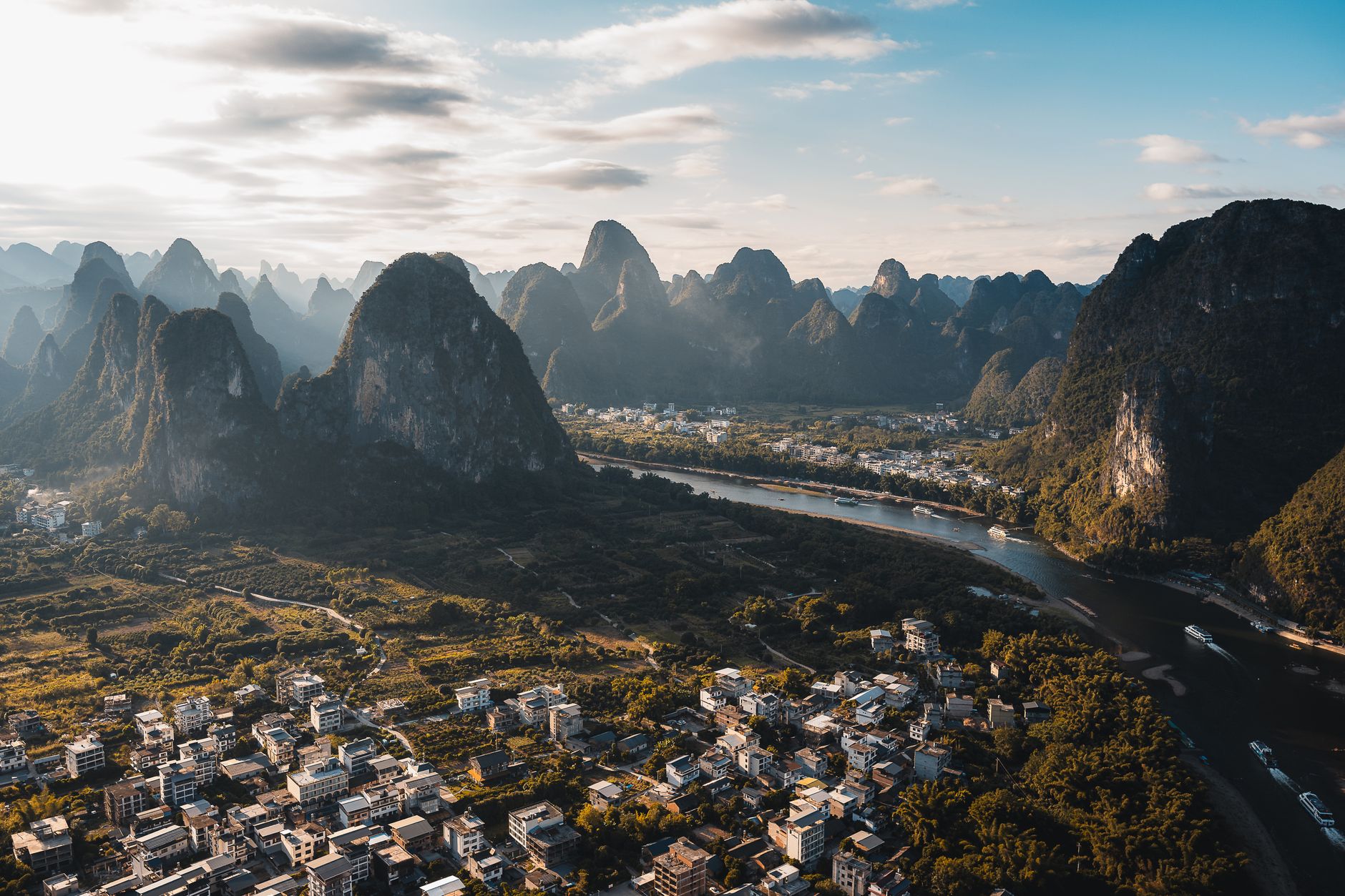
The classic way to take in the karst scenery is the Li River cruise from Guilin to Yangshuo, a four- to five-hour boat trip that runs the most scenic stretch of the river past the fishing village of Xingping. About 20 minutes' walk beyond Xingping's old town is the actual bend in the river behind the 20-yuan note, a shoal locals call Yellow Cloth Shoal; cruise boats slow down for it, and it's also reachable on its own from Yangshuo if you'd rather skip the full boat trip.
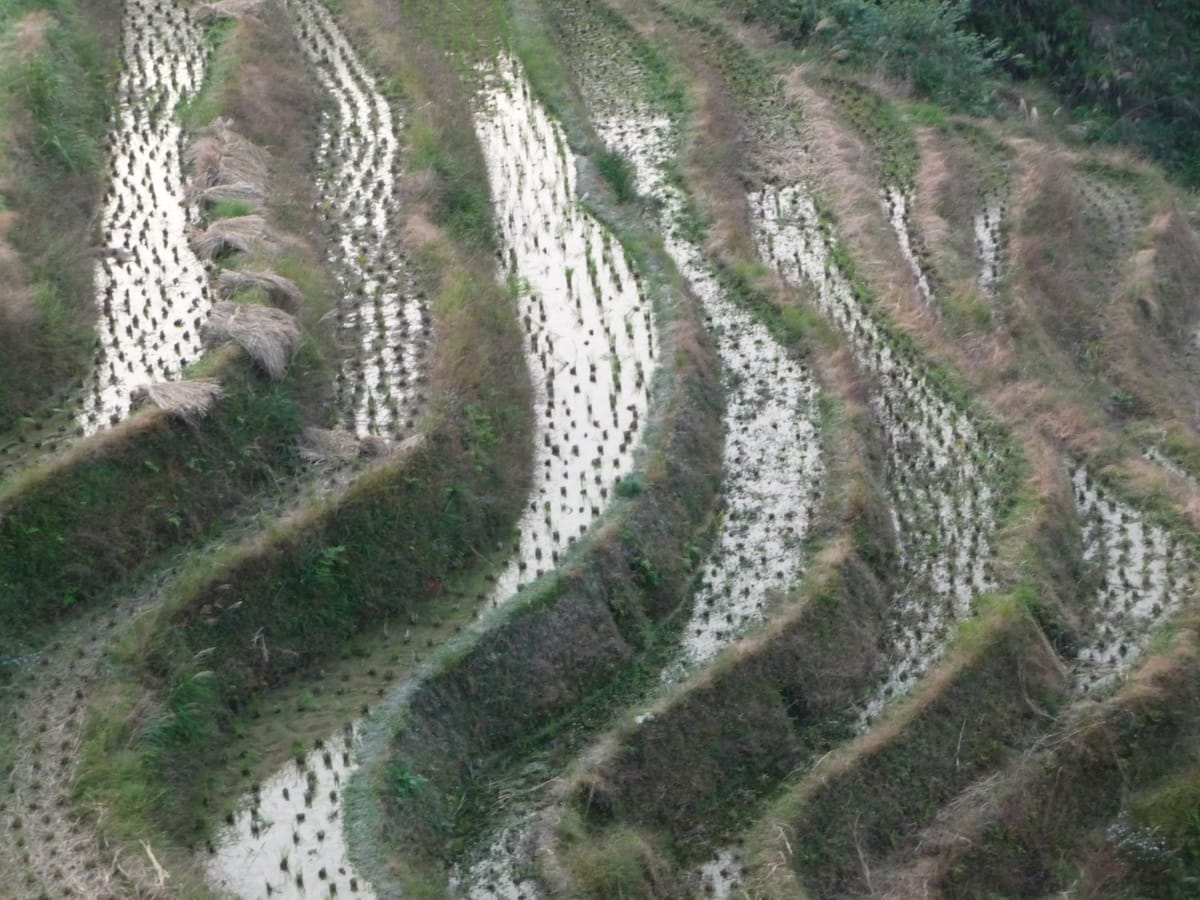
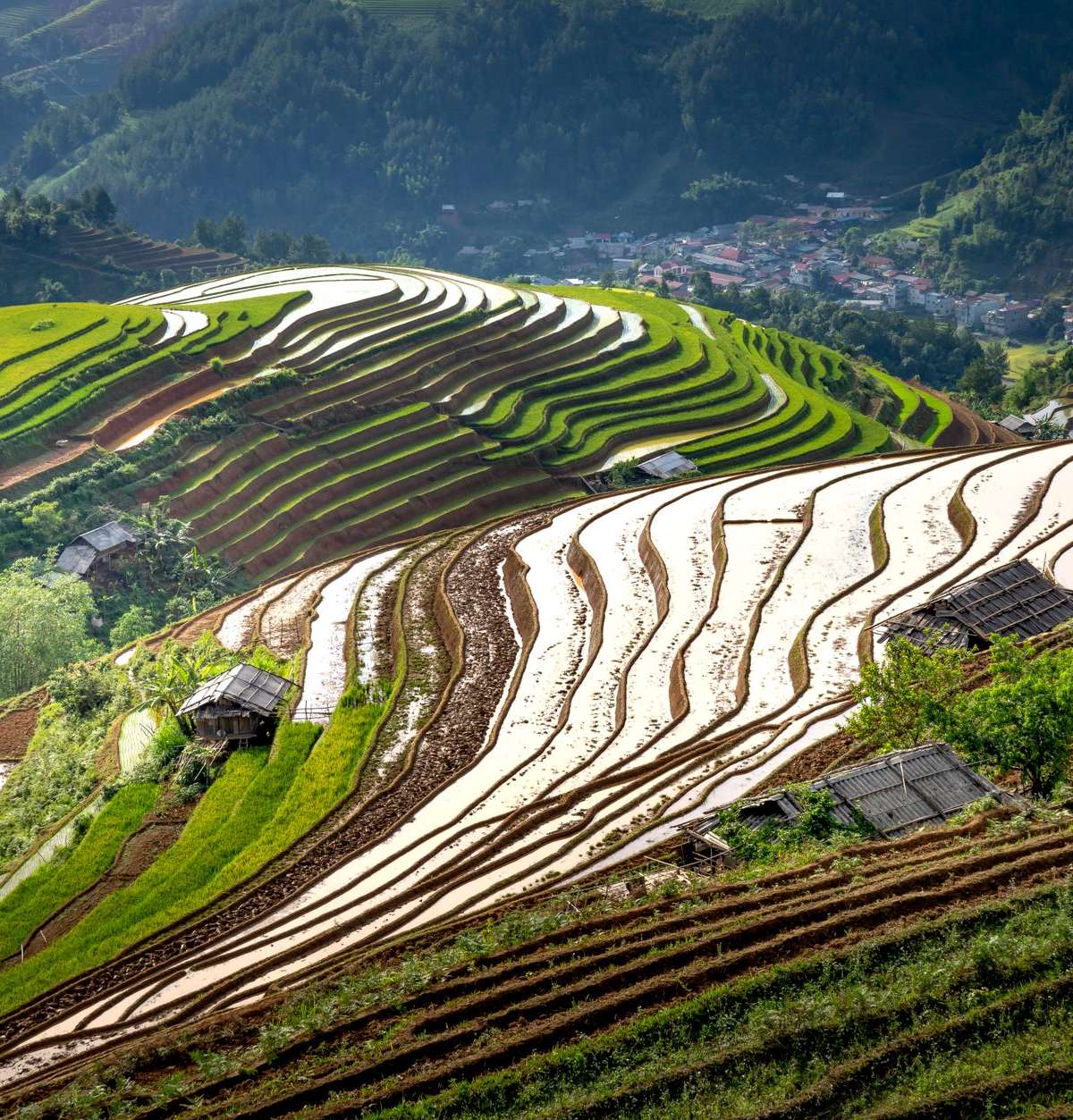
Longji rice terraces carved into the mountainsides near Longsheng, north of Guilin
Away from the river, the Longji (Dragon's Backbone) Rice Terraces near Longsheng wrap entire mountainsides in stacked paddies: flooded and mirror-like from late April into June, then gold at harvest from late September into early October. In Guilin city, Elephant Trunk Hill, a karst arch shaped like an elephant dipping its trunk into the water, is the most photographed spot in town, and the floodlit Reed Flute Cave is worth the detour for its illuminated stalactites. Once you're in Yangshuo, West Street is the town's cafe-and-bar strip, and the calmer Yulong River makes a shorter, easier bamboo-raft outing than the main cruise.
Guilin or Yangshuo: Where to Stay
Most travelers land in Guilin, since that's where the airport and the main train station are, then move straight on to Yangshuo and base there instead: it's smaller, walkable, wrapped in the same karst scenery, and closer to the countryside cycling routes and Longji. Staying a night in Guilin city itself still makes sense if you want Elephant Trunk Hill or Reed Flute Cave without a round trip, or if your flight or train times line up better that way. See our where to stay in China guide for booking basics; whichever you choose, book ahead around the October holiday week and Chinese New Year, when both towns fill up fast.
Book hotels in Guilin or Yangshuo
Compare karst-view rooms in Yangshuo or stays near Guilin North station on Trip.com
Some links are affiliate links; we may earn a commission at no extra cost to you.
Best Time to Visit
The ideal window is April through October, with the two sweet spots being spring (April to May) and autumn (September to November). Spring brings the soft, misty light Guilin is known for, though May and June are also the rainiest months, when the Li River can run high and cloudy. Autumn is drier and clearer, with comfortable temperatures, osmanthus blossom in the air, and the Longji terraces turning gold from late September into early October. Winter (December to February) is cool, quiet and far less crowded, though low water sometimes shortens or pauses the full Guilin-to-Yangshuo cruise, so check conditions before booking a winter departure.
Getting There & Around
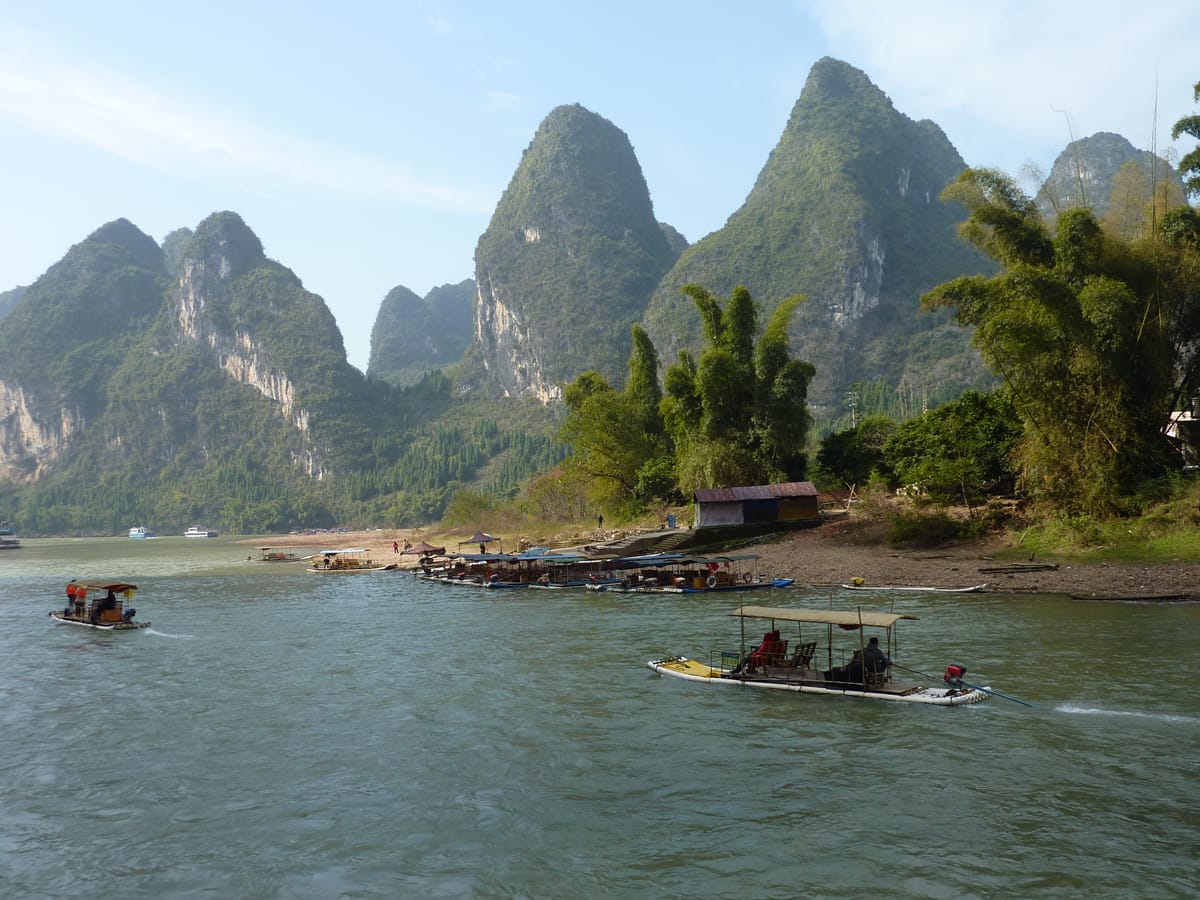
Bamboo rafts and a cruise boat on the Li River amid karst peaks near Yangshuo
Most travelers arrive by high-speed train into Guilin North (Guilinbei) station, with fast links to Nanning and Guangzhou in around 2 to 2.5 hours and direct trains from Shanghai, Shenzhen and Kunming; Guiyang is further, typically 3.5 hours or more even on the fastest trains, so treat it as its own trip rather than a quick add-on. Guilin Liangjiang International Airport sits about 30 km southwest of downtown, linked by a regular airport shuttle bus. It's one of the ports where eligible passport holders can use China's 240-hour visa-free transit, though direct international flights here mostly connect within Asia (Hong Kong, Bangkok, Kuala Lumpur, Seoul, Singapore, Taipei), so travelers from further afield usually connect through a bigger gateway city first.
Between Guilin and Yangshuo, the river cruise runs one direction only, Guilin to Yangshuo, so plan your return a different way: a direct bus from Guilin's South or Qintan bus stations covers the same 65 km by road in about an hour and a half and runs every 20–30 minutes through the day. Inside both towns, taxis and Didi cover longer hops, but Yangshuo's center is easily walkable, and renting a bike or electric scooter is the standard way to reach the rice fields and villages around town.
Practical Tips
Base yourself in Yangshuo for at least a night if your schedule allows it. Pack layers and rain gear for spring's mist and showers, and a warm layer for mornings on the river in winter. Treat the Longji terraces as a separate full day, not a stop on the way to somewhere else, since the drive alone runs 2.5–3 hours each way.
Highlights
- The Li River cruise from Guilin to Yangshuo, past Yellow Cloth Shoal, the view on the back of China's 20-yuan note
- Longji (Dragon's Backbone) Rice Terraces near Longsheng, flooded in late spring and gold at autumn harvest
- Elephant Trunk Hill, the karst arch that is Guilin's city emblem
- Reed Flute Cave and its floodlit stalactite chambers
- Yangshuo's West Street and the slower pace of riverside town life
- Bamboo rafting on the calm Yulong River
- Cycling the karst countryside around Yangshuo and Moon Hill
Travel Tips
The cruise only runs one way
Boats go from Guilin to Yangshuo, not back; plan your return by bus (about 1.5 hours) or car, and check water levels before a deep-winter cruise, since low water can shorten or pause the full route.
Base in Yangshuo, not just Guilin
Most travelers end up preferring Yangshuo as a base: it's smaller, walkable, and closer to the rice terraces and cycling routes, though a night in Guilin city works fine if it suits your flight or train times.
Arrive by high-speed rail
Guilin North station reaches Nanning and Guangzhou in around 2 to 2.5 hours, with direct trains from Shanghai, Shenzhen and Kunming; Guiyang is further, usually 3.5 hours or more.
Check your visa-free transit eligibility
Guilin's airport is one of the ports for China's 240-hour visa-free transit, but most direct flights here connect only within Asia, so many travelers arrive via a bigger gateway city first.
Give Longji a full day
The rice terraces are 2.5-3 hours north by bus; visit late April to June for flooded, mirror-like paddies, or late September to early October for the gold harvest.