Foshan Culture 2026: Understand Lion Dance and Local Traditions
Start with the lion dance
For a first look at Foshan culture, begin with Guangdong lion dance, also known as southern lion dance. It is a public performance tradition that brings martial arts, dance, and music together. Because it is commonly performed for festivals and celebratory occasions, it offers a practical way to think about local culture as something performed and shared, not only displayed behind glass.
Guangdong lion dance was included in China’s first batch of national intangible cultural heritage representative projects in 2006. Foshan is the declared locality for the project, and the Foshan Nanhai District Museum is listed as its protecting institution.
That heritage status gives useful context, but it does not need to turn your visit into a history lesson. Start by watching how separate skills become one character. The lion is not simply a costume. Its expression comes from controlled movement, rhythm, and the relationship between the performers and the accompanying music.
What makes a lion-dance performance distinctive?
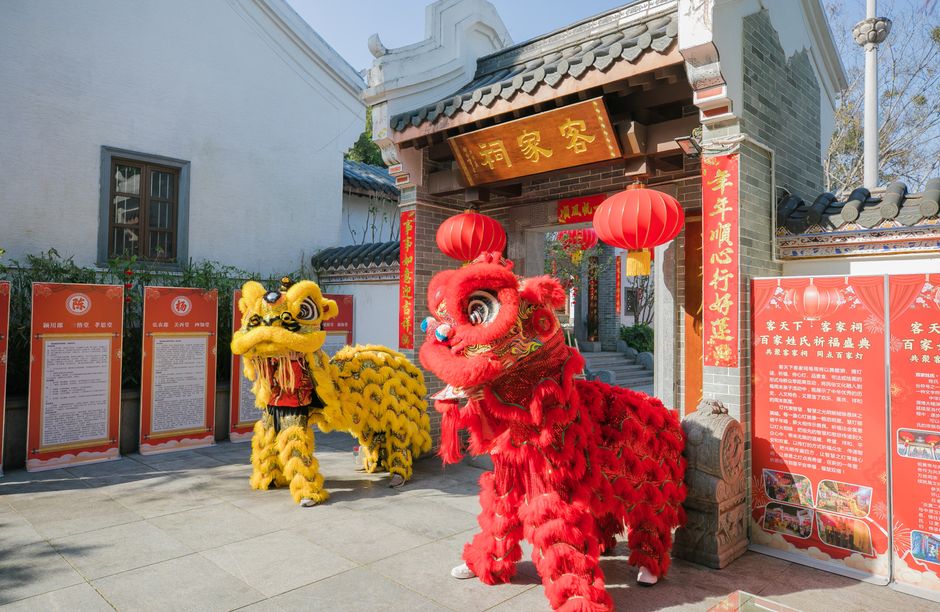
Lion dance performers in colorful costumes at a vibrant Chinese festival outdoors.
The most useful way to watch is to notice the combination of movement, dance, and music. Each part has a role, and together they give the lion its presence. You do not need specialist knowledge to follow this. Look for changes in pace, posture, direction, and response to rhythm.
Focus on three connected elements:
- Martial-arts-based movement and physical control
- Dance that gives the lion character and expression
- Music that supports the rhythm and shape of the performance
The martial-arts connection matters because it helps explain why the movement can feel deliberate and athletic. The dance connection matters because the performance is more than a display of physical technique. Music ties the action together, helping you notice shifts in energy and timing.
Rather than trying to identify every gesture, watch the performance as a conversation between these elements. A change in rhythm can alter the mood of the lion. A change in movement can make the character seem alert, playful, or forceful. This is general viewing guidance, not a fixed code: the value is in paying attention to how the elements work together.
How to watch without turning it into a checklist
A short, focused approach often makes the tradition easier to appreciate. Before the performance, remember that Guangdong lion dance is a southern-lion tradition associated with Foshan and with festivals and celebrations. During it, choose one thing to follow at a time.
You might begin with the physical work. Notice how movement is controlled and coordinated. Then listen for the music and see how it supports the action. Finally, step back and take in the lion as a character created through dance rather than as an object.
This approach avoids a common trap: reducing a living tradition to a list of visual details. The point is not to collect facts from a performance. It is to see how a public tradition can join physical practice, sound, celebration, and shared attention in one event.
Add the Foshan Ancestral Temple Museum
The Foshan Ancestral Temple Museum is in Chancheng District, Foshan, Guangdong. It is a national-level protected historic-cultural site. Visiting it alongside an introduction to lion dance provides two different ways to approach Foshan heritage: a protected historic-cultural place and a living performance tradition.
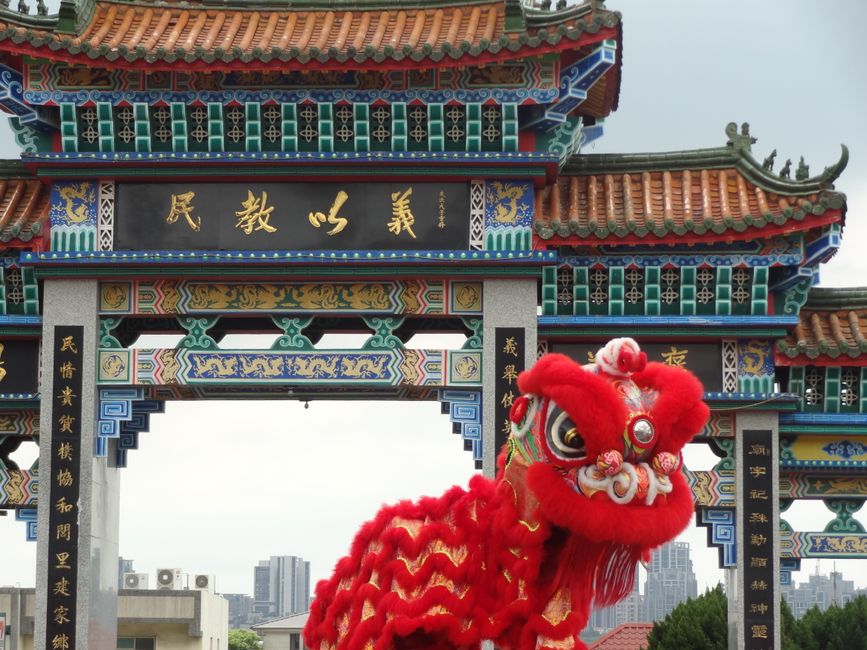
Vivid red dragon costume in front of a traditional Chinese temple gate during daytime.
The connection here is interpretive rather than logistical. The museum gives you a historic-cultural setting in the city, while lion dance highlights a tradition experienced through movement and sound. Together, they can make Foshan feel less like a single attraction and more like a place where heritage has different forms.
Do not assume that one visit explains all of Foshan. Instead, use the pairing to ask a better question: what changes when heritage is protected as a site, and what changes when it is carried through performance? The answer will depend on what you observe, but the comparison helps keep the visit grounded.
A simple cultural plan for Foshan
Keep the plan modest. Learn the basic role of Guangdong lion dance first, then use the Foshan Ancestral Temple Museum to reflect on the city’s historic-cultural setting.
- Read the basic context: Guangdong lion dance combines martial arts, dance, and music and is associated with festivals and celebrations.
- If you encounter a performance, watch the relationship between movement, rhythm, and character rather than trying to decode every detail.
- Visit or consider the Foshan Ancestral Temple Museum as a protected historic-cultural site in Chancheng District.
- Compare the two forms of heritage: one is encountered through performance, the other through a protected place.
- Leave room for observation. A cultural visit is more useful when it is not treated as a race through a checklist.
This plan deliberately does not promise a performance at a particular place or time. Schedules and visitor arrangements are not established by the supplied sources. The safer approach is to treat lion dance as the cultural lens for your visit and the Ancestral Temple Museum as a complementary historic-cultural reference point.
Why this pairing works for a first visit
Lion dance gives a direct introduction to a local tradition through action. The museum gives a different frame: a nationally protected historic-cultural site within Foshan. Neither needs to stand in for the whole city. Their value is that they show two ways culture can be encountered.
One is active, rhythmic, and connected with public celebration. The other is a protected place that can help situate Foshan’s historic-cultural setting. Seeing both ideas together makes it easier to move beyond a simple sightseeing list.
For travelers, this is also a useful reminder to distinguish between what is known and what is observed. The supplied evidence confirms the heritage status and declared locality of Guangdong lion dance, its combination of martial arts, dance, and music, its association with festivals and celebrations, and the location and protected status of the museum. Your own response to a performance or place will be personal, and that is part of the experience.
Key takeaway
Begin a first introduction to Foshan culture with Guangdong lion dance and the Foshan Ancestral Temple Museum. Lion dance is a living southern tradition that combines martial arts, dance, and music. The museum is a national-level protected historic-cultural site in Chancheng District. Together, they offer a clear starting point for understanding performance, celebration, and heritage protection in Foshan.
Foshan culture FAQ
What is Guangdong lion dance?
Guangdong lion dance is a southern-lion tradition that combines martial arts, dance, and music. It is commonly performed for festivals and celebratory occasions.
Why is lion dance important to Foshan culture?
Foshan is the declared locality for Guangdong lion dance in China’s national intangible cultural heritage project. The tradition offers a direct way to observe how movement, music, and celebration come together in public performance.
What should I watch for during a lion-dance performance?
Focus on the relationship between physical control, dance, and music. Notice how rhythm and movement help create the lion’s character. This is a simple viewing approach, not a requirement to identify every gesture.
Where is the Foshan Ancestral Temple Museum?
The Foshan Ancestral Temple Museum is in Chancheng District, Foshan, Guangdong. It is a national-level protected historic-cultural site.
Can I treat the museum and lion dance as one cultural itinerary?
They work well as a cultural pairing: lion dance introduces a living performance tradition, while the museum provides a protected historic-cultural setting. The supplied sources do not confirm performance schedules or on-site arrangements, so check current visitor information independently before making time-specific plans.
Sources
- Lion Dance (Guangdong Lion Dance) · China Intangible Cultural Heritage Digital Museum
- Foshan Ancestral Temple Museum · Foreign Affairs Office of the People’s Government of Guangdong Province