Mid-Autumn Festival 2026 in China: Dates, Mooncakes & Travel Tips
The Mid-Autumn Festival is the night China looks up. Families gather under the fullest moon of the year, share mooncakes, and light lanterns for one of the country's oldest and most loved holidays. If you are traveling in China in autumn 2026, you will feel it in the packed bakeries, the lantern displays in every park, and the trains booked solid days ahead.
In 2026, the Mid-Autumn Festival falls on Friday, September 25. Here is what the festival is, how it is celebrated, and what it means for your trip.
When is the Mid-Autumn Festival in 2026?
The festival lands on the 15th day of the 8th month in the Chinese lunar calendar, which in 2026 is Friday, September 25. It is a statutory public holiday, and the official break runs from September 25 to 27, giving most people a three-day weekend.
One thing to plan around: in 2026 the Mid-Autumn Festival sits about a week before the National Day Golden Week, which runs October 1 to 7. The two holidays do not merge this year, so you get two separate busy travel periods rather than one long one. If you want to avoid the heaviest crowds, the gap between them, roughly September 28 to 30, is a calmer window.
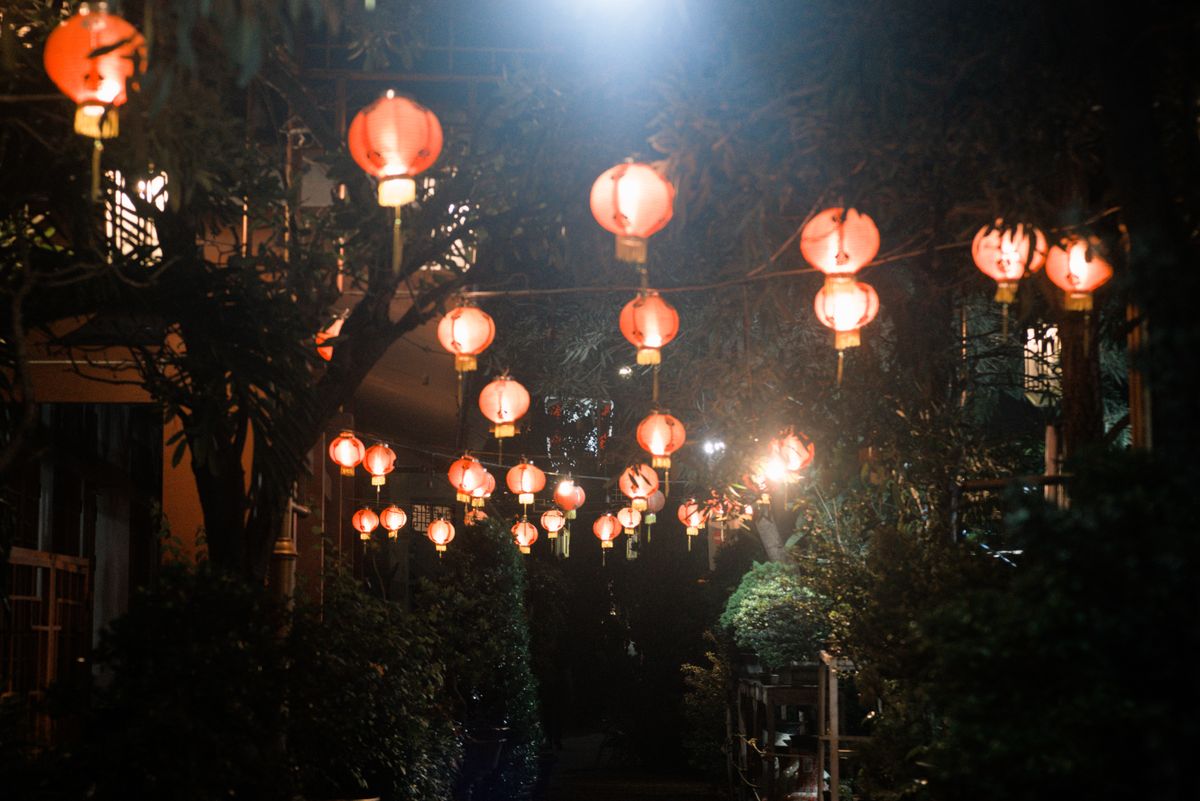
Red lanterns glowing on a festival evening
What the festival is about
Mid-Autumn is a harvest and reunion festival, tied to the full moon that marks the middle of autumn. The round moon stands for wholeness and family togetherness, which is why the holiday is sometimes called the Reunion Festival. People who live far from home try to return, and those who cannot look at the same moon and think of each other.
The best-known legend behind the night is the story of Chang'e, the moon goddess. In the tale, she drinks an elixir of immortality and floats up to live on the moon, separated from her husband, the archer Hou Yi. On Mid-Autumn night he lays out her favorite fruits and cakes as an offering, and people have gazed at the moon in her memory ever since. The story gives the festival its bittersweet mood of longing and love across distance.
Mooncakes, the taste of the holiday
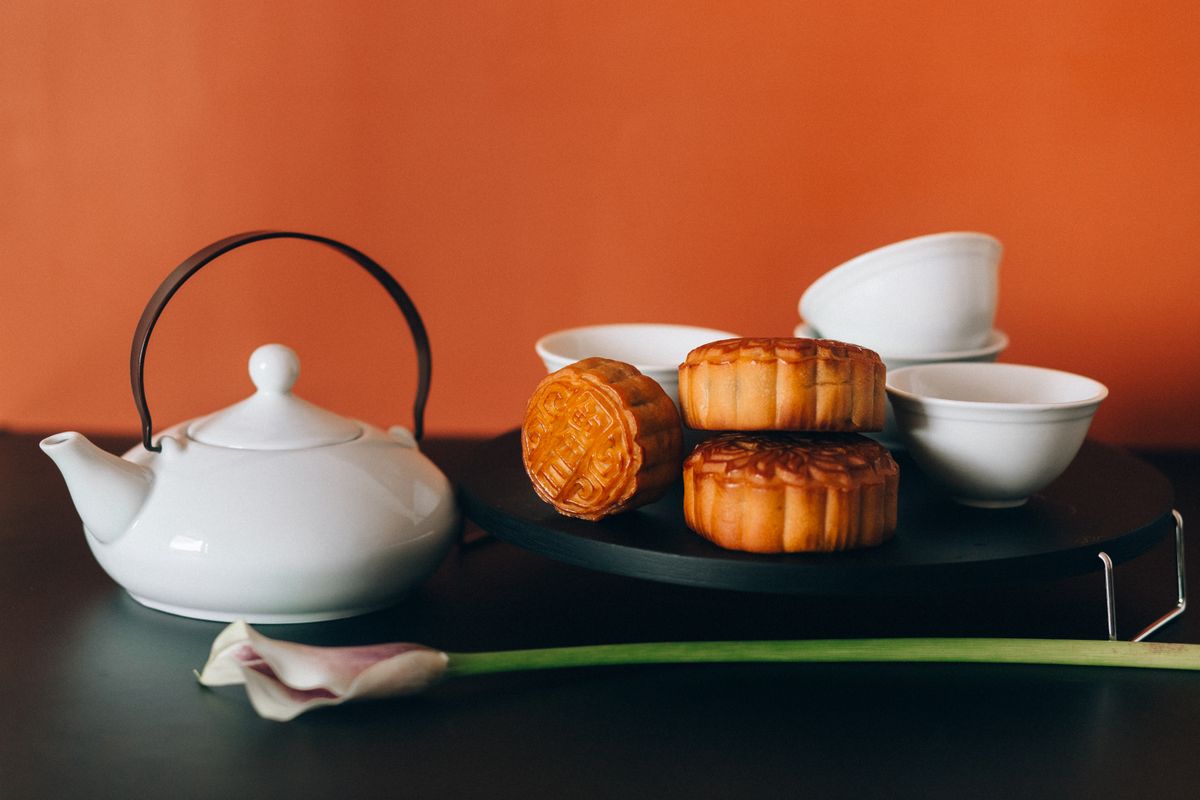
Mooncakes served with tea
No food is more tied to a Chinese holiday than the mooncake is to Mid-Autumn. These dense, palm-sized pastries have a thin printed crust wrapped around a rich filling, most traditionally lotus seed paste with a salted duck egg yolk in the center that stands for the full moon. Regional styles vary widely: flaky Suzhou-style cakes, chewy Cantonese ones, savory versions with ham, and modern flavors like custard, matcha, and even ice-cream mooncakes sold by hotels and cafes.
Mooncakes are as much about giving as eating. In the weeks before the festival, boxes of them are exchanged between families, friends, and coworkers, often beautifully packaged. If a Chinese friend gives you a box, it is a warm gesture, and sharing one cut into small wedges with tea is the traditional way to enjoy them, since they are very rich.
How it is celebrated today
On the night itself, families gather for a big dinner, then head outside or onto balconies to admire the moon together. Parks and lakesides fill with lantern displays, and children carry glowing paper or plastic lanterns. Cities host lantern festivals, riverside light shows, and cultural performances. In the south, you may see lion dances and fire-dragon parades. It is a gentler, more family-centered holiday than the fireworks of Chinese New Year, closer in feeling to a harvest moon gathering.
For a traveler, the festival is a lovely time to be in China. Wander a lit-up park in the evening, buy a few mooncakes from a busy bakery, and join the crowds looking up. West Lake in Hangzhou, the Bund in Shanghai, and the classical gardens of Suzhou are especially atmospheric under the full moon.
What it means for your trip
The three-day holiday means domestic travel spikes. Expect these effects:
- Trains and flights fill early. High-speed rail on popular routes sells out days ahead around September 25 to 27. Book as soon as your dates are set.
- Hotels get busier and pricier in tourist cities over the long weekend. Reserve ahead rather than walking in.
- Attractions are crowded but open. Unlike some closures during other holidays, major sights, parks, and restaurants stay open and are lively.
- The gap week is your friend. Traveling September 28 to 30, between Mid-Autumn and National Day, avoids the worst of both crushes.
If your trip overlaps the holiday, lock in your trains and hotels well in advance, then lean into the atmosphere rather than fighting the crowds.
{pick:booking.trip|Book trains and hotels for the holiday|Mid-Autumn sells out fast, reserve rooms and high-speed rail early|compact}
Frequently asked questions (FAQ)
When is the Mid-Autumn Festival in 2026? It falls on Friday, September 25, 2026, with an official public holiday from September 25 to 27.
Is the Mid-Autumn Festival a good or bad time to visit China? It is a beautiful time to experience Chinese culture, with lanterns and festivities everywhere, but domestic travel is busy. Book transport and hotels early and you will enjoy it.
What do people eat during the Mid-Autumn Festival? Mooncakes are the signature food, usually shared with tea. Families also gather for a large reunion dinner with seasonal dishes, and pomelo and osmanthus-flavored treats are popular.
Is Mid-Autumn the same as the Moon Festival? Yes. Mid-Autumn Festival, Moon Festival, and Mooncake Festival are all names for the same holiday.
Do shops and attractions close during Mid-Autumn? No. Shops, restaurants, and tourist sites stay open and are often at their most festive. Only some offices and businesses close for the public holiday.