How Much Cash to Bring to China (2026): Amounts by Trip Length
Quick answer: For most trips, bring about ¥2,000 to ¥3,000 in cash (roughly USD 280 to 420) as an emergency reserve, not your main spending. Mobile apps handle around 95% of payments in China, so cash sits in your bag for the moments phones fail. Ask for small notes; ¥100 bills are hard to break.
The number that surprises people is how little physical cash China actually needs. You are not going to fund a whole trip from your wallet, because Alipay and WeChat Pay cover almost everything. What you want is a sensible cash cushion: enough to rescue you when a phone dies, a card gets blocked, or a rural vendor only takes notes.
This guide gives concrete amounts by trip length, explains the "emergency reserve" logic, and flags the denomination trap that catches first-timers.

Wallet holding banknotes and coins
The short answer, by trip length
These figures are cash to carry as a buffer, on top of the card you will link to a payment app. They are not your total budget, which mostly flows through the apps.
| Trip length | Cash to bring or hold | Rough USD |
|---|---|---|
| 3 to 5 days | ¥1,500 to ¥2,000 | 210 to 280 |
| 1 week | ¥2,000 to ¥3,000 | 280 to 420 |
| 10 days | ¥2,500 to ¥3,500 | 350 to 490 |
| 2 weeks | ¥3,000 to ¥4,000 | 420 to 560 |
If you are heading to rural areas, small towns or the far west, lean toward the higher end. If you stay in major cities with your card linked to a wallet, the lower end is plenty.
Why around ¥3,000 is the sweet spot
A reserve near ¥3,000 (about USD 420) is a useful benchmark for a week or two. It is enough to buy a high-speed train ticket between major cities if you lose your phone, cover a minor medical visit, or pay for several days of meals if your bank freezes your card. It is small enough to carry safely and lose without disaster.
Think of it as insurance rather than spending money. On a normal day you will pay for street food, coffee, metro rides and taxis with your phone, and the cash will stay untouched. That is exactly what you want.
How much to keep in your pocket day to day
Separate from the reserve, keep ¥100 to ¥300 of small notes handy for the day. That covers a cash-only noodle stall, a temple ticket window, a taxi with an older driver, or a market vendor who cannot scan a foreign wallet. Refill it from your reserve as you spend it, and keep the bulk of your cash and your backup card somewhere separate from your phone.
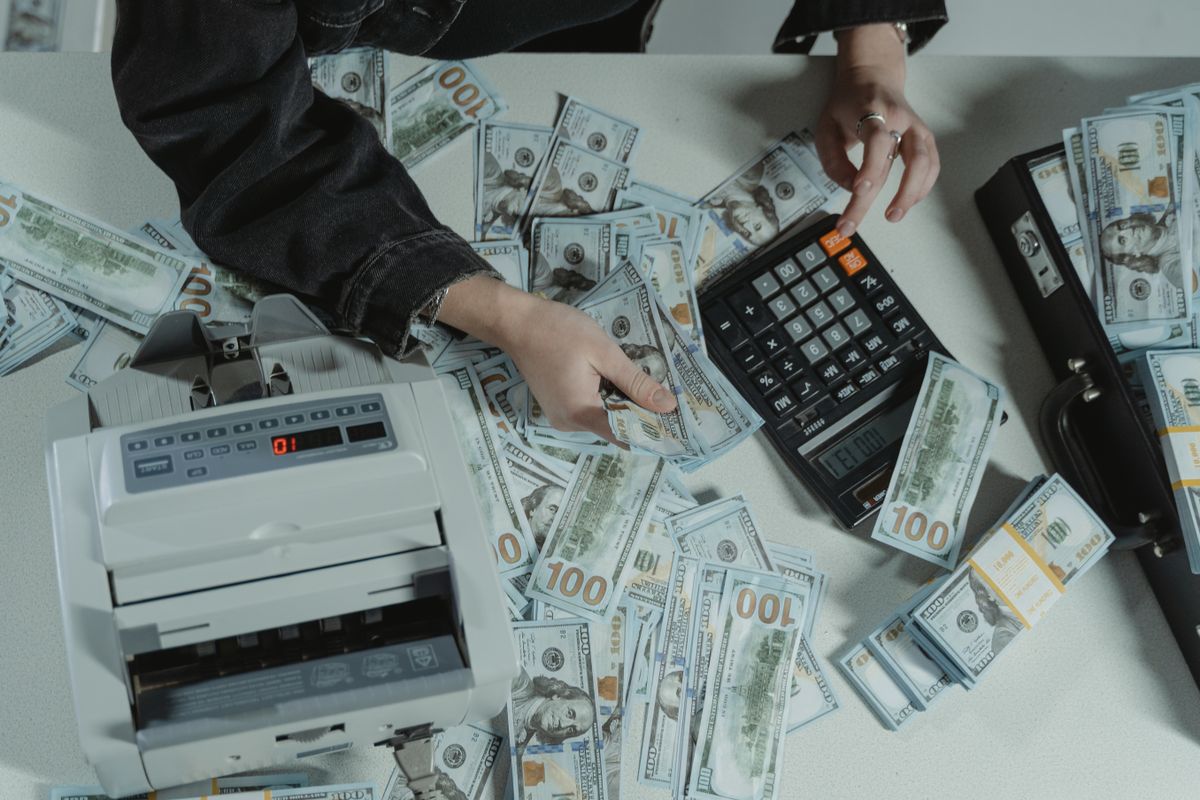
Counting cash with a calculator
The denomination trap
Exchange or withdraw and you will often be handed crisp ¥100 notes. Those are the hardest bills to spend in China. A small vendor selling a ¥6 snack rarely has change for a ¥100, and you will get a pained look or a flat refusal.
When you change money or use an ATM, ask for or break your cash into ¥50, ¥20 and ¥10 notes. Small bills are the currency of street food, markets and taxis. A pocket of tens and twenties makes you far more welcome than a stack of hundreds.
Should you bring cash from home or get it in China?
You can do either. Bringing a modest amount of RMB from home means you land with a working reserve and skip airport queues. Pulling cash in China from an ATM often gives a better exchange rate than a home bureau, though each withdrawal carries a fee and a per-transaction cap. Many travelers bring a small starter amount and top up locally if needed; see how to withdraw cash in China.
Whatever you do, the primary method should still be a phone wallet. Cash is the backup, and setting up the apps needs data the moment you land.

China eSIM so you rely less on cash
Data on arrival means Alipay and WeChat Pay work straight away, so cash stays a backup
Some links are affiliate links; we may earn a commission at no extra cost to you.
Set up WeChat Pay or Alipay before departure, and read can you use cash in China for where notes still help.
A couple of legal and safety notes
- Customs: you can enter China carrying up to the equivalent of USD 5,000 in foreign currency, or ¥20,000 in renminbi, without a formal declaration. A normal travel reserve is far below this.
- Safety: China is generally very safe for carrying modest cash, but still split it up, keep some in the hotel safe, and do not flash a thick wallet at markets.
Who needs more, who needs less
Bring more cash if your itinerary includes rural regions, long-distance buses, small guesthouses, or if you simply prefer not to depend on a phone. Older travelers and those visiting family in the countryside usually use more notes.
Bring less if you are city-focused, comfortable with mobile wallets, and have both a card and the apps set up. In that case ¥1,500 to ¥2,000 as a reserve, plus daily top-ups, is almost always enough.
Related: For how mobile pay, cash and cards fit together, see our overview of how to pay in China.
Frequently asked questions
How much cash should I bring to China for one week? A reserve of about ¥2,000 to ¥3,000 (USD 280 to 420) is plenty, on top of a card linked to Alipay or WeChat Pay for everyday spending.
Do I need cash at all if I have Alipay? Yes, a little. Apps cover most spending, but machines, app-only services and some rural vendors need cash, and phones can die.
Can I use US dollars in China? No, shops price and take renminbi. Exchange your dollars at a bank or ATM; you cannot pay a Chinese vendor directly in USD.
What denomination should I ask for? Request ¥50, ¥20 and ¥10 notes. Avoid a stack of ¥100 bills, which small vendors struggle to change.
Is it safe to carry cash in China? Yes, China is generally safe. Still, carry a modest amount, split it between bag and hotel safe, and keep your backup card separate from your phone.
Sources
- How to Exchange Money in China 2026: Payment Tips for China Travel · Trip.com
- Facilitating payment services for inbound travelers in China · Beijing Municipal Government