China Student Visa (X1/X2): Requirements, Fees & JW202 Guide (2026)
Quick answer: International students studying in China for more than 180 days need an X1 visa; 180 days or less needs an X2. Which form you submit, JW202 (self-funded) or JW201 (CSC scholarship), determines how the rest of your paperwork is assembled.
X1 vs X2: which one do you actually need
The single question that decides your visa category is program length, not degree level or scholarship status.
- X1 visa: any study program longer than 180 days, this covers nearly every bachelor's, master's, PhD, and full-year language program. X1 holders must apply for a residence permit within 30 days of arrival, because the visa itself is only a travel authorization, not a long-term stay permit.
- X2 visa: study programs of 180 days or less, semester exchanges, short intensive language courses, summer or winter Chinese-language camps. No residence permit conversion is needed. You simply leave before the visa expires.
If your offer letter does not state a program length, ask your admissions office directly. Universities sometimes issue ambiguous dates, and applying for the wrong category means a second embassy trip.

Students gathered on a school campus in China
For a full comparison against tourist (L), business (M), and work (Z) visas, see our China visa types explained. If your plan is to work in China after you graduate, note that a Z visa follows a completely different route: work permit first, then residence permit, with no automatic conversion from a student visa. You will need a fresh application once you have a job offer, see the China work visa (Z) guide for that process.
JW202 vs JW201: the form that unlocks your visa
Neither the X1 nor X2 application moves forward without one of two forms, and universities and admissions offices worldwide are consistent about this: no form, no visa interview.
| Form | Who gets it | Issued by |
|---|---|---|
| JW202 | Self-funded students, and students on partial or institutional scholarships that aren't CSC-administered | Your admitting Chinese university / receiving institution |
| JW201 | Students awarded a Chinese Government Scholarship (CSC) or a scholarship at an institution directly under the Ministry of Education | China Scholarship Council (CSC), routed through your embassy or dispatching authority |
Most applicants receive JW202. Since mid-2023, Chinese universities issue it as an electronic document rather than mailing a physical original, so check your admissions portal or student email rather than waiting on international post. CSC scholarship recipients get JW201 through the CSC's own distribution process, which usually arrives later in the summer (CSC targets July 31 for the following academic year) than a self-funded JW202.
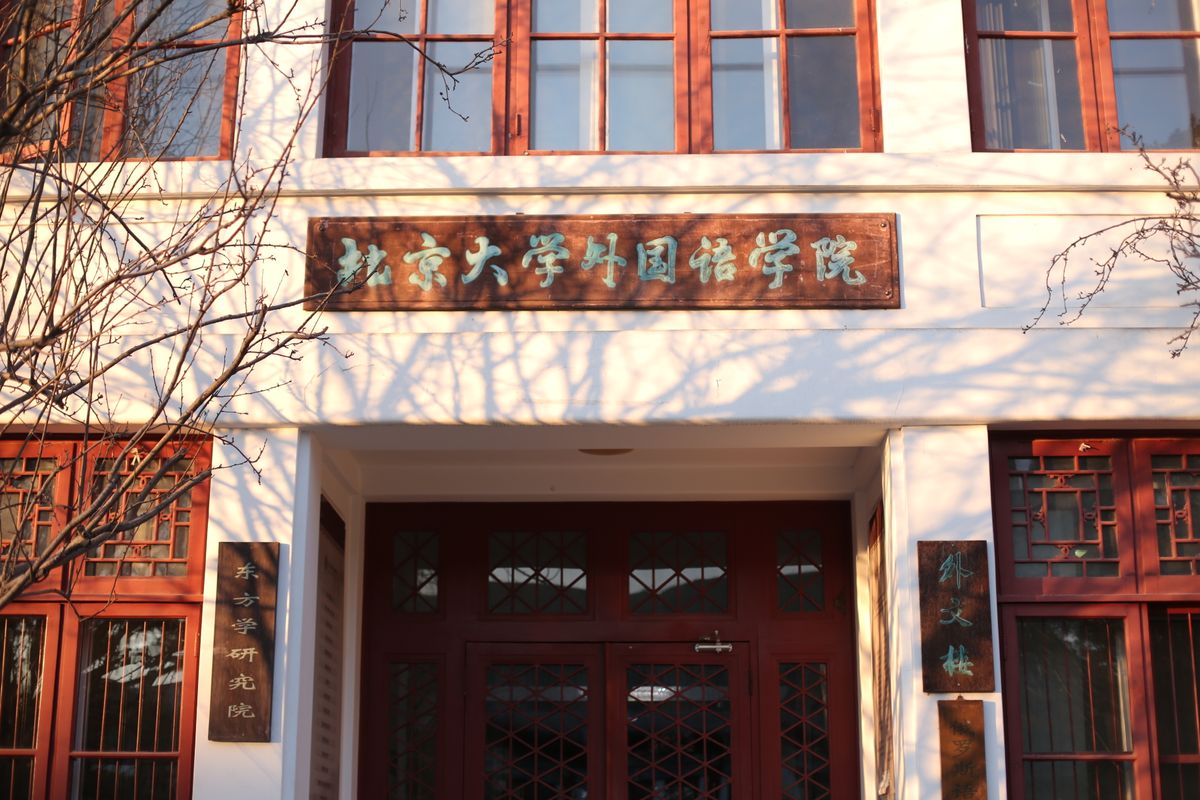
Building at a Chinese university, where JW202 forms are issued
Bring the admission notice alongside whichever form applies. Consulates will not accept the form on its own.
Documents, fees, and the bank statement question
Beyond the admission notice and JW202/JW201, expect to assemble:
- Passport valid 6+ months with at least 2 blank visa pages
- Completed online visa application form (via COVA) plus a recent 48mm x 33mm color photo
- Foreigner Physical Examination Form, completed by a doctor before you travel if your consulate requires it (some accept a re-examination after arrival instead, check your specific consulate)
- Proof of financial support, typically a bank statement showing sufficient funds, especially for self-funded X1/X2 applicants without a scholarship letter
- Previous passports with old Chinese visas, if you've traveled to China before
Fees vary by nationality, not by visa type. A US applicant pays a different rate than a UK or Pakistani applicant for the identical X1 stamp, because China's visa fee schedule is reciprocal: it mirrors what your home country charges Chinese citizens. This is exactly why "china student visa fee from pakistan" and "china student visa bank statement" show up as distinct, common searches, applicants are trying to figure out costs and proof-of-funds requirements that a generic guide won't spell out.
Pakistani nationals with an ordinary passport are currently exempt from the Chinese visa fee itself (confirmed through 2026 by the Chinese Embassy in Pakistan), though a separate service fee applies through the visa application center that processes the paperwork. If you're applying from Pakistan, our dedicated China visa for Pakistani citizens guide covers the visa center process and what counts as an acceptable bank statement in more detail. For a nationality-by-nationality fee breakdown across visa types, see China visa cost.
Regardless of nationality, submit your bank statement in your own name (or your sponsor's, with a signed sponsor letter attached) showing a balance that covers a reasonable slice of your first year's tuition and living costs. Consulates don't publish a hard minimum, so err generous and recent: most want a statement dated within the last 1-3 months.
Processing time
Standard processing at most Chinese consulates and CVASCs runs around 4 working days once your passport and full document set are submitted, longer during peak intake months (July-September) or if your file gets flagged for extra review. Apply at least a month before your program start date. Rushing a student visa the week before you fly is the single most common way applicants end up stuck.
From X1 visa to residence permit: what happens after you land
Your X1 visa gets you through the border, but it is not your legal basis to stay for the full program. Within 30 days of arrival you must convert it to a residence permit at the local Exit-Entry Administration Bureau (the foreigner affairs division of the local Public Security Bureau). Three things need to happen, roughly in this order:
- Register with local police within 24 hours of arrival. If you're moving into a university dormitory, the international student office usually handles this registration automatically, but confirm rather than assume, especially if you're arriving on a weekend when the office is closed.
- Complete a physical examination in China, even if you already did one at home. Most Exit-Entry Bureaus require the in-country exam (roughly ¥400-700) rather than accepting your home-country paperwork as final, though your original exam form is still worth bringing as a backup.
- Apply for the residence permit with your passport, admission notice, JW202/JW201, health certificate, and accommodation registration proof. Processing typically runs 7-15 business days, during which you'll hold a receipt that lets you stay legally while the permit itself is printed into your passport.
X2 visa holders skip this entire step, since a short program doesn't require one.
Once you're settled, download the apps you'll actually use day to day: Alipay or WeChat Pay for anything from campus canteens to phone top-ups, and Amap for navigation, since Google Maps doesn't work reliably in China. It's also worth sorting out a local data plan before you land rather than after; a short-term eSIM gets you connected the moment you land, before you've had time to register for a Chinese SIM at all.

Some links are affiliate links; we may earn a commission at no extra cost to you.
Common mistakes
- Applying for X2 when your program actually runs past 180 days. Universities sometimes list a semester's teaching weeks rather than the full enrollment period. Check the admission notice's actual start and end dates, not just "one semester."
- Missing the 30-day residence permit window. The clock starts on arrival, not on your first day of class. Students who spend the first month traveling before reporting to campus routinely blow past the deadline and face a scramble (or a fine) at the Exit-Entry Bureau.
- Submitting a bank statement that's too old or in the wrong name. A statement from six months ago, or one in a parent's name with no accompanying sponsor letter, is a common reason consulates ask applicants to resubmit and restart the clock.
- Assuming the JW202/JW201 form is optional if you already have an admission letter. Consulates want both documents together. An admission letter alone will get your application rejected at the counter.
- Waiting until the week before departure to book a visa appointment. CVASC slots fill up fast in July-September; book as soon as your form arrives.
Who this is for
This guide is for you if:
- You have (or are waiting on) an admission notice from a Chinese university and need to figure out X1 vs X2
- You're a self-funded student trying to understand the JW202 process and what financial proof to submit
- You're a CSC scholarship recipient wondering how JW201 differs from the self-funded track
- You're applying from a country like Pakistan where visa fee rules differ from the standard schedule
This guide is not for you if:
- You're attending a short conference or academic exchange under 180 days but aren't enrolled in a degree or language program (an M or F visa may fit better, check with your host institution)
- You already hold a residence permit and are asking about renewal rather than first-time application (that process differs and starts at your local Exit-Entry Bureau, not the embassy)
- You're looking to convert a student visa into work authorization after graduation (start with our China work visa (Z) guide instead)
FAQ
Do students need a bank statement for a China visa? Yes, in most cases. Self-funded applicants especially should expect to submit a bank statement (their own or a sponsor's, with a signed letter) showing funds adequate to cover tuition and living costs. CSC scholarship recipients typically substitute a scholarship award letter instead.
Can I convert a China student visa to a work visa? Not automatically. An X1 or X2 visa doesn't carry work rights, and there's no direct in-country conversion path the way there is from X1 to a residence permit. You'll need a job offer that meets the criteria in our work visa (Z) guide, and typically must apply from outside China once your student status ends.
What's the difference between JW202 and JW201? JW202 goes to self-funded students and most non-CSC scholarship holders; it's issued directly by your Chinese university. JW201 goes to Chinese Government Scholarship (CSC) recipients and is issued through the China Scholarship Council's distribution process, usually arriving later in the summer than JW202.
How much does a China student visa cost from Pakistan? Pakistani ordinary-passport holders are currently exempt from the Chinese visa fee itself, though a separate visa center service fee still applies. See our China visa for Pakistani citizens guide for the current service-fee amount and required documents.
How long do I have to get a residence permit after arriving on an X1 visa? 30 days from arrival. You'll also need to register with local police within 24 hours and complete a physical examination in China before the residence permit is issued.
Takeaways
Confirm your program length against the actual admission notice before choosing X1 or X2, chase your JW202 or JW201 form as soon as your university issues it, and calendar the 30-day residence-permit deadline the moment you land. Bring more financial proof than you think you need, and if you're applying from Pakistan, budget for the service fee even though the visa fee itself is waived.
Not sure if you even need a visa?
Check your China visa-free eligibility →
Sources
- Guidelines for Application for Student Visas to China (X1/X2) · Beijing Municipal Government
- Visa Processing Time and Fee · Embassy of the People's Republic of China in Pakistan