Chongqing
Ciqikou Ancient Town
Ciqikou Ancient Town rooftops above the Jialing River
Ciqikou was a working porcelain-shipping port on the Jialing River for centuries, and the name still says so: it means "Porcelain Port." At its peak, wharves here loaded boats bound downriver to the Yangtze. The warehouses are long gone, but the flagstone lanes, stilt houses and temple courtyards that climb the hillside survived the demolition that reshaped the rest of Chongqing, which is why this is the one place in the city where the old riverport street plan is still legible on foot.
Getting in, and what it costs
The town itself is free and there is no gate ticket or advance booking to arrange. Metro Line 1 to Ciqikou Station, Exit 1, leaves you at the southwest corner of the old town, a signposted few-minutes' walk from the main lanes; it sits roughly 14 km northwest of Jiefangbei. A couple of enclosed sites inside charge their own small admission separately from the free street: Baolun Temple, the Buddhist hall above the shops, and the Zhong family courtyard house. Bring your passport for the metro security check and keep some mobile pay set up, since most stalls are cashless.
What to see
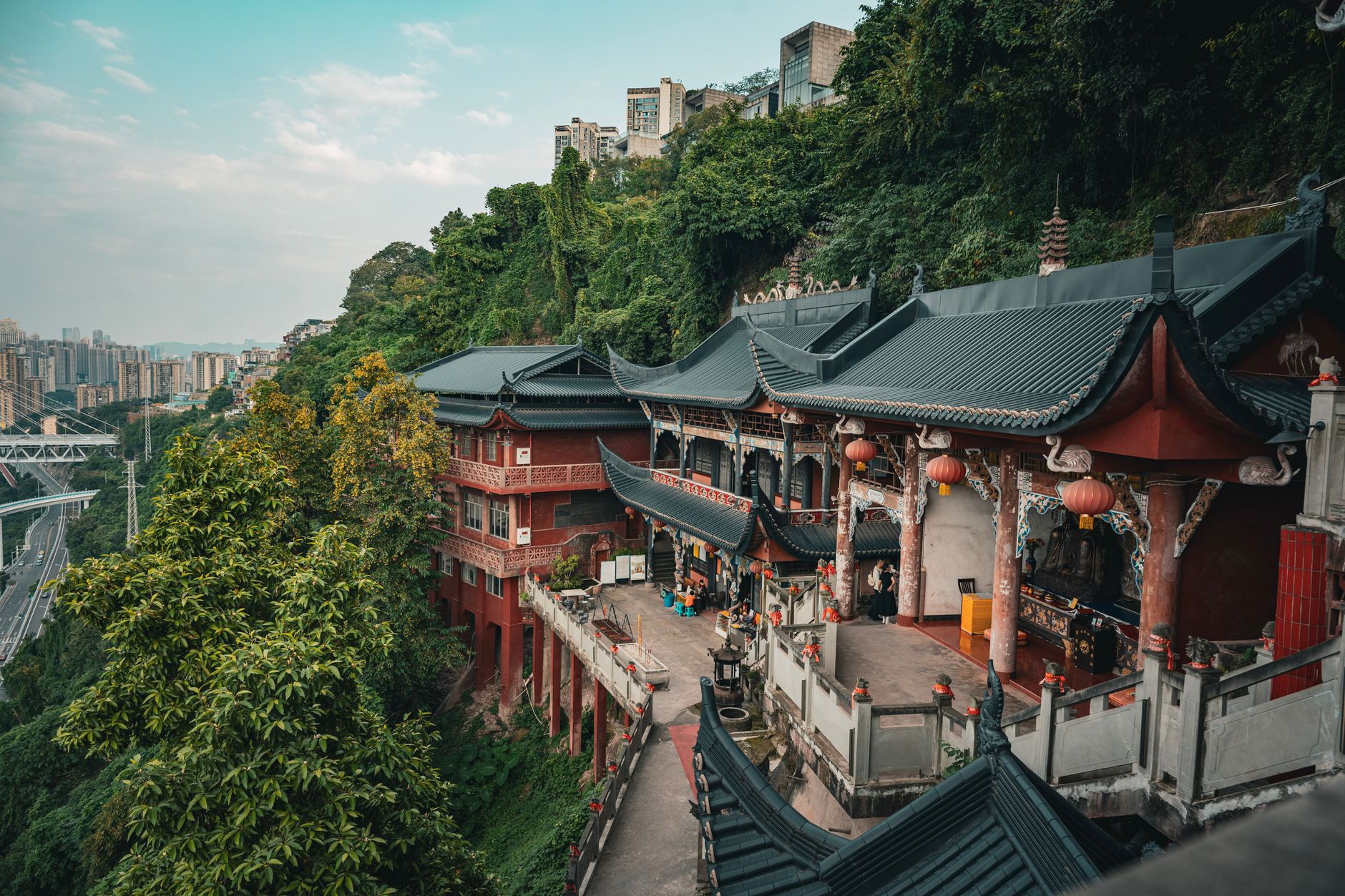
The core is the main flagstone street running uphill from the river gate, packed with teahouses, snack stalls and craft workshops. Climb to Baolun Temple for the quietest corner and the best rooftop views over the tiled roofs. The real payoff is leaving the main drag: side lanes like Jinrong and Matou thin out fast, and residents still hang laundry between the eaves. Down at the water, the same stone steps that porters once used to load porcelain drop straight to the Jialing.
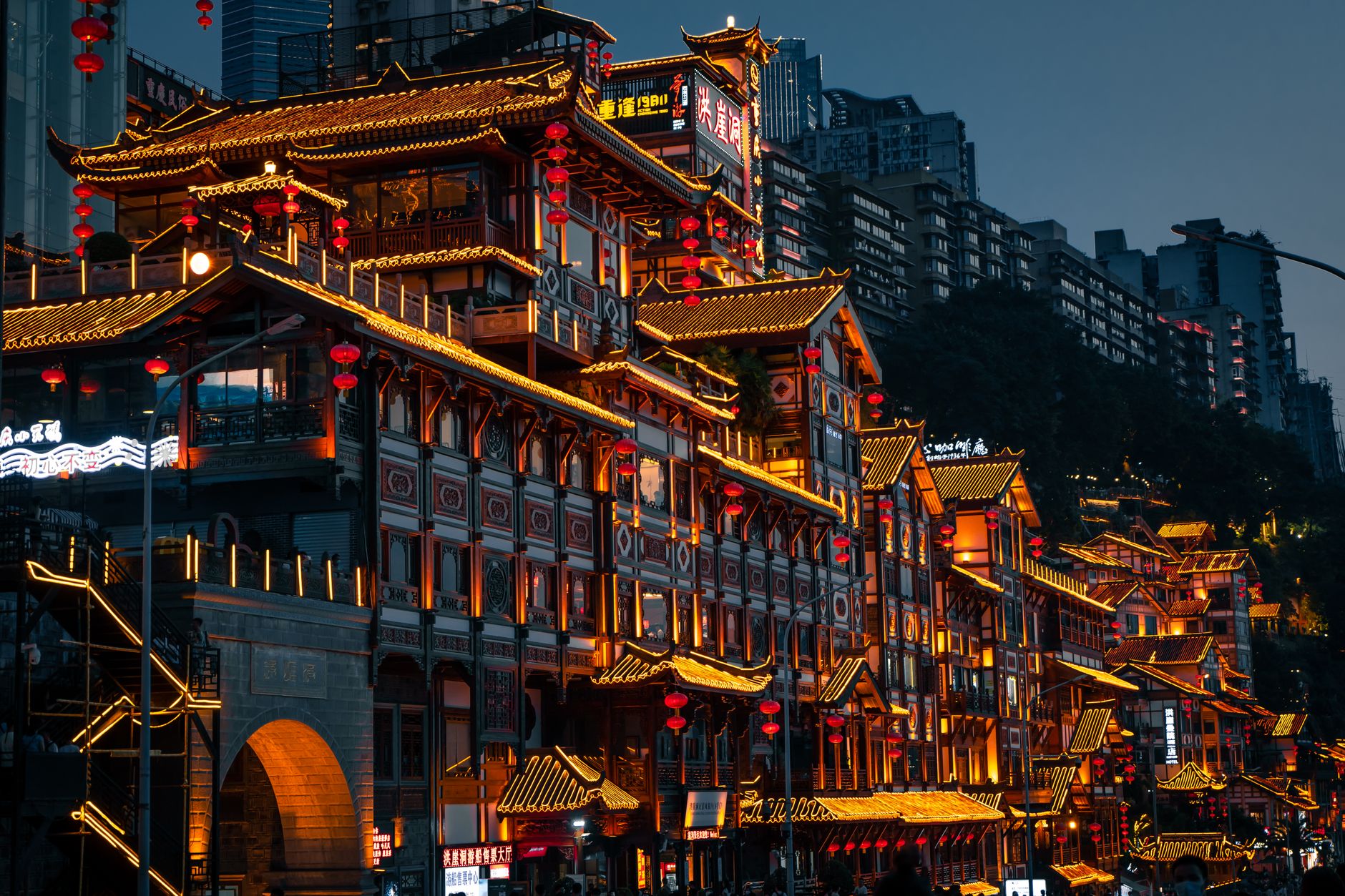
Lantern-lit lanes of Ciqikou at night
Street food and tea
Ciqikou is as much about eating as sightseeing. The signature snack is mahua, crunchy twisted fried dough sold plain or in dozens of flavours; you smell the stalls before you see them. Look for tea-smoked tofu, hand-pulled rice cakes, and bowls of spicy Chongqing xiaomian noodles. The old teahouses are the other institution: order a covered cup of green tea, catch a quyi storyteller if one is performing, and let the lane traffic go by.
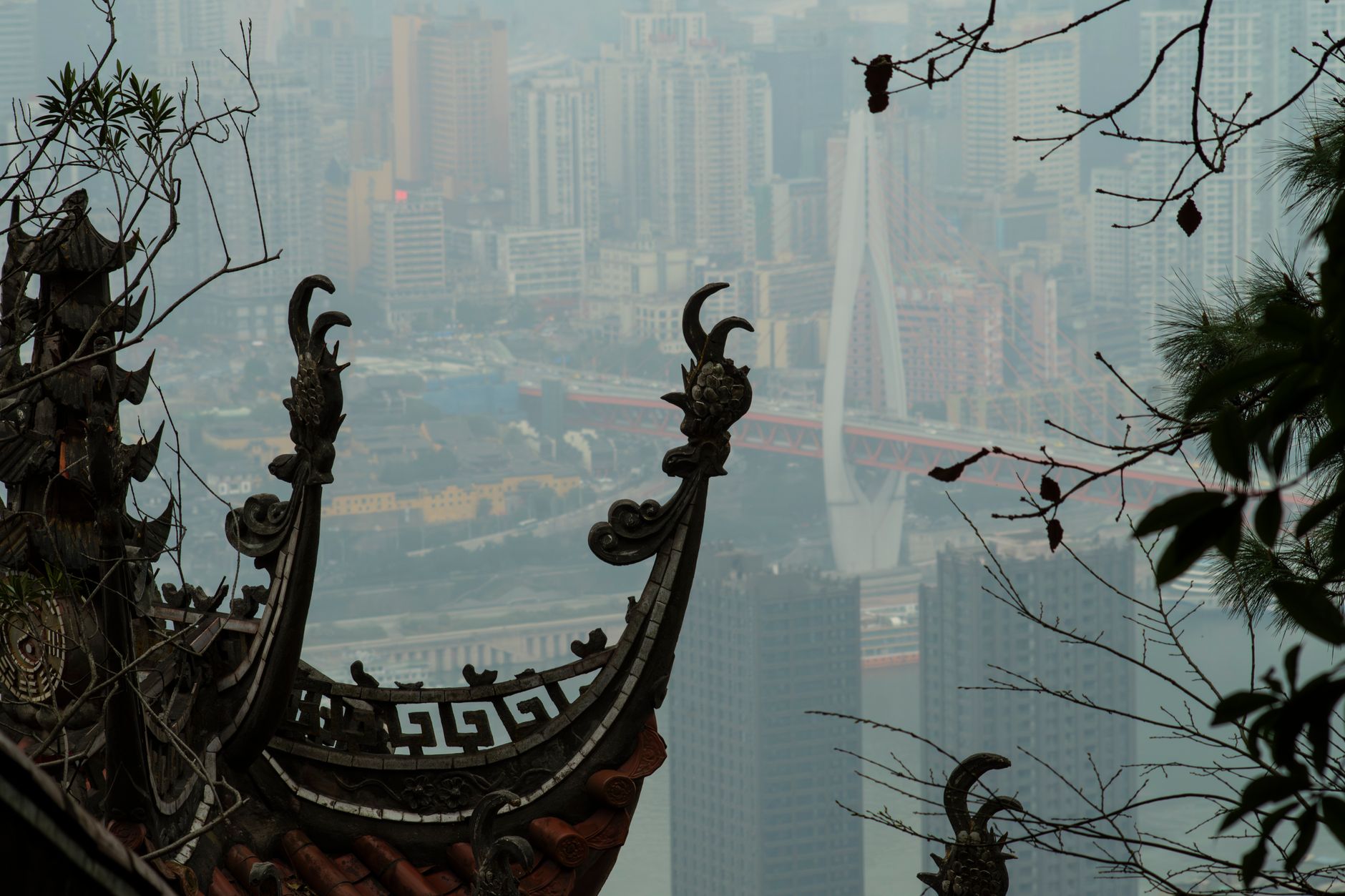
Temple eaves framing the Chongqing skyline at Ciqikou
When to go
The town never really closes, but most shops shut around 9pm, so evenings are for atmosphere and lanterns rather than shopping. Crowds are the real variable: weekends and public holidays pack the main street shoulder-to-shoulder, while a weekday before 10am gives you near-empty lanes and soft light. Autumn, roughly September to November, is the most comfortable season; Chongqing summers are hot and humid. Two to three hours covers it, or half a day if you settle into a teahouse.
Highlights
- Centuries-old Jialing River porcelain port with intact Ming-Qing stone lanes
- Baolun Temple, an ancient Buddhist hall above the shopping street (small separate ticket)
- Mahua twisted-dough snacks and dozens of Chongqing street-food stalls
- Traditional teahouses with quyi storytelling performances
- Red-lantern night atmosphere reflected in the riverside lanes
Travel Tips
Beat the crowds
Come on a weekday before 10am or stay until after dusk; weekends and public holidays pack the main street shoulder-to-shoulder.
Getting there
Metro Line 1 to Ciqikou Station, Exit 1, drops you at the southwest corner of the old town, a signposted few-minutes' walk to the main lanes. The town is free and needs no booking.
Go off the main lane
Side streets like Jinrong and Matou are quieter and more local than the snack-packed central road.
Paid sites inside
The street is free, but Baolun Temple and the Zhong family courtyard charge their own small admission if you want to go in.