Chongqing
Wulong Three Natural Bridges
The Three Natural Bridges karst canyon at Wulong
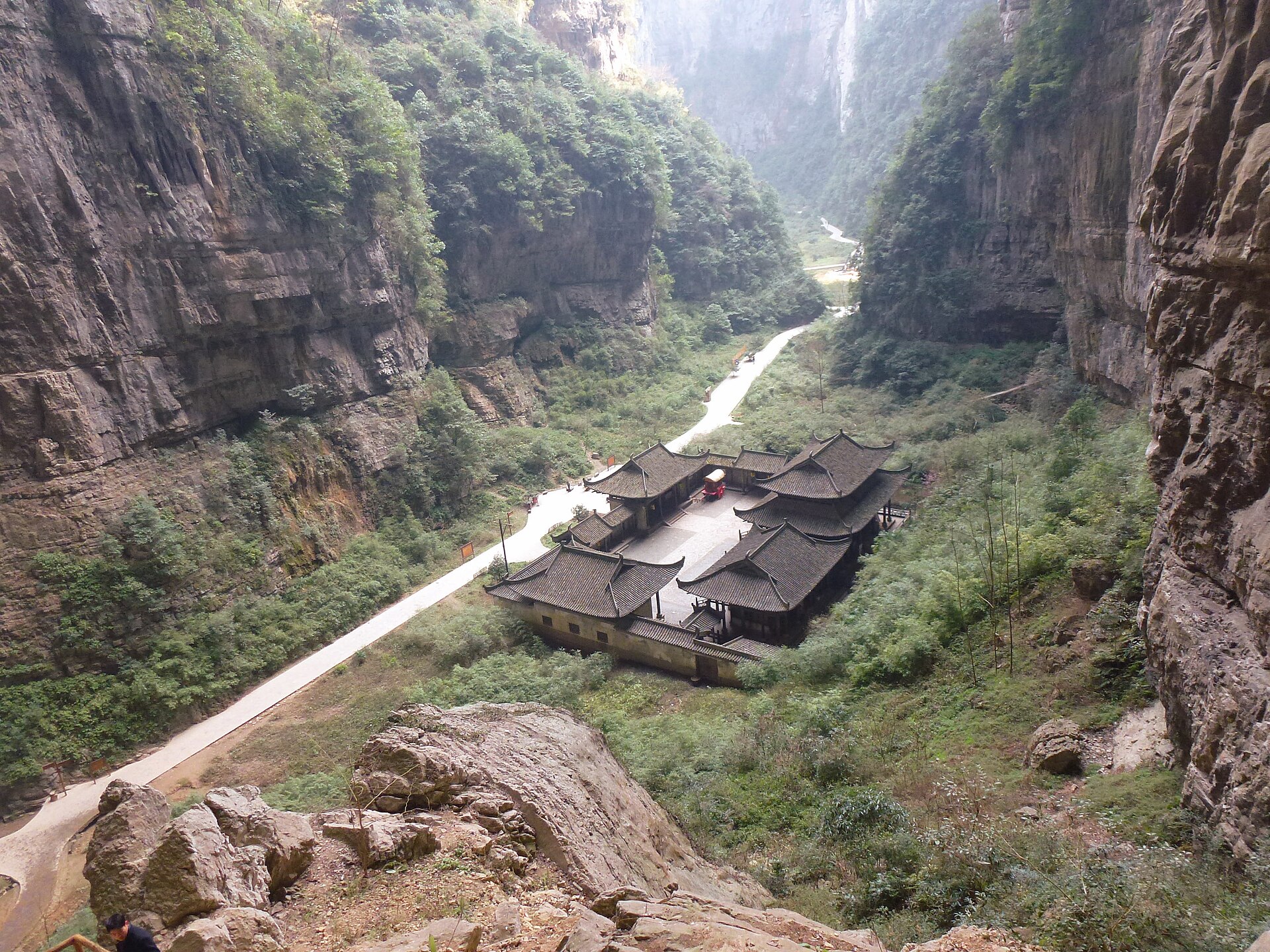
Wulong's Three Natural Bridges (Tiansheng Sanqiao) put you on the floor of a canyon with hundreds of metres of rock arching overhead. Three of the largest natural stone arches on Earth, Tianlong (Sky Dragon), Qinglong (Green Dragon) and Heilong (Black Dragon), span a chain of collapsed sinkholes here, part of the UNESCO "South China Karst" World Heritage site. The scenery is dramatic enough that it stood in for imperial China in Curse of the Golden Flower and turned up in a Transformers film.
What you'll see
A glass-fronted lift drops you to the canyon floor, where a paved trail runs a couple of kilometres beneath the three bridges. The scale is the point: Tianlong is the widest, Qinglong the tallest, and Heilong the most streaked with mineral colour and seeping water. Between the first two arches sits the lonely courtyard of the Tianfu Official Post, a rebuilt Tang-dynasty relay inn stranded on the sinkhole floor, and the building most people recognise from the films.
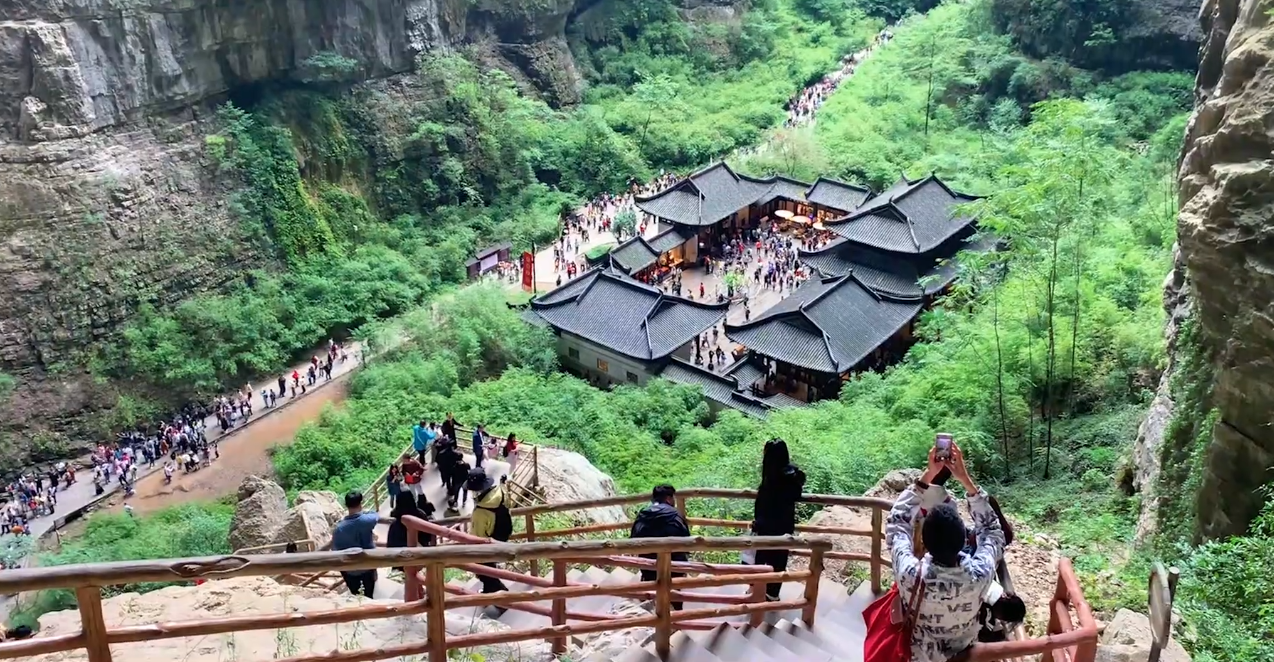
The natural stone arches and sinkhole at Wulong
Getting there and getting around
The trip got much shorter in June 2025, when a new high-speed line opened through Wulong South Station: the ride from Chongqing East now takes under an hour, against the half-day it used to eat by ordinary train or road. Most of your travel time is now the connections rather than the train itself. From Wulong South you take a blue scenic shuttle to the Wulong Karst visitor centre (allow around three quarters of an hour), then transfer to the official park shuttle that covers the last stretch to the bridges' entrance; private cars cannot go in. If you would rather not stitch the legs together yourself, you can book a Wulong day trip or entry package online.
Tickets, hours and seasons
The scenic area opens daily, roughly 8 to 8:30am until 4:30 to 5pm depending on the season, with last entry about an hour before closing. The main ticket bundles the internal shuttle and the glass elevator into one price, which runs a little higher in the peak months (March to October) than in winter, so check the current rate before you go. Spring and autumn are ideal; the shaded canyon stays cooler than the city in summer, while winter can dust the karst with snow but keeps shorter hours.
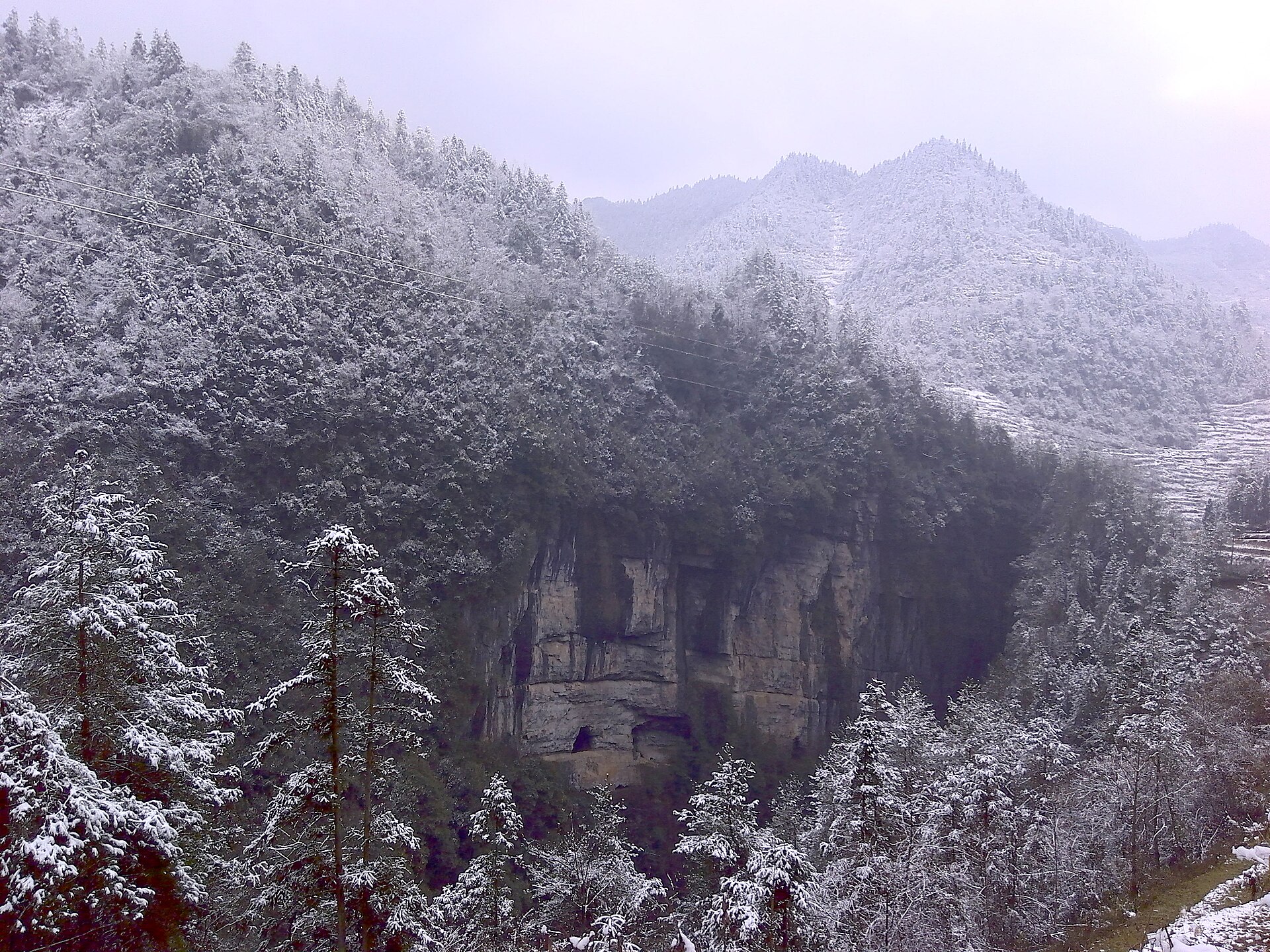
Snow-dusted karst landscape at Wulong
Practical tips
Budget at least half a day door to door, or a full day if you add the nearby Longshui Gorge or the Fairy Mountain grassland. The canyon floor is cool and damp even in July, so pack a light layer and shoes you can walk a few kilometres in. Late morning is best for photos, when sunlight reaches down into the sinkholes. Check the last shuttle time before you set off, so a slow lunch does not leave you stranded.
Highlights
- UNESCO 'South China Karst' world heritage landscape
- Three of the world's largest natural stone bridges: Tianlong, Qinglong and Heilong
- Tianfu Official Post, a Tang-style relay inn on the sinkhole floor (a famous film location)
- Glass lift descent into a canyon with rock arching hundreds of metres overhead
- Cooler summer refuge and atmospheric winter snow scenes
Travel Tips
Plan a full half-day
The high-speed ride is short, but the shuttle connections add up; leave early and confirm the last shuttle so you aren't stranded.
Dress for the canyon
The sinkhole floor stays cool and damp even in summer, so bring a light layer and comfortable walking shoes.
One combined ticket
The main ticket covers the internal shuttle and the glass elevator down; it is a little pricier in peak season (March-October). Buy at the visitor centre or online.