Chongqing
Jiefangbei (People's Liberation Monument)
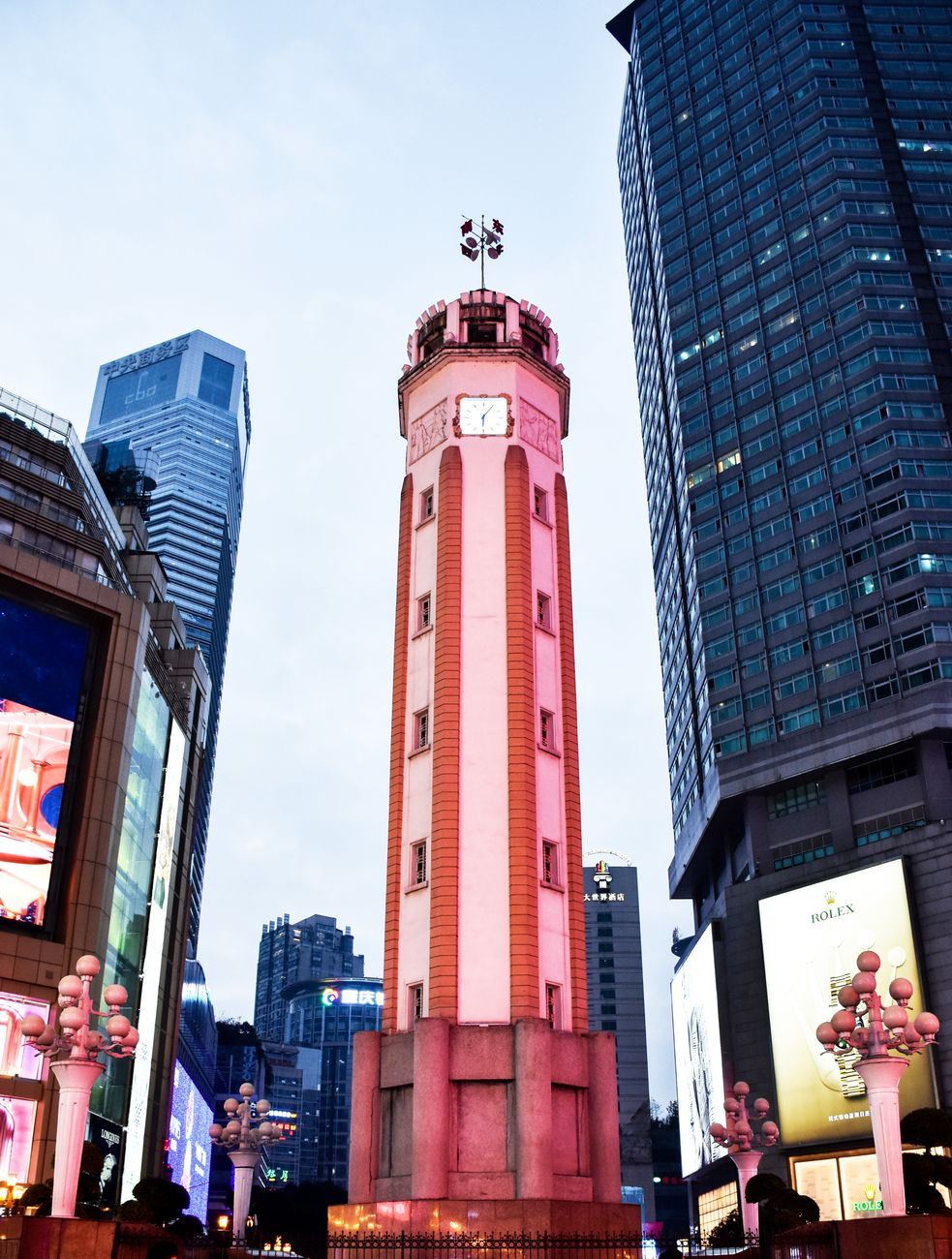
The Liberation Monument clock tower ringed by skyscrapers at Jiefangbei
Stand under Jiefangbei after dark and you are at the exact point Chongqing measures its road distances from. The slim 27.5-metre clock tower is the city's official "kilometre zero", and it now sits inside a ring of LED-clad skyscrapers that turn the whole plaza into an open-air light show. Locals still use the monument as their default meeting spot, so the square around it stays busy from late morning until close to midnight.
From wartime marker to city landmark
The concrete tower you see went up in 1947. It replaced a wooden wartime structure called the Spiritual Fortress (Jingshen Baolei), raised in 1940 to rally the temporary capital while Japanese planes bombed the city. On 1 October 1950 the inscription was rewritten and it became the People's Liberation Monument, the name that stuck. The clock high on the tower, originally a gift from a local Catholic church, has for years carried a Rolex face and still marks the hours. What was once the tallest thing for miles is now dwarfed by the glass towers around it, which is exactly why the contrast draws crowds.
The shopping plaza around it
"Jiefangbei" today means the whole pedestrian CBD, not just the monument. It is one of the busiest and most fashionable shopping zones in western China: department stores, international flagship boutiques, hotpot restaurants and street-snack stalls fan out in every direction. Shops mostly run from mid-morning to about 10pm, while the food streets and bars keep going later. The monument and plaza themselves are free and open around the clock, so there is no ticket and no gate.
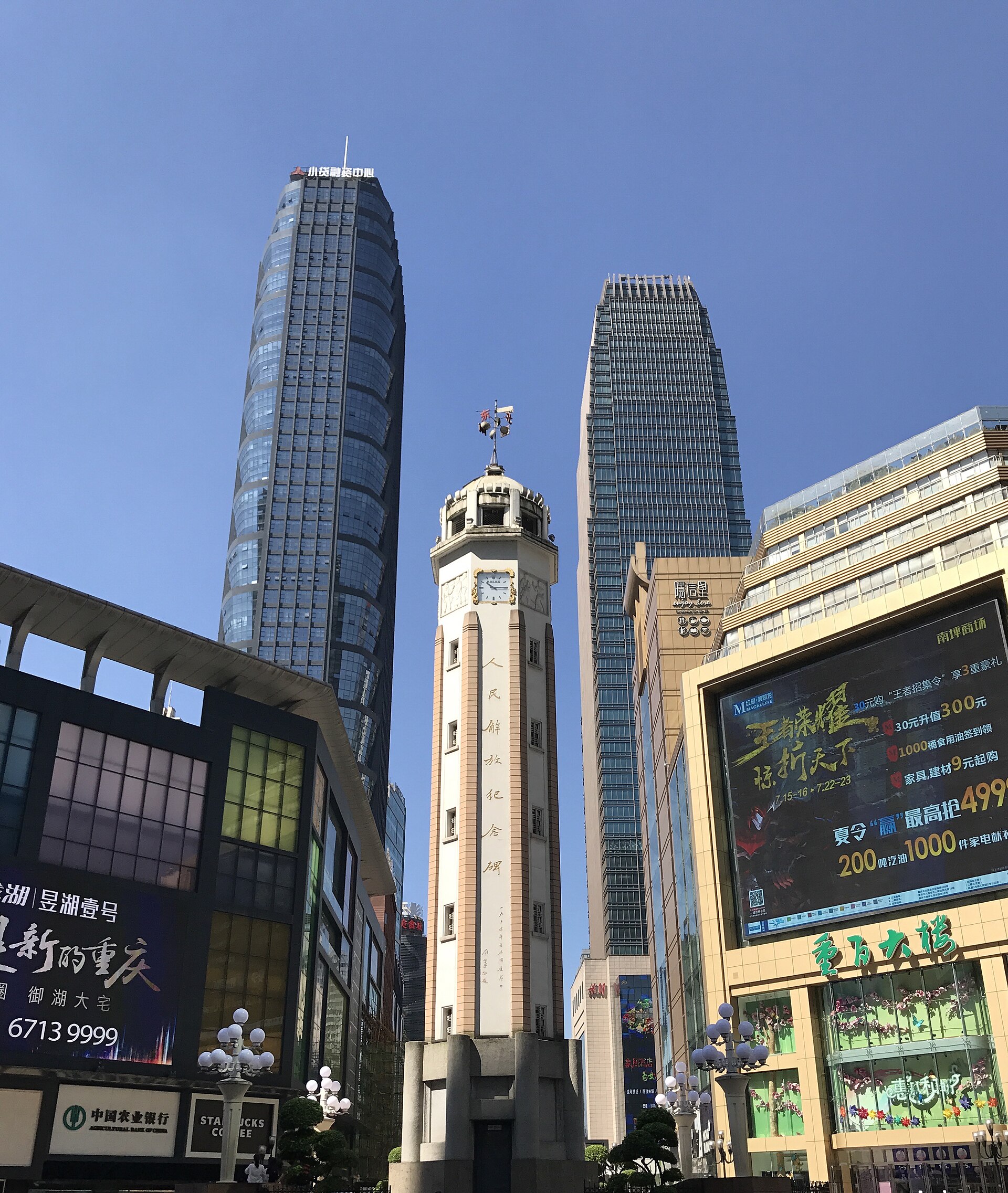
The pedestrian plaza and towers around Jiefangbei
What is within a short walk
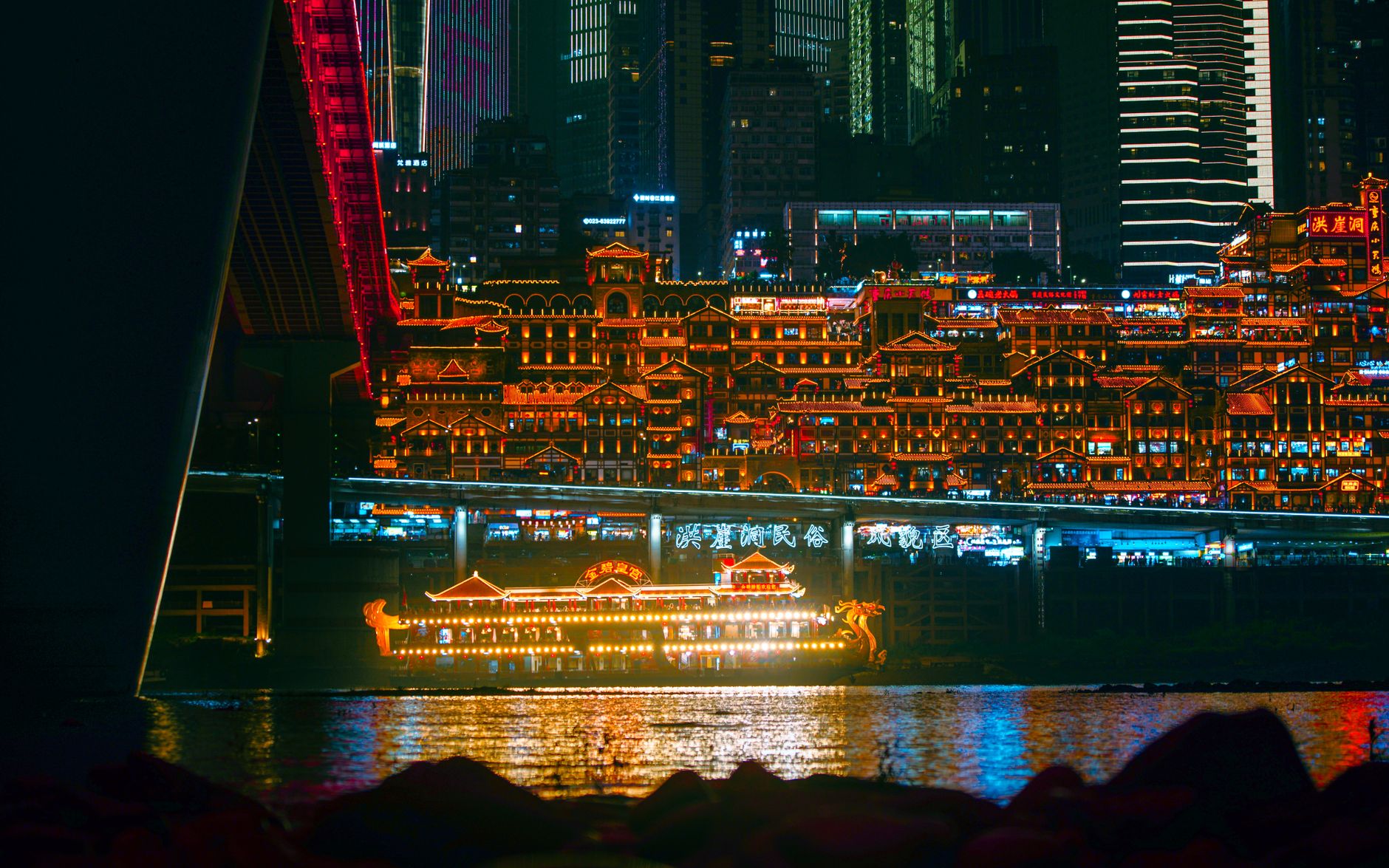
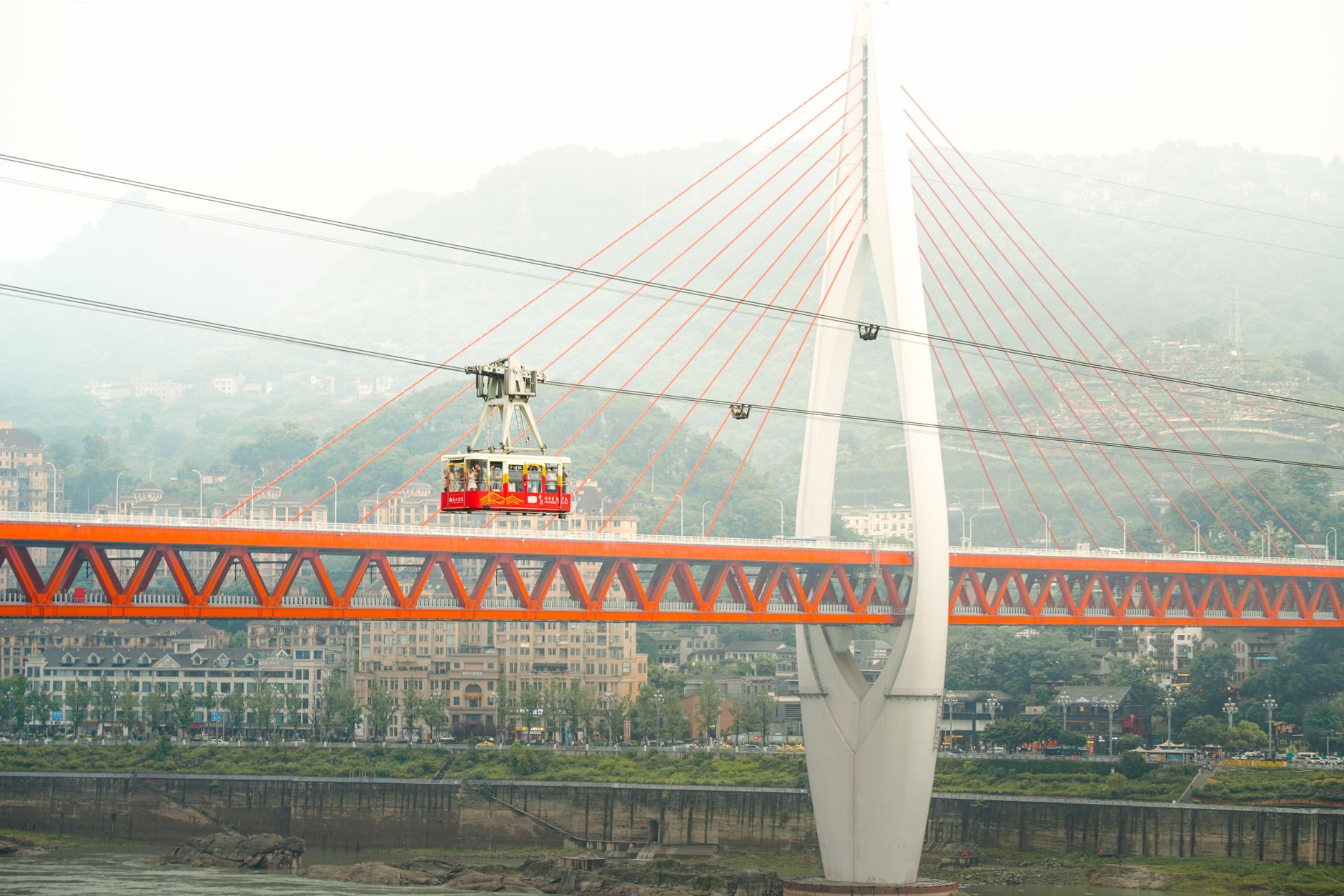
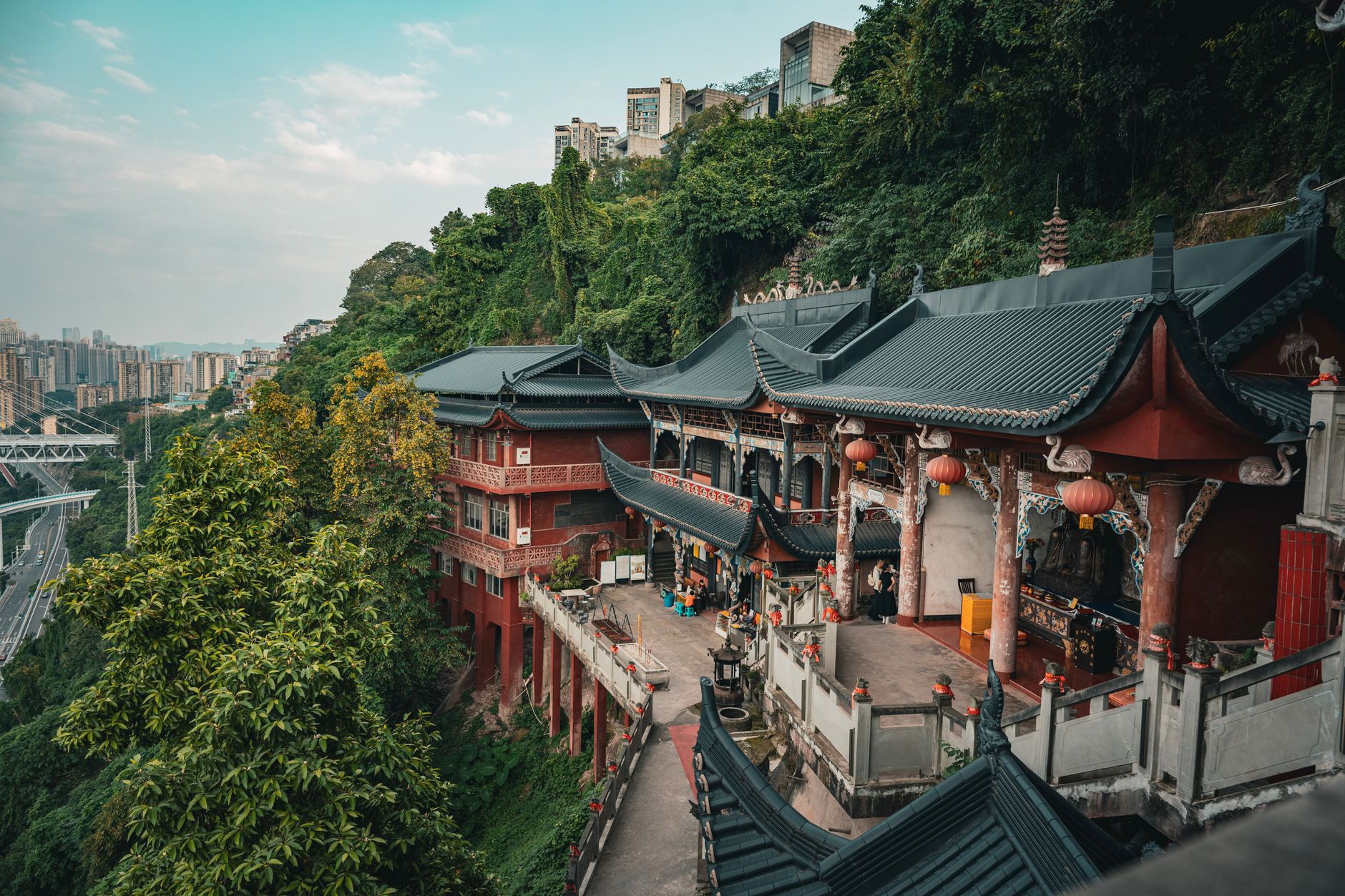
Jiefangbei works best as a base you explore on foot. The cliffside Hongya Cave stilt complex is about a 10 to 15 minute walk north toward the river, and it is at its most striking after the lights come on. The Yangtze River Cableway, which still runs as a working commuter line across the river as well as a tourist ride, is a similar distance to the southeast. For food, skip the chain restaurants and dive into the lanes near Bayi Road Snack Street, where you will find Chongqing's famous xiaomian noodles, grilled skewers and suan la fen hot-and-sour sweet potato noodles.
Getting there and getting around
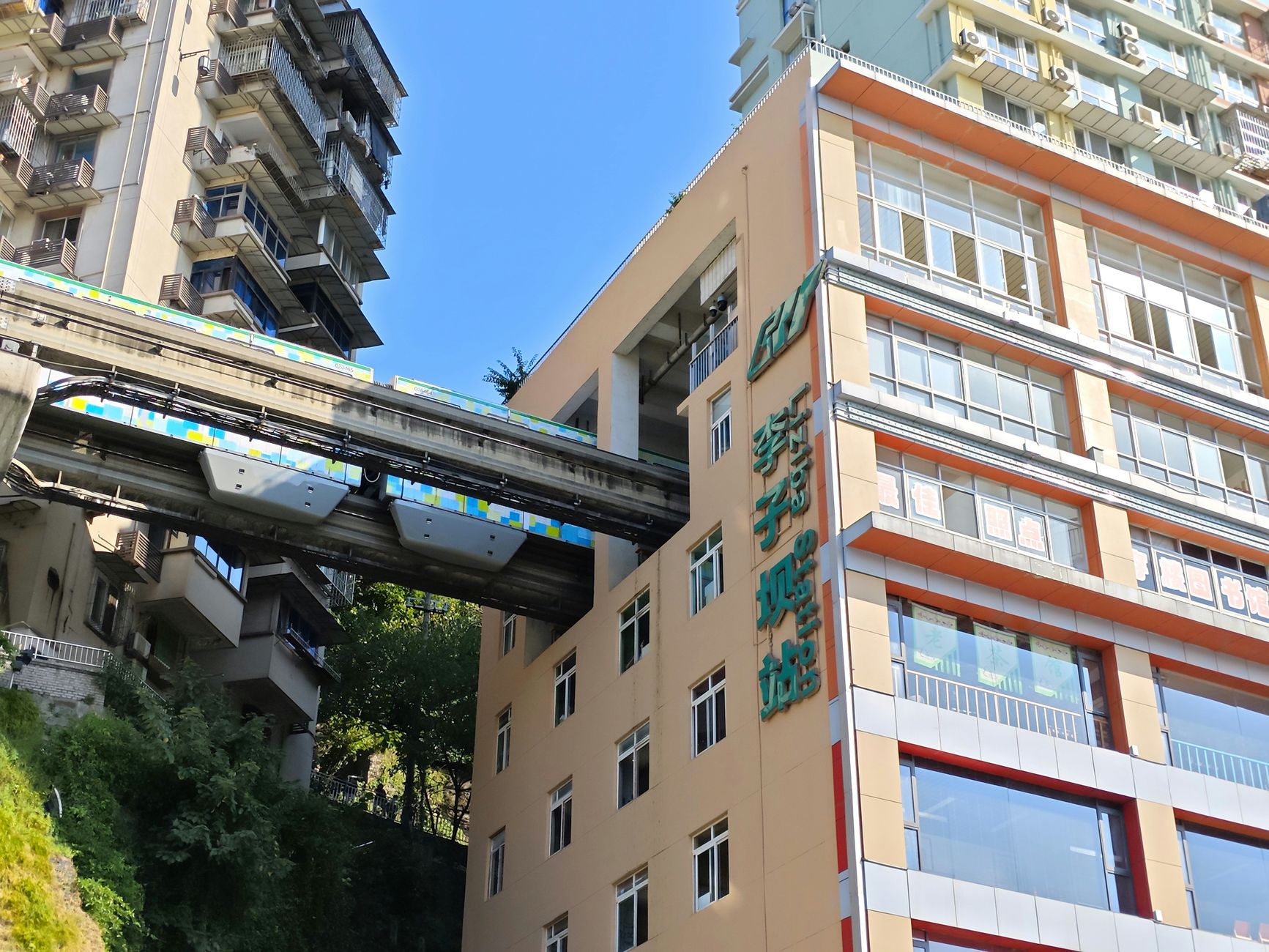
Three metro stations sit within roughly a 10-minute walk. Jiaochangkou (Lines 1 and 2) is the closest and drops you at the southwest edge of the district; Linjiangmen (Line 2) and Xiaoshizi are the other two. Because Chongqing's downtown is stacked on steep hillsides, the "ground floor" of one street is often several storeys above another, so map apps can misjudge your route. Wear shoes you can climb stairs in and do not be surprised when a footbridge leaves you level with a tenth-floor rooftop.
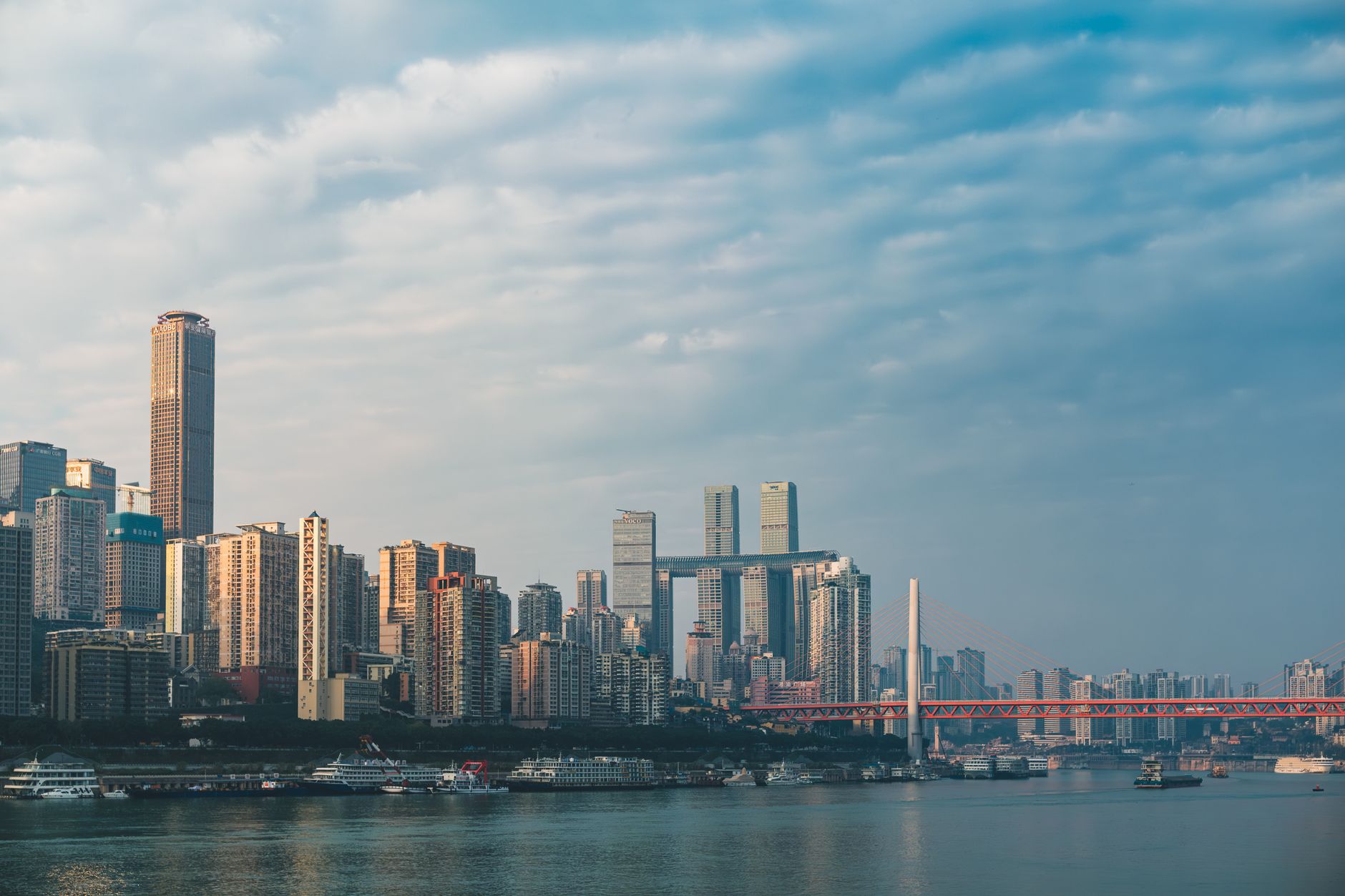
Daytime view of the Liberation Monument and surrounding CBD
When to go
Evening is the payoff: the LED towers, the neon and the lit monument are what most people come to photograph, though that is also when the crowds peak. Spring and autumn nights are the most comfortable; summer stays hot and humid well after sunset, but the lights and the energy carry it. Give the area an hour or two just to wander, and more if you fold in shopping, snacks or the walk to Hongya Cave.
Highlights
- 27.5-metre clock tower that serves as Chongqing's official 'kilometre zero'
- 1947 concrete monument, renamed the People's Liberation Monument in 1950
- Heart of one of western China's busiest pedestrian shopping districts
- Night scene of LED-clad skyscrapers ringing the lit monument
- Free and open 24 hours, with no ticket or gate
- Walking distance to Hongya Cave, the Yangtze River Cableway and Bayi Road snacks
Travel Tips
Come after dark
Evening is the most photogenic and lively time, when the surrounding LED towers and the monument light up. It is also the most crowded, so expect shoulder-to-shoulder foot traffic on weekends.
Use it as a walking hub
Jiaochangkou station (Lines 1 and 2) is the closest exit; from the plaza you can walk to Hongya Cave and the Yangtze River Cableway in 10 to 15 minutes each.
Wear shoes for stairs
Downtown Chongqing is steep and built on several levels, so map apps often misread the route. Expect stairs, slopes and footbridges that leave you level with a rooftop.